
Shingle color fading is a natural, gradual process where UV radiation breaks down the ceramic pigments on your granules, causing colors to lighten and dull over time. The good news: most fading is manageable. Your main options are:
- Prevention through regular maintenance, soft washing, and protective metal strips
- Treatment via professional cleaning or roof rejuvenation using plant-based technologies like Fresh Roof Green Soy Technology
- Replacement only when structural failure is confirmed by a professional inspection
Catching the problem early is everything. A roof that looks tired may still have years of life left in it.
Why do shingles fade, and what does it do to your roof?
UV radiation is the primary culprit. It excites electrons in the ceramic coating on your granules, breaking chemical bonds and stripping color from the surface. Every asphalt shingle will fade eventually. The rate depends on shingle quality, sun exposure, and your local climate.
A few factors accelerate the process:
- Roof orientation: South and west-facing slopes receive more UV radiation than north-facing slopes, so they fade faster
- Shingle quality: Premium architectural shingles with UV-stable inorganic pigments can hold color significantly longer; budget shingles use less stable pigments and fade faster
- Asphalt oxidation: As the binder oxidizes, it shifts from black to gray, making granule colors look washed out even before the granules themselves change
- Climate stress: Freeze-thaw cycles and extreme heat accelerate the breakdown of the ceramic coating on granules
- Darker shingles: Darker roofs absorb more heat, which speeds up the loss of asphalt volatiles and increases thermal cycling
Fading alone does not affect waterproofing. It is purely cosmetic, until it is not.
How to tell if your shingles are fading or actually failing
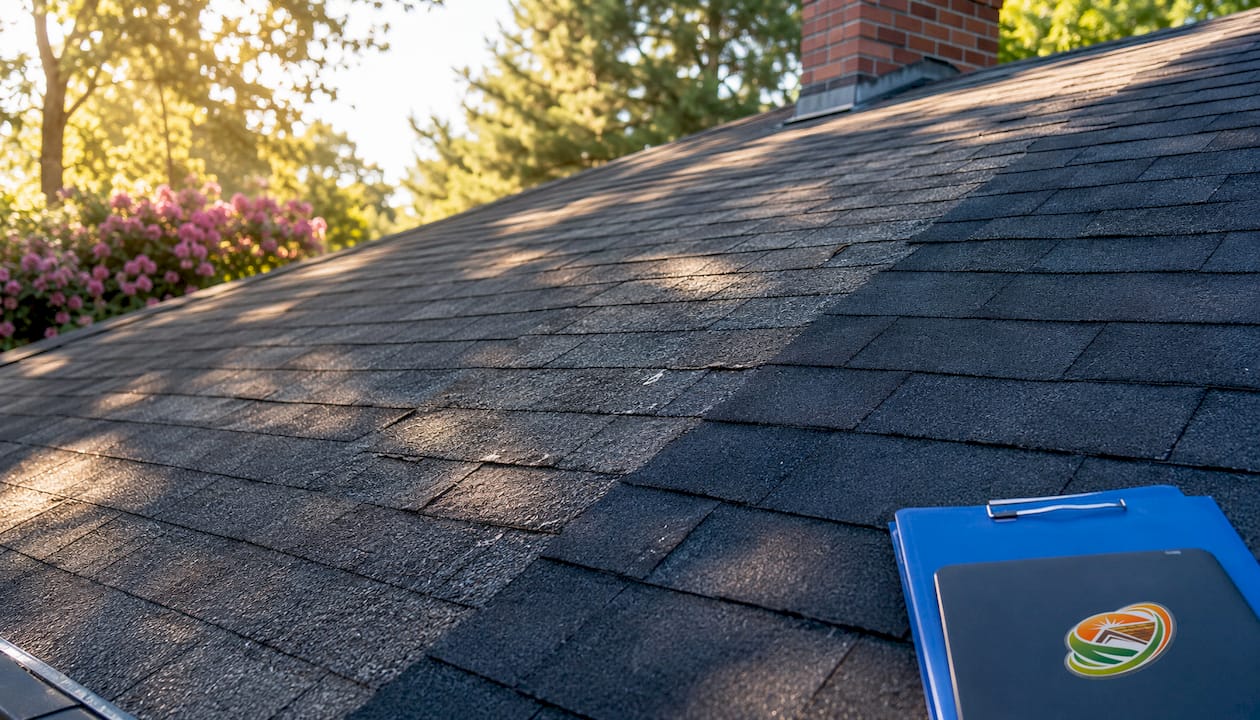
Uniform lightening across your roof is normal aging. Patchy, rapid, or uneven fading is a different story and deserves a closer look.
Watch for these warning signs that go beyond cosmetic fading:
- Granules in gutters: Sand-like buildup in your gutters is one of the first signs your shingles are losing their protective layer
- Curling or cupping edges: Shingles that lift or curl at the corners are drying out and losing structural integrity
- Brittleness and cracking: Asphalt that has lost its oils becomes rigid and cracks under thermal stress
- Bald spots: Patches of exposed asphalt mean the granules are gone and UV protection is compromised
Fading accompanied by minimal granule loss is cosmetic. When you see granule loss and brittleness together, the shingles are not just fading. They are failing, and that requires professional assessment.
One more thing to know: dark streaking is not fading at all. Black or gray streaks are almost always algae growth (Gloeocapsa magma), a biological issue that cleaning can address. Rapid or uneven fading within the first 5 years may indicate a manufacturing defect eligible for a warranty claim. Document it with dated photos and contact your manufacturer. A professional roof inspection typically costs $125–$350 and can confirm whether you are dealing with normal aging or early failure.
Prevention strategies that actually slow fading
The most cost-effective shingle color fading solutions are the ones you apply before the damage sets in. These steps protect your granules and keep your roof looking cleaner, longer.
- Soft wash cleaning: Use a 50/50 mix of laundry-strength bleach and water to remove algae and moss. Never use a pressure washer on asphalt shingles. High pressure strips granules, shortens roof life, and voids most warranties
- Install zinc or copper strips: Metal strips near the roof ridge release ions during rain that inhibit algae and moss growth, preventing the biological staining that mimics fading
- Trim overhanging branches: Branches hold moisture against shingles and drop debris that traps water, accelerating organic growth
- Clean gutters twice a year: Clogged gutters cause water to back up under the drip edge, rotting fascia and loosening granules
- Choose premium shingles when replacing: UV-stable inorganic pigments like iron oxides and chromium oxides resist breakdown far longer than budget alternatives
Pro Tip: If you live in a humid climate or near the coast, algae staining is often mistaken for fading. Cleaning alone can restore much of your roof's color without any rejuvenation treatment needed. Treating mildew and staining on adjacent surfaces, like pool screens, follows the same logic. A mildew stain removal guide for homeowners covers the same soft-wash principles that apply to roof care.
Treatment options for faded shingles, including roof rejuvenation
When prevention was not enough, you have a few practical paths to restore shingle color and extend roof life.
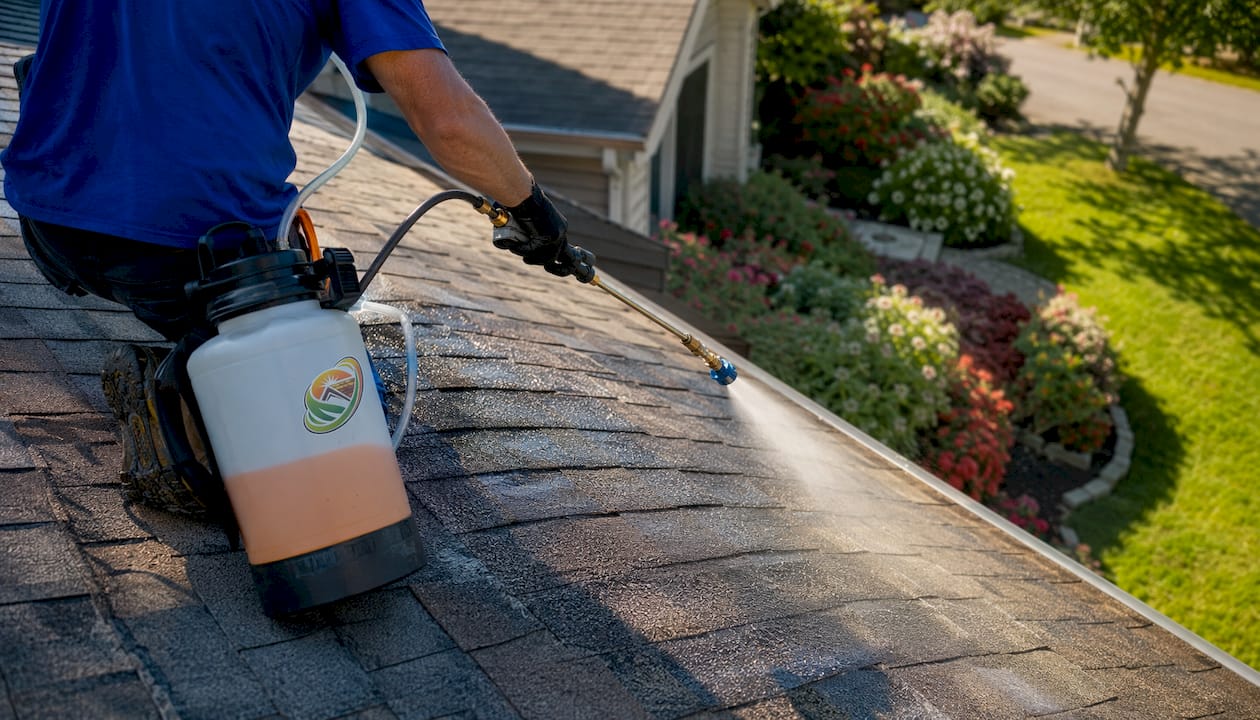
Soft wash cleaning is the first step for most roofs. If algae or staining is the primary cause of your roof's dull appearance, professional cleaning can deliver a major visual improvement without any rejuvenation product at all.
Roof rejuvenation goes deeper. Products like Fresh Roof Green Soy Technology use plant-based oils to replenish the asphalt volatiles that UV exposure and heat have cooked out of your shingles. The result is restored flexibility and a modestly richer tone, often described as a "just got wet" appearance. It is not painting. It does not replace missing granules. But it does slow the drying and cracking cycle that leads to premature failure.
Rejuvenation cannot restore missing granules or erase years of uneven fading. Expect a healthier appearance rather than a perfect, uniform color after treatment.
Set realistic expectations. The modest darkening effect softens over time as the roof continues to weather. If you want a noticeably different color or a "refinished" surface, you are looking at coating or resurfacing, not rejuvenation. If you want it to look genuinely new, replacement is the only option that resets granules, texture, and uniformity.
When replacement is the right call
Rejuvenation and cleaning can extend a qualifying roof's life, but some roofs are past that point. Replacement becomes necessary when:
- Granule loss is widespread, leaving bare asphalt exposed to direct UV
- Shingles are curling, cracking, or missing entirely
- You have active leaks or water stains inside your home
- Fading occurred significantly within the first 5 years, suggesting a manufacturing defect
- A professional inspection confirms the roof has reached the end of its useful life
Replacement resets everything: granules, texture, and color uniformity. It is also the most expensive option, often running $15,000–$30,000 for a full residential roof. That is exactly why a professional assessment before you commit matters. Many roofs that look like they need replacement actually qualify for preservation treatment instead.
Step-by-step: how a professional roof treatment works
Understanding the process helps you know what to expect and ask the right questions before hiring anyone.
- Inspection first. A certified applicator walks the roof to assess shingle condition, granule coverage, and the extent of any staining or fading. This step determines whether the roof qualifies for rejuvenation or needs replacement.
- Soft wash cleaning. The roof is treated with a low-pressure cleaning solution to remove algae, moss, and surface debris. Cleaning must happen before any rejuvenation product is applied. Skipping this step can seal staining under the treatment.
- Application of rejuvenation product. Fresh Roof Green Soy Technology is applied in controlled, even passes using soft wash equipment. Even coverage is critical. Uneven application shows through as patchy darkening.
- Dwell time. The product penetrates the asphalt binder over a set period, replenishing oils at the molecular level and restoring flexibility.
- Post-treatment inspection. The applicator confirms coverage and documents the condition with photos. Expect some biological staining to continue weathering off over the following 30–90 days.
- Homeowner walkthrough. A reputable applicator explains what you will see in the days and weeks after treatment, including the temporary darkening and how it softens over time.
Cost estimates for different treatment options
Budgeting for roof shingle color maintenance starts with knowing what each option actually costs.
| Treatment option | Typical cost range | Best for |
|---|---|---|
| Professional soft wash cleaning | — | Algae and moss staining |
| Roof rejuvenation treatment | $500–$1,500 | Dried-out, fading shingles that still have structural life |
| Professional inspection | $125–$350 | Confirming condition before any treatment |
| Coating or resurfacing | $1,500 | Homeowners wanting a more dramatic color change |
| Full roof replacement | $15,000–$30,000 | Roofs with widespread structural failure |
Rejuvenation consistently delivers the best return when the roof qualifies. Spending $500–$1,500 to extend a roof's life by years is a fraction of what replacement costs. The key is getting an honest assessment first.
Maintenance tips after treatment to keep color longer
Treatment is not a one-and-done fix. What you do after determines how long the results last.
- Schedule annual visual inspections. Walk the perimeter and check gutters for granule buildup each spring and fall
- Keep gutters clear. Water backup loosens granules and undoes the benefits of any rejuvenation treatment
- Reapply soft wash cleaning every 2–3 years to prevent algae and moss from re-establishing
- Trim branches that hang over the roof to reduce moisture retention and debris accumulation
- Take dated reference photos from the same angle each year so you can track changes accurately over time
- Avoid walking on the roof unnecessarily. Foot traffic loosens granules and can crack brittle shingles
The goal after treatment is to protect what you just invested in. A little consistent attention goes a long way.
Professional vs. DIY treatment: which is right for you?
DIY roof care has real limits. Here is an honest comparison.
DIY works well for:
- Annual gutter cleaning
- Trimming nearby branches
- Applying a bleach-water solution to small algae patches with a garden hose
DIY carries real risk for:
- Pressure washing (strips granules, voids warranties)
- Applying rejuvenation products without proper equipment (uneven coverage shows through)
- Walking the roof without training (safety risk and granule damage)
- Diagnosing fading versus failure without experience
Professional applicators bring calibrated soft wash equipment, even application technique, and the ability to assess shingle condition before treatment. A certified authorized applicator using Fresh Roof Green Soy Technology also backs the work with a 6-year transferable warranty, something no DIY kit can offer. For anything beyond basic cleaning, professional treatment protects both your roof and your investment.
Shingleroofrenewal: roof preservation before you need a roofer
If your roof is showing signs of fading, drying, or early wear, Shingleroofrenewal is the call to make before you call a roofer.
Shingleroofrenewal serves Broward and Palm Beach County homeowners as a certified authorized applicator of Fresh Roof Green Soy Technology. This plant-based treatment penetrates shingles at the molecular level, restoring flexibility, locking in granules, and extending roof life by 10–15 years for qualifying roofs. The result is a healthier, more uniform appearance and a roof that is no longer drying out from the inside.
Most homeowners spend $15,000–$30,000 on a replacement they did not need yet. Shingleroofrenewal's preservation approach can save you up to 80% of that cost, backed by a 6-year transferable warranty. The process is simple: inspection, assessment, and an honest recommendation. If your roof does not qualify, we will tell you that too.
Schedule your free roof inspection today and find out if your roof can be saved.
Key takeaways
Shingle fading is manageable when caught early: prevention, professional cleaning, and rejuvenation with Fresh Roof Green Soy Technology can extend roof life and restore appearance without the cost of replacement.
| Point | Details |
|---|---|
| Fading is usually cosmetic | Uniform lightening is normal aging; granule loss, curling, and cracking signal actual failure. |
| Inspection guides every decision | A professional inspection costs $125–$350 and confirms whether treatment or replacement is needed. |
| Rejuvenation restores flexibility, not factory color | Plant-based oils replenish asphalt volatiles; expect modest darkening, not a full color makeover. |
| Prevention is the lowest-cost solution | Soft washing, copper or zinc strips, and gutter cleaning slow fading before it becomes a problem. |
| Shingleroofrenewal offers certified preservation | As a certified Fresh Roof applicator in South Florida, Shingleroofrenewal backs treatment with a 6-year transferable warranty. |