
TL;DR:
- Roof renewal is a cost-effective way to extend shingle lifespan and avoid full replacement.
- The three-step process includes cleaning, rejuvenation treatment, and protective coating.
- Proactive renewal before storm season offers better protection and significant savings.
Most South Florida homeowners assume that once their shingles start aging, the only path forward is a full roof replacement. That assumption costs thousands of dollars and weeks of disruption every year. The truth is, your roof may have years of good life left in it. A professional three-step renewal process can restore shingle flexibility, defend against hurricanes and UV damage, and extend your roof's lifespan significantly. This guide breaks down each phase of that process so you can make a confident, informed decision before the next storm season arrives.
Table of Contents
- Why shingle roof renewal is the smarter choice in South Florida
- Step 1: Deep cleaning and surface preparation
- Step 2: Application of advanced rejuvenator treatment
- Step 3: Final seal and coating for enhanced protection
- The truth South Florida homeowners miss about roof renewal
- Get a professional shingle roof renewal and save thousands
- Frequently asked questions
Key Takeaways
| Point | Details |
|---|---|
| Extend roof life | A three-step renewal process adds years to an aging shingle roof without full replacement. |
| Boost storm readiness | Renewed shingles resist severe South Florida weather better than untreated roofs. |
| Save money | Roof renewal typically costs far less than a complete replacement for similar benefits. |
| Quick, eco-friendly upgrade | Most renewals are finished in a day with less waste and neighborhood disruption. |
Why shingle roof renewal is the smarter choice in South Florida
Full roof replacement is expensive, disruptive, and often unnecessary. In South Florida, where intense sun, hurricane-force winds, and heavy rainfall push roofs hard year-round, staying proactive about maintenance is not optional. It is essential. But proactive does not have to mean costly.
Replacement costs can run $15,000 to $30,000 or more depending on your home's size. A professional renewal, by contrast, addresses the core problem, which is shingle brittleness and loss of protective oils, at a fraction of that price. As shingle roof renewal experts consistently show, renewal adds service life and is far more cost-effective than tearing everything off and starting over.
There is also a widespread myth that renewal is just a cosmetic fix. That is simply not true. When done with certified technology like Fresh Roof's GreenSoy Technology, the treatment works at the molecular level to restore flexibility inside the shingle itself. The result is a roof that handles wind uplift and thermal stress far better than a brittle, untreated one.
Here are the key benefits South Florida homeowners gain from renewal over replacement:
- Save money: Renewal costs a fraction of replacement while delivering real structural benefits
- Extend roof lifespan: Professional treatments can add 10 to 15 years of service life
- Less disruption: No tear-off, no debris, no weeks of construction noise
- Eco-friendly: Keeping your existing roof out of the landfill reduces waste significantly
- Better storm readiness: Restored shingle flexibility reduces cracking and wind-driven granule loss
Pro Tip: Schedule your renewal before June, when South Florida's peak hurricane season begins. Restored shingles are far more resistant to wind damage than brittle, oil-depleted ones. Waiting until after a storm is always more expensive.
"A timely roof renewal is one of the smartest investments a South Florida homeowner can make. You protect your home, extend your roof's useful life, and spend a fraction of what replacement would cost." — Shingle Roof Renewal
If you are weighing your options, explore the reasons to restore roof rather than replace. The case is compelling.
Step 1: Deep cleaning and surface preparation
Understanding the value of renewal, here's how the process begins.
The first step sounds straightforward, but it is the one most homeowners underestimate. Before any restorative product can work, the roof surface must be thoroughly cleaned. In South Florida's humid climate, shingles accumulate algae, mold, moss, and surface grime faster than almost anywhere else in the country.
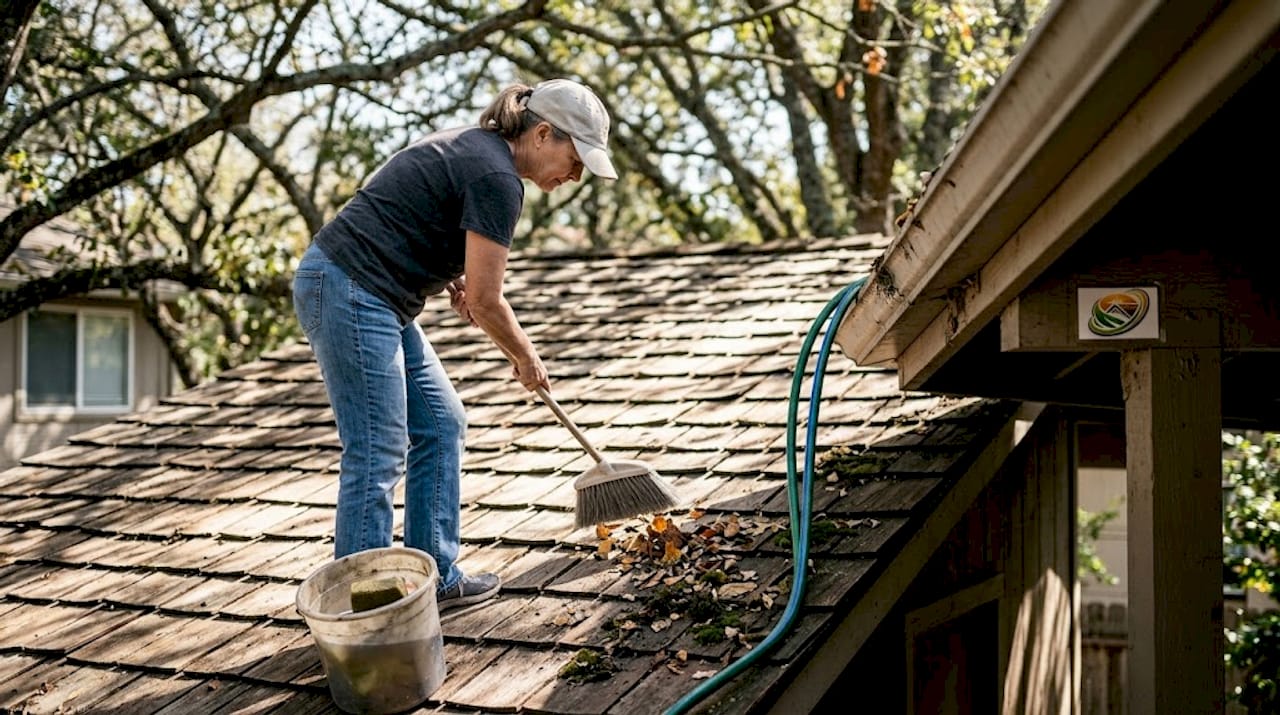
Proper cleaning removes the dirt, moss, and aging oils that undermine shingle performance. If you skip this step or rush through it, the rejuvenator and sealant applied later simply cannot bond and penetrate properly. The whole restoration becomes less effective.
Here is the typical sequence of a professional cleaning session:
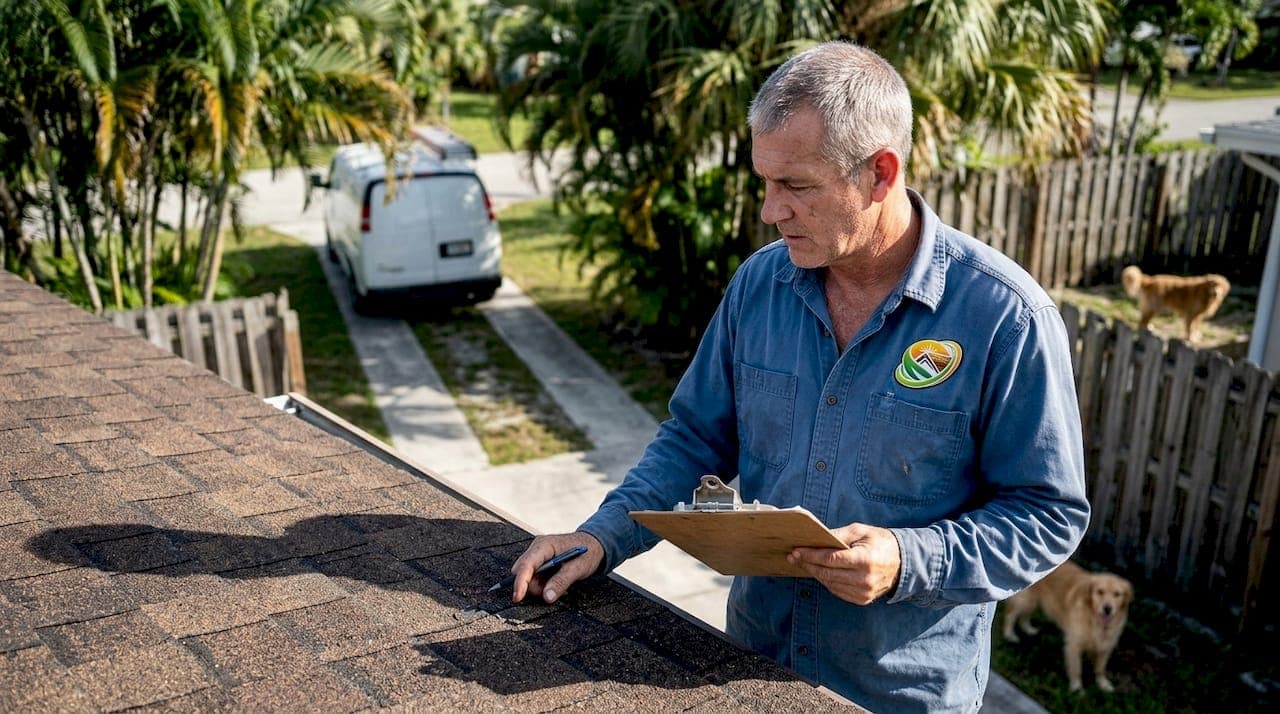
- Initial inspection: The crew assesses the roof for visible damage, missing shingles, and areas of concern before any cleaning begins
- Soft wash or low-pressure rinse: A controlled wash removes loose debris, algae blooms, and surface contamination without blasting granules off the shingles
- Targeted treatment for biological growth: Any mold, moss, or lichen spots receive a specific treatment solution to kill growth at the root
- Minor repairs: Loose flashing, cracked caulking, or isolated shingle damage gets addressed at this stage before products are applied
- Dry time confirmation: The crew confirms the surface is ready before moving to the next phase, which is critical in humid South Florida air
This first step protects the integrity of everything that follows. Cutting corners here means the rejuvenator and coating will not perform as intended. That is why working with certified roof renewal services matters. They follow a strict preparation protocol designed specifically for the heat, moisture, and storm exposure common across Palm Beach and Broward counties.
"In a climate like South Florida's, a clean and prepped surface is not a luxury. It is the foundation of every effective roof restoration. Without it, even the best products underperform."
A well-prepared roof is the difference between a restoration that lasts a decade and one that fades within a few years.
Step 2: Application of advanced rejuvenator treatment
Once the roof is clean and ready, the core of the renewal process begins.
A rejuvenator is a treatment that replenishes the natural oils asphalt shingles lose over time due to heat, UV exposure, and weathering. Think of shingles like leather. When they dry out, they crack and break. When you condition them, they stay flexible and durable. A rejuvenator does exactly that for your shingles.
The best-in-class products, like Fresh Roof's GreenSoy Technology, are plant-based and penetrate deeply into the shingle's structure rather than just coating the surface. Rejuvenator treatments restore lost shingle oils and significantly improve weather resistance.
Here is a side-by-side look at what rejuvenation does compared to leaving shingles untreated:
| Performance factor | Untreated aging shingles | After rejuvenator treatment |
|---|---|---|
| Flexibility | Low, prone to cracking | Restored to near-original range |
| Granule retention | High loss rate | Significantly reduced loss |
| UV resistance | Weakened and fading | Strengthened and stabilized |
| Wind uplift resistance | Reduced due to brittleness | Improved through restored flexibility |
| Expected remaining life | 2 to 5 years | Up to 10 to 15 additional years |
Not sure if your shingles need treatment? Watch for these visible warning signs:
- Granules collecting in gutters after light rain
- Shingles curling or cupping at the edges
- Visible fading or color loss across large sections
- Surface cracking or small splits in the shingle face
- Brittleness when inspected up close during an inspection
Pro Tip: When evaluating a rejuvenator provider, ask specifically whether their product penetrates the shingle or only coats the surface. Surface-only treatments wear off faster, especially in South Florida's intense sun. Also ask about drying time. Quality applications typically need 24 to 48 hours to fully set. Review the difference between options by visiting fresh roof vs rejuvenation before making any decisions.
Beyond durability, rejuvenator treatments with GreenSoy Technology also offer fire-resistance benefits, which is an often-overlooked advantage for homeowners in densely built neighborhoods.
Step 3: Final seal and coating for enhanced protection
After rejuvenation, it's vital to lock in the gains with the last layer of protection.
The final step is the protective coating or sealant applied over the treated shingles. This layer acts as a shield. It guards against water infiltration, UV radiation, and wind-driven rain, all of which are constant threats in South Florida. Without it, the restored shingles remain vulnerable to re-oxidation and weathering.
Here is how coated and uncoated shingles compare over time:
| Metric | Uncoated shingles | Coated shingles |
|---|---|---|
| UV resistance | Degrades quickly | Maintained for years |
| Water shedding | Weakens with age | Consistently effective |
| Algae and mold resistance | Low without treatment | High with protective coating |
| Energy efficiency | Standard heat absorption | Improved with reflective coating |
| Estimated lifespan gain | None additional | 5 to 10+ years beyond baseline |
The roof coating options available today go well beyond basic waterproofing. Protective roof coatings extend service life while boosting resistance to both UV damage and moisture infiltration. That matters enormously in a region where afternoon thunderstorms and blistering heat are daily realities for much of the year.
Immediate benefits homeowners notice after the final coating:
- Cleaner, brighter appearance that can improve curb appeal noticeably
- Algae and moss resistance lasting several years before reapplication is needed
- Reduced attic heat buildup due to better UV reflectance
- Lower energy bills during cooling-heavy summer months
- Peace of mind heading into storm season with a protected, sealed roof above you
The warranty matters too. When you complete all three steps with a certified applicator, you receive a multi-year transferable warranty. That warranty adds value to your home and protects your investment even if you decide to sell.
The truth South Florida homeowners miss about roof renewal
With the process explained, let's look at important lessons local homeowners often overlook.
We see the same scenario regularly. A homeowner waits until they spot a stain on the ceiling or find granules piling up in the downspout before calling us. By then, the window for a simple renewal may have already closed, and they are facing more extensive repairs or, worse, a full replacement.
The uncomfortable reality is this: waiting for obvious damage in Florida's climate is a losing strategy. The sun and humidity do not give shingles recovery time. They just keep degrading, month after month. A homeowner in Boca Raton, for example, might look at a perfectly normal-looking roof and assume it is fine. But once shingles become too brittle, no treatment can fully restore them. The Boca Raton renewal case study we have seen firsthand shows what proactive action looks like versus reactive scrambling.
Conventional wisdom says, "Wait until there is a real problem." In Florida, that advice is expensive. The hidden cost of neglect compounds every storm season. One bad hurricane can turn a roof that needed a $2,000 renewal into a $25,000 replacement.
Our advice is simple. Renew early. Renew before the storms come. Give your roof its best chance.
Get a professional shingle roof renewal and save thousands
Your roof does not have to fail before you take action. A professional renewal by a certified applicator tailored for South Florida's unique climate conditions is the smarter path forward.
Shingle Roof Renewal specializes in residential roof restoration across Palm Beach and Broward counties. We use Fresh Roof's certified GreenSoy Technology backed by a 6-year transferable warranty. Our roof renewal services are designed to give your aging shingles real, lasting protection, not a temporary patch. Whether you are in Delray Beach or anywhere across South Florida, we offer free assessments to help you understand your roof's condition before storm season arrives. Contact us today and protect your home.
Frequently asked questions
How long does the three-step roof renewal process take?
Most renewals complete in under a day, though larger homes or weather delays may add a few hours. You can typically have a fully restored roof without the disruption of a multi-day project.
Is roof renewal safe for older, brittle shingles?
Yes. When performed by a certified applicator, rejuvenators improve flexibility in aging shingles safely and without causing further damage. The key is acting before shingles pass the point of no return.
What are the signs my roof needs renewal versus replacement?
Loss of granules and minor surface cracks typically indicate renewal is still a viable option. Structural sagging, widespread leaking, or decking damage are signs that replacement may be necessary.
How much money can I save by renewing instead of replacing my roof?
Renewal costs a fraction of full replacement, typically 20 to 30 percent of replacement cost, which translates to thousands of dollars saved for most South Florida homeowners.
Does a roof renewal process come with a warranty?
Yes. Renewal warranties protect your investment with a multi-year, transferable coverage plan. This means the warranty can transfer to the new owner if you sell your home, adding real value to the property.