
TL;DR:
- Green roofs can significantly lower surface temperatures and extend shingle lifespan in South Florida's intense sun. They reduce stormwater runoff, support local ecosystems, and provide substantial energy savings despite higher upfront costs. Proper engineering and maintenance are essential for green roofs to protect roofs effectively and deliver long-term environmental and financial benefits.
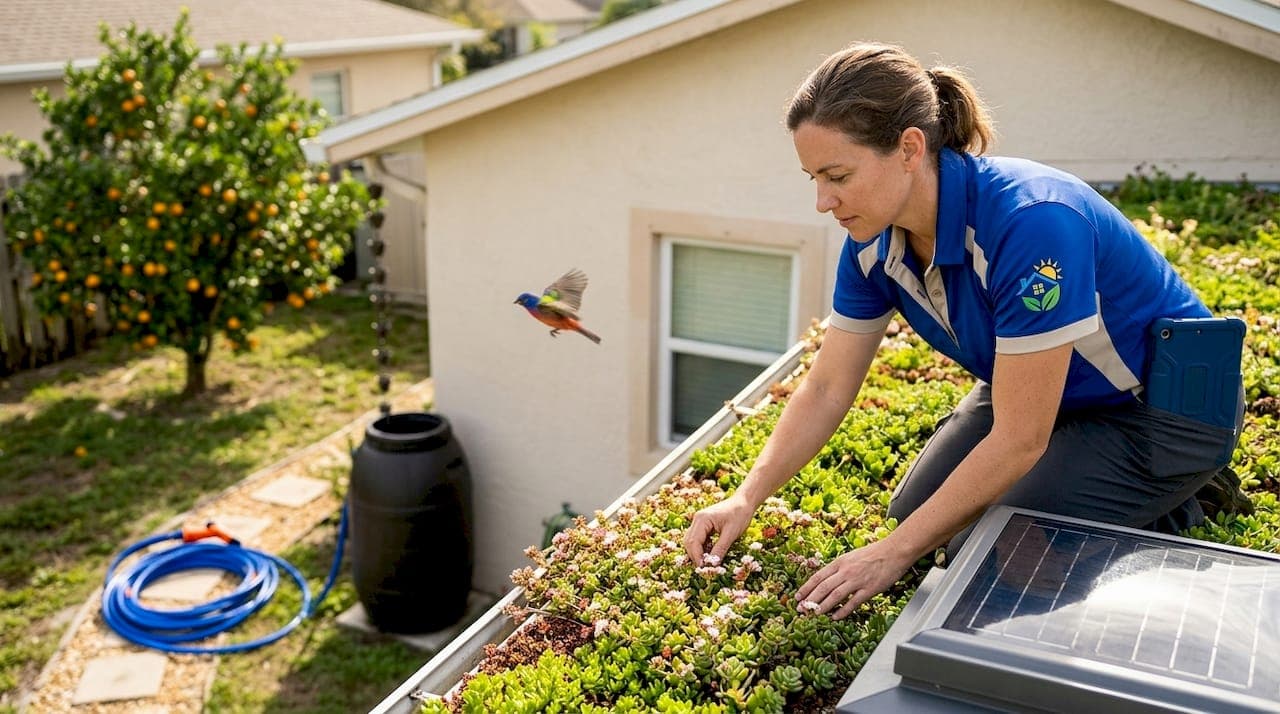
If your asphalt shingle roof in Broward or Palm Beach County is absorbing full Florida sun right now, the surface temperature could be approaching 160°F on a summer afternoon. Green roofing technology benefits homeowners precisely at that point. A properly installed living roof system can cool surface temperatures by about 56°F, slashing your AC load and shielding your shingles from the UV punishment that causes curling, granule loss, and premature replacement. This article breaks down what green roofs actually do for South Florida homes, what they cost in real terms, and what you need to know before making any decisions.
Table of Contents
- Key Takeaways
- Green roofing technology benefits for tropical energy efficiency
- How a green roof protects and extends your shingle roof
- Stormwater and environmental benefits in South Florida
- Costs, maintenance, and what South Florida homeowners need to know
- My honest take on green roofs for South Florida homes
- How Shingleroofrenewal can help protect your South Florida roof
- FAQ
Key Takeaways
| Point | Details |
|---|---|
| Dramatic cooling effect | Green roofs can drop roof surface temps by 56°F, reducing indoor cooling load by up to 70%. |
| Extended shingle lifespan | A vegetated roof layer shields shingles from UV and storm damage, potentially adding 10 to 15 years of life. |
| Significant stormwater control | Green roofs reduce runoff by 60% to 100%, a major benefit during South Florida's intense rain seasons. |
| High upfront cost, strong lifecycle value | Green roofs cost 3 to 6 times more than conventional roofs but pay back through energy and maintenance savings. |
| Engineering matters more than plants | Proper waterproofing and root barriers, not plant selection, determine whether a green roof protects or damages your shingles. |
Green roofing technology benefits for tropical energy efficiency
Let's start by defining green roof technologies clearly, because the industry uses the term in two distinct ways. In the standard sense, a "green roof" (also called a vegetated roof or living roof system) refers to a multi-layer engineered system placed over your existing roof membrane. It includes a waterproof barrier, a root protection layer, a drainage layer, a growing medium, and plants. This is different from cool roofs or reflective coatings, which are also sometimes called "green" but work through an entirely different mechanism.
In hot, humid climates like South Florida, the primary driver of energy savings is evapotranspiration. Plants and soil release moisture into the air as they warm up. That process pulls heat away from the roof surface the same way sweating cools your skin. According to the EPA's heat island research, this cooling mechanism is what drives the 70% reduction in cooling load that well-maintained green roofs can achieve in warm climates.
Here is how those energy numbers break down in practical terms for a South Florida homeowner:
- Roof surface temperature: Standard dark asphalt shingles in Florida sun can hit 150°F to 160°F. A green roof keeps that surface at 90°F to 100°F.
- Indoor temperature impact: Studies show indoor temps drop up to 27°F in buildings with green roofs compared to conventional roofing.
- AC runtime: Less heat penetrating your ceiling means your air conditioner runs shorter cycles, cutting electricity bills during the months when South Florida power bills are highest.
- Neighborhood effect: Green roofs on multiple homes in a neighborhood reduce the urban heat island effect, making the surrounding air cooler for everyone.
| Roof Type | Surface Temp (Peak Summer) | Cooling Load Reduction |
|---|---|---|
| Standard dark shingles | 150°F to 160°F | Baseline |
| Cool roof (reflective coating) | 120°F to 130°F | 15% to 25% |
| Green roof (vegetated system) | 90°F to 105°F | Up to 70% |
Pro Tip: If you want to maximize the cooling benefit in South Florida's dry season, choose a green roof system with built-in irrigation or a deeper substrate layer. Substrate moisture is critical for maintaining evapotranspiration during dry spells, and without it, a green roof can lose most of its cooling advantage.
How a green roof protects and extends your shingle roof
This is where the advantages of green roofs get especially relevant for homeowners in Broward and Palm Beach County. Your asphalt shingles have one primary enemy: heat-driven oxidation. When shingles bake under relentless UV exposure, the oils that keep them flexible evaporate. That is what causes curling, cracking, and granule loss. A green roof places a physical barrier between your shingles and that punishment.
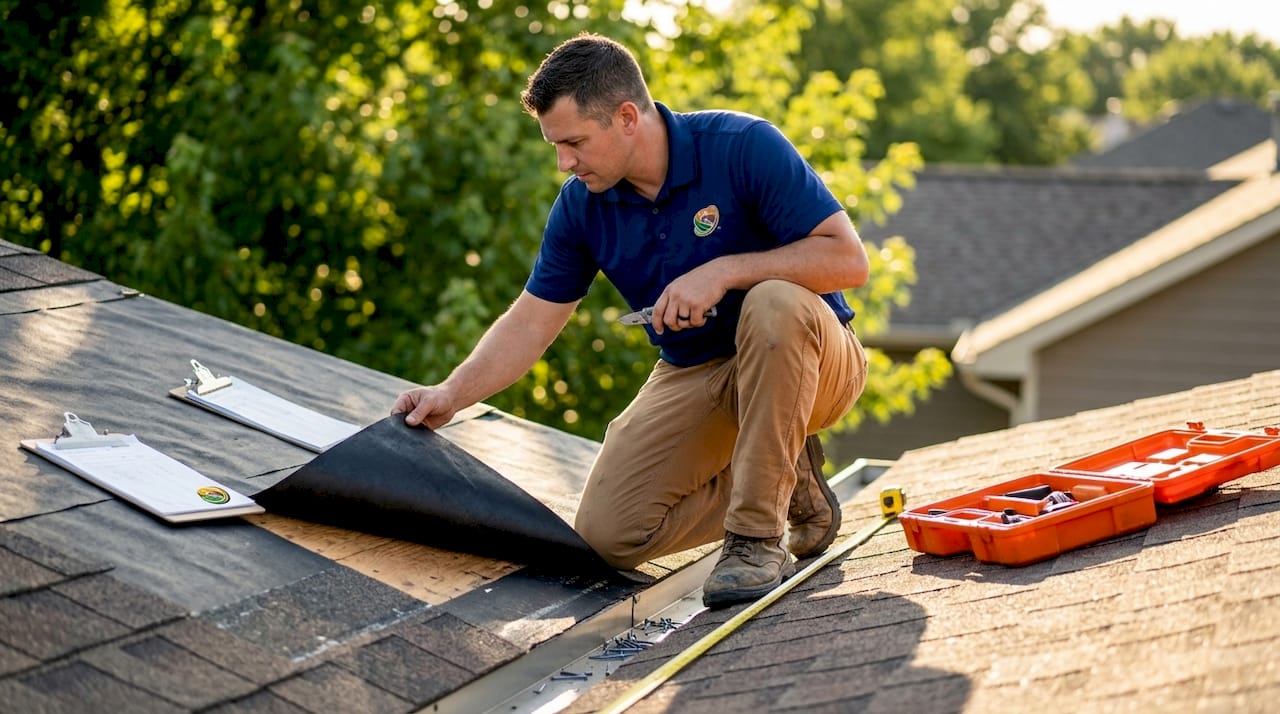
Consider what your shingles face on a typical South Florida summer day. Eight to ten hours of direct sun. Peak UV index readings that rival equatorial zones. Then a violent afternoon thunderstorm with hail potential. A vegetated layer absorbs the UV, cushions the impact of rain and hail, and dramatically reduces the thermal cycling (rapid heating and cooling) that fatigues shingle adhesive over time.
The protection benefits include:
- UV shielding: The growing medium and plant canopy block direct solar radiation from reaching the membrane beneath.
- Storm impact absorption: The soil and vegetation layer cushions hail and wind-driven rain, reducing physical damage to shingles.
- Thermal stability: Instead of expanding and contracting 40°F to 60°F every day, shingles under a green roof experience far smaller temperature swings, reducing material fatigue.
- Reduced insurance pressure: Fewer weather-related damage claims can help homeowners maintain favorable insurance relationships, which is a real concern in Florida's current market.
The tradeoff is that green roofs must be engineered with proper waterproof barriers, root protection layers, and drainage systems. Treating a living roof as just landscaping placed on top of shingles causes water infiltration and root damage within a few years. Done correctly, however, the same engineering principles that protect shingles on a green roof can extend roof life by 10 to 15 years.
Pro Tip: Before any green roof installation on a shingle home, get a structural load assessment. Living roof systems add 10 to 150 pounds per square foot depending on depth. Your roof deck and framing need to support that weight without compromise. Check our roof longevity checklist before moving forward.
Stormwater and environmental benefits in South Florida
South Florida's rain patterns are extreme by any measure. During hurricane season, Broward and Palm Beach counties can receive several inches of rain in a single storm. Standard asphalt shingle roofs shed that water immediately, dumping it into storm drains that overflow and flood streets. Green roofs change that equation.
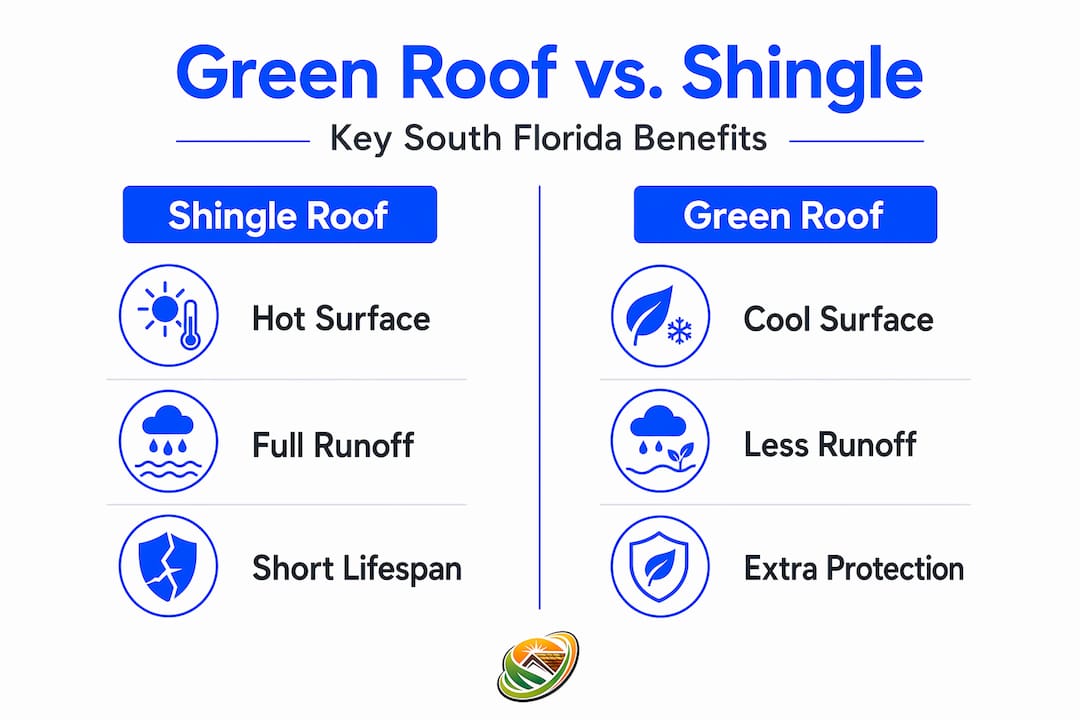
Extensive and intensive green roofs reduce stormwater runoff by 60% to 100% depending on substrate depth and plant coverage. The soil absorbs the initial surge, holds it, and releases it slowly over hours. That slows peak flow into municipal systems, reducing flood risk for your neighborhood and your property.
The environmental advantages extend beyond water volume:
- Natural filtration: As rainwater passes through the growing medium, soil and plant roots filter out pollutants before the water reaches the drainage system. This improves local water quality in canals and waterways that South Florida residents depend on.
- Pollinator support: Native Florida plants used on green roofs provide habitat and food for bees, butterflies, and other pollinators that are losing ground to development across Broward and Palm Beach counties.
- Urban heat island reduction: Each green roof in a dense neighborhood lowers ambient air temperature slightly. Across many homes, this creates a measurable cooling effect that benefits the whole community.
- Carbon capture: Plants absorb CO2 as they grow. While a residential green roof will not offset large emissions, the contribution adds up across neighborhoods and aligns with South Florida's broader climate resilience goals.
| Environmental Benefit | Conventional Shingle Roof | Green Roof System |
|---|---|---|
| Stormwater runoff | 100% shed immediately | 60% to 100% retained or slowed |
| Urban heat contribution | High (dark surface absorbs heat) | Low to none |
| Local biodiversity | None | Supports pollinators and birds |
| Pollutant filtering | None | Natural filtration through substrate |
The EU's green infrastructure research confirms that intensive green roofs, with deeper soil and more diverse plant life, deliver stronger biodiversity outcomes. For South Florida homeowners interested in ecological improvements, that distinction matters when choosing which system to install.
Costs, maintenance, and what South Florida homeowners need to know
Here is where realistic expectations matter most. Green roofs are one of the most effective eco-friendly roofing solutions available, but they are not cheap upfront. Green roofs cost 3 to 6 times more than a conventional shingle installation. For a South Florida home, that typically means $20 to $40 per square foot installed, compared to $4 to $8 per square foot for a standard shingle re-roof.
The lifecycle picture is more favorable. City-wide green roof adoption studies show payback periods of roughly 6 to 7 years when energy savings, stormwater management, and extended roof life are factored together. For a homeowner, that means thinking in decades, not months.
Practical considerations before you commit:
- Structural assessment first: Get an engineer to confirm your home's framing can handle the added weight of a green roof system before any other step.
- Choose the right system type: Extensive green roofs (thin substrate, drought-tolerant plants like sedums) are lighter and lower-maintenance. Intensive systems (deeper substrate, more plant variety) weigh more but deliver stronger benefits. For most South Florida homes, extensive systems are the realistic starting point.
- Irrigation planning: During South Florida's dry season (November through April), natural rainfall will not sustain a green roof without supplemental irrigation. Maintaining substrate moisture is not optional if you want the cooling and lifespan benefits to persist year-round.
- Plant selection matters: Native or climate-adapted plants perform far better than species imported from temperate zones. Work with a contractor who understands South Florida's climate specifically.
- Seasonal upkeep: Plan for twice-yearly maintenance visits to remove invasive plants, check drainage, and inspect the waterproof membrane. This is a living system, not a set-and-forget installation.
For homeowners exploring affordable steps toward roofing sustainability, it helps to understand that green roofs represent one end of the spectrum. There are also intermediate steps that deliver real energy and lifespan benefits without the full cost and complexity of a living roof system.
My honest take on green roofs for South Florida homes
I have reviewed and discussed a lot of roofing projects across South Florida, and the honest truth about green roofs is this: most homeowners who ask about them are drawn in by the Instagram-worthy images of lush rooftop gardens. That's not what makes a green roof worth the investment. What makes it worth it is the engineering underneath.
I've seen green roof installations fail within three years because a contractor treated the waterproofing as an afterthought. The plants looked beautiful right up until water started coming through the ceiling. The waterproof barrier and root protection layers are what you're actually paying for. The plants are almost secondary.
My honest view: for South Florida homeowners with structurally sound homes and a 10-plus-year planning horizon, a well-engineered green roof is one of the smartest long-term investments you can make. The energy savings are real. The shingle protection is real. The stormwater benefits are real. But go in with clear eyes about upfront cost and maintenance commitment. And if your shingles are already aging, curling, or losing granules, address that problem first before layering anything on top. You cannot build long-term value on a failing foundation.
— Daniellison
How Shingleroofrenewal can help protect your South Florida roof
If you're not ready for a full green roof installation but your shingles are showing signs of heat damage, granule loss, or curling from South Florida's relentless sun, there is a smarter middle step.
Shingleroofrenewal is a certified applicator of Fresh Roof's GreenSoy Technology, a process that restores aging asphalt shingles at the molecular level. It brings back flexibility, stops further deterioration, and extends your roof's life by 10 to 15 years, all at a fraction of the cost of replacement. Homeowners in Broward and Palm Beach County can save up to 80% compared to a full re-roof, backed by a 6-year transferable warranty. Whether you're in Boca Raton, Plantation, or anywhere in between, find out if your roof qualifies before a small problem turns into a $20,000 replacement. Schedule your free roof inspection today.
FAQ
What are the main green roofing technology benefits for homeowners?
Green roofing technology benefits include lower cooling costs, extended roof lifespan, and reduced stormwater runoff. In tropical climates like South Florida, cooling load reductions of up to 70% are possible with a properly maintained system.
How much does a green roof cost compared to a regular shingle roof?
Green roofs typically cost 3 to 6 times more than conventional shingle roofs upfront. However, lifecycle savings from energy efficiency and extended roof life can bring payback within 6 to 7 years.
Can a green roof be installed on a standard South Florida home?
Yes, but a structural engineer must first confirm the home's framing can handle the added weight. Extensive green roof systems, which are lighter and use drought-tolerant plants, are generally the most practical option for residential shingle homes.
How do green roofs hold up during Florida's hurricane season?
The vegetated layer absorbs rain impact and reduces runoff by 60% to 100%, but the system must be engineered with proper drainage and root barriers. Plants and growing medium need to be secured against high winds to avoid damage during major storms.
What is the difference between a green roof and a cool roof?
A cool roof uses reflective coatings to bounce solar radiation away, reducing surface temperatures by 20°F to 30°F. A green roof uses evapotranspiration through living plants to achieve greater cooling effects and adds stormwater management and biodiversity benefits that cool roofs do not provide.