
TL;DR:
- Class A fire-resistant roofs reduce ignition risk and can qualify for insurance discounts.
- Metal roofing offers top-tier fire resistance and long lifespan with minimal weight and maintenance.
- For affordability and quick installation, fiberglass asphalt shingles are an effective Class A upgrade.
Replacing an aging shingle roof in South Florida is not a simple weekend decision. You are weighing storm season damage, rising insurance premiums, local building codes, and the very real risk of ember ignition from nearby brush or structure fires. The good news is that several proven, Class A fire-resistant roofing materials work beautifully in our climate, and they come at a wide range of price points. This guide walks you through every major option, gives you a real comparison, and helps you pick the right upgrade for your home, your budget, and your peace of mind.
Table of Contents
- How to evaluate fire-resistant roofing for South Florida homes
- Fiberglass asphalt shingles: The cost-effective Class A upgrade
- Metal roofing: Durable, non-combustible, hurricane-ready
- Premium fire-resistant options: Concrete, clay tile, and synthetic slate/shake
- Which fire-resistant roof should you choose? Real-world scenarios
- The hidden costs and realities of fire-resistant roofing in Florida
- Extend your roof's life with expert renewal—get a free Class A assessment
- Frequently asked questions
Key Takeaways
| Point | Details |
|---|---|
| Class A fire rating matters | Only roofing materials with Class A fire ratings deliver top-level peace of mind in Florida’s severe weather. |
| Fiberglass shingles are affordable | Fiberglass asphalt shingles balance cost and fire safety, making them popular for budget-conscious replacements. |
| Metal roofs offer ultimate protection | Metal roofing combines fire resistance, hurricane durability, and long lifespan without overloading old structures. |
| Premium materials last longer | Tile and synthetic roofing cost more but deliver decades of non-combustible protection when properly installed. |
| Match the roof to your home | Choose roofing based on your budget, structure strength, and local codes for the best long-term outcome. |
How to evaluate fire-resistant roofing for South Florida homes
Before you compare materials, you need a clear scorecard. Not all roofing labeled "fire-resistant" is created equal, and in Florida, what works in a dry western state may fall short here.
What "Class A" actually means
Class A is the highest fire-resistance rating a roofing material can earn. It means the product has passed the ASTM E108/UL790 Class A fire test, which includes a burning brand test, a flame spread test, and an intermittent flame exposure test. A roof earns a Class A rating per ASTM E108/UL790 only when it survives all three. Some materials earn it "standalone," meaning the product itself qualifies. Others earn it "by assembly," meaning the full system (material plus underlayment) must be installed together to achieve the rating.
Key criteria for South Florida homeowners
Use this checklist when evaluating any roofing option:
- Fire rating: Standalone Class A is best. Confirm it in writing.
- Wind resistance: South Florida needs materials rated for 130 mph or higher per Florida Building Code.
- Weight: Older homes may not support heavy tile without structural upgrades.
- Upfront vs. lifetime cost: A cheaper material that lasts 20 years often costs more over time than a pricier material lasting 50 years.
- Appearance and HOA rules: Some communities restrict visible roofing types.
- Installation details: Underlayment selection, edge treatments, and ventilation all affect real-world fire and water performance.
Embers are a genuine threat even in suburban South Florida. Florida climate impacts on shingle roofs show how heat, UV exposure, and storm cycles accelerate shingle degradation, leaving gaps that allow ember intrusion. A Class A roof reduces that risk significantly.
Pro Tip: Always weigh the insurance discount a Class A roof may earn you. In many cases, the annual savings on your homeowner's premium offset a meaningful portion of the upgrade cost over the life of the roof.
Fiberglass asphalt shingles: The cost-effective Class A upgrade
For most South Florida homeowners watching their budget, fiberglass asphalt shingles are the first serious option to consider.
How they earn Class A status
Traditional organic mat shingles were fire-vulnerable. Modern fiberglass asphalt shingles use a fiberglass mat core coated with asphalt and ceramic granules. That fiberglass core does not ignite the way organic materials do, which is why these shingles earn standalone Class A fire ratings in most product lines.
Key specs at a glance
- Cost: Class A fire-rated, lasting 20 to 30 years at $3.95 to $8 per square foot installed
- Wind rating: Leading brands offer 130 mph ratings; some impact-resistant lines reach 150 mph
- Lifespan: 20 to 30 years depending on grade and maintenance
- Weight: Light, compatible with virtually any existing roof structure
- Appearance: Available in a wide range of colors and profiles to match neighborhood styles
The real pros and cons
Fiberglass shingles are easy to source, and nearly any licensed Florida roofing contractor can install them correctly. They are the most cost-effective path to Class A protection. On the downside, their lifespan is shorter than metal or tile. And in South Florida's intense UV environment, lower-grade products can lose granules faster, reducing their fire and weather performance ahead of schedule.
If your home is a strong candidate for renewal rather than full replacement, explore shingle renewal alternatives that can extend your current roof's life before committing to a full tear-off. For homeowners in Palm Beach County, shingle renewal in Boca Raton is a proven, cost-effective option worth reviewing first.
Pro Tip: Pair fiberglass shingles with a high-quality synthetic underlayment. The underlayment adds a critical secondary layer of fire resistance and dramatically improves leak protection, which matters enormously during hurricane season.
Metal roofing: Durable, non-combustible, hurricane-ready
Metal roofing has moved well beyond industrial buildings. Today, it is one of the most popular premium upgrades for South Florida homeowners who want genuine longevity and top-tier safety in a single product.
Why metal leads on fire safety
Steel, aluminum, and copper roofing panels are non-combustible materials. They do not need a fiberglass core or special coating to resist fire. They earn their Class A standalone fire rating outright because they simply will not burn. Metal roofs also carry some of the highest hurricane wind ratings available, many exceeding 150 mph, making them ideal for coastal and inland South Florida properties.
Performance and cost breakdown
- Cost: $5 to $12 per square foot installed, depending on material and profile
- Lifespan: 40 to 80 years with minimal maintenance
- Weight: Significantly lighter than concrete or clay tile, so most aging structures handle metal without added support
- Wind resistance: Commonly rated at 130 to 160 mph
- Maintenance: Low; resistant to mold, algae, and insect damage
Metal roofing is also one of the better investments for long-term cost-per-year value. When you spread the installed cost over a 50-year lifespan, it often beats shingles on a lifetime basis. Understanding shingle roof risks and renewal helps clarify when making the jump to metal makes more sense than another shingle cycle.
"For aging South Florida homes that need to meet modern Florida Building Code wind and fire standards, metal roofing is consistently the most reliable path to achieving both goals without structural reinforcement."
If you are weighing the full cost picture, the roof restoration advantages page offers a useful comparison for homes that may not yet need a full tear-off. For properties already showing damage, a Florida roof damage guide can help you understand whether repair or replacement is the smarter call.
Premium fire-resistant options: Concrete, clay tile, and synthetic slate/shake
For homeowners who want maximum longevity and a high-end aesthetic, premium materials offer outstanding fire protection and decades of durability.
Concrete and clay tile
Tile roofing is common across South Florida for good reason. Concrete and clay tiles are inherently Class A, costing $9 to $25 per square foot installed, and lasting 25 to 100 years depending on material and maintenance. Clay tile can last a century with proper care. Both materials are genuinely non-combustible and handle South Florida's heat exceptionally well.
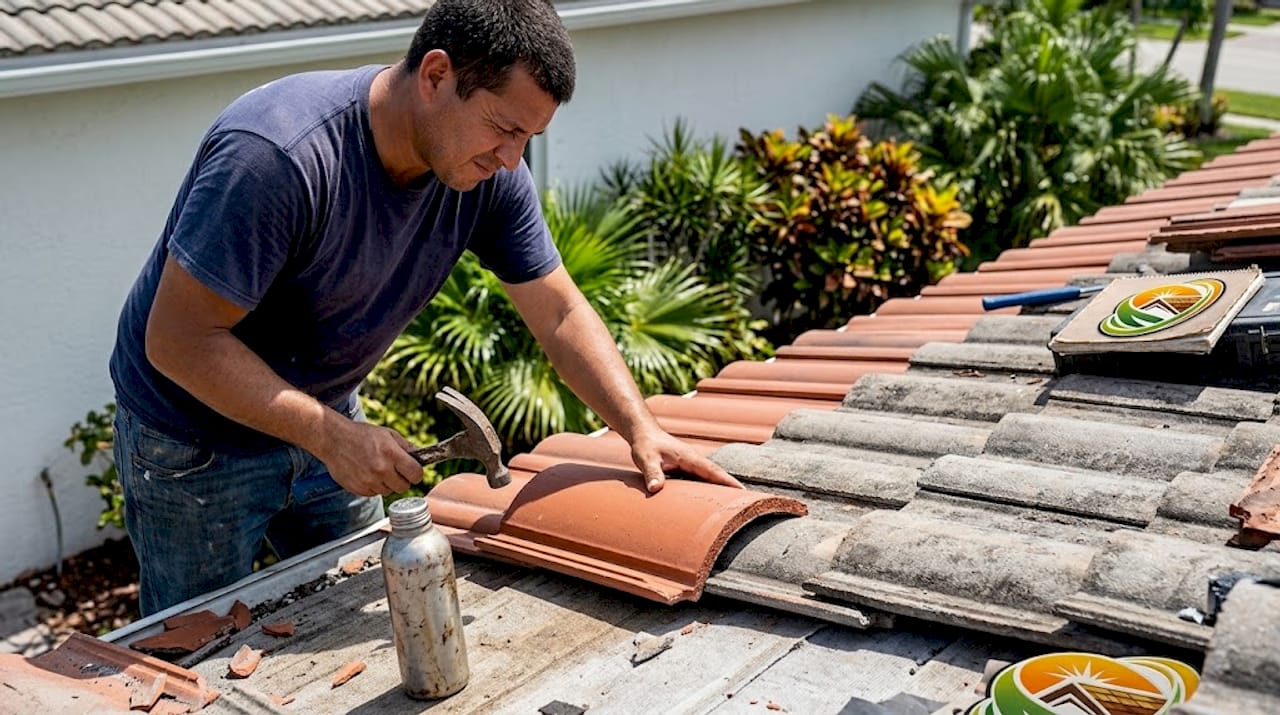
The challenge is weight. Concrete and clay tile systems are heavy, and many older homes require structural assessment before installation. Tile also needs "bird stopping" (foam or mortar closures at the eaves) to prevent pests and water from entering underneath the tiles.
Synthetic slate and shake
Synthetic slate and shakes are Class A rated, lightweight, and impact-resistant, with many manufacturers offering 50-year warranties. They mimic the look of natural slate or cedar shake without the weight or fire risk of organic materials. They also resist mold and insects, which is a genuine advantage in South Florida's humid climate.
Side-by-side comparison
| Material | Cost per sq ft | Lifespan | Fire rating | Wind rating | Weight |
|---|---|---|---|---|---|
| Fiberglass asphalt shingles | $3.95 to $8 | 20 to 30 years | Class A | 130 to 150 mph | Light |
| Metal (steel/aluminum) | $5 to $12 | 40 to 80 years | Class A standalone | 130 to 160 mph | Light |
| Concrete tile | $9 to $18 | 25 to 50 years | Class A | 150+ mph | Heavy |
| Clay tile | $12 to $25 | 50 to 100 years | Class A | 150+ mph | Very heavy |
| Synthetic slate/shake | $9 to $20 | 50 years | Class A | 110 to 130 mph | Light |
Before selecting a premium option, walk through our roof inspection checklist to understand your current roof structure's condition and load capacity.
Which fire-resistant roof should you choose? Real-world scenarios
Your best choice depends on your specific situation. Here is how to match material to need.
Scenario-based decision guide
- Tight budget, need Class A now: Fiberglass asphalt shingles. Fast to install, affordable, and fully code-compliant across South Florida.
- Want the lowest lifetime cost: Metal roofing. Higher upfront, but minimal maintenance and a 50-plus-year lifespan make it the smartest long-term investment.
- Older home with weak structure: Avoid heavy tile. Choose metal or synthetic slate to minimize structural load.
- Strong structure and premium curb appeal: Clay or concrete tile. Outstanding fire protection, beautiful aesthetics, and a major asset to home resale value.
- HOA requires a specific look: Synthetic slate or shake can satisfy HOA appearance rules while delivering Class A fire and impact resistance.
Common mistakes to avoid
- Skipping a structural assessment before choosing heavy tile.
- Accepting "fire resistant" labeling without requesting the actual Class A certification documentation.
- Choosing the cheapest underlayment to save money, then losing the assembly Class A rating.
- Ignoring edge and eave details that allow embers to enter.
Class A fire-resistant roofs halve the ignition risk compared to traditional materials in wildland-urban interface studies. That is not a marginal improvement. It is a significant, measurable reduction in real-world risk for your family and your home.
Before you finalize your material decision, run through the roof assessment process to confirm your deck condition, structural load capacity, and code requirements.
Pro Tip: Always request the Class A test documentation (ASTM E108 or UL 790 report) from your contractor before signing a contract. A reputable contractor will provide it without hesitation.
The hidden costs and realities of fire-resistant roofing in Florida
Most online guides focus on material costs and fire ratings. What they skip over is what actually determines whether your new roof performs as promised: the installation details, the deck beneath it, and the local code environment.
We have seen beautifully specified roofing projects fall apart because the contractor discovered rotted deck boards, incorrect fastener patterns, or a permitting requirement that forced a full code upgrade mid-project. These are not rare situations. In South Florida, where homes built in the 1980s and 1990s are now hitting their second or third roof cycle, hidden deck damage is common. Discovering it late adds cost and delay.
Code changes since your last roof installation may also require you to upgrade decking thickness, add specific underlayment layers, or change ventilation. A contractor who quotes based on surface inspection alone is setting you up for surprises.
Smart Florida homeowners invest in a thorough pre-project assessment. The roof inspection checklist is a practical starting point. Choose a contractor who pulls permits, follows current Florida Building Code, and documents everything in writing. Paying slightly more upfront for that diligence saves you from expensive rework after the first hurricane passes through.
Extend your roof's life with expert renewal—get a free Class A assessment
Not every aging shingle roof needs a full replacement. In many cases, a certified renewal treatment can restore your shingles' flexibility, improve fire resistance, and add years to your roof's lifespan at a fraction of replacement cost.
At Shingle Roof Renewal, we specialize in helping South Florida homeowners make smart, cost-effective roofing decisions. Whether you are in Palm Beach or Broward County, we offer free roof assessments to determine whether renewal or replacement is the right path for your home. Boca Raton shingle roof renewal is one of our most requested services. Explore our service details to see exactly what we provide, or request your free inspection today and let us help you protect your home with confidence.
Frequently asked questions
What is the most affordable fire-resistant roofing for Florida homes?
Fiberglass asphalt shingles are Class A and installed for as little as $3.95 per square foot, making them the most budget-friendly path to certified fire resistance in Florida.
Do metal roofs require extra support on aging homes?
Metal roofing is lightweight and typically compatible with older structures, unlike heavy concrete or clay tile options that often require a structural assessment first.
How long do Class A fire-resistant roofs last?
Lifespans vary by material: fiberglass shingles last 20 to 30 years, metal 40 to 80 years, concrete tile 25 to 50 years, clay tile up to 100 years, and synthetic slate around 50 years.
What is the difference between "standalone" and "by-assembly" Class A ratings?
A standalone Class A rating means the roofing material itself passes all fire tests on its own, while a by-assembly rating requires the full system including underlayment to be installed together to achieve the certification.
Does a Class A roof guarantee wildfire safety?
Class A roofs cut ignition rates significantly compared to traditional materials, but no roof eliminates all risk. They are your strongest available defense, not an absolute guarantee.