
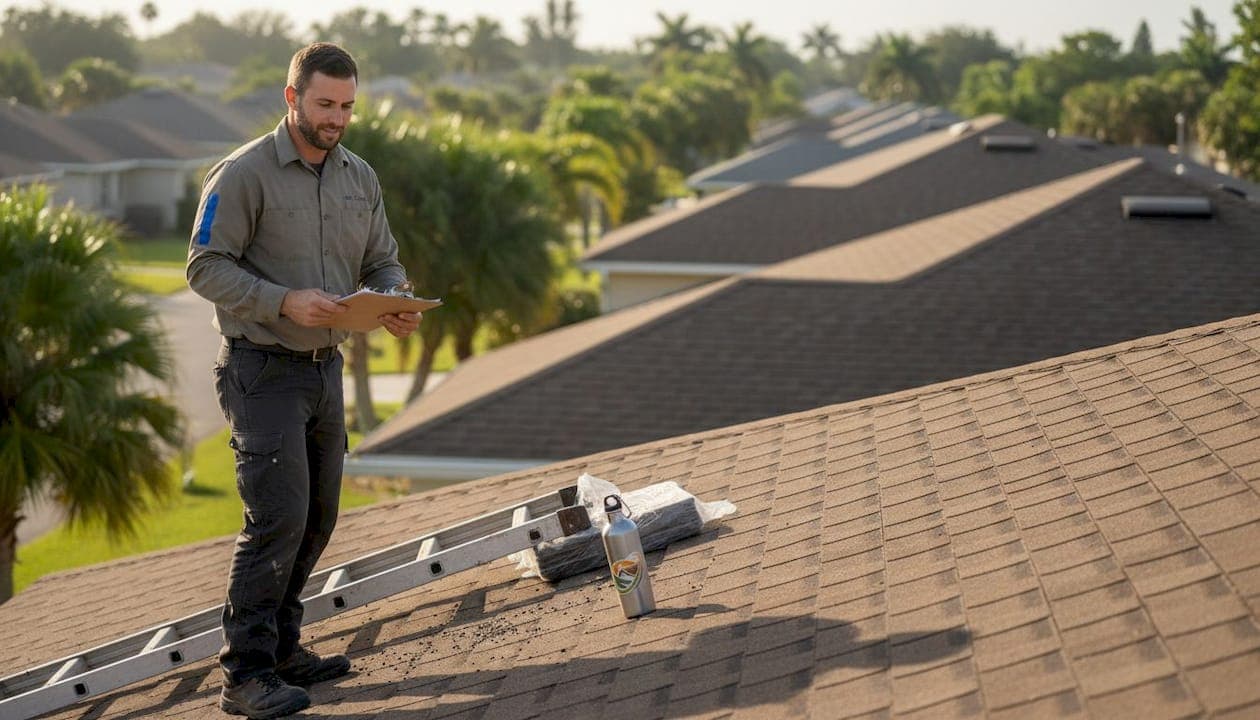
TL;DR:
- Shingle roofs are popular in Florida due to their affordability and quick installation.
- Their vulnerability to UV exposure, humidity, and storm damage shortens their lifespan to 15-25 years.
- Proactive inspection, maintenance, and renewal can significantly extend their durability before storm season.
Shingle roofs cover 80% of US homes largely because they are affordable and fast to install. But in South Florida, that popularity comes with a serious tradeoff. The same shingles that work fine in Ohio or Tennessee face brutal UV exposure, year-round humidity, and hurricane-force winds here. If your roof is more than 10 years old, you are already in a higher-risk category. This guide breaks down how shingle roofs are built, how the different types compare, why they dominate Florida despite their vulnerabilities, and what you can do right now to protect your home before storm season.
Table of Contents
- What defines a shingle roof: Structure and materials
- Types of shingle roofs and their performance differences
- Why shingle roofs dominate Florida homes and their Achilles' heel
- Extending the life of your shingle roof: Smart strategies before storm season
- A closer look: What most guides miss about shingle roof risks
- How to get affordable shingle roof renewal before the next storm
- Frequently asked questions
Key Takeaways
| Point | Details |
|---|---|
| Distinct multi-layer design | Shingle roofs use overlapping, flexible layers and self-sealing strips for weather resistance that's different from rigid roofing. |
| Performance varies by type | 3-tab, architectural, and premium shingles differ in weight, durability, and resistance to Florida storms. |
| Florida’s climate shortens lifespan | Heat, UV, and hurricanes mean even premium shingles rarely last as long as manufacturers claim. |
| Proactive care protects investment | Regular inspections and timely restoration can add years and prevent expensive storm damage. |
What defines a shingle roof: Structure and materials
Now that we've seen why shingle roofs matter in South Florida, let's break down what makes up a shingle roof.
At its core, a shingle roof is a layered system. Each shingle is built around a base mat, either fiberglass or organic material, that is coated with asphalt and topped with mineral granules. Asphalt shingles use fiberglass mats coated with asphalt and mineral granules to create a weather-resistant surface. Those granules do more than you might think. They reflect UV rays, add color, and provide fire resistance.
What separates shingles from tile or metal is how they move. Shingles are flexible. They expand and contract with temperature swings, which is a real advantage in Florida's heat. Tile and metal are rigid by comparison. That rigidity can cause cracking or fastener failure under repeated thermal stress.
The overlapping design is another key feature. Each shingle laps over the one below it, channeling water downward and off the roof. Combined with self-sealing adhesive strips on the underside, this system creates a tight bond that resists wind uplift when it's working properly.
Here's what a complete shingle roof system includes:
- Roof deck: The plywood or OSB base that everything attaches to
- Underlayment: A water-resistant barrier between the deck and shingles
- Starter strip: The first row that anchors the self-sealing system
- Shingles: The visible, weather-facing layer
- Ridge cap: Specialized shingles that seal the peak of the roof
"The granule layer is the first line of defense. Once granules wear away, UV and moisture attack the asphalt directly, accelerating aging significantly."
Pro Tip: When you walk your roof or look from the ground, check your gutters. Heavy granule buildup in gutters is one of the earliest signs that your shingles are aging and losing their protective coating. Catching this early is critical, especially with Florida climate and shingle roofs creating conditions that speed up this process.
Types of shingle roofs and their performance differences
Understanding the base construction, let's examine how shingle types differ, especially what that means for storms and long-term value.
Shingle subtypes include 3-tab, architectural, and premium options, each with different lifespans, weights, and performance levels. Choosing the right type matters a great deal in South Florida.

3-tab shingles are the thinnest and lightest option. They have a flat, uniform appearance and a single layer of asphalt. They are the least expensive but also the least durable. In high-wind environments, they are the first to fail.
Architectural shingles, also called laminated shingles, are two layers bonded together. They are heavier, thicker, and far more resistant to wind and impact. Most new construction in Florida uses architectural shingles today.
Premium shingles take it further with specialized shapes, extra weight, and enhanced wind ratings. They mimic the look of slate or wood shake while offering superior protection.
Here is how the three types compare:
| Type | Layers | Weight (per square) | Typical lifespan (FL) | Wind resistance |
|---|---|---|---|---|
| 3-tab | 1 | ~240 lbs | 10 to 15 years | Up to 60 mph |
| Architectural | 2 | ~320 lbs | 15 to 25 years | Up to 110 mph |
| Premium | 2 to 3 | ~400+ lbs | 20 to 30 years | Up to 130 mph |
The pattern is clear. Heavier shingles last longer and handle storms better. The extra mass gives them more resistance to wind uplift, and the added thickness means more asphalt to protect the mat underneath.
Key takeaways by type:
- 3-tab: Budget-friendly upfront, but higher long-term replacement costs
- Architectural: Best value for most Florida homeowners
- Premium: Highest upfront cost, best performance in severe weather
If you are unsure what type of shingles you have, a roof inspection can identify your shingle type and current condition quickly.
Why shingle roofs dominate Florida homes and their Achilles' heel
Now that you've seen the technical differences, it's worth asking: why do shingles rule Florida despite their risks?
The answer comes down to three things: cost, speed, and familiarity. Shingles cost roughly half as much to install as tile and significantly less than metal. They go up faster, which matters to builders managing tight schedules. And every contractor in the country knows how to work with them.
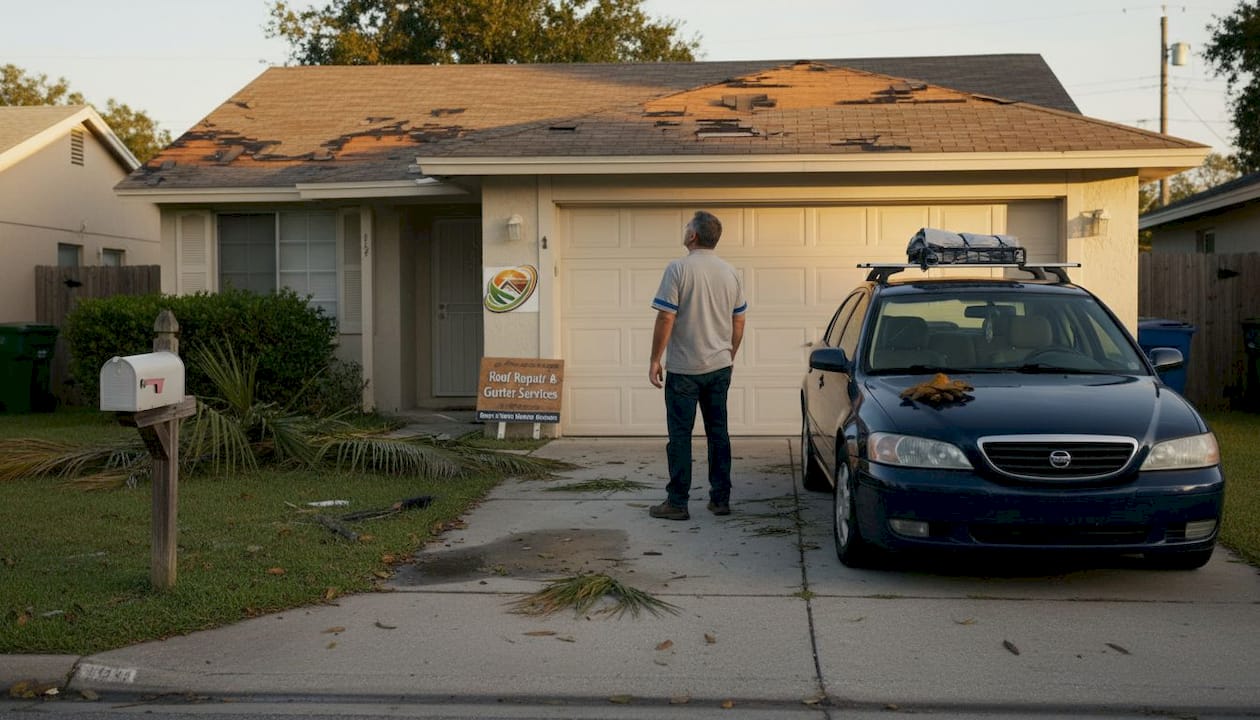
But shingle roofs in South Florida last 15 to 25 years, and hurricane damage rates can approach 50% for older roofs. That is a sobering number.
| Material | Avg. hurricane damage rate | Life expectancy (FL) | Installed cost (per sq.) |
|---|---|---|---|
| Asphalt shingles | Up to 50% (aging roofs) | 15 to 25 years | $150 to $250 |
| Concrete tile | 10 to 20% | 30 to 50 years | $350 to $500 |
| Metal roofing | 5 to 15% | 40 to 70 years | $400 to $700 |
The gap in durability is real. So why do most homeowners still choose shingles? Because the upfront savings are hard to ignore, especially when budgets are tight.
"The problem isn't the shingles themselves. It's aging shingles meeting a Category 3 storm. That combination is where most of the damage happens."
Top 3 risks for aging shingle roofs in Florida:
- Granule loss: Exposes the asphalt layer to direct UV, causing rapid brittleness
- Sealant strip failure: Allows wind to lift individual shingles, leading to water intrusion
- Deck rot: Moisture that gets under compromised shingles can rot the plywood deck beneath
The good news is that all three risks are manageable with early action. Waiting until after a storm is when costs explode. Exploring reasons to restore vs replace your roof can help you make a smarter financial decision before the next storm season.
Extending the life of your shingle roof: Smart strategies before storm season
Knowing their weaknesses, what's the best way to keep your shingle roof strong and ready for South Florida's storm season?
Roofs over 10 years old are especially vulnerable to severe storms, but targeted upkeep can extend their life meaningfully. The key is acting before a storm forces your hand.
Here is a step-by-step checklist to follow before hurricane season:
- Schedule a professional roof inspection to identify granule loss, cracked shingles, or lifting edges
- Clear all debris from the roof surface and gutters to prevent moisture buildup
- Check flashing around chimneys, vents, and skylights for gaps or rust
- Evaluate sealant strips along the eaves and ridgeline for adhesion failure
- Consider professional renewal if your roof is 8 to 15 years old but structurally sound
Pro Tip: Restoration costs a fraction of what emergency repairs or full replacement costs after a hurricane. If your roof is aging but not yet failing, renewal is almost always the smarter financial move. A roof inspection checklist can help you know exactly what to look for.
Common mistakes homeowners make that shorten shingle roof life:
- Pressure washing the roof: This strips granules and voids many warranties
- Ignoring small leaks: Minor water intrusion leads to major deck damage over time
- Skipping annual inspections: Problems found late are always more expensive to fix
- Assuming visual appearance means the roof is fine: Shingles can look intact while the asphalt underneath is already brittle
- Waiting until after storm season to act: By then, contractors are booked and prices spike
The window to act is now, before the storms arrive. Small investments in maintenance today prevent massive repair bills later.
A closer look: What most guides miss about shingle roof risks
After reviewing practical strategies, here's the rarely-shared reality from years working with South Florida roofs.
Most roofing guides are written for a national audience. The advice is generic: inspect annually, replace every 20 to 25 years, fix missing shingles promptly. That advice isn't wrong, but it dramatically underestimates what South Florida's climate actually does to a shingle roof.
UV and thermal cycling cause brittleness that compounds year after year. A roof that looks fine to the eye can be dangerously fragile underneath. We see it constantly. Homeowners in Palm Beach and Broward counties assume their 12-year-old roof has years left because it isn't leaking. Then a storm hits and the shingles peel back like paper.
The other thing most guides miss is the role of roof age combined with storm data. It's not just about how the roof looks. It's about how many thermal cycles it has endured, how much UV exposure it has absorbed, and how close the next storm season is. Addressing what looks like a "minor" issue on a 12-year-old South Florida roof often prevents a catastrophic failure that costs $15,000 or more to fix.
Don't let the calendar fool you. Act based on local Florida climate impacts on shingle roofs, not national averages.
How to get affordable shingle roof renewal before the next storm
If you're ready to protect your home and wallet, here's how to act before South Florida's next storm strikes.
Professional renewal can add 10 to 15 years to an aging shingle roof and saves thousands compared to full replacement. At Shingle Roof Renewal, we use Fresh Roof's GreenSoy Technology, which restores shingle flexibility at the molecular level and comes backed by a 6-year transferable warranty.
Our roof renewal process starts with a thorough assessment to confirm your roof is a good candidate. We serve homeowners across Palm Beach and Broward counties. If you're in the area, our Boca Raton roof renewal team is ready to help. Don't wait for the next storm to make the decision for you. Reach out today and find out if renewal is the right move for your home.
Frequently asked questions
How long do shingle roofs last in South Florida?
Shingle roofs last 15 to 25 years in South Florida due to intense heat, UV exposure, and storm activity, which is significantly shorter than in cooler, drier climates.
Are architectural shingles better for hurricanes?
Yes. Heavier asphalt content in architectural shingles gives them greater flexibility and wind resistance compared to thinner 3-tab shingles, making them the better choice for hurricane-prone areas.
What's the most common cause of failure for aging shingle roofs?
UV, heat, and humidity accelerate granule loss and cause the asphalt layer to become brittle, which is the primary reason aging shingles fail during storms.
How can I make my shingle roof last longer in Florida?
Targeted upkeep including annual inspections, timely repairs, and professional renewal services can meaningfully extend your shingle roof's lifespan before it reaches the point of full replacement.
Recommended
- How Florida's climate impacts shingle roofs: what homeowners can do
- Shingle Roof Renewal Plantation, FL | Save Thousands vs Replacement
- Shingle Roof Renewal Delray Beach, FL | Save Thousands vs Replacement
- Shingle Roof Renewal West Palm Beach, FL | Save Thousands vs Replacement
- Roofing Trends in 2026: Storm-Resistant Innovations