
Yes, soy-based roof rejuvenation restores shingle flexibility and can delay replacement for qualifying roofs. Ohio State University lab testing and USDA biobased certification back that claim with real data, not marketing copy. It only works, though, on roofs that are still structurally sound. Active leaks, rotted decking, or missing shingles mean it's already too late for a soy treatment to help.
TL;DR:
- Soy roof treatment is most effective on roofs aged between 7 and 20 years that are still structurally sound and free of active leaks or missing shingles.
- Treatment can restore flexibility and significantly reduce permeability, with each application adding about five years of useful roof life.
- A professional inspection is essential to confirm eligibility, as DIY application risks over-softening shingles, uneven coverage, and voided warranties.
- The cost of one soy treatment ranges from 10 to 15 percent of full roof replacement, offering a cost-effective way to extend roof lifespan without full removal.
- Certified application with a product like Fresh Roof Green Soy Technology can deliver 10 to 15 years of additional roof life, backed by a transferable six-year warranty.
Table of Contents
- What Is a Soy Roof Treatment, and How Does It Work?
- Which Roofs Actually Qualify for Soy Treatment?
- How Much Does Soy Roof Treatment Cost, and How Long Does It Last?
- What Happens During a Soy Treatment Application?
- Should You DIY a Soy Roof Treatment or Hire a Professional?
- Shingle Roof Renewal: Certified Green Soy Technology in Action
- Call Us Before You Call the Roofer
- Schedule Your Free Roof Inspection Today
- Sources
What Is a Soy Roof Treatment, and How Does It Work?
A soy roof treatment is a spray-applied emulsion made from soy methyl esters or soy oil, designed to soak back into aging asphalt shingles and replace the oils they've lost to sun and heat exposure. Asphalt shingles start life flexible because they're full of oil. Florida sun bakes that oil out over the years, leaving the asphalt binder brittle, cracked, and prone to shedding granules.
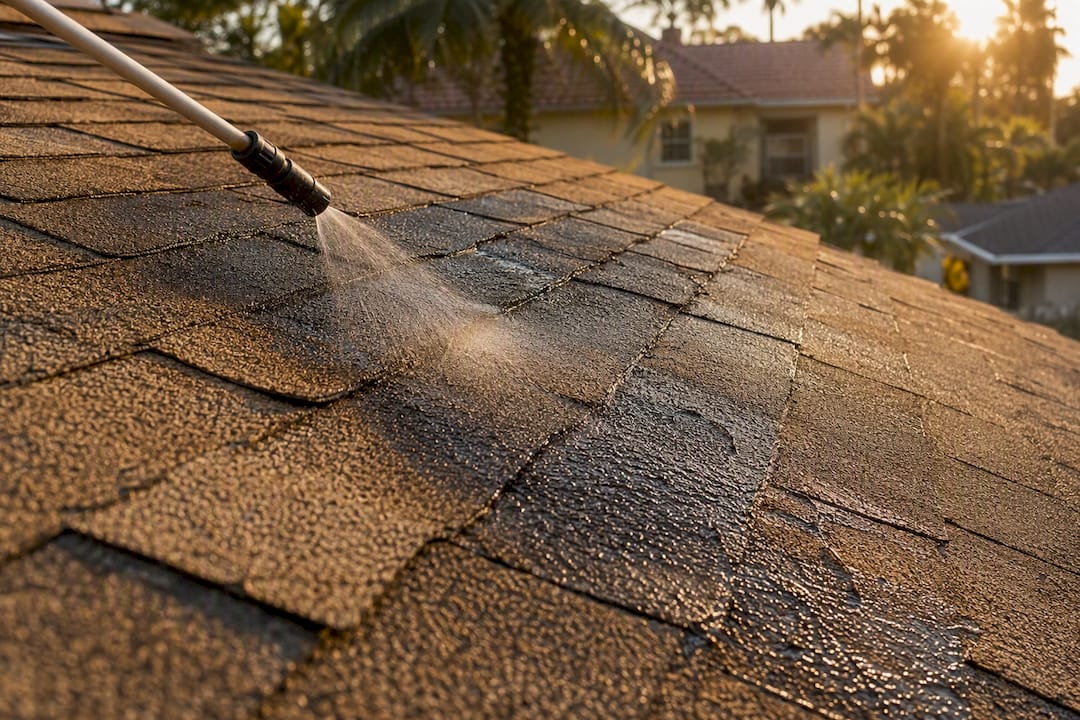
Soy oil molecules are small enough to penetrate that dried binder and re-plasticize it from the inside. Ohio State University's technical evaluation used ASTM test methods and found treated shingles regained pliability, with roughly a 60% reduction in permeability and far less granule displacement than untreated samples.
There are two chemical approaches worth understanding:
- Inert soy methyl ester (SME) softeners act more like a lubricant, temporarily restoring flexibility without permanently bonding to the asphalt.
- Reactive SESO (semi-epoxidized soybean oil) treatments chemically bond with oxidized asphaltenes, which case-study research suggests offers deeper, longer-lasting restoration.
Formulation matters here. Push soy oil content too high, and shingles can actually over-soften, trading brittleness for a different kind of weakness.
Which Roofs Actually Qualify for Soy Treatment?
Not every aging roof is a good candidate, and figuring that out fast saves you from wasting money on a treatment that won't hold.
- Check the age. Roofs between roughly 7 and 20 years old tend to respond best. Younger roofs don't need it yet; much older ones may already be past the point of return.
- Look for curling or cracking without deck damage. Brittle, curling shingles that are still intact are prime candidates for extending commercial roof life.
- Rule out active leaks. Water actively getting through the roof system usually signals a deck problem, not just dried out shingles.
- Check for missing or severely eroded shingles. Bare spots mean the substrate is exposed, and no oil treatment fixes that.
- Confirm structural soundness. Soft spots, sagging, or rot in the decking take a roof out of contention entirely.
A short walk-through with these five checks, or a professional inspection, tells you almost immediately whether your roof is a treatment candidate or a replacement job.
How Much Does Soy Roof Treatment Cost, and How Long Does It Last?
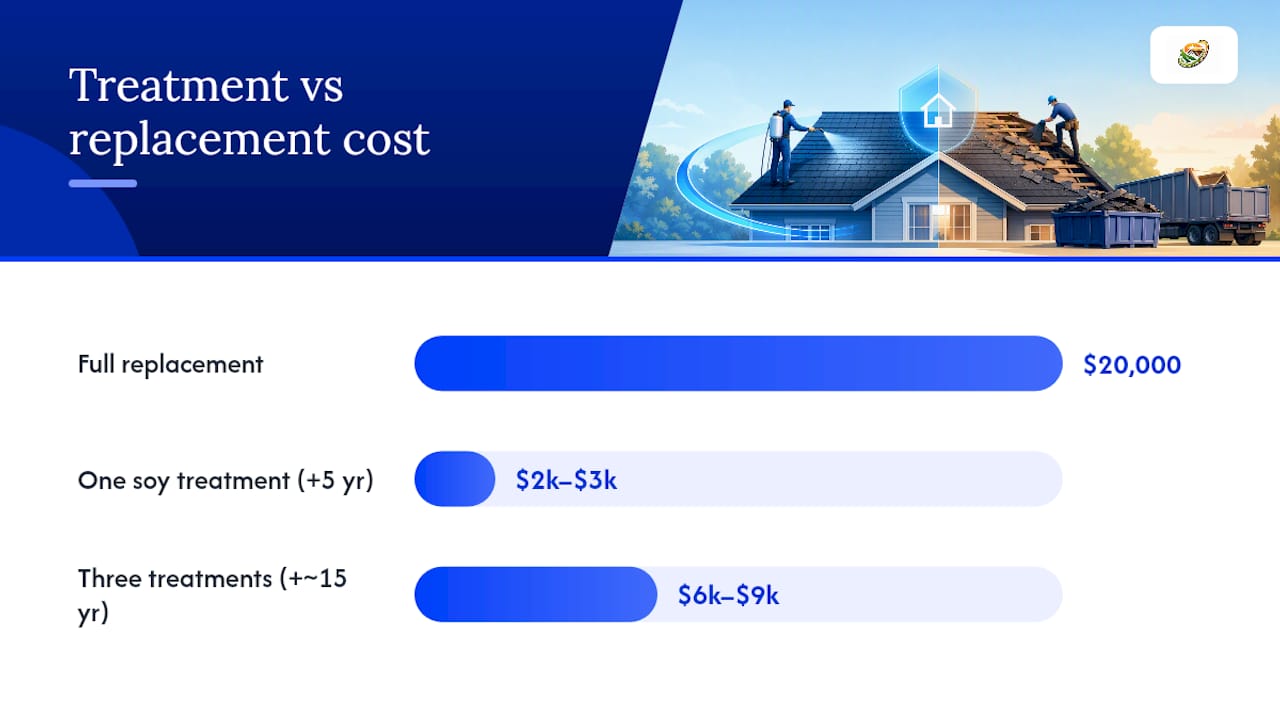
A single soy treatment typically runs about 10% to 15% of the cost of a full roof replacement, which is the number that gets most homeowners' attention. Cost drivers include roof square footage, pitch, and how much prep work the shingles need before spraying.
Each treatment tends to extend usable roof life by around 5 years. Some homeowners apply up to three treatments over time, stretching total life extension toward 15 years when the roof stays otherwise sound.
- One treatment: roughly 5 years of added life, at a fraction of replacement cost.
- Two to three treatments over time: cumulative extension approaching 15 years in favorable cases.
- A typical asphalt roof replacement runs $15,000 to $30,000. At 10 to 15% of that figure per treatment, even three rounds of soy rejuvenation can leave real money on the table compared to tearing off and starting over.
Quick math: on a $20,000 replacement estimate, a single treatment in the $2,000 to $3,000 range that buys five more years is a strong bet, especially if your roof passed the eligibility checks above.
What Happens During a Soy Treatment Application?
A typical job follows a predictable rhythm, and knowing the steps ahead of time helps you plan around it.
- Inspection first. A trained applicator checks for the red flags already covered, then confirms the roof qualifies.
- Light cleaning if needed. Debris and heavy surface dirt get cleared so the emulsion can soak into the shingle surface rather than sitting on top of grime.
- Spray application. Crews apply the soy emulsion at an industry benchmark near 1 gallon per 100 square feet, though exact rates vary by product and shingle condition.
- Drying and cure time. Shingles need dry weather and moderate temperatures to absorb the oil fully, so scheduling around forecasts matters.
Pro Tip: Book your treatment for a stretch of dry, mild weather. Rain right after application can dilute the emulsion before it fully penetrates the shingle surface, which cuts into your results.
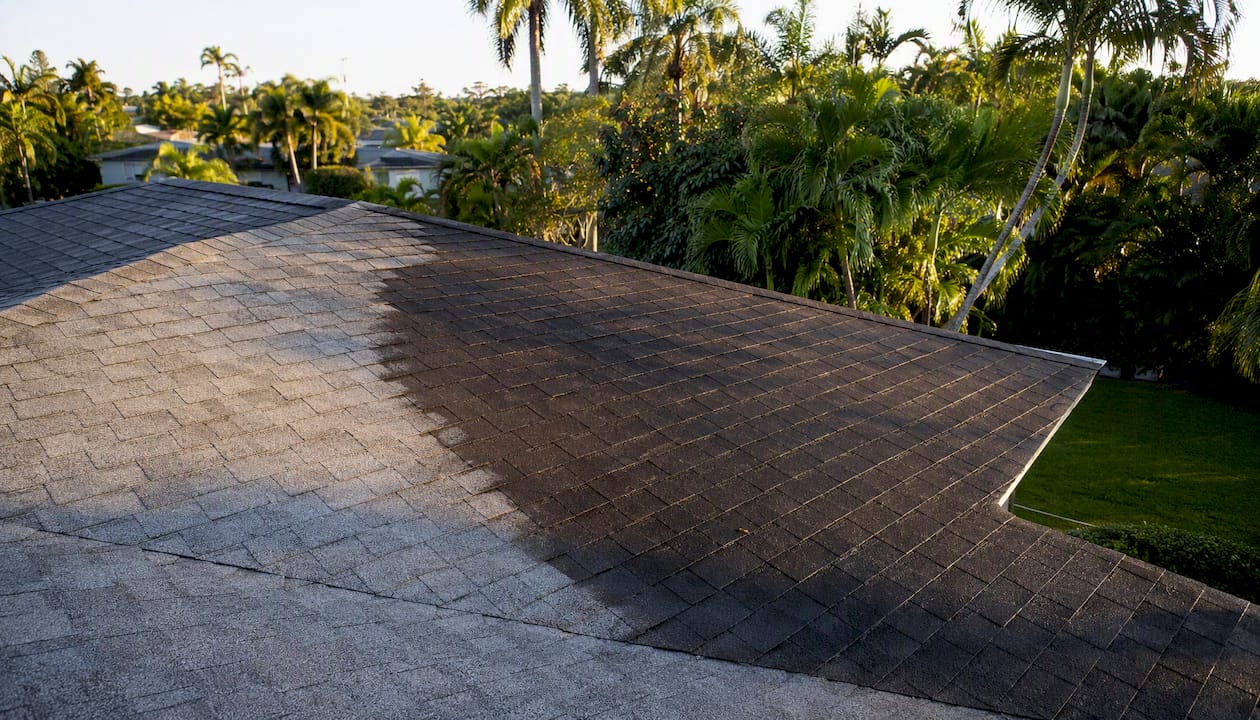
Most homeowners notice a visible color change in the shingles almost immediately, a sign the oils are being absorbed and replenished.
Should You DIY a Soy Roof Treatment or Hire a Professional?
Soy rejuvenation concentrates are sold to consumers, which tempts some homeowners toward a weekend DIY project. That temptation usually costs more than it saves.
DIY risks stack up fast:
- Incorrect mix ratios can under-treat the roof or, worse, over-soften shingles beyond the safe range research points to.
- Uneven spray coverage leaves patches of roof untreated while others get soaked.
- Roof work carries real fall hazards, especially on steep pitches.
- A self-applied treatment typically voids any manufacturer performance expectations tied to certified application.
A certified applicator brings four things a bottle of concentrate can't:
- Documented qualification confirming your roof is actually a good candidate before spending a dollar.
- Consistent, measured coverage across the entire roof surface.
- A transferable warranty that matters if you sell the house.
- Written documentation useful for resale or refinancing conversations with an appraiser or buyer.
A small test patch is reasonable if you're simply curious about product behavior on a low-slope, low-risk section. For the full roof, especially anything above single-story or with tricky access, call a professional every time.
Shingle Roof Renewal: Certified Green Soy Technology in Action
Shingleroofrenewal is a certified applicator of Fresh Roof Green Soy Technology, a soy-based formula built to penetrate asphalt shingles at the molecular level and restore the flexibility your roof lost to years of Florida sun. That penetration is what separates a real rejuvenation treatment from a surface coating that just looks good for a season.
Our process stays simple on purpose:
- Inspect the roof for age, wear patterns, and any red flags like active leaks or deck damage.
- Assess condition against the same eligibility markers covered above.
- Qualify the roof for treatment, or tell you honestly if replacement is the smarter call.
When a roof qualifies, treatment with Fresh Roof Green Soy Technology can extend usable roof life by 10 to 15 years, backed by a 6-year transferable warranty that carries over if you sell the home. That combination, certified application plus a real warranty, is what protects the investment you already have in your roof instead of gambling on it.
Call Us Before You Call the Roofer
I've spent enough time in the research behind this treatment category to land on one firm conclusion: homeowners lose money by skipping the inspection step. Too many people assume curling shingles mean replacement, when a soy treatment could buy years at a fraction of the cost.
Three things worth doing this week: document your roof's current condition with photos, book a free assessment, and compare that estimate against a full replacement quote. Beyond the savings, every roof preserved instead of torn off keeps thousands of pounds of asphalt out of a landfill.
— Daniellison
Schedule Your Free Roof Inspection Today
Shingleroofrenewal is the call you make before the roofer before you tear anything off. A full replacement runs $15,000 to $30,000; a qualifying roof treated with our certified Fresh Roof Green Soy Technology can cost a fraction of that while adding years of usable life.
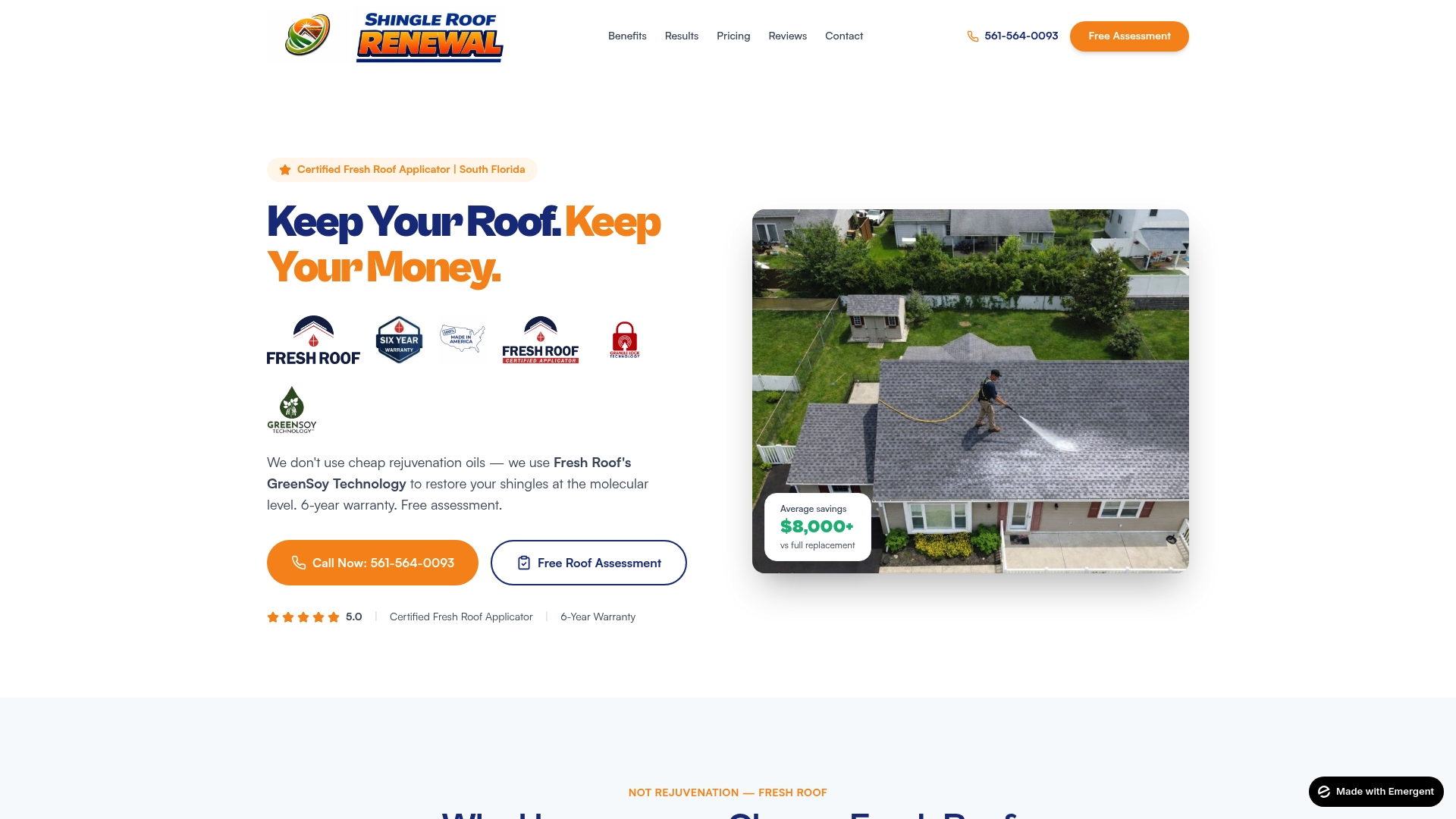
We're a certified applicator, not a general roofing crew, which means our entire process is built around one question: does your roof actually need replacing, or can it be preserved? Every job starts with a free inspection and honest qualification, backed by a 6-year transferable warranty if your roof passes muster. South Florida's sun and storms are hard on shingles, and catching brittleness early is the difference between a preservation job and a five-figure tear-off. Schedule your free roof inspection today and find out if your roof qualifies for renewal instead of replacement.
Sources
For homeowners who want to read the underlying science, the Ohio State University technical evaluation and the SESO case study on shingle restoration cover the lab data in full. The USDA BioPreferred success story and AURI's reporting on soy rejuvenation add certification and industry context.