
What is roof treatment and does it really work?
Roof treatment, also called roof rejuvenation, is the application of a plant-based chemical spray directly onto aging asphalt shingles to restore the oils they've lost to sun, heat, and weather. The result: shingles regain flexibility, shed fewer granules, and resist the brittleness that leads to cracking and curling. For the right roof, it works.
The key phrase is "the right roof." These treatments are designed for shingles that are chemically aging but still structurally sound. No active leaks. No missing shingles. No sagging deck. When those conditions are met, rejuvenation treatments can meaningfully extend a roof's useful life.
One common misconception is that roof treatment is a repair solution. It isn't. It won't seal a leak, reattach a missing shingle, or fix storm damage. Think of it as preventative maintenance, not emergency care.
What a qualifying roof treatment can deliver:
- Restored shingle flexibility, reducing cracking and curling
- Reduced granule loss, protecting the asphalt layer from UV exposure
- Extended roof life by several years with proper application
- A transferable warranty (Shingleroofrenewal's Green Soy Technology carries a 6-year transferable warranty)
- Significant cost savings compared to full replacement
NRCIA field data from 6,460 roof inspections shows that 66% of roofs either qualify or can be repaired to qualify for leak-free certification — meaning most aging roofs still have options before replacement becomes necessary.
How roof treatment works: the science behind shingle rejuvenation
Asphalt shingles are essentially a fiberglass mat saturated with coating asphalt, topped with ceramic granules. The asphalt binder is what keeps everything flexible and waterproof. Over time, UV radiation and heat cause the lighter oil fractions in that asphalt to evaporate, leaving behind a stiffer, more brittle material prone to cracking and granule loss.
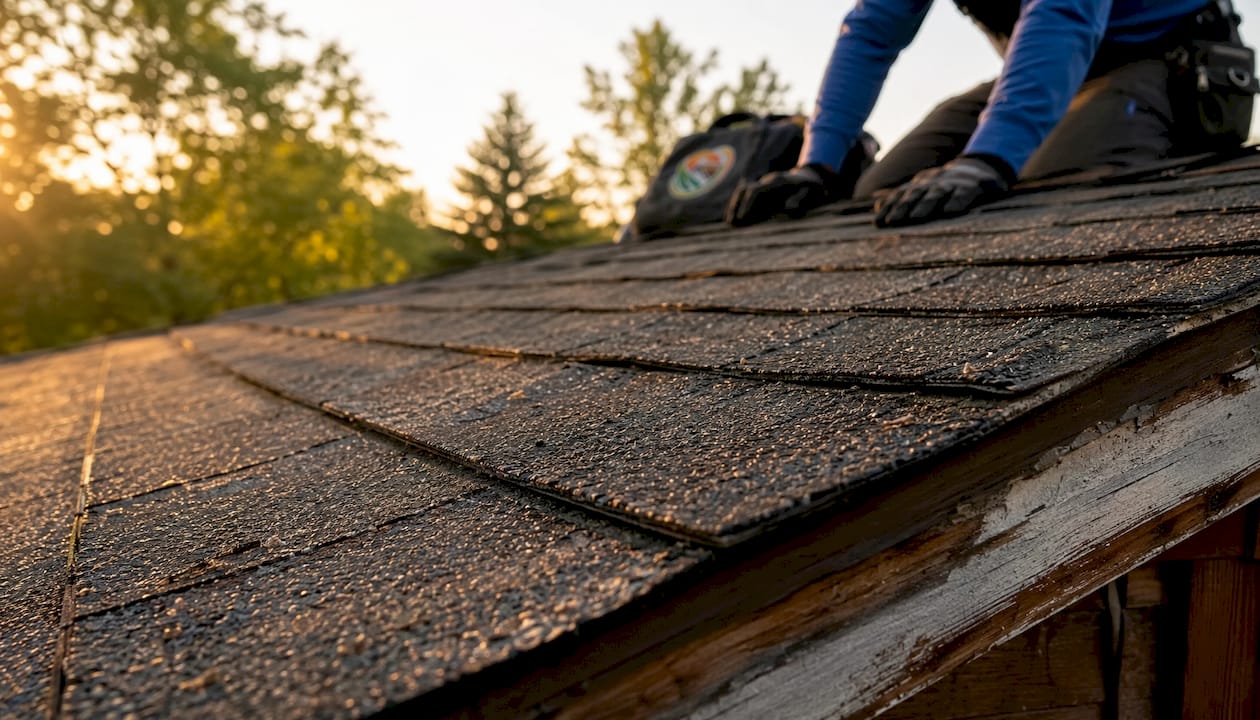
Rejuvenation treatments work by replenishing those lost oils. Most products today use plant-based oils, particularly soybean derivatives, as the active ingredient. A soybean oil-based spray composed of partially epoxidized soybean oil penetrates the shingle's asphalt layer, restoring the chemical balance between maltenes and asphaltenes. The result is a softer, more pliable binder that can flex with temperature changes instead of cracking under them.
This is a penetrating treatment, not a surface coating. It soaks into the shingle rather than sitting on top. That distinction matters because surface coatings can trap moisture and may affect fire ratings, while penetrating rejuvenators restore the shingle from within.
"The application of the soybean oil-based spray to aged asphalt shingles restored their flexibility and dramatically improved their granule retention, making for much longer-lasting asphalt shingles capable of standing extreme weather conditions." — Published research on soybean oil-based rejuvenation
Key scientific points:
- Soybean oil derivatives re-saturate dried asphalt, restoring pliability
- Lab tests showed a significant reduction in granule loss after treatment on aged shingles
- Treated shingles passed ASTM flexibility tests that untreated shingles failed
- Penetrating rejuvenators differ fundamentally from elastomeric or acrylic surface coatings
- Treatments do not restore factory sealant strips responsible for wind resistance
That last point is worth holding onto. Wind resistance depends on the adhesive sealant strip along each shingle's edge. Rejuvenation treatments focus on asphalt flexibility and granule retention, not on reactivating that sealant. Homeowners in hurricane-prone areas should understand this limitation clearly.
Roof rejuvenation vs. roof replacement: when to choose which option
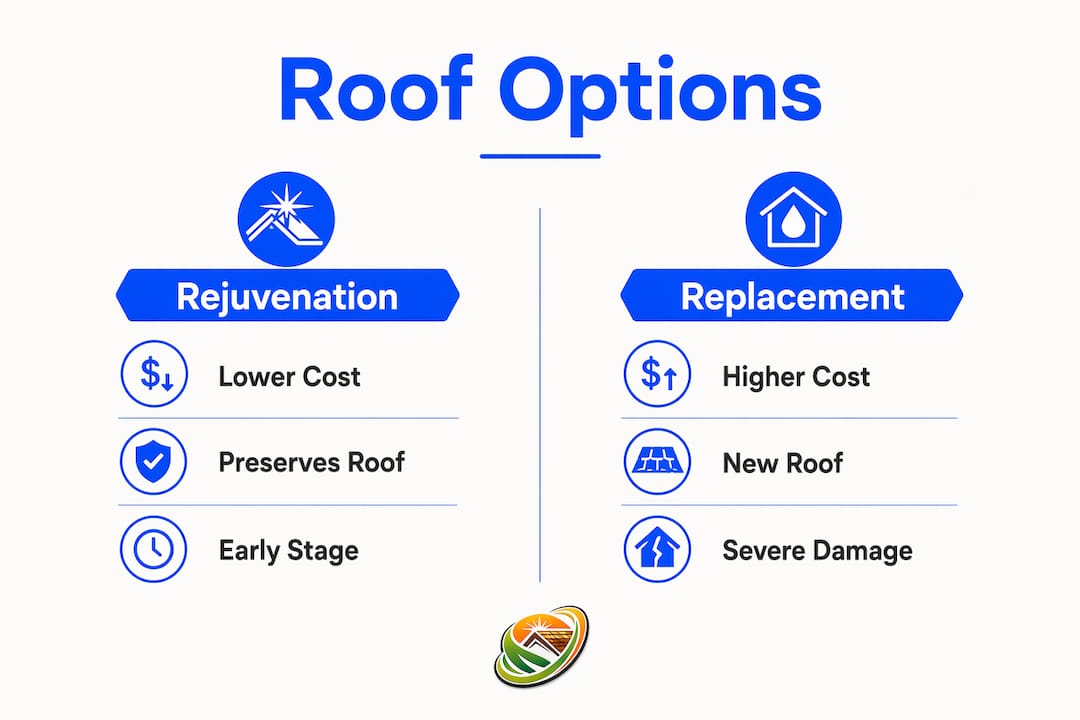
The honest answer: most homeowners jump to replacement too soon. A full tear-off and re-roof typically costs $15,000–$30,000. Treatment, when the roof qualifies, can save up to 80% of that cost. But treatment is only the right call when the roof meets specific conditions.
Choose treatment when:
- Shingles are drying out, becoming brittle, or showing early granule loss
- The roof has no active leaks or structural damage
- The deck is solid with no sagging or soft spots
- Shingles are curling slightly but still intact
- The roof has several years of potential life remaining
Choose replacement when:
- Multiple active leaks are present
- Shingles are cracked, broken, or missing in large areas
- The roof deck shows rot or structural failure
- Granule loss is so severe the asphalt mat is exposed
- The roof is well past its expected lifespan (3-tab shingles have a shorter typical lifespan, while dimensional shingles last longer)
Cost comparison matters here. Treatment preserves what you have at a fraction of replacement cost. Replacement gives you a fresh start with a new manufacturer warranty. The trade-off is straightforward: if your roof is aging but sound, treatment buys you years. If it's failing, treatment is money spent on a lost cause.
Pro Tip: Before committing to either path, get a professional inspection. A certified inspector can tell you whether your roof qualifies for treatment or has crossed into replacement territory. Shingleroofrenewal's three-step renewal process starts with exactly that assessment.
Long-term benefits and limitations of roof treatment
Treatment delivers real, measurable benefits for the right roof. It also has hard limits that no amount of marketing can change. Knowing both helps you set accurate expectations.
Benefits:
- Extends shingle life by several years, delaying costly replacement
- Reduces granule loss, slowing UV degradation of the asphalt layer
- Restores flexibility, reducing cracking from thermal cycling
- Costs a fraction of full replacement
- Reduces landfill waste from premature tear-offs (the U.S. generates more than 11 million tons of asphalt shingle waste annually)
- Transferable warranty adds value if you sell your home
Limitations:
- Cannot seal active leaks or fix structural damage
- Does not restore factory sealant strips for wind resistance
- Requires reapplication every several years to maintain benefits
- Will not work on roofs with thick moss, broken shingles, or exposed decking
- Long-term independent field studies remain limited
Roofing experts and the NRCIA recommend viewing rejuvenation treatments as a temporary life-extension measure rather than a permanent solution. The NRCIA notes that in many cases, investing in professional repairs and leak-free certification provides stronger protection than rejuvenation spray alone.
That perspective is fair and worth taking seriously. Treatment is not a substitute for a well-maintained, structurally sound roof. It works best as part of a broader maintenance approach that includes regular inspections and prompt repairs.
What homeowners and roofing professionals say about roof treatment
Professional perspectives on roof treatment tend to land in the same place: it works for a specific, narrow set of conditions, and it fails when applied to the wrong roof.
Roofing inspectors who have evaluated treated roofs consistently report that shingles showing early brittleness and granule loss respond well to oil-based rejuvenation. The flexibility improvement is visible and measurable. Where they express caution is with homeowners who treat a failing roof hoping to avoid the inevitable.
Homeowners who see the best results tend to share a few things in common: they caught the problem early, had a professional inspection first, and used a certified applicator. Those who report disappointment usually applied treatment to a roof that needed repairs or replacement.
Common homeowner learning points:
- Treatment is preventative, not corrective. Catch the problem before it becomes a failure.
- DIY application is strongly discouraged. Uneven coverage reduces effectiveness and voids warranties.
- Reapplication is part of the plan. A single treatment typically lasts several years before retreatment is needed.
- Inspect first, treat second. A professional assessment protects your investment.
Professional roofing associations also flag one important caution: some field-applied coatings can affect shingle manufacturer warranties or fire ratings. This is why working with a certified applicator who uses a properly tested product matters. Shingleroofrenewal's Green Soy Technology is applied by trained, certified professionals specifically to avoid these risks.
How to apply roof treatment: a step-by-step overview
Professional application follows a clear sequence. Understanding it helps you know what to expect and why each step matters.
- Inspect the roof thoroughly. Check for active leaks, broken or missing shingles, soft spots on the deck, and excessive granule loss. Any of these disqualify the roof from treatment.
- Clean the surface. Remove debris, moss, algae, and dirt. Treatment cannot penetrate through biological growth or heavy soiling.
- Make necessary repairs. Seal any minor gaps, replace isolated damaged shingles, and address flashing issues before applying treatment.
- Mix and load the treatment. Certified applicators use professional spray equipment calibrated for even coverage. Products like Fresh Roof's Green Soy Technology require specific equipment to achieve consistent penetration.
- Apply the treatment evenly. The spray is applied across the entire roof surface, working from the ridge down. Even coverage is critical. Missed spots or pooling both reduce effectiveness.
- Allow proper cure time. The treatment needs time to penetrate the asphalt layer. Applicators will advise on drying time before rain exposure.
- Document and issue warranty. A certified applicator provides written warranty documentation at completion.
Only certified installers with professional spray equipment should perform this work. DIY application risks uneven coverage, wasted product, and voided warranties.
Common risks during roof treatment and how to avoid them
Roof treatment done right is low-risk. Done wrong, it can waste money and create new problems.
Applying treatment to a disqualified roof is the most common mistake. If active leaks, structural damage, or severe granule loss are present, treatment won't help and may mask problems that need immediate repair. Always inspect before you treat.
Using the wrong product type creates real risk. Surface coatings, such as silicone or acrylic roof paints, are fundamentally different from penetrating rejuvenators. Coatings can trap moisture beneath the shingle surface, potentially accelerating decay. The Asphalt Roofing Manufacturers Association warns against field-applied coatings on shingles for this reason. Stick with penetrating, plant-based rejuvenators applied by certified professionals.
DIY application introduces uneven coverage, which means some areas get too much product and others get too little. Beyond the performance issue, it voids the warranty and creates safety risks from working on a wet, sloped surface.
Skipping the pre-treatment repair step is another avoidable error. Treatment locks in the current condition of your shingles. If minor damage isn't repaired first, you're preserving a compromised roof rather than a sound one.
Pro Tip: Pair your roof treatment with a broader exterior maintenance check. A yearly exterior inspection of your home's surfaces, including paint and caulking, helps catch moisture entry points before they become interior problems.
How to inspect and assess your roof before deciding on treatment
A proper pre-treatment assessment takes about 30 minutes and tells you everything you need to know. You can do a basic visual check yourself, but a professional inspection gives you the full picture.
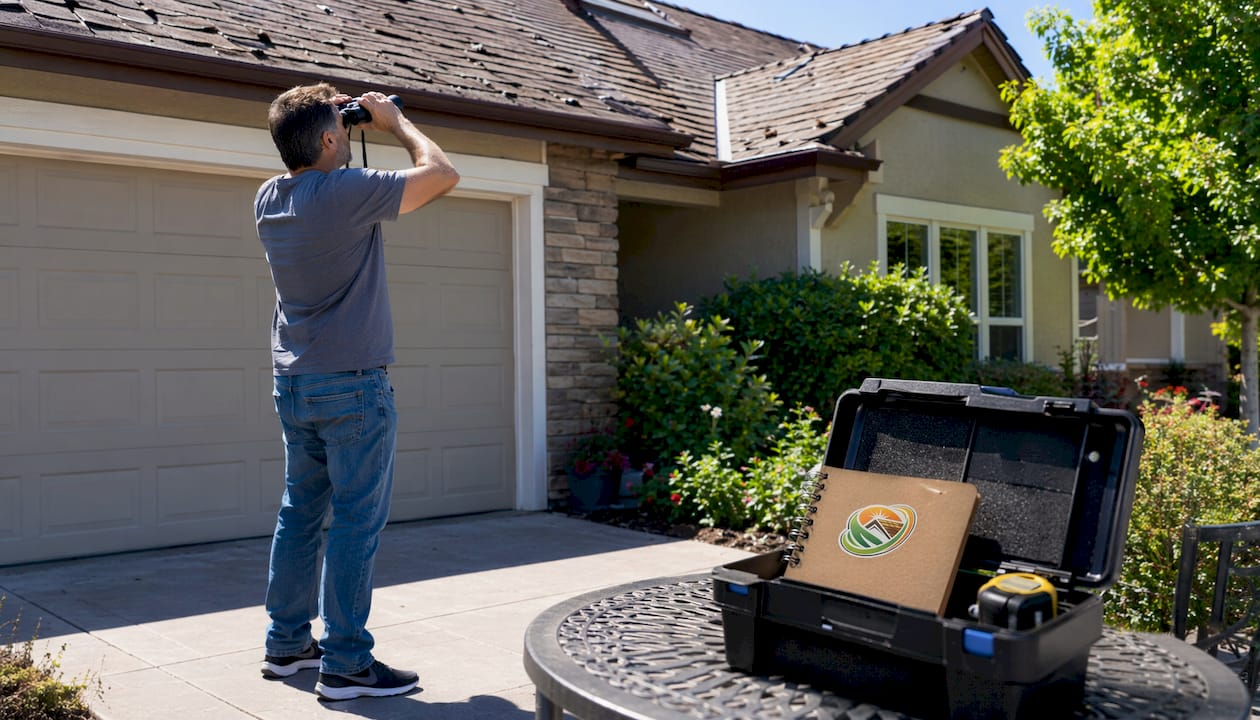
Start from the ground. Walk the perimeter with binoculars. Look for curling shingle edges, dark patches where granules are missing, visible cracking, and any shingles that appear lifted or out of alignment.
Check your gutters. Heavy granule accumulation in gutters is a reliable sign of accelerated shingle aging. Some granule loss is normal; a thick layer of grit after every rain is not.
Inspect the attic. Look for daylight coming through the roof boards, water stains on the decking or rafters, and soft spots that indicate rot. These are structural issues that disqualify a roof from treatment.
Look at the flashing. Metal flashing around chimneys, vents, and skylights is a common leak point. Rust, gaps, or lifted edges need repair before any treatment is applied.
Consider the age. A 3-tab shingle roof at 18 years is a strong candidate for treatment if it's otherwise sound. The same roof at 22 years, showing widespread granule loss, is likely past the point where treatment makes financial sense.
The NRCIA recommends starting with a certified professional inspection before making any treatment decision. Shingleroofrenewal's roof inspection and assessment process follows exactly this approach, giving homeowners a clear, honest answer before any money changes hands.
Green Soy Technology by Shingleroofrenewal: a certified preservation solution
Shingleroofrenewal is a certified applicator of Fresh Roof's Green Soy Technology, a plant-based treatment that works at the molecular level to restore aging asphalt shingles. It's not a coating. It penetrates the shingle's asphalt layer, replenishing the oils that Florida's sun, heat, and storms have driven out over years of exposure.
The technology is specifically formulated for the South Florida climate, where UV intensity and thermal cycling accelerate shingle aging faster than in most other U.S. markets. Broward and Palm Beach County homeowners face conditions that can shorten a shingle roof's effective life by years compared to cooler, less sunny regions.
What sets Shingleroofrenewal's service apart:
- Certified applicator status for Fresh Roof Green Soy Technology
- Molecular-level penetration that restores flexibility and locks in granules
- 6-year transferable warranty backed by the treatment manufacturer
- Potential to extend roof life by 10–15 years on qualifying roofs
- Reduces landfill waste by preserving roofs that would otherwise be torn off prematurely
- Honest qualification process: if your roof doesn't qualify, we tell you
The Shingleroofrenewal three-step process:
- Inspect your roof for structural soundness and treatment eligibility
- Assess shingle condition, granule retention, and overall roof health
- Recommend the right path: treatment if it qualifies, honest guidance if it doesn't
"Most homeowners don't realize their roof can still be saved. We help you catch the problem early, before it turns into a full replacement." — Shingleroofrenewal
The environmental case is real too. The U.S. generates more than 11 million tons of asphalt shingle waste each year. Every roof that gets preserved instead of torn off keeps material out of the landfill. For homeowners who want to make a responsible choice alongside a financially smart one, that matters.
Is your roof a candidate? Schedule a free inspection with Shingleroofrenewal
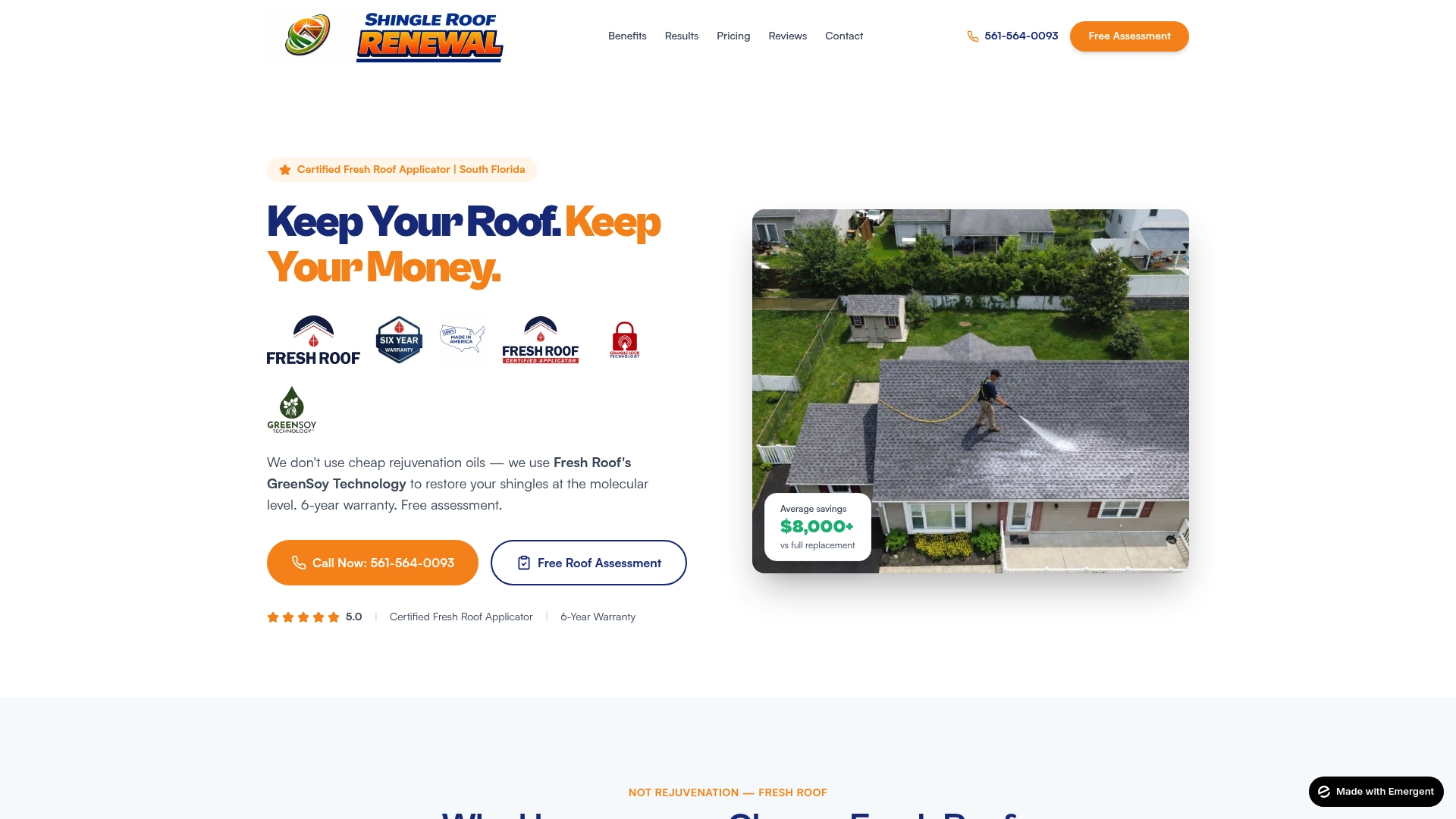
If your asphalt shingle roof is showing signs of aging, brittleness, or granule loss, the worst move is to wait. The longer you wait, the more likely treatment becomes impossible and replacement becomes unavoidable.
Shingleroofrenewal serves homeowners across Broward and Palm Beach County. We inspect, assess, and give you a straight answer. If your roof qualifies for Green Soy Technology treatment, you could save thousands compared to a full replacement, backed by a 6-year transferable warranty. If it doesn't qualify, we'll tell you that too.
Call us before you call the roofer.
Schedule your free inspection today and find out if your roof can be saved.
Key Takeaways
Roof treatment works best as early intervention on chemically aging, structurally sound asphalt shingle roofs, and it cannot substitute for repairs or replacement when structural damage or active leaks are present.
| Point | Details |
|---|---|
| Treatment requires a sound roof | Active leaks, structural damage, or severe granule loss disqualify a roof from treatment. |
| Science backs the approach | Lab tests showed a significant reduction in granule loss after soybean oil-based treatment on aged shingles. |
| Cost savings are substantial | Qualifying homeowners can save up to 80% compared to full roof replacement costs. |
| Certification matters | Only certified applicators with professional equipment should apply treatment to preserve warranties and ensure even coverage. |
| Shingleroofrenewal's warranty | Green Soy Technology treatments come with a 6-year transferable warranty and can extend roof life by many years. |