
The most effective roofing upgrade trends for asphalt shingle roofs are not about replacing what you have. They are about preserving it. Homeowners across the U.S. often choose preventative maintenance and advanced preservation technologies to delay costly replacements, which can be effective. Here is what the smartest roof care looks like right now:
- Regular biannual gutter cleaning to prevent water backup and fascia rot
- Gentle moss and algae removal using low-pressure, chemical-safe methods
- Tree trimming to keep branches at least 6–10 feet from the roofline
- Attic ventilation assessments to stop shingles from baking from the inside out
- Molecular renewal treatments like Fresh Roof Green Soy Technology to restore shingle flexibility
- Annual professional inspections to catch early leaks, granule loss, and decking issues
- Smart roofing sensors for real-time moisture and temperature monitoring
These approaches combine traditional upkeep with modern preservation science. The financial case is clear: roof preservation can save homeowners thousands compared to a full tear-off, while also keeping shingle waste out of landfills. Shingleroofrenewal, certified as an authorized applicator of Fresh Roof Green Soy Technology, sits at the center of this shift in how homeowners think about roof care.
Table of Contents
- What proactive maintenance tasks actually extend your roof's life?
- How molecular renewal technology preserves asphalt shingles
- Common homeowner mistakes that shorten roof life faster than weather does
- How your local climate shapes which roofing upgrades matter most
- Key Takeaways
- Your roof may have more life left than you think
What proactive maintenance tasks actually extend your roof's life?
The difference between a roof that lasts 15 years and one that lasts 25 often comes down to a handful of habits. Gutter cleaning twice a year is the single most impactful task most homeowners skip. Clogged gutters can cause water backup, potentially leading to fascia rot and leaks into the attic.
Moss and algae are a close second. Left untreated, moss root systems physically lift shingle edges and break the seal strips, letting water in far faster than normal aging would. The right approach is a 50/50 mix of water and laundry bleach applied from the ground, never a pressure washer. Pressure washing can strip granules and often void manufacturer warranties.
Key maintenance tasks to build into your annual schedule:
- Clean gutters in spring and fall, and after any major storm
- Trim tree branches to at least 6–10 feet from the roofline to reduce abrasion and granule loss
- Remove moss and algae with gentle chemical treatments, not high-pressure water
- Inspect flashing around chimneys and vents each fall before winter sets in
- Check for blistering or curling shingles during summer heat checks
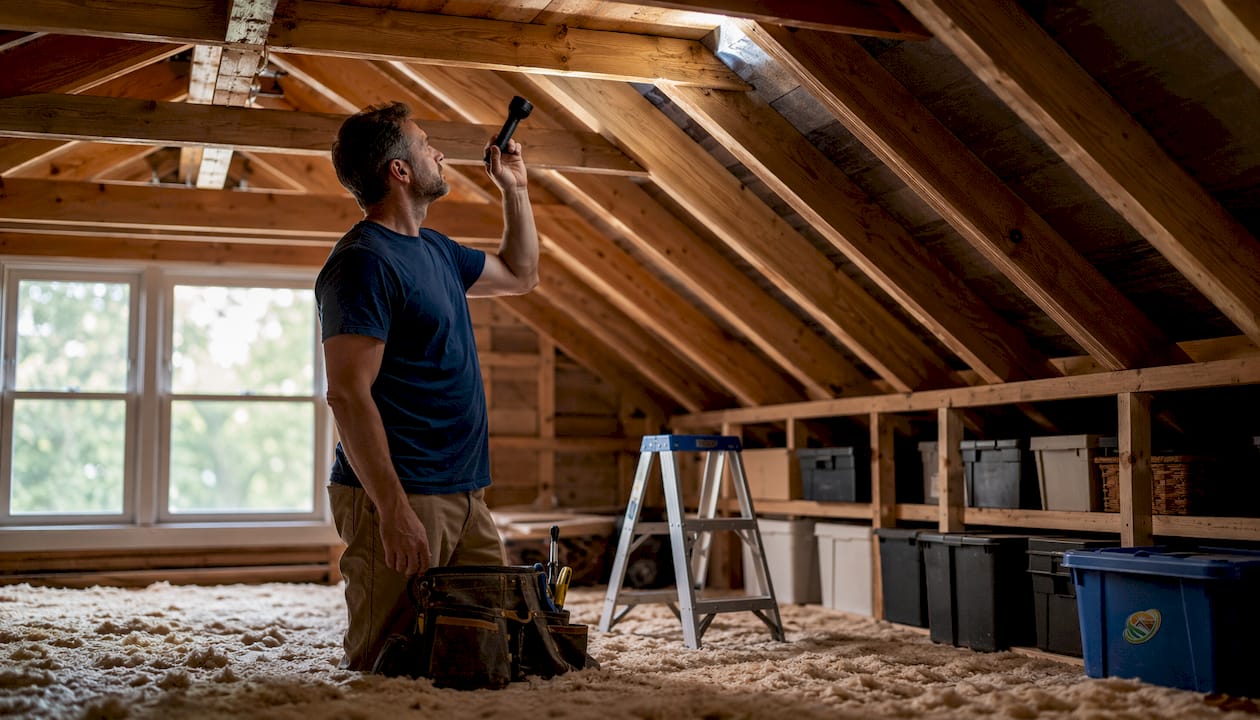
Pro Tip: Go into your attic with a flashlight on a bright day, turn the light off, and look up. Any pinhole of daylight means the roof has failed at the deck level. Moisture staining on the rafters is an early leak warning most homeowners miss entirely. Catching it here, before it shows up on your ceiling, is the difference between a repair and a replacement.
Annual inspections that include the attic reduce unexpected replacements by identifying early leaks, ventilation failures, and decking rot before they compound. Seasonal timing matters too: spring for post-winter damage, fall for pre-freeze preparation.
How molecular renewal technology preserves asphalt shingles
Fresh Roof Green Soy Technology works at the molecular level. Asphalt shingles contain natural oils that keep them flexible. Sun, heat, and rain cause those oils to evaporate over time, leaving shingles brittle, prone to cracking, and vulnerable to granule loss. The Green Soy treatment penetrates the shingle and replenishes oils, helping to restore flexibility before severe damage occurs.
Ohio State University testing showed that treated shingles experienced 46% less granule loss and 24% improved impact resistance compared to untreated controls. Those are real, measurable improvements on a structurally sound roof.
Shingleroofrenewal is a certified applicator of this technology, which matters because the treatment requires proper application to deliver its full benefit. The service comes backed by a 6-year transferable warranty and can extend roof life by 10–15 years, with savings of up to 80% compared to full replacement costs.
"Soy-based roof rejuvenation treatments can restore flexibility and delay brittleness, but they work best as a preventative approach on structurally sound roofs that are 8–15 years old with no active leaks. They do not fix structural damage — they protect against it advancing." — NRCIA field guidance
There are clear eligibility requirements. The roof must be structurally sound, free of active leaks, and retain most of its granules. Molecular renewal is a preservation tool best suited for roofs still in good condition with useful life remaining.
Pro Tip: If your roof is between 8 and 15 years old and you have not had it professionally assessed, now is the right window. Waiting until shingles are curling or cracking means the treatment cannot do its job. Early intervention is where the real savings happen.
From an environmental standpoint, every roof preserved through renewal is one less tear-off filling a landfill. For homeowners who want to restore shingle flexibility before problems escalate, molecular renewal is the most advanced option available today.
Common homeowner mistakes that shorten roof life faster than weather does
Most roof failures are not weather events. They are the result of decisions made, or not made, over years of ownership. NRCIA experts consistently advise homeowners to treat the roof as an integrated system, not a collection of isolated problems. Patching one leak while ignoring granule loss elsewhere is like fixing one tire on a car with three flats.
The most common mistakes:
- Treating symptoms, not the system. Fixing one cracked shingle while ignoring widespread granule loss wastes money and delays an honest assessment.
- Skipping attic inspections. Most moisture damage starts in the attic, not on the surface. By the time a stain appears on your ceiling, the decking may already be rotting.
- Using pressure washers. This strips granules, accelerates UV damage, and voids warranties in a single afternoon.
- Prioritizing curb appeal over structure. A roof that looks clean from the street can be failing underneath. Algae stains are cosmetic; poor ventilation is structural.
- Ignoring ventilation. Poor attic ventilation doubles the aging rate by trapping hot, moist air that blisters shingles from below in summer and causes ice dams in winter.
- Waiting for a visible leak to act. By the time water shows up inside, the damage is already weeks or months old.
The fix is straightforward: schedule a professional inspection that includes the attic and decking, not just a visual surface check. Catching a ventilation problem or early granule loss at year 10 is a maintenance conversation. Catching it at year 18 is often a replacement conversation.
How your local climate shapes which roofing upgrades matter most
Where you live determines how fast your roof ages, and which upgrades deliver the most protection. The lifespan printed on a shingle package assumes ideal installation, mild climate, and perfect ventilation. Real-world conditions routinely shorten that estimate.
| Climate factor | Effect on asphalt shingles | Recommended upgrade or task |
|---|---|---|
| Intense UV and heat (South Florida) | Oils evaporate faster, causing early brittleness and granule loss | Molecular renewal treatment; shade assessment |
| Humidity and moss growth (Pacific Northwest) | Moss lifts shingle edges, accelerates water infiltration | Zinc or copper ridge strips; annual moss treatment |
| Freeze-thaw cycles (Northeast, Midwest) | Expands and contracts flashings and sealants, causing seal failure | Flashing inspection each fall; attic ventilation upgrade |
| High winds (Gulf Coast, storm corridors) | Lifts shingle edges, propagates granule loss and seal breaks | Post-storm inspections; re-sealing lifted edges |
| Extreme heat with poor ventilation (any region) | Bakes shingles from below, causing blistering and premature cracking | Attic ventilation assessment; radiant barrier installation |
In South Florida specifically, the combination of intense UV, high humidity, and storm activity means shingles lose their oils faster than almost anywhere else in the country. That is exactly why Shingleroofrenewal focuses on Broward and Palm Beach County homeowners, where climate-driven shingle aging is a predictable, preventable problem.
Smart roofing technology is also entering the picture. Wireless moisture sensors placed in the attic can alert homeowners to humidity spikes or early water intrusion before any visible damage appears. Paired with a roofing contractor evaluation that accounts for your specific regional conditions, these tools give you a real-time picture of your roof's health between annual inspections. The goal is always the same: catch the problem early, act before it compounds, and keep your existing roof working for as long as it responsibly can.
Key Takeaways
Preserving your asphalt shingle roof through proactive maintenance and molecular renewal technology is the most cost-effective way to delay or avoid a full replacement.
| Point | Details |
|---|---|
| Biannual gutter cleaning | Cleaning gutters twice a year prevents water backup that rots fascia and leaks into the attic. |
| Avoid pressure washing | High-pressure cleaning strips granules and voids manufacturer warranties immediately. |
| Molecular renewal window | Fresh Roof Green Soy Technology works best on structurally sound roofs aged 8–15 years with no active leaks. |
| Lab-tested results | Treated shingles showed 46% less granule loss and 24% improved impact resistance in Ohio State University testing. |
| Climate-specific care | South Florida's UV and heat accelerate oil loss in shingles, making early intervention and renewal treatments especially valuable. |
Your roof may have more life left than you think
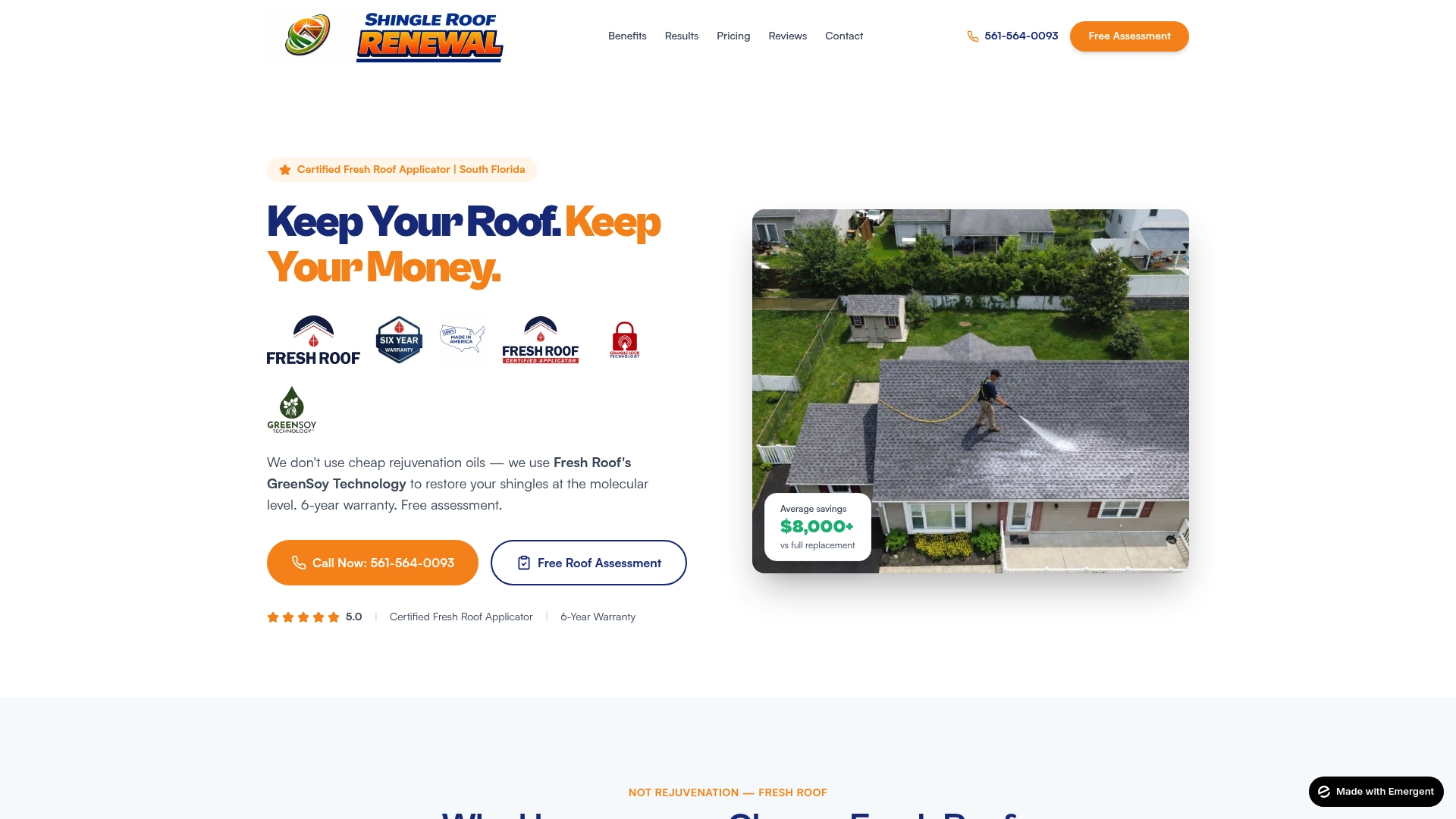
Most homeowners call a roofer the moment something looks wrong. We think there is a better first call. Shingleroofrenewal inspects your roof, assesses its condition, and tells you honestly whether it qualifies for preservation and renewal. No pressure. No upsell. Just a clear answer.
If your roof qualifies for Fresh Roof Green Soy Technology treatment, you could save up to 80% compared to full replacement, backed by a 6-year transferable warranty. Homeowners in Boca Raton and Delray Beach are already extending their roofs by 10–15 years instead of spending $15,000–$30,000 on a tear-off.
Call us before you call the roofer. Schedule your free roof inspection today.