
TL;DR:
- A residential roof audit is a comprehensive, documented evaluation of the entire roofing system, unlike a basic inspection. It assesses critical components like shingles, flashing, ventilation, and attic condition to identify current and future risks, saving homeowners money and extending roof life. Regularly scheduling audits, especially after storms, helps South Florida homeowners proactively protect their assets and avoid costly replacements.
Most homeowners assume a quick visual check and a basic roof inspection are the same thing. They are not. Understanding what is a residential roof audit could be the difference between catching a small problem early and writing a $20,000 check for a full replacement. If you own a home in Broward or Palm Beach County, where the Florida sun, humidity, and storm season work against your asphalt shingles year-round, this distinction matters more than you might expect. This guide walks you through exactly what a roof audit covers, how the process works, and why it is one of the smartest things you can do for your home.
Table of Contents
- Key Takeaways
- What a residential roof audit actually covers
- Inspections vs. audits: knowing when you need which
- The roof audit process: what to expect step by step
- Benefits of roof audits for South Florida homeowners
- How to use audit results to protect your investment
- My honest take on why audits matter in Florida
- Protect your roof with Shingleroofrenewal
- FAQ
Key Takeaways
| Point | Details |
|---|---|
| Audits go beyond inspections | A roof audit examines six critical systems, not just visible shingle damage. |
| Timing affects your outcome | Schedule audits twice a year and always after a major storm to catch claimable damage in time. |
| Documentation protects your money | Audit reports include photos and severity ratings that support insurance claims and property sales. |
| Audits can save you thousands | Catching problems early through an audit can help you avoid full replacement, saving up to 80%. |
| South Florida climate demands proactive care | Constant UV exposure, heat, and storms accelerate shingle aging in Broward and Palm Beach Counties. |
What a residential roof audit actually covers
A basic inspection asks one question: is there visible damage right now? A residential roof audit asks a different set of questions entirely. It evaluates your roof as a system, not just a surface.
A comprehensive roof audit examines six critical areas: shingles, flashing, drainage, ventilation, fascia and soffits, and the attic. Each one tells a different story about the health of your roof.
Here is what gets evaluated:
- Shingles and surface materials: Auditors look for granule loss, curling, cracking, blistering, and any signs of accelerated aging. In South Florida, thermal cycling from high temperatures causes nail pops and shingle brittleness that a basic inspection often misses.
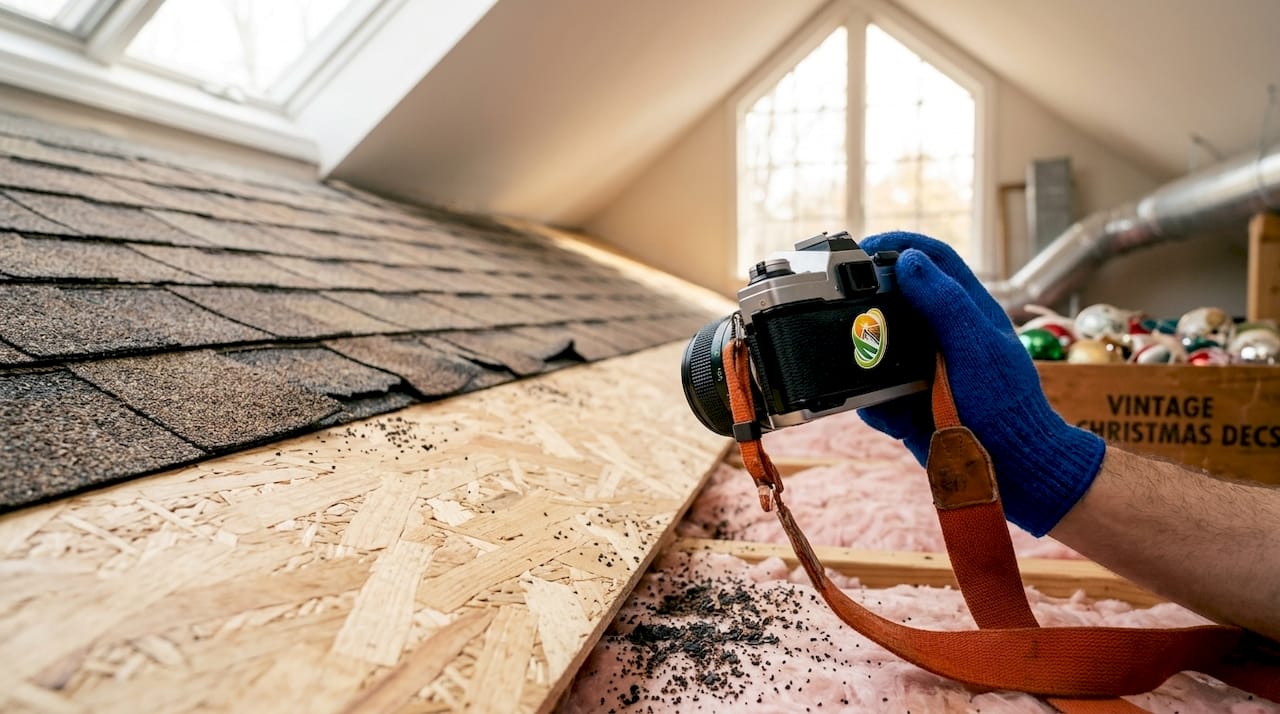
- Flashing and seals: Flashing around chimneys, vents, and skylights fails before the shingles do. Florida's UV stress specifically damages flashing and ridge vents, and if left unchecked, water intrusion follows quickly.
- Drainage systems: Gutters and downspouts are checked for blockages, improper slope, and damage. Poor drainage is one of the most common causes of fascia rot in humid climates like South Florida.
- Ventilation: Attic ventilation directly affects how long your shingles last. Heat and moisture buildup underneath your roof deck accelerate shingle aging from below, a problem you will never see from the ground.
- Fascia, soffits, and decking: These structural elements are checked for rot, pest damage, and water staining. If your decking is compromised, no amount of shingle repair will solve the underlying problem.
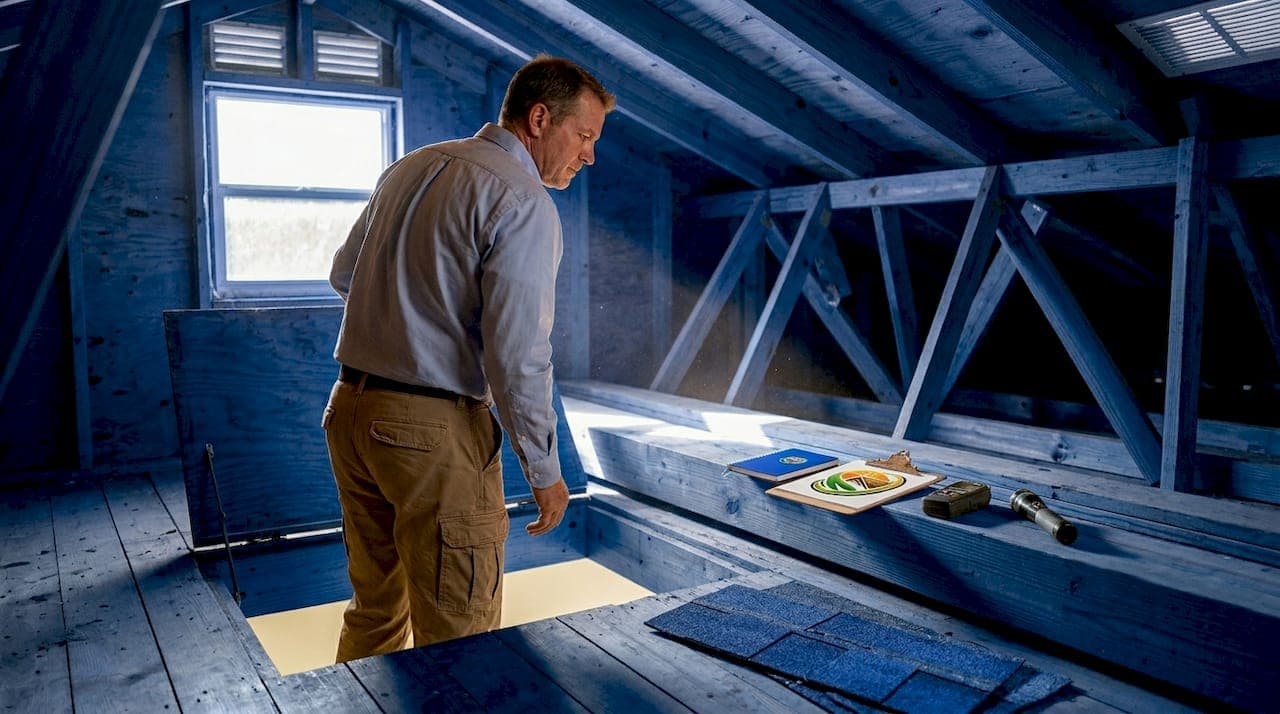
- Attic interior: Attic inspections reveal hidden water intrusion, mold, deck rot, and ventilation issues that are completely invisible from the roof surface. This step alone separates a real audit from a surface-level check.
Auditors also use tools like moisture meters and cameras to detect problems that the naked eye cannot catch. Findings are documented thoroughly, not communicated verbally.
Pro Tip: Ask your auditor specifically whether an attic inspection is included. Many "free inspections" skip it entirely, which means they can miss the most expensive problems hiding inside your home.
Inspections vs. audits: knowing when you need which
The simplest way to understand the difference is this: an inspection is reactive, and an audit is proactive.
A standard roof inspection typically happens after you notice a leak, after a storm, or when a buyer requests one during a home sale. It answers a narrow question and gives you a short verbal or one-page summary. An audit, by contrast, provides in-depth analysis of performance, installation quality, energy efficiency, and code compliance, and it produces a multi-year maintenance roadmap you can actually use.
Here is a side-by-side comparison:
| Feature | Basic Inspection | Roof Audit |
|---|---|---|
| Scope | Surface-level visual check | Full system evaluation including attic |
| Documentation | Verbal or brief summary | Multi-page report with photos and ratings |
| Purpose | Identify current visible damage | Assess current and future risk |
| Strategic value | Reactive | Proactive with maintenance roadmap |
| Use case | Post-storm or sale requirement | Pre-storm prep, life extension, insurance |
When does a roof audit make more sense than a basic inspection?
- You are buying or selling a home and want objective documentation before negotiations
- You are approaching or past the 10-year mark on your asphalt shingle roof
- You want to extend your roof's lifespan and avoid premature replacement
- Your insurance company is asking questions about your roof's condition
- You want to prepare your home before hurricane season hits
Audit history supports insurance claims and resale value by proving objective, documented maintenance records. That paperwork is worth more than most homeowners realize when an adjuster comes knocking after a storm.
The roof audit process: what to expect step by step
Knowing what happens during an audit removes the uncertainty and helps you prepare. Here is how a professional residential roofing assessment unfolds from start to finish.
-
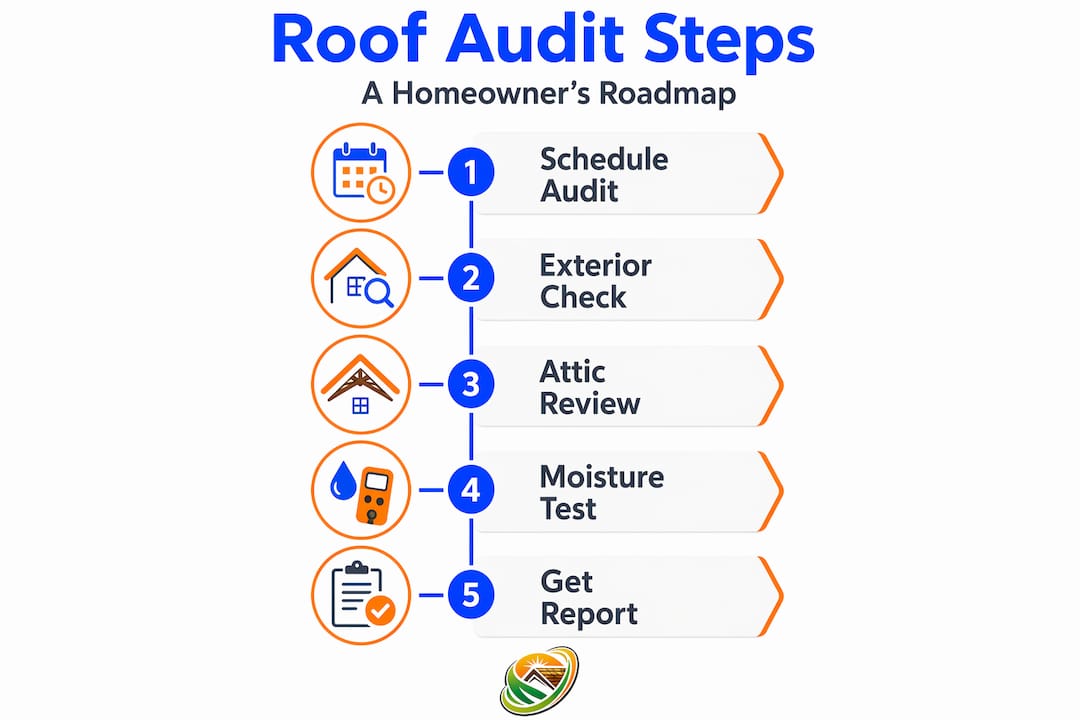
Scheduling: Plan to schedule audits twice a year or immediately after any severe weather event. In South Florida, the window right after a storm is especially valuable because you can document damage while it is still claimable through insurance.
-
On-roof inspection: The auditor physically walks your roof to examine shingles, flashing, ridge vents, valleys, and the roof surface. They are looking for granule loss, lifting shingles, cracked or missing pieces, and any signs of improper installation.
-
Attic inspection: This step is non-negotiable in a real audit. A thorough attic crawl with moisture readings can reveal deck rot, water staining, mold growth, and inadequate ventilation that would never show up in a surface check.
-
Tool-assisted diagnostics: Moisture meters detect water trapped beneath the surface. Cameras document tight or hard-to-reach areas. These tools increase accuracy and give you proof, not guesswork.
-
Documentation: A professional roof audit delivers a detailed, multi-page written report with photographs, precise issue locations, severity ratings, and clear recommendations. You walk away with a real document, not a salesperson's summary.
-
Recommendations: Based on findings, the auditor outlines your options. Common recommendations for South Florida homes include cleaning, targeted repairs, flashing replacement, ventilation upgrades, or in many cases, roof renewal rather than full replacement.
Pro Tip: Before your audit, clear your attic access point and remove any stored items blocking the hatch. Auditors who cannot access the attic will either skip it or charge extra for a return visit, and that step is too important to skip.
Common issues found in Broward and Palm Beach County homes include granule loss from intense UV exposure, curling shingles from heat and age, failed flashing around A/C curbs and pipes, and insufficient ridge vent coverage. The roof assessment process documents all of these clearly so you know exactly what you are dealing with before spending a dollar on repairs.
Benefits of roof audits for South Florida homeowners
The benefits of roof audits are concrete and measurable. This is not about peace of mind in the abstract. It is about protecting a significant financial asset in a climate that works against it every single day.
- Up to 80% in savings: Choosing renewal over replacement after a thorough audit can save homeowners thousands. A full shingle replacement in South Florida often runs between $15,000 and $30,000. An audit-guided renewal can cost a fraction of that.
- 10 to 15 years of added life: Timely maintenance guided by audits extends asphalt shingle roof life significantly. If your roof still has structural integrity but the shingles are drying out, renewal is often the smarter path.
- Prevention of costly failures: Small flashing issues and minor granule loss caught in an audit cost very little to address. Left unchecked, they lead to deck rot, interior water damage, and a full replacement bill.
- Insurance and resale documentation: A written audit report gives you leverage. When an insurance adjuster questions the age or condition of your roof, a documented history of professional audits proves responsible maintenance.
- Storm readiness: South Florida homeowners who audit their roofs before hurricane season go into it knowing their roof's weak points. That is not a small thing when a Cat 2 is heading for Broward County.
The financial math is straightforward. A residential roofing assessment costs a few hundred dollars. Skipping it and missing a repairable problem can cost you tens of thousands.
How to use audit results to protect your investment
Getting a roof audit is the first step. Knowing what to do with the results is what protects your home long-term.
When you receive your report, read the severity ratings first. Most professional reports categorize findings from minor maintenance items to urgent repairs requiring immediate attention. Focus your budget on the urgent and high-severity items first.
Here is how to move from audit to action:
- Compare repair vs. renewal: If your shingles are aging but structurally sound, renewal is often more cost-effective than patching and waiting. A roof longevity checklist can help you see the full picture before committing to any path.
- Budget with a timeline: Your report should give you a multi-year outlook. Use it to plan spending, not just react to emergencies.
- Choose qualified professionals: A real audit is a paid service with detailed documentation. Homeowners should avoid "free" inspections used as sales tools. Those rarely include attic checks, moisture readings, or unbiased recommendations.
- Schedule in advance of storm season: In South Florida, the best time to audit is late winter or early spring before June 1st. That gives you time to act on findings before the storms arrive.
- Keep your reports on file: Each audit adds to a documented maintenance history. That history is valuable when dealing with insurance carriers, future buyers, or contractors trying to quote work without full context.
If your audit reveals aging shingles with early signs of brittleness, curling, or granule loss, that is not a replacement sentence. It is a renewal opportunity. Catching it now, before the damage spreads, is exactly what the roof inspection checklist for South Florida homeowners is designed to help you do.
My honest take on why audits matter in Florida
I have seen too many homeowners in Broward and Palm Beach Counties make the same expensive mistake: they wait until something goes wrong before they look at their roof. By then, a repair that would have cost a few hundred dollars has turned into a full replacement.
What I have learned from working with South Florida homeowners is that the climate here does not give you the luxury of a reactive mindset. The sun does not pause between storm seasons. UV rays are breaking down your shingles every single day, drying out the oils that keep them flexible. When a storm finally hits, a roof that could have been saved with a simple audit becomes one that cannot.
In my experience, homeowners who get audits done regularly are almost always the ones who avoid premature replacements. Not because they got lucky. Because they knew what was happening on their roof before it became a crisis.
The audit does not just tell you what is wrong. It tells you what is worth saving. And in South Florida, that information is genuinely valuable.
— Daniellison
Protect your roof with Shingleroofrenewal
If your roof audit reveals aging shingles in need of attention, a full replacement is not your only option. Shingleroofrenewal serves homeowners across Broward and Palm Beach Counties with a certified renewal process that uses GreenSoy Technology to restore shingle flexibility at the molecular level, extending your roof's life by 10 to 15 years.
The process starts with a free inspection to assess whether your roof qualifies. If it does, you could save up to 80% compared to a full replacement, all backed by a 6-year transferable warranty. Shingleroofrenewal is an authorized Fresh Roof applicator, so you are getting a certified service, not a generic spray and pray. Learn more about the renewal process and services and find out what your roof is worth saving.
👉 Schedule your free roof inspection today and find out if your roof qualifies.
FAQ
What is a residential roof audit?
A residential roof audit is a thorough, documented evaluation of your entire roofing system, covering shingles, flashing, drainage, ventilation, structural components, and the attic. It goes well beyond a basic inspection and produces a written report with photos, severity ratings, and a maintenance roadmap.
How often should I get a roof audit?
Roof audits should be scheduled at least twice a year and immediately after any severe weather event. In South Florida, auditing before hurricane season and after any major storm gives you the best protection and the strongest documentation for insurance purposes.
What is the difference between a roof inspection and a roof audit?
A roof inspection is a reactive, surface-level check that identifies visible damage. A roof audit is a proactive, system-wide evaluation that assesses current condition, installation quality, future risks, and produces a detailed multi-page report with recommendations.
Can a roof audit help me avoid a full replacement?
Yes. An audit can identify problems early enough that renewal or targeted repairs are still viable options. Homeowners who catch shingle deterioration before it becomes structural damage can save up to 80% compared to a full roof replacement.
How do I find a qualified roof auditor in South Florida?
Look for professionals who provide a written report with photos and severity ratings, include an attic inspection, and charge a fee for the service. Avoid free inspections that serve primarily as sales tools, as they typically skip the documentation and depth that make an audit genuinely useful.