
TL;DR:
- Choosing manufacturer-certified applicators ensures proper application, protects your roof warranty, and extends its lifespan despite South Florida's harsh climate.
- Uncertified contractors pose risks of warranty voidance, technical failures, and costly premature roof replacements.
Certified applicators are roofing professionals officially authorized by manufacturers to apply roofing materials according to strict product-specific standards, ensuring both performance and warranty validity. For South Florida homeowners, this distinction is not a technicality. The relentless sun, heat, and storm cycles in Broward and Palm Beach County accelerate shingle deterioration faster than almost anywhere else in the country. Knowing why choose certified applicators matters is the difference between a roof that lasts and one that fails years before it should. The wrong contractor can void your warranty, compromise your shingles, and cost you far more than the money you thought you were saving upfront.
Why choose certified applicators over general contractors?
Manufacturer certification and a state roofing license are two very different things. A state license is the legal minimum required to work on roofs. Manufacturer certification proves product-specific competency through dedicated training programs and exams that go well beyond what a general license requires. That gap in knowledge is exactly where roof failures happen.
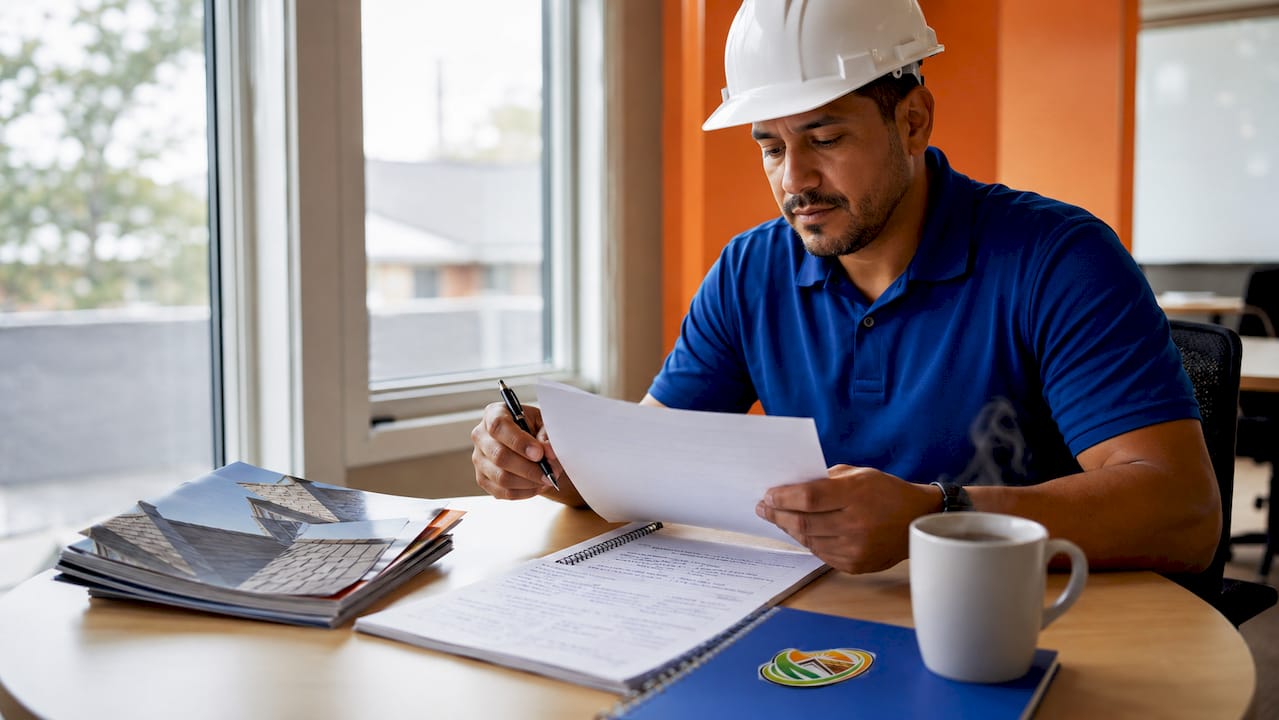
Certified applicators complete manufacturer-run training that covers product chemistry, correct application thickness, surface preparation requirements, and quality checkpoints specific to each product line. They are tested on these protocols and must maintain active authorization to keep their status. Homeowners who confuse a licensed contractor with a certified one often discover the difference only after a warranty claim gets denied.
Certification is product-line specific, meaning authorization for one roofing product does not automatically qualify a contractor for another. A contractor certified to apply one coating brand is not necessarily qualified to apply a different manufacturer's system. This is a detail most homeowners never think to ask about, and it creates real risk when the wrong product is applied by an unauthorized hand.
Pro Tip: Always ask a contractor to show you their current manufacturer authorization document, not just their state license. These are separate credentials, and only one of them protects your warranty.
The certification process also includes a review of the contractor's financial stability and workmanship history. Manufacturers assess these factors to protect their own brand reputation and to make sure certified contractors can honor long-term warranty commitments. That vetting process works in your favor as a homeowner.
What risks do uncertified roof applicators create?
Uncertified contractors create financial and structural risks that show up long after the job is done. The most immediate danger is warranty voidance. Manufacturers void warranties when uncertified installers perform work, leaving homeowners financially exposed despite paying for materials that should have been covered.
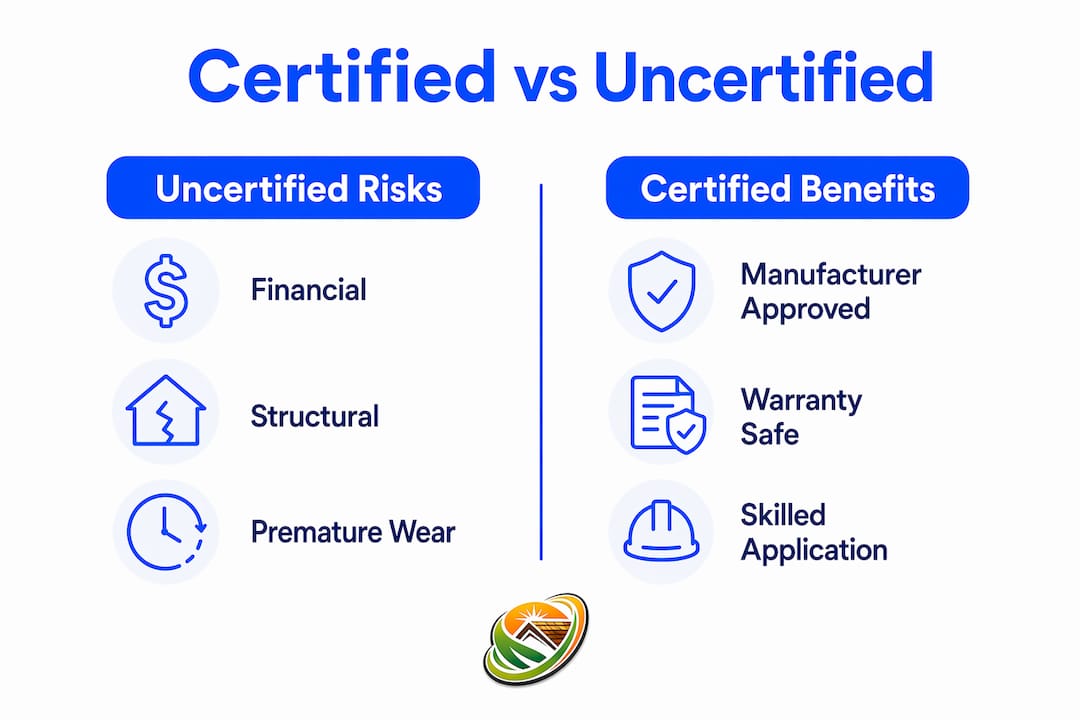
The financial math is stark. A homeowner who saves a few hundred dollars by hiring an uncertified contractor can end up paying the full cost of roof replacement out of pocket when a warranty claim is denied. That is not a hypothetical. It is a documented pattern in the roofing industry.
Beyond warranty issues, uncertified work produces technical failures that shorten roof life. Common problems include:
- Wrong application thickness. Products applied too thin or too thick fail to perform as designed, leading to premature cracking or peeling.
- Poor substrate preparation. No product performs properly if the surface beneath it is not correctly cleaned, dried, and primed. Certified applicators are trained to assess and prepare substrates before any product touches the roof.
- Incorrect sequencing. Many roofing systems require specific layering steps. Skipping or reversing steps causes delamination and moisture intrusion.
- Non-compliant materials. Uncertified contractors sometimes substitute unapproved products, which immediately voids manufacturer coverage.
Failure to follow manufacturer application standards is a leading cause of premature roof degradation. South Florida's climate amplifies every installation error. Heat and UV exposure punish improperly applied coatings faster here than in cooler climates, turning a small technical mistake into a full roof failure within a few years.
Key benefits of choosing certified applicators for your roof
The advantages of working with a certified applicator extend well beyond avoiding problems. They create real, measurable value for your roof and your wallet.
-
Access to extended warranty coverage. Certified applicators unlock premium warranty tiers covering both materials and installation errors, often extending coverage up to 50 years or lifetime. Standard warranties available through uncertified contractors typically cover materials only, leaving installation defects unprotected.
-
Verified technical expertise. Certified contractors have proven skills in complex installation details that general contractors simply are not trained on. They know how to read a roof's condition, identify problem areas before application, and adjust their process to match what the surface actually needs.
-
Ongoing manufacturer support. Certified applicators are integrated into manufacturer networks that provide ongoing technical support and efficient warranty claim handling throughout the life of your roof. When something goes wrong, you have a clear path to resolution rather than a contractor who has moved on.
-
Warranty validity at the moment of application. This is a detail most homeowners miss entirely. Manufacturer-backed warranties require that the contractor holds active certification at the exact time of application. A contractor whose certification lapsed before your job was completed leaves you with no warranty coverage, even if the work looks correct.
-
Long-term roof stewardship. Certified applicators participate in manufacturer compliance programs that hold them accountable over time. They are not anonymous contractors who disappear after the job. They are part of a verified network with a reputation to protect.
"Choosing a certified applicator is not just about getting the job done right today. It is about having a verified professional who remains accountable to a manufacturer's standards for the life of your roof. That accountability is what separates a protected investment from an expensive gamble."
The benefits of certified roof specialists are especially significant in South Florida, where roofs face year-round stress from UV radiation, humidity, and storm damage. Every layer of protection matters here.
How do you verify a certified applicator in South Florida?
Verification takes about ten minutes and protects you from years of potential problems. Here is what to check before signing any contract:
- Request the manufacturer authorization document. Ask for the specific certification tied to the product being applied to your roof. A legitimate certified applicator will have this on hand and will not hesitate to share it.
- Check the manufacturer's contractor database. Most major roofing product manufacturers maintain an online directory of currently authorized applicators. Cross-reference the contractor's name against that list.
- Confirm the certification is current. Less than 2% of roofing contractors hold top-tier certifications, and those certifications must be active at the time of your job. Ask for the expiration date and verify it.
- Review licensing and insurance. State licensure and general liability insurance are baseline requirements. Certification is the layer on top of these, not a replacement for them.
- Ask about warranty claim handling. A certified applicator should be able to explain exactly how a warranty claim would be processed, who the manufacturer contact is, and what documentation you will receive after the job.
Pro Tip: Ask the contractor to name the specific manufacturer certification they hold and the product line it covers. If they cannot answer that question clearly, they are not certified for your job.
The table below summarizes what to request and why it matters:
| Document or check | Why it matters |
|---|---|
| Manufacturer authorization letter | Confirms active certification for the specific product being applied |
| Manufacturer online directory listing | Independent verification that certification is current and legitimate |
| State roofing license | Legal minimum required to work; separate from manufacturer certification |
| Proof of general liability insurance | Protects you if property damage occurs during the job |
| Written warranty documentation | Confirms what is covered, for how long, and under what conditions |
The role of certified roof applicators in preventing installation failures is well documented. Doing this verification work upfront is far less painful than disputing a denied warranty claim after the fact.
Key Takeaways
Certified applicators are the single most reliable safeguard a South Florida homeowner has against premature roof failure, denied warranty claims, and unnecessary replacement costs.
| Point | Details |
|---|---|
| Certification differs from licensure | State licenses are the legal minimum; manufacturer certification proves product-specific training and authorization. |
| Warranty validity depends on certification | Manufacturers deny claims if the contractor was not actively certified at the time of application. |
| Uncertified work creates compounding risk | Poor prep, wrong thickness, and unapproved materials accelerate roof failure in South Florida's climate. |
| Extended warranties require certified applicators | Coverage up to 50 years or lifetime is only available through manufacturer-authorized contractors. |
| Verification takes minutes | Check the manufacturer's online directory and request the authorization document before signing any contract. |
What I've learned from watching homeowners skip this step
I have seen the same scenario play out more times than I can count. A homeowner gets three quotes, picks the lowest one, and never thinks to ask whether the contractor is manufacturer-certified. The job gets done. The roof looks fine. Then two years later, a storm causes damage, the homeowner files a warranty claim, and the manufacturer denies it because the contractor was not authorized. The homeowner is now looking at a full replacement bill with no coverage.
The frustrating part is that the certified option was often only marginally more expensive. The price gap between a certified and uncertified contractor is rarely the thousands of dollars homeowners assume. What is actually expensive is the uncertified job that leaves you holding a voided warranty and a deteriorating roof.
Certification is not a marketing badge. It is a manufacturer's way of saying, "We trained this person, we tested them, and we stand behind their work." When you hire a certified applicator, you are not just hiring a contractor. You are activating a system of accountability that extends from the product manufacturer all the way to your roof. That system is what makes the warranty real rather than theoretical.
My honest advice: treat certification verification the same way you treat checking a contractor's insurance. It is not optional. It is the minimum standard for protecting your home.
— Daniellison
Shingleroofrenewal's certified applicators protect your South Florida roof
Shingleroofrenewal is a certified authorized applicator of Fresh Roof's Green Soy Technology, a manufacturer-backed system that restores shingle flexibility at the molecular level and extends roof life by 10–15 years. Every job Shingleroofrenewal completes is backed by a 6-year transferable warranty, available only because of that certified status.
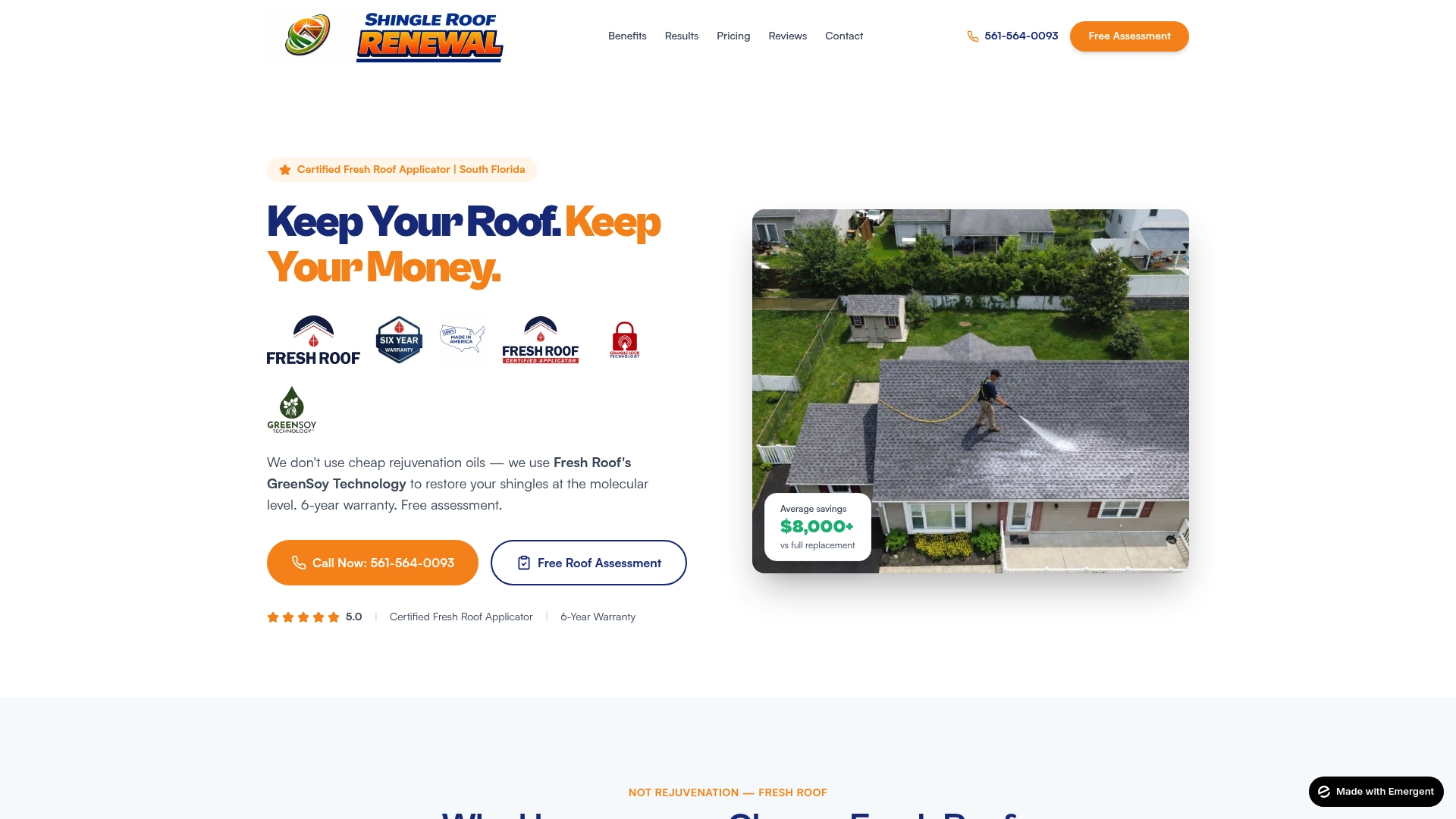
South Florida homeowners in Broward and Palm Beach County can schedule a free roof inspection to find out whether their roof qualifies for preservation and renewal. Most homeowners are surprised to learn their roof can still be saved before replacement becomes necessary. Shingleroofrenewal's certified preservation services give you a clear, honest assessment and a warranty-backed path forward. Call before you call the roofer. Visit Shingleroofrenewal to schedule your free inspection today.
FAQ
What makes a certified applicator different from a licensed contractor?
A state license is the legal minimum to perform roofing work. Manufacturer certification proves product-specific training, testing, and active authorization, which is required for warranty-eligible installation.
Can an uncertified contractor void my roof warranty?
Yes. Manufacturers void warranties when uncertified contractors perform work, even if the application appears correct. Warranty validity is tied to the contractor's certified status at the time of the job.
How do I find a certified applicator in South Florida?
Check the manufacturer's online contractor directory for your specific roofing product, then ask the contractor to provide their current authorization document. Confirm the certification is active before signing any contract.
Is certification specific to one roofing product?
Yes. Certification is product-line specific, meaning a contractor authorized for one manufacturer's system is not automatically qualified for another. Always confirm the certification matches the product being applied to your roof.
What warranty coverage can a certified applicator provide?
Certified applicators unlock extended warranty tiers covering both materials and installation errors, with coverage options that can reach up to 50 years or lifetime. Uncertified contractors can only offer standard material-only warranties.