
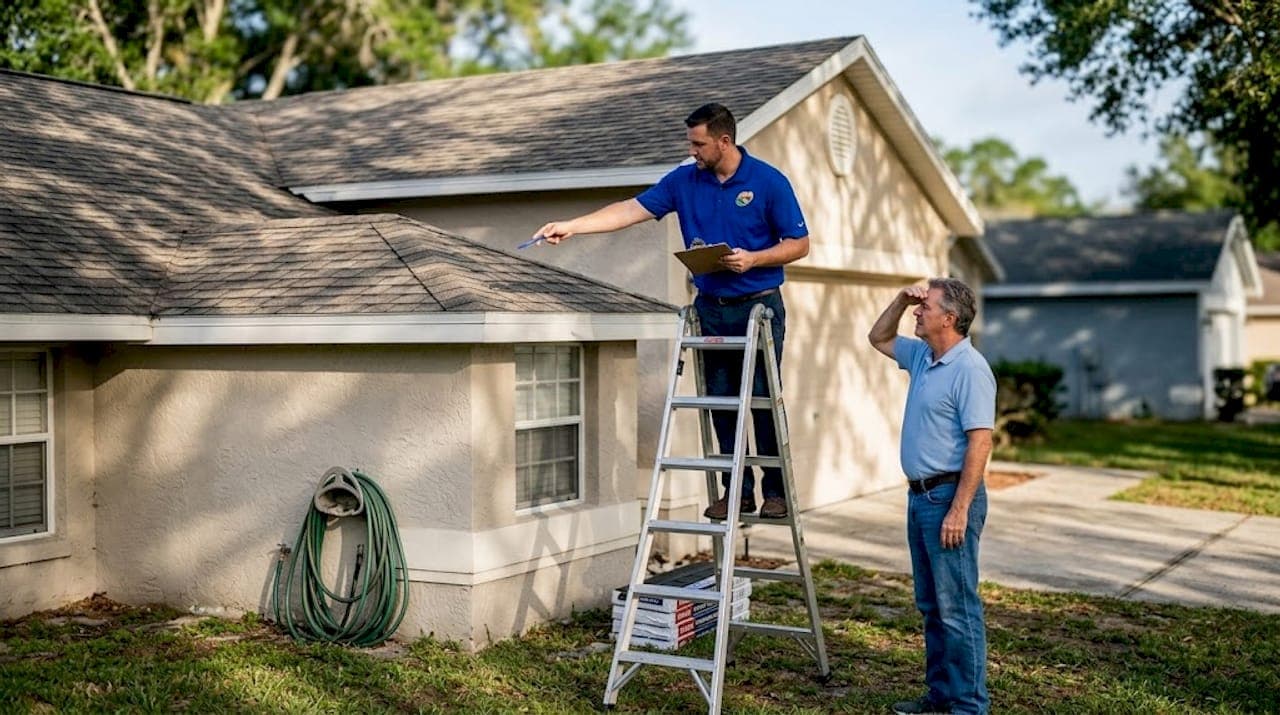
TL;DR:
- Roof certification confirms actual roof condition, helping homeowners avoid unnecessary replacement costs.
- It offers benefits like early problem detection, insurance compliance, and increased resale value.
- Regular certification can extend roof lifespan and prevent costly damage, especially in South Florida's climate.
Your aging roof doesn't automatically mean you need a $20,000 replacement. Thousands of homeowners in Broward and Palm Beach counties are discovering that roof certification offers a smarter, far more affordable path forward. Instead of assuming the worst when shingles start to show wear, certification lets a professional confirm exactly what condition your roof is in, catch small problems early, and give you documented proof that your roof is still sound. This article walks you through what roof certification is, why it matters in South Florida's punishing climate, and how it could save you serious money.
Table of Contents
- What is roof certification and how does it work?
- Key benefits of roof certification for Florida homeowners
- Roof certification vs. replacement: which is right for you?
- How roof certification increases home value and saleability
- Our take: most homeowners underestimate the power of roof certification
- Ready to protect and extend the life of your roof?
- Frequently asked questions
Key Takeaways
| Point | Details |
|---|---|
| Extends roof lifespan | Certification spotlights minor issues early, preventing costly damage and adding years to your roof’s life. |
| Saves on replacement costs | A certified roof often delays or eliminates the need for a total replacement, keeping more money in your pocket. |
| Boosts home value | Certified roofs give buyers and lenders peace of mind, helping your home sell faster and for more. |
| Improves insurance eligibility | Certification can help you qualify for better insurance rates and avoid policy cancellations. |
What is roof certification and how does it work?
Now that you know replacement isn't always necessary, it's crucial to understand exactly what roof certification is and how it works.
Roof certification is a professional inspection and official documentation process that confirms your roof's current condition. As covered in a roof inspection checklist, roof certification involves inspection and validated documentation that carries weight with insurers, lenders, and real estate agents. It's not just a walk-around. It's a structured evaluation that results in a signed report you can actually use.
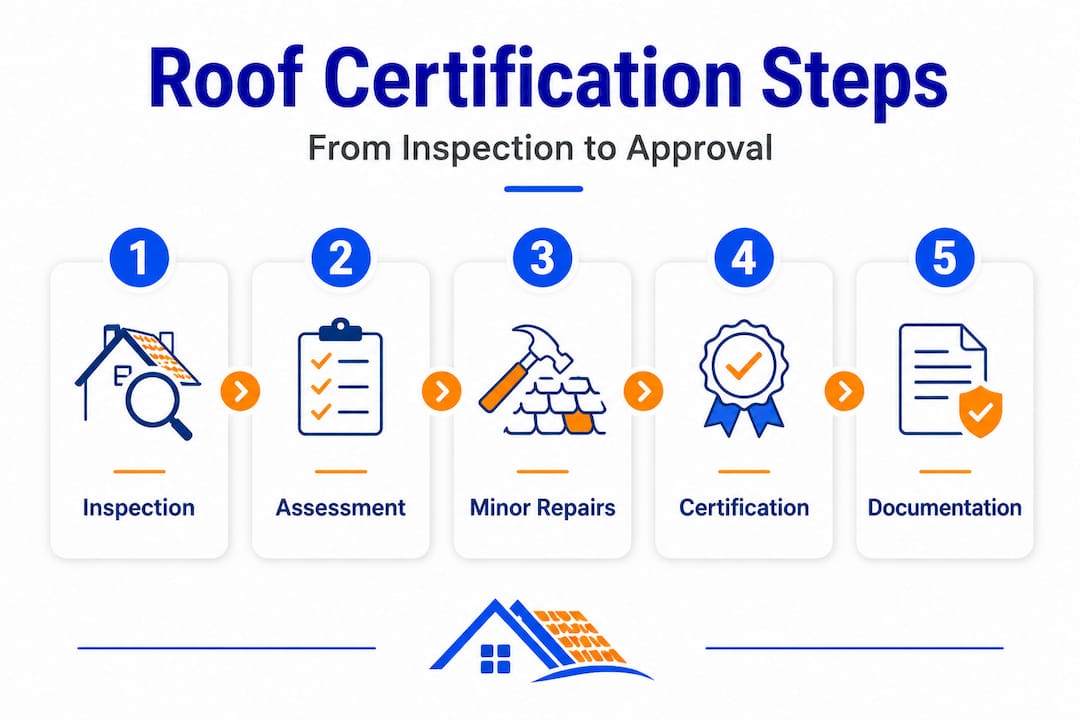
The documentation is typically valid for two to five years. That means you aren't just getting a one-time snapshot. You're getting ongoing protection and proof that your roof has been professionally evaluated.
Here's how the process typically works, step by step:
- Initial inspection: A certified roofing professional climbs your roof and evaluates every visible element, including shingles, flashing, gutters, vents, and the decking below.
- Identification of issues: The inspector documents any areas of concern, from missing granules to small cracks, curling shingles, or compromised flashing around chimneys and skylights.
- Repair recommendations: If minor repairs are needed before certification can be issued, the inspector will outline exactly what needs to be fixed and why.
- Completion of repairs: The recommended repairs are performed, either by you, your contractor, or as part of the certification service itself.
- Final assessment: Once repairs are done, a second review confirms the roof is in certifiable condition.
- Official documentation: You receive a signed certificate that records the roof's condition, the work performed, and the certification's expiration date.
This process connects directly to the broader roof assessment process, which is designed to give homeowners a full picture of their roof's health before committing to expensive decisions.
Pro Tip: Schedule your roof certification before hurricane season in South Florida. Getting it done in late spring gives you time to complete any recommended repairs and have documentation in hand before storm threats arrive. Insurers pay close attention to roof condition when storms are on the forecast.
Key benefits of roof certification for Florida homeowners
Understanding what roof certification involves sets the stage for exploring its compelling benefits, especially in South Florida's unique climate.
Florida's combination of intense UV rays, high humidity, salt air, and frequent storms is particularly hard on asphalt shingles. The sun bakes out the oils that keep shingles flexible. Then the rain and wind finish the job. For homeowners in Broward and Palm Beach counties, this means roofs age faster than in most other parts of the country. Certification doesn't just protect your home structurally. It protects your finances, your insurance coverage, and your peace of mind.
Here's what roof certification actually delivers for you:
- Early problem detection: Small issues like a cracked vent boot or a few lifted shingles are inexpensive to fix. Left alone, they become leaks, mold, and structural rot that cost five to ten times more to repair. As shown in top reasons to restore your roof instead of replacing it, certification can prevent unexpected roofing expenses by identifying minor issues before they become costly emergencies.
- Insurance compliance: Many Florida insurance carriers now require proof of roof condition before renewing or issuing a homeowners policy. A current roof certification keeps you compliant and prevents a sudden policy cancellation that could leave your home unprotected.
- Lower insurance premiums: Some carriers reduce premiums for recently certified roofs because they represent lower risk. It's worth calling your insurer directly after receiving certification to ask about available discounts.
- Mortgage and refinancing support: Lenders often require a roof certification before approving home loans or refinances, especially on homes with roofs older than ten years. Having documentation ready speeds up the process considerably.
- Higher resale value: A certified roof signals to buyers that the home has been well maintained. It removes one of the biggest concerns buyers have and can help you command a stronger asking price.
"A certified roof can save homeowners thousands in unplanned repairs."
When you look at Florida's climate and its impact on shingle roofs, it becomes clear that proactive maintenance isn't optional here. It's essential. And when you pair certification with a proper roof damage assessment workflow, you build a clear, documented history of your roof's condition over time. That history is valuable when dealing with insurance claims, buyers, or contractors who might otherwise try to upsell you on work you don't need.
Roof certification vs. replacement: which is right for you?
Knowing the benefits, you may wonder whether certification is enough or if it's time for a full replacement.
The honest answer is: it depends on your roof's actual condition. Not its age. Not how it looks from the street. Its actual structural condition. A roof that's 18 years old but has been maintained well may certify without any issue. A roof that's only 12 years old but was installed poorly or hit repeatedly by storms may be past the point of certification.
Here's a straightforward comparison to help you decide:
| Factor | Roof certification | Full replacement |
|---|---|---|
| Cost | Typically $150 to $500 for inspection and minor repairs | $15,000 to $30,000 for full replacement |
| Process | Inspection, minor repairs, documentation | Full tear-off, new materials, installation |
| Time to complete | Usually 1 to 2 days | Several days to a week |
| Insurance impact | Can maintain or improve coverage | Typically resets coverage favorably |
| Best for | Fair to good condition roofs with minor wear | Severely damaged or end-of-life roofs |
| Long-term outcome | Extends roof life 5 to 10+ years with proper care | Full new lifespan (20 to 30 years) |
As a proper roof assessment process confirms, the right evaluation can help you avoid premature replacement by extending shingle life when the structure is still sound.
Signs you may only need certification, not a full replacement:
- Limited or no active leaks inside the home
- Most shingles are still intact with no widespread curling, cracking, or missing sections
- Minor granule loss but shingles still have adequate coverage
- Age-related wear but no signs of structural decking damage
- Isolated damage from a single storm event rather than widespread deterioration
If you're unsure which category your roof falls into, use the inspection checklist as a starting guide before calling in a professional. It will help you ask the right questions and understand what the inspector is looking at during the visit.
How roof certification increases home value and saleability
After understanding certification's cost benefits, it's equally important to see how it can impact your home's value when selling.
Real estate in Broward and Palm Beach counties is competitive. Buyers are cautious, and home inspections frequently flag roof concerns as deal-breaking issues. A roof that fails inspection can stall a sale for weeks, reduce the final sale price by thousands, or kill the deal entirely. A certified roof eliminates that uncertainty before it ever becomes a problem.
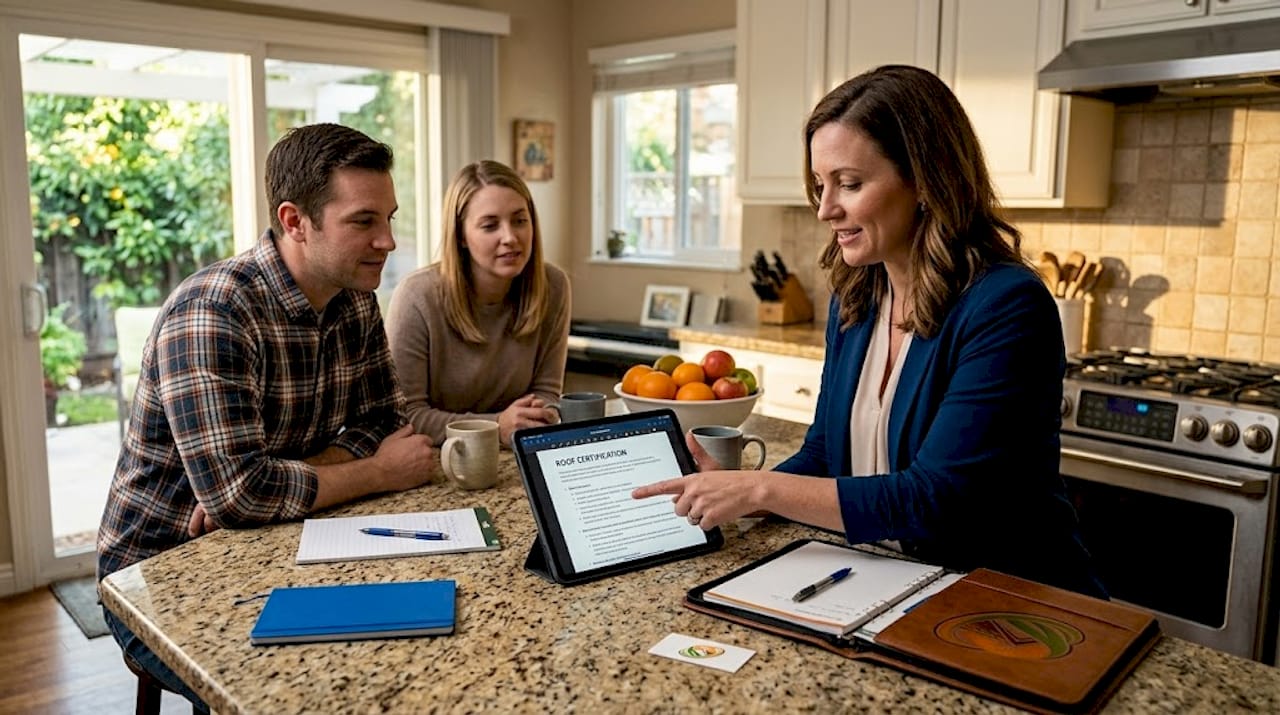
Certified roofs boost buyer confidence and can streamline appraisals. When a buyer's lender requests a roof inspection and you already have a current certification on file, the process moves faster. You're not scrambling to find a contractor or negotiating last-minute repairs. You're simply handing over documentation and moving forward.
Here's how homes with certified roofs tend to compare at sale:
| Metric | Home without certification | Home with current certification |
|---|---|---|
| Average days on market | 45 to 60 days | 25 to 35 days |
| Buyer-requested price reductions | Common (avg. $3,000 to $8,000) | Rare |
| Inspection-related delays | Frequent | Minimal |
| Buyer confidence level | Lower, especially for older roofs | Higher, reduces perceived risk |
| Appraisal complications | More likely for roofs 15+ years old | Less likely with current documentation |
These are real differences that affect your bottom line. Sellers who invest a few hundred dollars in certification before listing often recover ten to twenty times that amount in avoided price reductions and a faster closing timeline.
If you're in areas like Delray Beach or Wellington, where the housing market moves quickly, having a certified roof is a genuine competitive advantage. Buyers have options. Giving them one less reason to negotiate or walk away makes your home stand out.
Pro Tip: Renew your roof certification within 90 days of listing your home. An outdated certificate from three years ago won't carry the same weight as one issued this season. Fresh documentation shows buyers and their agents that you've been attentive and proactive about maintenance.
Our take: most homeowners underestimate the power of roof certification
We've worked with a lot of homeowners across South Florida. And again and again, we see the same pattern. Certification gets treated as optional. Something to deal with later. Until later becomes a crisis.
One homeowner in Plantation had a roof that was 16 years old. It looked fine from the driveway. She kept putting off an inspection because nothing was leaking. Then hurricane season arrived, and a storm revealed damage that had been silently growing for two years. What would have been a $400 certification and $600 in minor repairs turned into an insurance dispute and a $22,000 replacement.
That story isn't unusual. It's common. And it's exactly why we believe that the real value of roof certification is only understood in hindsight, when you see what it could have prevented.
Here's the contrarian truth most roofers won't tell you: in high-heat, storm-prone regions like South Florida, waiting for visible damage is the most expensive strategy you can choose. Visible damage means the problem has already advanced past the point of easy repair. By the time shingles are visibly failing, the underlayment beneath them may already be compromised. And underlayment damage leads to deck damage, which leads to replacement, not restoration.
Regular certification, paired with smart solutions like restoring your roof rather than replacing it, keeps you in control of your timeline and your budget. You're not reacting. You're managing. That shift in mindset is worth far more than any single repair.
We also hear homeowners say they don't want to "find out bad news." That's understandable. But avoiding the inspection doesn't prevent the damage. It just means you find out later, when the options are fewer and the costs are higher. Knowledge, in this case, absolutely saves money.
Ready to protect and extend the life of your roof?
If you've been putting off a roof inspection, now is the time to act. The longer you wait, the narrower your options become.
At Shingle Roof Renewal, we serve homeowners across Broward and Palm Beach counties, from Delray Beach to Plantation and beyond. Our certified team will inspect your roof, assess its true condition, and give you an honest recommendation. No pressure. No upsell. Just clear information so you can make the best decision for your home and your budget. We use advanced GreenSoy Technology to restore asphalt shingles at the molecular level, and we can help you understand how Fresh Roof compares to standard rejuvenation so you know exactly what you're getting. If your roof qualifies, you could save up to 80% compared to a full replacement, backed by a 6-year transferable warranty.
Schedule your free roof inspection today and find out if your roof qualifies.
Frequently asked questions
How long does a roof certification last in Florida?
Most roof certifications are valid for 2 to 5 years in Florida, depending on the provider and the condition of the roof at the time of inspection.
Does roof certification lower homeowners insurance premiums?
It can. Many insurers offer discounts for recently certified roofs because they indicate a lower risk of sudden failure or undetected damage.
What does a roof inspection for certification include?
Inspections cover shingles, underlayment, flashing, and all areas prone to leaks or material wear before the certification is issued.
Should I get my aging roof certified if I plan to sell soon?
Yes. Certified roofs boost buyer confidence and market value, helping your home sell faster and with fewer price negotiations.
Is roof certification worth it for roofs older than 15 years?
Yes, as long as the roof is structurally sound. Proper assessment can extend shingle life and help you avoid the expense of premature replacement when the structure still has usable life remaining.