
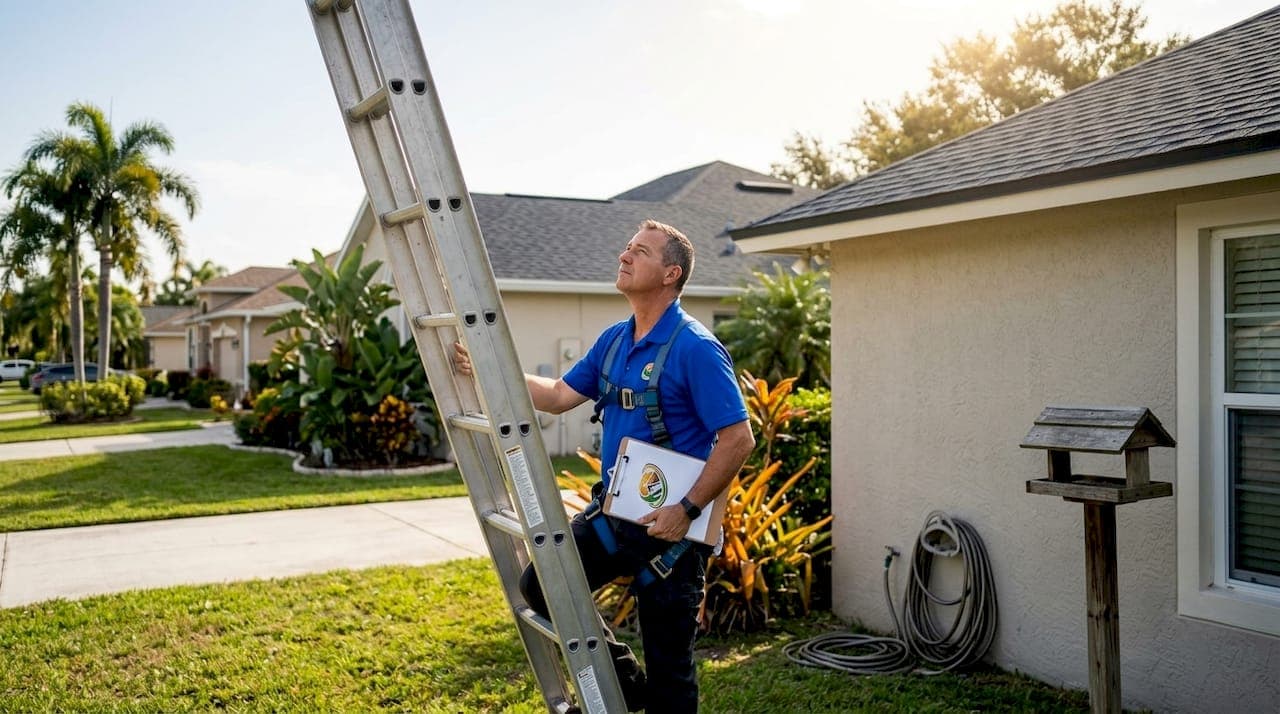
TL;DR:
- Certification ensures roof installers are trained specifically for South Florida’s extreme conditions, providing longer-lasting roofs. It also unlocks factory-backed warranties up to 25 years, offering better protection if the contractor closes. Verifying certification before hiring guarantees quality installation and enhances your home’s resilience and resale value.
Not every roofer who knocks on your door after a storm offers the same level of protection. In Broward and Palm Beach Counties, where brutal summer heat and hurricane season put asphalt shingles through constant stress, the role of certified roof applicators goes far beyond nailing down shingles correctly. Certification determines what warranties you get, who stands behind your roof if something goes wrong, and whether your shingles last 10 years or 25. This article breaks down exactly what that difference means for your home and your wallet.
Table of Contents
- Key Takeaways
- What certification really means for your roof
- How certified applicators deliver quality installation
- Warranty benefits you only get with certified installers
- Real-world advantages for South Florida homeowners
- How to verify and choose certified applicators locally
- My honest take after years in South Florida roofing
- Protect your roof with a certified South Florida team
- FAQ
Key Takeaways
| Point | Details |
|---|---|
| Certification exceeds licensing | A state license meets legal minimums, but certification requires manufacturer training and unlocks extended warranties. |
| Installation errors are the top threat | Improper installation causes most roof failures, not material defects — certified applicators follow strict specs to prevent this. |
| Premium warranties require certified installers | Workmanship coverage up to 25 years is only available when a certified professional does the work. |
| Factory-backed protection stays active | If your contractor closes, a manufacturer-backed warranty from a certified installer still protects you. |
| South Florida demands certified expertise | Constant sun, storms, and humidity accelerate shingle aging, making certified application critical for roof longevity. |
What certification really means for your roof
Many homeowners assume that any licensed roofer is qualified to do the job. That is understandable. But licensing confirms legal minimums only. It means the contractor has met Florida's state requirements to operate. It says nothing about product-specific training, installation quality, or whether they can offer you anything beyond a basic material warranty.
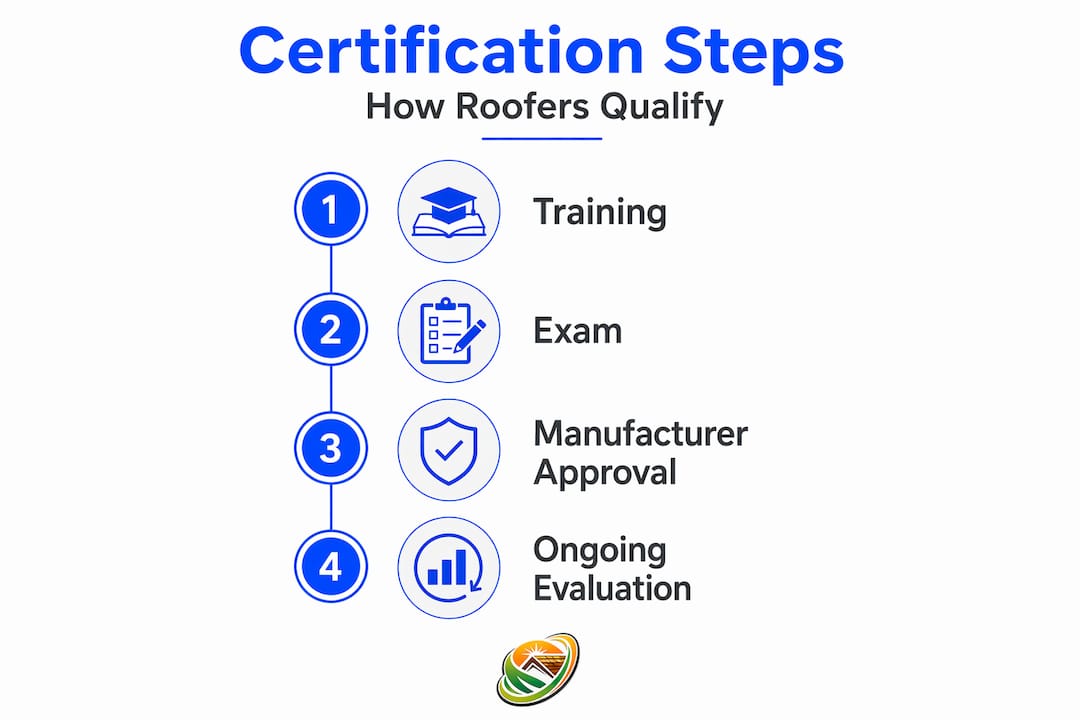
Certification is different. It is voluntary, earned through manufacturer-specific training programs, written exams, and ongoing education requirements. Programs like GAF Master Elite and NRCA ProCertified require contractors to demonstrate real knowledge of product systems, installation methods, and building codes. Certification programs require ongoing education that goes well beyond the initial qualification. That means a certified applicator keeps up with changes in materials, climate expectations, and manufacturer requirements year after year.
In South Florida, this distinction matters more than it does in most other states. Broward and Palm Beach Counties face year-round UV exposure, seasonal hurricane threats, and humidity levels that accelerate shingle aging fast. Choosing someone with only a state license to handle your asphalt shingle roof is a real risk. Choosing a certified roof applicator means you are getting someone trained specifically on how to make your roofing system perform in these conditions.
Here is what sets certified applicators apart:
- They complete manufacturer-approved training and pass product knowledge exams
- They are vetted for their financial standing and business practices
- They install roofing systems per strict manufacturer specifications, not just general codes
- They qualify you for enhanced warranties that uncertified contractors cannot offer
- They keep up with annual training requirements to maintain their certification status
Pro Tip: Ask any roofing contractor to show you their certification documents before you agree to a quote. A legitimate certified applicator will have no hesitation providing proof.
How certified applicators deliver quality installation
The most common reason roofs fail prematurely has nothing to do with the shingles themselves. Material defects account for just 0.1% of roof failures. The real culprit is installation error. Nails placed too high, underlayment installed without proper overlap, flashing cut incorrectly around vents and chimneys. These mistakes are invisible on inspection day but become expensive problems within a few years.
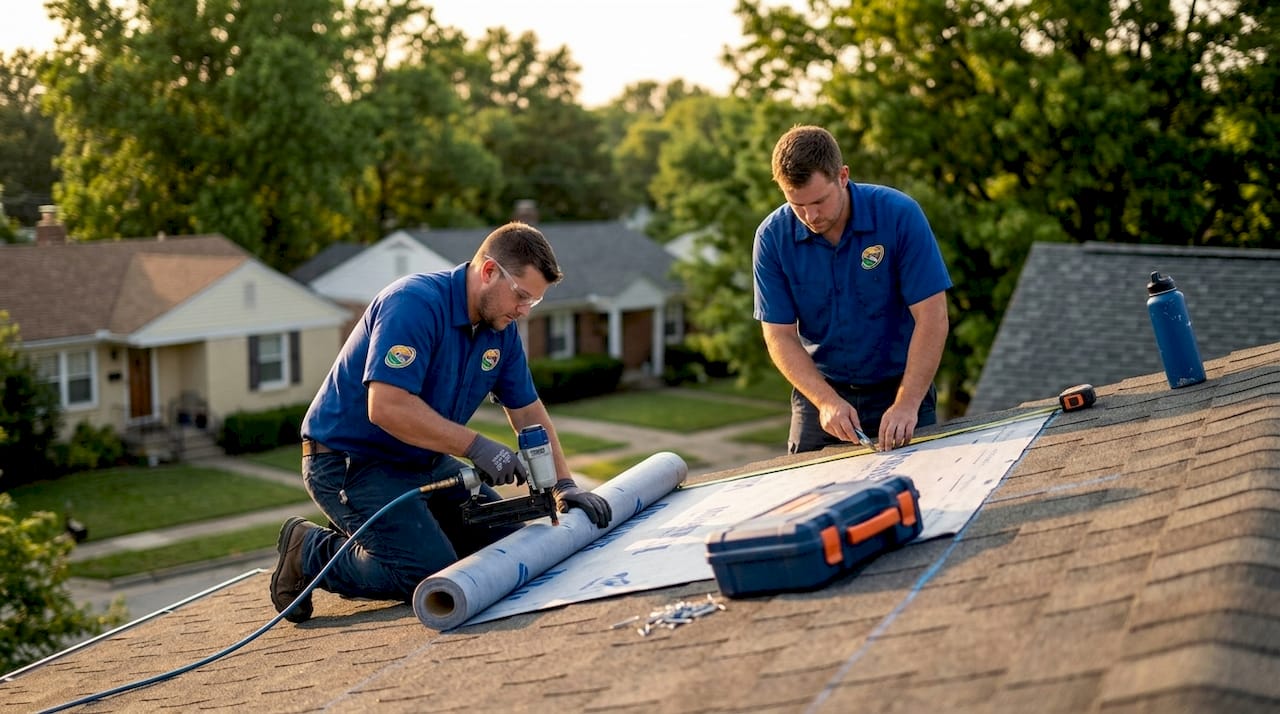
Certified roof applicators are trained to treat your roof as an integrated system, not individual components. Every layer, from the deck to the underlayment to the shingles and ridge cap, needs to work together to handle South Florida's extreme conditions. A certified applicator does not improvise. They follow the manufacturer's complete installation sequence, use compatible components, and verify that every stage meets the spec before moving to the next.
The inspection process is also more thorough with certified professionals. Registered Roof Observers verify that roofing systems are installed per design specifications, catching hidden gaps that would otherwise lead to leaks or warranty voidance. Here is how the quality process typically works on a certified job:
- Pre-installation inspection of the existing deck for soft spots, moisture damage, and structural issues
- Verification that materials match the approved product specifications for the warranty being offered
- Step-by-step installation following the manufacturer's written guidelines without substitution
- Mid-installation quality check to confirm nailing patterns, sealing, and underlayment overlap
- Final walkthrough and documentation to support warranty registration
"Certified contractors enforce manufacturer installation specs vital for roof performance in extreme weather, avoiding shortcuts and increasing durability." — Why RRO expertise matters
This process matters enormously for homes in Broward and Palm Beach Counties. The difference between a properly installed shingle system and a rushed job is often the difference between your roof surviving a Category 2 storm intact and filing an insurance claim the following week.
Warranty benefits you only get with certified installers
This is where certification translates directly into dollars. Uncertified installers can offer you a material warranty from the manufacturer. That warranty covers defective shingles, which, as noted above, accounts for almost none of actual roof failures. It does not cover the installation.
Certified applicators unlock a completely different tier of protection. GAF Master Elite certification offers the Golden Pledge warranty with lifetime limited material coverage and up to 25 years of non-prorated workmanship coverage. Non-prorated means the full value of the warranty applies whether your roof fails in year two or year twenty-two. That is a fundamentally different level of protection. Read more about what these warranty tiers mean for your shingle roof.
| Warranty type | Uncertified installer | Certified installer |
|---|---|---|
| Material defects | Limited manufacturer coverage | Lifetime limited coverage |
| Workmanship errors | Contractor only (if still in business) | Up to 25 years, factory-backed |
| Protection if contractor closes | None | Manufacturer handles the claim directly |
| Wind damage coverage | Basic | Enhanced, up to 130 mph |
| Transferability | Rarely included | Typically transferable to new owner |
The transferability point deserves attention if you are a property manager or plan to sell your home. A transferable, factory-backed warranty adds real resale value. Buyers and their inspectors notice. A roof with a premium warranty already in place is a selling point that a basic material warranty cannot match.
Factory-backed warranty claims remain valid even if the original contractor goes out of business. This matters more than most homeowners realize. In South Florida, roofing companies come and go, especially after active hurricane seasons. If your roofer disappears and you only have a contractor-backed workmanship warranty, you have no coverage at all. With a manufacturer-backed premium warranty, the manufacturer handles your claim directly regardless of what happened to the company that installed your roof.
Real-world advantages for South Florida homeowners
The abstract benefits of certification become very concrete when you are dealing with South Florida's climate. Constant UV radiation bleaches and oxidizes shingles. Summer heat cycles cause shingles to expand and contract repeatedly. Hurricane season brings wind-driven rain that tests every seam and penetration point on your roof.
Certified applicators trained for these conditions produce roofs that simply perform better over time:
- Shingles installed to spec show significantly less granule loss, which is the first visible sign of premature aging in this climate
- Proper sealing and nailing patterns reduce wind uplift damage during tropical storms
- Correct underlayment installation prevents moisture intrusion even when shingles are compromised
- System-level thinking means flashing and ventilation work correctly, reducing heat buildup that accelerates shingle degradation
- Documented installation records support insurance claims and speed up the adjustment process after storm events
Pro Tip: After any storm passes through Broward or Palm Beach County, your roof inspection records from a certified installation become critical documentation for your insurance adjuster. Keep them with your home files.
Understanding why roof certification protects your investment goes hand in hand with understanding why South Florida homes need more than a basic installation. The math is simple. A certified installation that extends your roof's life by 10 to 15 years and comes with factory-backed warranty coverage is worth more than a cheaper job that leaves you exposed when problems develop.
Addressing insurance pressure is another real benefit. Homeowners in Broward and Palm Beach Counties are dealing with a tight insurance market. Insurers look at roof age, condition, and documentation. A roof installed by a certified professional with documented inspections and a premium warranty is a much stronger position to be in than a roof with no verifiable installation records.
How to verify and choose certified applicators locally
Finding a certified roof applicator in Broward or Palm Beach County is straightforward once you know what to look for. The important thing is not to take a contractor's word for it. Verify independently.
Follow these steps before you sign anything:
- Ask the contractor to provide their certification name, number, and issuing manufacturer or organization directly. Write it down.
- Visit the manufacturer's website directly (GAF, CertainTeed, Owens Corning) and use their contractor locator tool to confirm the certification is active and current.
- Ask specifically what warranty tiers they can offer you. If they cannot offer workmanship coverage beyond their own company's word, they are not certified at the level they may be implying.
- Check for membership in the National Roofing Contractors Association (NRCA) or similar professional organizations, which require verified credentials.
- Request references from recent jobs in Broward or Palm Beach County specifically. Local experience with South Florida conditions is not the same as general roofing experience.
- Confirm they pull permits for all work. Certified applicators in Florida understand local building codes and do not skip this step.
Be skeptical of any contractor who discourages you from verifying their credentials online. Certification is a point of pride for applicators who have earned it. Transparency is part of the package. A professional roof inspection checklist can also help you know what questions to ask and what to watch for during the assessment process.
My honest take after years in South Florida roofing
I have seen what happens when homeowners skip the certification check. It usually does not show up immediately. The roof looks fine for a year or two. Then granules start appearing in the gutters. Then a storm reveals a flashing problem that should have been obvious from day one. Then the homeowner calls the contractor, only to discover they went out of business. No warranty. No coverage. Just a repair bill or a full replacement quote.
What I have learned working with South Florida homeowners is that the upfront cost difference between a certified and uncertified installer is almost never as large as people fear. But the difference in what you get for that money is enormous. A premium factory-backed warranty worth up to 25 years of workmanship coverage is not a small benefit. It is the difference between paying out of pocket for a roof failure and making a phone call to a manufacturer who handles it for you.
I have also seen homeowners underestimate how much certification matters for the renewal process. When your shingles are aging and you want to extend their life rather than replace them, a certified applicator's inspection report carries real weight. It tells you the honest condition of your roof and whether intervention can still save it. That kind of unbiased professional assessment is something an uncertified contractor simply cannot credibly provide.
My recommendation is always the same. When it comes to your asphalt shingle roof in Broward or Palm Beach County, never hire on price alone. Hire on certification, documented experience in this climate, and the warranty they can actually back up in writing.
— Daniellison
Protect your roof with a certified South Florida team
Knowing the role of certified roof applicators is only half the equation. The other half is working with a team that actually holds those credentials and knows this market.
At Shingleroofrenewal, we are certified authorized applicators of Fresh Roof's GreenSoy Technology, and we work exclusively in Broward and Palm Beach Counties. If your asphalt shingles are aging, curling, or losing granules, we can assess whether your roof qualifies for renewal instead of a full replacement. Most homeowners we work with save up to 80% compared to the cost of a new roof, and every renewal is backed by a 6-year transferable warranty. Whether you are in Plantation or Delray Beach, our certified renewal services are built for South Florida conditions. Schedule your free inspection today and find out if your roof can be saved.
FAQ
What does a certified roof applicator do differently?
A certified roof applicator follows strict manufacturer installation specifications and uses compatible materials, which reduces installation errors and qualifies the homeowner for extended, factory-backed warranties that uncertified installers cannot offer.
Why does certification matter more than a roofing license in Florida?
A Florida roofing license confirms a contractor meets state legal minimums. Certification goes further by requiring manufacturer-specific training, vetting, and ongoing education, which unlocks better warranties and ensures proper installation for South Florida's severe weather conditions.
What warranties are only available through certified installers?
Premium warranties like the GAF Golden Pledge offer lifetime material coverage and up to 25 years of non-prorated workmanship coverage, which are exclusively available when the installation is performed by a certified contractor.
What happens to my warranty if my roofer goes out of business?
If your roof was installed by a certified applicator under a manufacturer-backed premium warranty, the manufacturer handles your claim directly even if the original contractor no longer exists, providing long-term protection for your home.
How do I verify a roofer's certification in Broward or Palm Beach County?
Ask the contractor for their certification name and number, then confirm it independently on the manufacturer's official website using their contractor locator tool. Active certification status should be easy to verify within minutes.