
TL;DR:
- In South Florida, 30-year shingles typically last 15 to 22 years due to harsh climate conditions. The costs for replacement range from $8,500 to $18,000, influenced by hurricane codes, material certification, and labor. Maintaining and renewing the roof can significantly extend its lifespan and reduce expenses.
The 30 year shingles price in South Florida typically runs between $8,500 and $18,000 for a standard 2,000 sq ft home, which is 15–30% above the national average due to hurricane building codes and storm-driven demand. The industry term for these products is "30-year architectural asphalt shingles," a laminated shingle rated for three decades under temperate conditions. South Florida is not a temperate climate. Before you call a roofer and commit to a five-figure replacement, you need to understand exactly what drives that price, how long these shingles actually last here, and whether your current roof still has life left in it.
What does 30 year shingles price really mean in South Florida?
The "30-year" label on architectural asphalt shingles is a manufacturer warranty rating, not a performance guarantee for Florida conditions. Manufacturer warranties are based on temperate climate lab tests. South Florida's intense UV radiation, heat, and humidity degrade asphalt at a much faster rate than those tests account for.
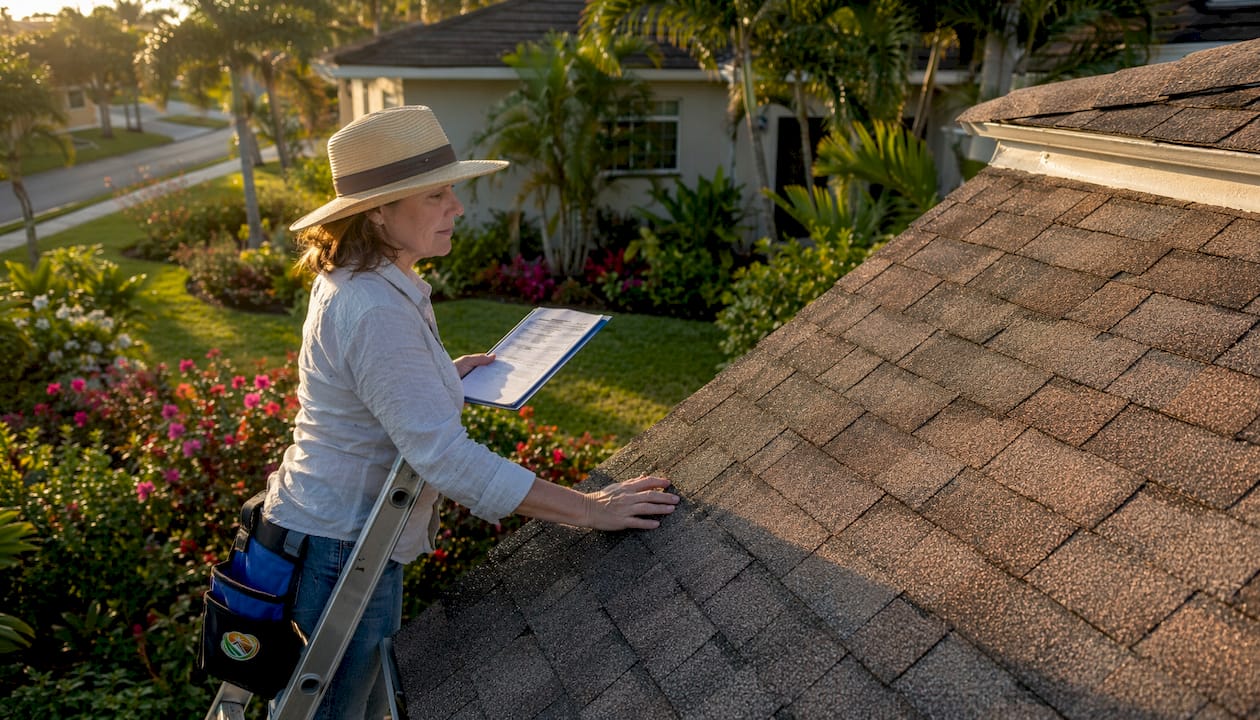
The practical result is significant. 30-year architectural shingles in Florida realistically last between 15 and 22 years. That is 30–50% shorter than the warranty suggests. For a homeowner budgeting around a 30-year replacement cycle, this gap is a costly surprise.
Insurance companies already know this. Most Florida insurers will not renew policies for homes with shingle roofs older than 15 years. That policy creates a hard deadline that has nothing to do with whether your shingles are actually failing.
Pro Tip: Ask your insurance agent for the exact age threshold on your policy before you get any roofing quotes. Knowing that number tells you how much time you actually have to weigh your options.
How Florida's climate and building codes drive up replacement costs
South Florida's environment attacks asphalt shingles from multiple directions at once. UV radiation bakes out the oils that keep shingles flexible. Heat cycling causes expansion and contraction that loosens granules. Humidity accelerates algae growth and moisture intrusion. The result is shingles that crack, curl, and shed granules years ahead of schedule.
Regulatory requirements add another layer of cost. Miami-Dade and Broward counties fall under the High Velocity Hurricane Zone (HVHZ), which mandates NOA-approved materials for all roofing work. NOA stands for Notice of Acceptance, a certification issued by Miami-Dade County that confirms a product can withstand hurricane-force winds. Non-compliant materials fail inspection and void insurance coverage.
These code requirements affect your wallet in three specific ways:
- Material selection is restricted. You cannot simply buy the cheapest shingle on the shelf. It must carry NOA certification, which narrows your options and raises the baseline price.
- Underlayment upgrades are required. HVHZ installations typically require a heavier, more expensive underlayment than standard builds.
- Labor costs rise. Certified installation methods take longer and require more experienced crews, which increases the labor portion of your quote.
NOA-compliant materials are not optional in South Florida. Skipping them means failed inspections and potential loss of insurance coverage, which is a far more expensive outcome than paying the premium upfront.
What makes up the total cost of 30-year shingles installation?
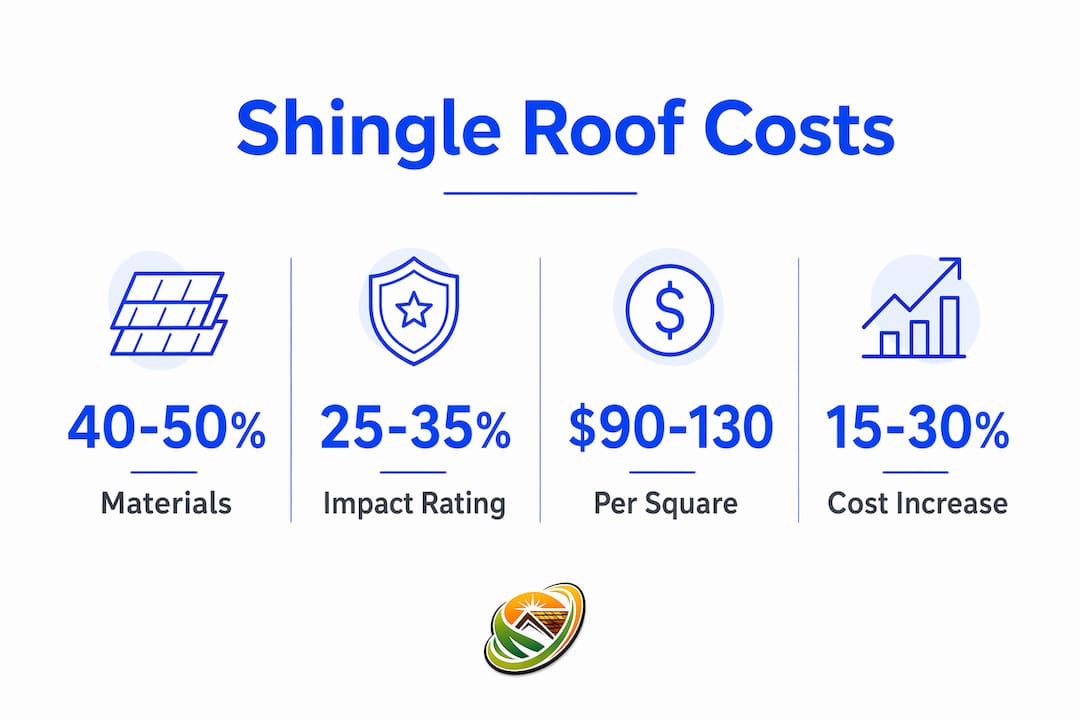
Understanding the cost breakdown helps you evaluate quotes accurately. Materials account for roughly 40–50% of total roof replacement costs. Labor, permits, disposal, and repairs make up the rest.
| Cost Component | Typical Range |
|---|---|
| Architectural shingles (standard NOA) | $90–$130 per square (100 sq ft) |
| Impact-rated shingles (premium NOA) | $120–$175 per square |
| Labor | $150–$300 per square |
| Deck repair (if needed) | $2–$4 per sq ft |
| Permits and inspections | $300–$800 |
| Tear-off and disposal | $1–$2 per sq ft |
Deck repairs are a common hidden cost. When a crew removes old shingles, they often find rotted or damaged decking underneath. Deck damage repair adds $2–$4 per sq ft to the final bill, and it is nearly impossible to predict before the tear-off begins.
Roof pitch and orientation also affect your quote. Complex roof geometry raises labor costs and accelerates UV degradation on south-facing slopes. A steeply pitched roof with multiple valleys and dormers can cost significantly more to replace than a simple gable roof of the same square footage.
Impact-rated shingles cost about 25–35% more than standard architectural shingles. They extend practical lifespan by 5–7 years and can reduce insurance premiums by 15–25%. Over a 20-year period, that trade-off often favors the premium product.
Pro Tip: Get at least three itemized quotes. Ask each contractor to list materials, labor, permits, and disposal separately. A quote that bundles everything into one number makes it impossible to compare fairly.
How can you extend your 30-year shingle roof's life in South Florida?
Proactive maintenance is the most cost-effective tool a South Florida homeowner has. Routine inspections and minor repairs can significantly extend shingle roof lifespan and reduce the risk of premature replacement. The key is catching problems before they compound.
A practical maintenance plan covers four areas:
- Attic ventilation. Proper airflow reduces heat buildup that degrades shingles from below. Ventilation at 1 sq ft of vent per 150 sq ft of attic space can extend roof life by 5–10 years. That is one of the highest-return improvements a homeowner can make without touching the roof surface.
- Annual inspections. A qualified inspector can spot cracked flashing, lifted shingles, and early granule loss before water gets in. Water intrusion that goes undetected for one rainy season can cause deck damage that turns a $500 repair into a $5,000 problem.
- Minor repairs. Replacing a handful of damaged shingles costs a fraction of a full replacement. Address small issues while they are still small.
- Roof rejuvenation treatments. Specialized treatments can restore flexibility to aging shingles, slow granule loss, and reduce brittleness. Shingleroofrenewal uses certified Fresh Roof Green Soy Technology, which works at the molecular level to restore the oils that Florida's climate bakes out of asphalt shingles.
The cost savings potential from a well-maintained roof versus a prematurely replaced one is substantial. Extending a roof's life by even five years on a $15,000 replacement defers a major expense and keeps money in your pocket.
What are your alternatives to full roof replacement?
Full replacement is not always the only answer when shingles show wear. South Florida homeowners have several options worth understanding before committing to a tear-off.
- Spot repairs and patching. Replacing isolated damaged sections works well when damage is limited. The critical constraint is Florida's 25% rule. If more than 25% of a roof is repaired within a 12-month period, Florida building code requires the entire roof to be brought up to current code. This rule catches many homeowners off guard and turns a planned partial repair into a full replacement.
- Roof overlays. Installing new shingles over existing ones avoids tear-off costs. Most Florida insurers and building departments restrict or prohibit overlays because they add weight and can hide underlying damage. Check local code and your insurance policy before pursuing this option.
- Premium vs. budget shingles. If replacement is necessary, choosing impact-rated shingles over standard architectural shingles is worth the added cost in South Florida. The insurance savings and extended lifespan make the premium version the better long-term value in a hurricane zone.
- Preservation and renewal. If your roof is structurally sound but showing early signs of aging, a certified renewal treatment may qualify it for several more years of service. This is the option most homeowners never hear about until they call Shingleroofrenewal.
Replacement becomes the clear choice when shingles are past 18 years old, when deck damage is widespread, or when the roof has failed inspection. Short of those conditions, preservation is worth exploring first.
Key Takeaways
The 30 year shingles price in South Florida reflects local climate, hurricane code requirements, and material quality, making informed decisions about maintenance and replacement critical for homeowners.
| Point | Details |
|---|---|
| Real lifespan is shorter | 30-year shingles last 15–22 years in Florida, not 30, due to UV and heat. |
| Replacement costs run higher | South Florida replacements cost $8,500–$18,000, driven by NOA requirements and labor. |
| Materials are only half the bill | Materials cover 40–50% of costs; labor, permits, and deck repairs make up the rest. |
| Ventilation extends roof life | Proper attic ventilation (1:150 ratio) can add 5–10 years to shingle lifespan. |
| Preservation beats early replacement | Renewal treatments and maintenance can defer costly replacement and save thousands. |
What I've learned after years of watching South Florida homeowners overpay
The most common mistake I see is homeowners treating the "30-year" label as a reliable timeline. It is not. It is a marketing figure calibrated for climates that look nothing like Broward or Palm Beach County. By the time a homeowner in Boca Raton or Pembroke Pines realizes their 17-year-old roof is uninsurable, they feel blindsided. They should not be. The signs were there years earlier.
The second mistake is assuming that any visible wear means replacement is the only path. I have seen roofs that looked rough from the street but were structurally sound and genuinely good candidates for renewal. The homeowner had already called three roofers and gotten three replacement quotes before anyone suggested checking whether the roof could be preserved. That is a failure of the industry, not the homeowner.
My honest advice: get an independent assessment before you get a replacement quote. Know your insurance company's age threshold. Understand the 25% repair rule before you approve any patchwork. And if your roof is under 20 years old and still structurally intact, ask whether a roof preservation approach makes sense before committing to a five-figure tear-off.
NOA compliance is non-negotiable in South Florida. Any contractor who does not bring it up in the first conversation is a contractor worth walking away from.
— Daniellison
How Shingleroofrenewal helps South Florida homeowners save before replacing
Shingleroofrenewal is not a roofing company. We are the call you make before the roofer shows up.

We inspect your roof, assess its condition, and tell you honestly whether it qualifies for preservation and renewal using certified Fresh Roof Green Soy Technology. This treatment restores flexibility to aging shingles, locks in granules, and slows the deterioration that Florida's climate accelerates. If your roof qualifies, you could save up to 80% compared to full replacement, backed by a 6-year transferable warranty. We serve homeowners across Broward and Palm Beach County. Schedule your free inspection today and find out if your roof still has years left in it.
FAQ
How much do 30-year shingles cost in South Florida?
A full replacement for a 2,000 sq ft home in South Florida typically costs $8,500–$18,000, which is 15–30% above the national average due to hurricane building codes and local labor demand.
Do 30-year shingles actually last 30 years in Florida?
No. In Florida's climate, 30-year architectural shingles realistically last 15–22 years. Insurance companies often treat them as end-of-life at 15–18 years.
What are NOA-approved shingles and why do they matter?
NOA-approved shingles carry a Notice of Acceptance from Miami-Dade County, certifying they can withstand hurricane-force winds. Using non-NOA materials in South Florida results in failed inspections and potential loss of insurance coverage.
What is Florida's 25% roof repair rule?
Florida building code requires a full roof upgrade to current code if more than 25% of the roof surface is repaired within a 12-month period. This rule often converts planned partial repairs into mandatory full replacements.
Can I extend my shingle roof's life instead of replacing it?
Yes, if the roof is structurally sound. Proper attic ventilation, annual inspections, minor repairs, and certified renewal treatments can extend shingle roof life by several years and defer costly replacement.