
TL;DR:
- South Florida homeowners often delay roof renewal until visible water stains appear, risking expensive damage. Early signs like granule loss, curling shingles, or algae growth indicate aging shingles, which renewal can extend by 10 to 15 years and save up to 80%. Proactive inspections and understanding Florida's 25% repair rule help maintain roof integrity and avoid costly full replacements.
Most South Florida homeowners wait until they see a water stain on the ceiling before thinking about when to renew your roof. By that point, the damage is already expensive. In Broward and Palm Beach counties, the combination of intense UV exposure, high humidity, and hurricane season creates conditions that age shingles faster than almost anywhere else in the country. The good news: if you catch the signs early, renewal can extend your roof's life by 10 to 15 years and save you up to 80% compared to a full replacement.
Table of Contents
- Key Takeaways
- Signs your shingle roof needs renewal
- Florida's 25% rule and your renewal timing
- Renewal vs. full replacement: making the right call
- Monitoring your roof health in Broward and Palm Beach counties
- Addressing the fears homeowners carry about roof costs
- My take on the timing mistake South Florida homeowners make most
- Is your South Florida roof a candidate for renewal?
- FAQ
Key Takeaways
| Point | Details |
|---|---|
| Act before visible leaks | Signs your roof needs renewal show up years before water damage appears inside your home. |
| Florida's 25% rule matters | Repairs exceeding 25% of your roof in 12 months can legally require a full replacement under Florida code. |
| Renewal beats repeated repairs | Proactive roof renewal costs far less than patching aging shingles and avoids insurance complications. |
| Inspections protect your coverage | Insurers may drop policies on roofs over 15 years old without a report showing remaining useful life. |
| Timing saves thousands | Acting before hurricane season or insurance renewal deadlines gives you better options and less pressure. |
Signs your shingle roof needs renewal
Knowing the signs your roof needs renewal is not just about avoiding leaks. It is about protecting your home's value and keeping your insurance intact.
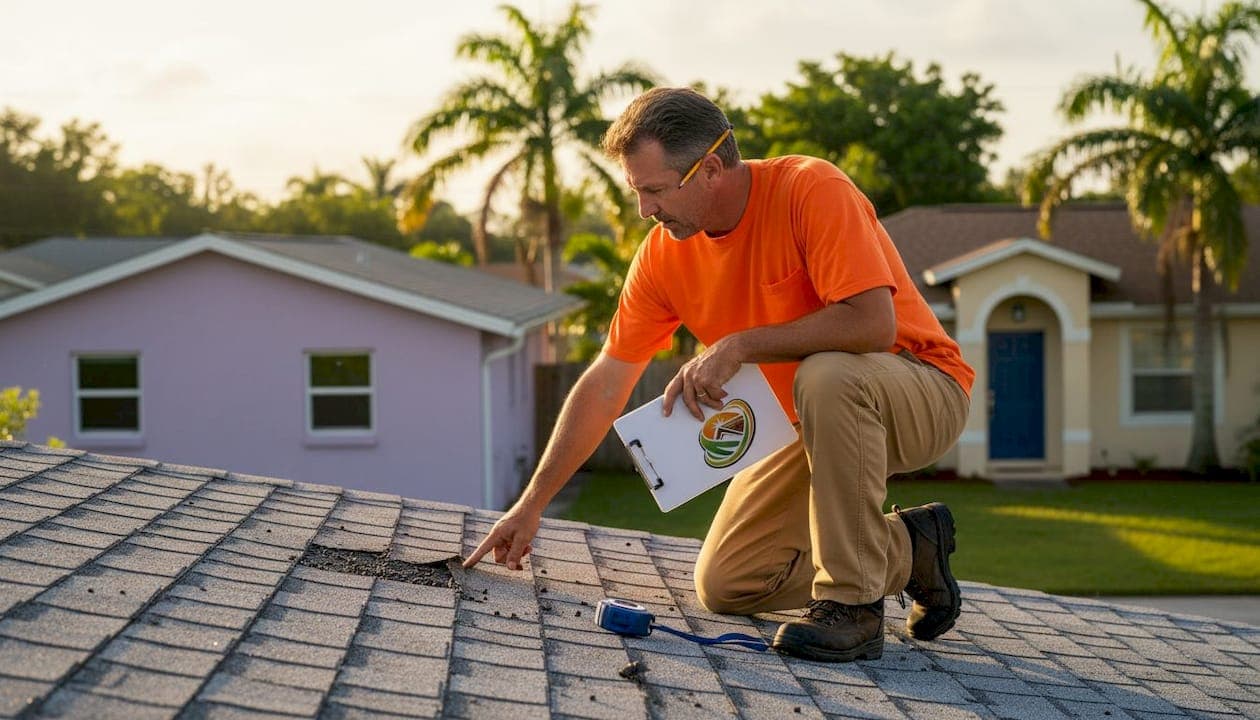
The most telling sign in South Florida is granule loss. Those small, sand-like particles that coat your shingles protect them from UV rays and heat. When they shed heavily, the underlying asphalt is exposed and deteriorates fast. New shingles shed granules in the first 6 to 12 months, which is normal. Heavy, sustained granule loss after that first year is a warning sign you should not ignore. Check your gutters during cleaning. If you see a thick layer of gray or black grit, your shingles are aging faster than they should.
Here are the key physical indicators of roof damage to watch for on a South Florida shingle roof:
- Curling or cupping shingles. Heat and UV cause shingles to curl upward at the edges or buckle in the center. Either shape means the shingles have lost their flexibility.
- Bald spots. Patches with no granules left, especially after a storm, signal that the shingle is near the end of its protective life.
- Cracking. Brittle shingles crack under thermal stress. Florida's daily heat cycles push shingles to expand and contract constantly.
- Dark streaking or algae growth. South Florida's humidity feeds algae. Beyond appearance, algae traps moisture and speeds up shingle breakdown.
- Sagging sections. Any area that dips or sags points to potential decking damage underneath, not just a surface problem.
- Age over 15 years. If your roof is more than 15 years old and showing any of the above, replacement may become cost-effective sooner than you expect.
Pro Tip: Check your gutters after every significant rainstorm during hurricane season. A sudden spike in granule accumulation after a storm tells you the roof took more stress than it looks like from the ground.
Florida's 25% rule and your renewal timing
This is the rule most South Florida homeowners have never heard of, and it is one of the most financially consequential pieces of information you can know.
Florida's building code requires a full roof replacement if repairs exceed 25% of the roof within any 12-month rolling period, unless the roof already meets 2007 or later code standards. This includes decking, underlayment, flashing, and shingles. Not just what you can see.
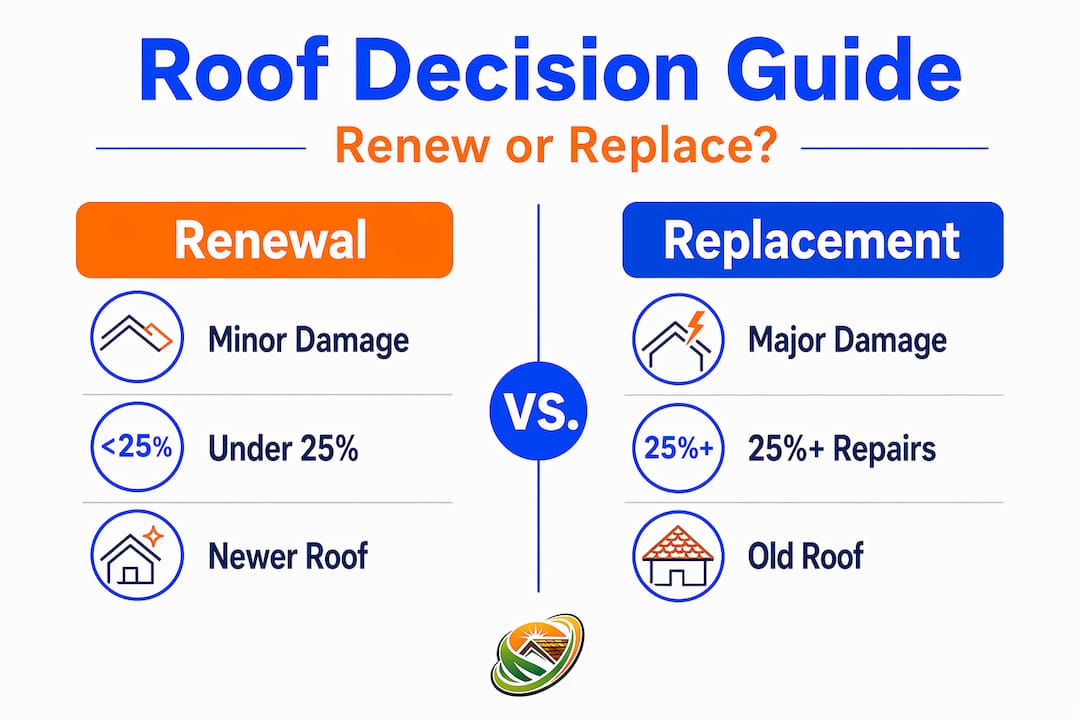
The critical detail: the 25% threshold is cumulative. It is not per storm or per event. Every repair made within a rolling 12-month window counts toward that total. Three separate patch jobs from three separate storms can add up to a mandatory full replacement.
Here is how this plays out in practice:
| Repair scenario | Cumulative % | Result under Florida code |
|---|---|---|
| Single post-storm patch | 10% | Repair allowed, no replacement required |
| Two patches in 8 months | 28% | Full replacement likely required |
| Three patches over 11 months | 35% | Full replacement required |
| Pre-2007 roof with repeated repairs | Any amount over 25% | Full replacement required |
If your roof was built or replaced before 2009, you have less flexibility. Older roofs do not qualify for the exemptions that apply to newer construction. That means even modest cumulative repairs can legally trigger a complete tear-off and re-roof, at a cost of $15,000 to $30,000 or more in Broward and Palm Beach counties.
The problem is that many homeowners rely on their insurer's adjuster to define the scope of damage. Independent licensed roofing contractors provide far more accurate damage assessments and can document exactly what percentage of the roof has been affected. That documentation matters enormously when an insurance claim is in play.
Pro Tip: Before you approve any repair, ask your contractor to calculate the cumulative repair percentage for the past 12 months. One call could save you from accidentally triggering a mandatory full replacement.
Renewal vs. full replacement: making the right call
Understanding when to choose restoration over replacement is where most homeowners save or lose thousands of dollars.
Full roof replacement in South Florida is not cheap. Depending on home size and materials, costs range from $15,000 to $30,000. Many homeowners are shocked to find that their insurance covers less than expected, especially on older roofs where Actual Cash Value policies factor in depreciation. Policy type and roof age together determine what your insurer will actually pay.
Roof renewal changes that math significantly.
Benefits of renewal over replacement:
- Saves up to 80% compared to a full roof replacement
- Extends roof life by 10 to 15 years without a tear-off
- Restores shingle flexibility at the molecular level using GreenSoy Technology
- Backed by a 6-year transferable warranty through Shingleroofrenewal
- No construction disruption, no debris, no permit delays
- Helps maintain insurance eligibility by demonstrating proactive care
When replacement is unavoidable:
- Structural decking is damaged or rotted throughout
- More than 25% cumulative damage has already been repaired
- Shingles are completely beyond the point of restoration
- Your insurer requires a full replacement for policy renewal
Patching roofs over 15 years old is often a false economy. Brittle shingles break during the repair process itself, creating new leak points. You end up spending money repeatedly without actually solving the problem.
Renewal is the strategic middle ground. It works best when the roof is showing early to moderate signs of aging but the structure underneath is still sound. A professional inspection determines whether your roof qualifies. That assessment is the most important step you can take right now.
Monitoring your roof health in Broward and Palm Beach counties
Staying ahead of roof deterioration takes a simple, consistent approach. Here is how to do it in South Florida's climate:
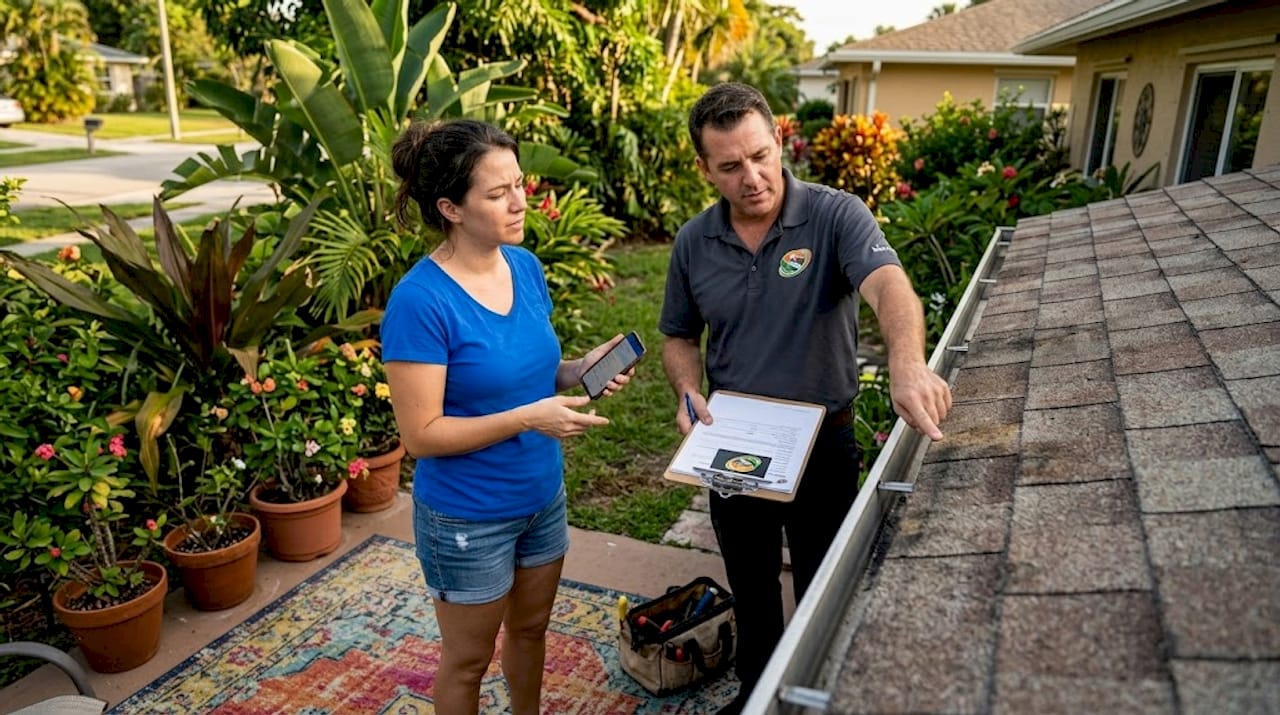
- Schedule a professional inspection every 2 to 3 years. Routine inspections catch damage early and give you documentation you can use for insurance claims and repair decisions.
- Inspect after every named storm or hurricane. Wind uplift and flying debris cause damage that is not visible from the ground. Do not wait until you see a stain inside.
- Check your gutters every time you clean them. Granule buildup is your early warning system. Track changes over time.
- Photograph your roof condition after every significant weather event. Dated photos create a record of when damage occurred and how it progressed, which matters if you ever dispute a claim.
- Know your roof's code compliance status before approving repairs. If your roof predates 2007, you need to understand the 25% rule before any contractor starts cutting or patching.
- Plan renewal before hurricane season, not during it. Scheduling a roof inspection and renewal in early spring gives you options. Waiting until July means rushed work, permit backlogs, and pressure to accept whatever contractor is available.
Timing your renewal outside of peak storm months also protects you from insurance non-renewal situations. Insurers often send non-renewal notices in spring based on aerial inspection data collected after the prior hurricane season. If you already have a recent inspection report and a renewal treatment in progress, you have evidence to fight back.
Pro Tip: Before making any repair in Broward or Palm Beach County, pull your permit history from the county property appraiser's office. It shows every permitted repair on record and helps you calculate where you stand on the 25% threshold.
Addressing the fears homeowners carry about roof costs
The two fears we hear most from South Florida homeowners are "I can't afford to replace it" and "I'm afraid my insurance will drop me." Both fears are legitimate. And both can be addressed with early action.
Insurance carriers frequently decline to renew policies on roofs older than 15 years unless an inspection report shows at least 5 years of useful life remaining. If you wait for that notice to arrive, your options narrow fast. Homeowners who act proactively, with documented inspections and renewal treatments, stay in a much stronger position with their insurer.
On the cost side, consider what the alternative actually looks like. Homeowners who replace their roofs proactively before insurer-forced situations arise save 30% to 50% on premiums on new coverage, which offsets replacement costs over time. But renewal makes that math even better by avoiding replacement altogether.
Here are the steps to take right now if these fears feel real to you:
- Schedule a free professional inspection to get an honest picture of your roof's current condition
- Ask for a written assessment that documents the roof's estimated remaining life
- Request a cumulative repair percentage calculation based on the past 12 months
- Explore renewal as an option before committing to a full replacement quote
- Check your current policy type and whether your insurer requires specific roof conditions for renewal
You do not have to make a $25,000 decision under pressure. Getting clear information early is what keeps you in control.
My take on the timing mistake South Florida homeowners make most
I have seen it play out the same way dozens of times. A homeowner in Plantation or Boca Raton notices a few granules in the gutter, maybe some slight curling at the shingle edges. They figure it is cosmetic. They wait. Two years later, they are sitting across from a contractor getting a $22,000 replacement quote, and their insurer has already sent a non-renewal notice.
What makes South Florida different is the pace of deterioration. The combination of intense sun, daily heat cycles, and hurricane-season storms does not give roofs a slow decline. They can go from "aging but manageable" to "structurally compromised" in a single bad season.
The homeowners I have seen come out ahead are the ones who treated their roof like any other major home system. They scheduled inspections on a calendar. They tracked granule loss like a metric. When renewal became an option, they took it. They spent a fraction of what their neighbors paid for full replacements and walked away with warranties and extended coverage.
My honest advice: do not wait for a leak. Do not wait for the insurance letter. The signs your roof needs renewal are visible years before the crisis hits. The only question is whether you are looking for them.
— Daniellison
Is your South Florida roof a candidate for renewal?
If any of the signs in this article sound familiar, the best next step is a professional assessment. Not a guess, and not a replacement quote. An actual inspection that tells you where your roof stands today.

Shingleroofrenewal serves homeowners across Broward and Palm Beach counties, including Fort Lauderdale, Boca Raton, and Delray Beach. Using certified GreenSoy Technology, we restore asphalt shingle roofs at the molecular level, extending their life by 10 to 15 years without the cost or disruption of a full replacement. If your roof qualifies, you could save up to 80% compared to replacement, backed by a 6-year transferable warranty.
The inspection is free. The assessment is honest. And the savings, if your roof qualifies, are real. Schedule your free inspection today and find out exactly what your roof needs.
FAQ
What are the first signs your roof needs renewal?
The earliest signs your roof needs renewal include heavy granule loss in gutters, curling or cracking shingles, and dark streaking from algae growth. In South Florida, these signs often appear within 10 to 15 years due to constant UV exposure and storm stress.
How often should roofs be replaced in South Florida?
Most asphalt shingle roofs in South Florida last 15 to 20 years before requiring replacement, though the lifetime of roofing materials shortens significantly in Florida's heat and humidity. Proactive renewal can extend that lifespan by 10 to 15 years, often delaying replacement entirely.
What is the best time to replace or renew your roof?
The best time to replace or renew your roof in Broward or Palm Beach County is in early spring, before hurricane season begins. This avoids permit backlogs, rushed contractor schedules, and potential coverage gaps during storm months.
Does granule loss always mean I need a new roof?
Not always. Granule loss in the first year after installation is normal. Sustained heavy granule loss after that first year, especially on roofs over 15 years old, is a stronger indicator that renewal or replacement should be evaluated soon.
What happens if I repair more than 25% of my roof in Florida?
Under Florida's building code, repairing more than 25% of your roof within any 12-month period triggers a requirement for full roof replacement, unless the roof already meets 2007 or later code standards. This threshold is cumulative across all repairs within that window.