
TL;DR:
- Asphalt shingle degradation results from the loss of oils that keep shingles flexible and waterproof.
- South Florida's climate accelerates this process, leading to faster deterioration and potential failure.
Asphalt shingle degradation is defined as the progressive loss of the oily compounds inside the asphalt binder that keep shingles flexible, waterproof, and intact. Two chemical processes drive this: volatilization, where heat causes those oils to evaporate, and oxidation, where oxygen stiffens the remaining asphalt until it becomes brittle. Understanding how shingles degrade over time is not just useful knowledge. It is the difference between catching a fixable problem early and writing a check for $15,000 to $30,000 in roof replacement. South Florida homeowners face this faster than most, because the heat, UV exposure, and humidity here accelerate both processes year-round.
How shingles degrade over time: the chemistry behind it
The internal oil content of a new asphalt shingle sits between 40% and 60% maltene content. By the time visible aging begins, that number has dropped to 20%–30%. That loss is not cosmetic. Maltenes are the compounds that give shingles their flexibility, their ability to expand and contract with temperature swings, and their capacity to self-heal minor stress cracks.
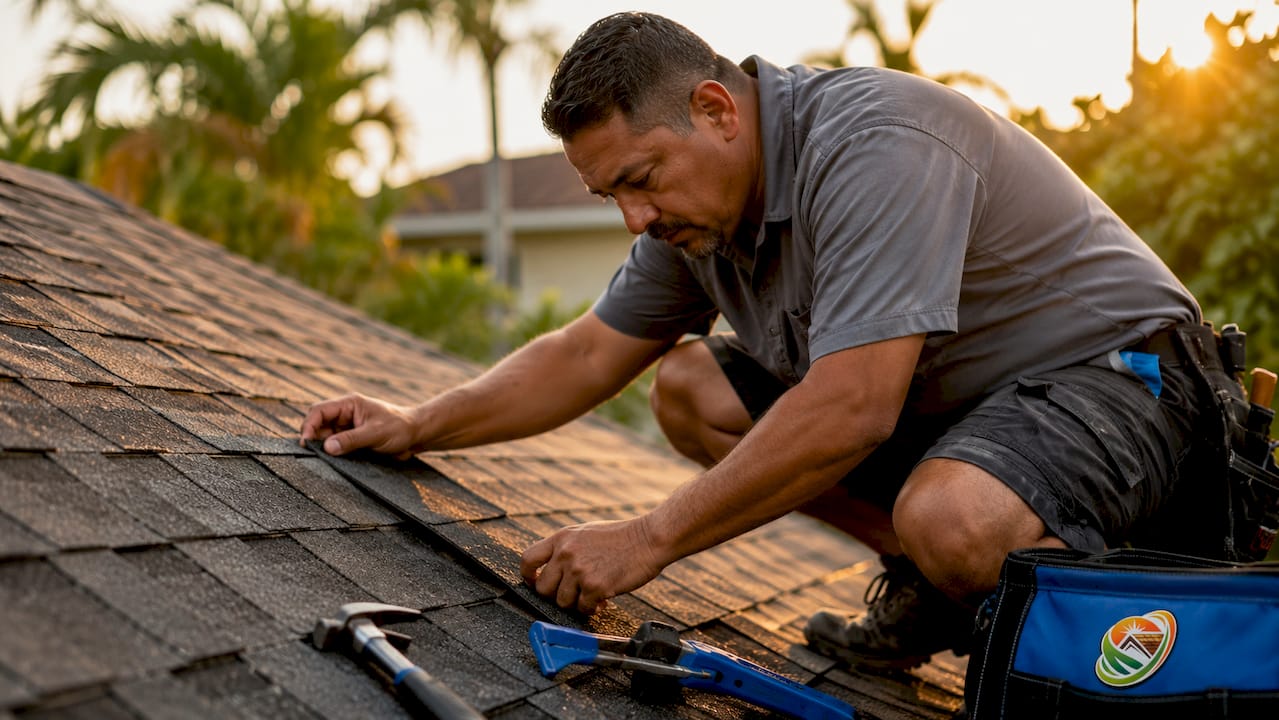
Volatilization happens every time your roof heats up under the Florida sun. Heat drives those oils out of the asphalt binder and into the air. Oxidation works alongside it, chemically bonding oxygen molecules into the asphalt and making it rigid. Together, these two processes turn a flexible, durable shingle into something that cracks under pressure and sheds granules with every rainstorm.
Granule loss is the visible signal that this internal chemistry is already in trouble. Granules protect the asphalt from direct UV exposure. When they shed, fresh asphalt is exposed, which accelerates oxidation further. That creates a feedback loop where each bit of granule loss speeds up the next round of deterioration.
What are the main stages of asphalt shingle deterioration?
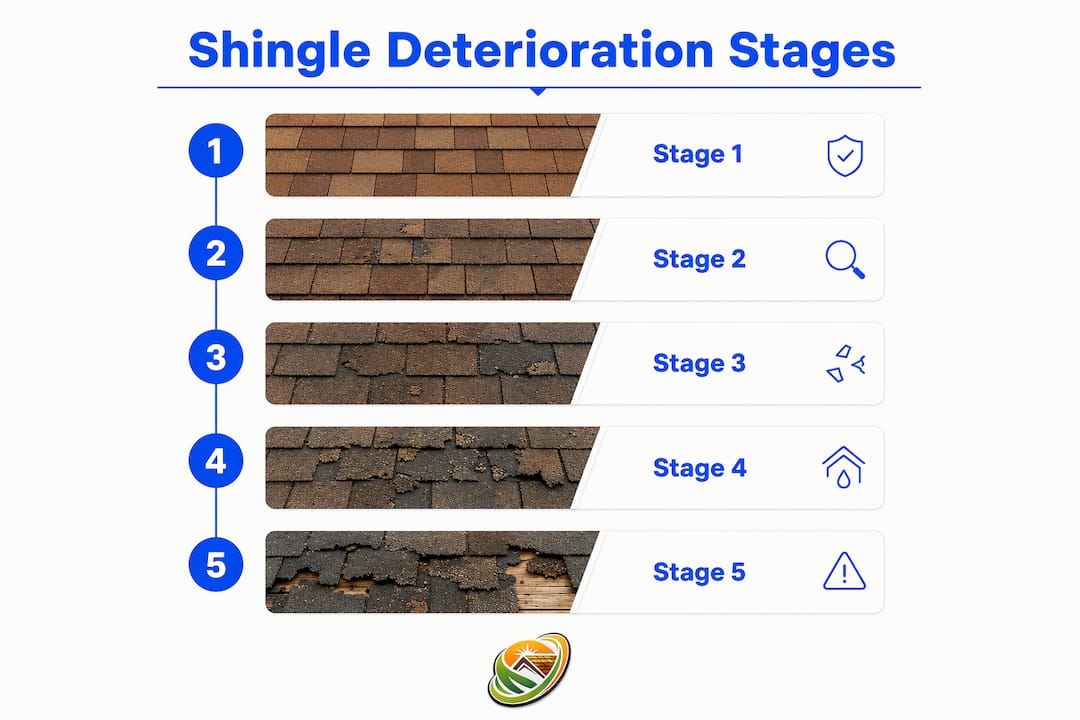
The shingle deterioration process follows four distinct stages. Knowing which stage your roof is in tells you exactly what your options are.
-
Stage 1: Peak performance. New shingles are fully saturated with maltene oils. They flex without cracking, shed water cleanly, and hold granules firmly. This stage typically lasts the first several years after installation, depending on climate and ventilation.
-
Stage 2: Early aging. Oil content begins to drop. Granule loss starts, usually showing up as accumulation in your gutters. Shingles lose some flexibility but still look acceptable from the ground. This is the most important stage for intervention. Roofs in Stage 2 are strong candidates for chemical rejuvenation because the underlying structure is still sound.
-
Stage 3: Advanced deterioration. Thermal cycling has caused micro-cracks that the depleted binder can no longer self-heal. Curling, cupping, and cracking become visible. South facing slopes often reach this stage years before north facing ones on the same house. At this point, options narrow significantly.
-
Stage 4: End of life. The fiberglass mat beneath the asphalt becomes exposed. The shingle has lost structural integrity. Roof replacement is the only viable path forward. No treatment can reverse mat exposure or structural failure.
The gap between Stage 2 and Stage 4 can be as short as two to three years in South Florida's climate. That is why waiting for obvious damage before acting is a costly mistake.
How does South Florida's climate affect shingle aging?
South Florida does not give asphalt shingles an easy life. Several factors specific to this region accelerate the shingle deterioration process well beyond what manufacturers design for in moderate climates.
- Intense UV exposure. Year-round sun in Broward and Palm Beach County drives volatilization at a rate that cooler climates simply do not match. The effects of weather on shingles here are compressive and constant.
- High humidity and moisture cycling. Moisture works into micro-cracks, expands during heat, and widens those cracks over time. Humidity also promotes algae and moss growth, which retain moisture against the shingle surface.
- Poor attic ventilation. This is the factor most homeowners overlook. Trapped attic heat cooks shingles from below while the sun attacks from above. Poor ventilation can reduce roof lifespan by 30%–50%. That is not a minor variable. On a 20-year shingle, that could mean failure at 10 to 14 years.
- Slope orientation. South and west facing roof slopes receive the most direct sun exposure. Two identical roofs on the same street can age at completely different rates based on slope and exposure.
- Storm impact. Repeated wind and rain events dislodge granules and stress shingle edges, compounding the chemical deterioration already underway.
Pro Tip: Check your attic ventilation before blaming your shingles. Attic temperatures in South Florida can exceed 160°F without proper airflow. That heat alone can age a shingle years faster than the calendar suggests.
What are the signs of shingle wear you should spot early?
Knowing how to identify shingle wear before it becomes a structural problem gives you options. Waiting until you see daylight through the decking gives you none.
- Granules in your gutters. This is the earliest and most reliable warning sign. A handful of granules after a storm is normal. Consistent accumulation means the bond between granule and asphalt is failing.
- Bald spots on shingles. Visible patches where granules are gone expose raw asphalt directly to UV. Those spots age at a dramatically faster rate than the rest of the shingle.
- Curling and cupping edges. Shingle edges that curl upward (cupping) or tips that curl downward (clawing) signal that the binder has dried unevenly. Thermal cycling is pulling the shingle apart.
- Brittleness and cracking. A shingle that cracks when you press it lightly has lost its maltene content. Thermal cycling causes micro-cracks that cannot self-heal once those oils are gone.
- Discoloration and dark streaking. Dark streaks often indicate algae growth. While algae itself is not the primary cause of degradation, it retains moisture and accelerates the underlying chemical processes.
The most important thing to understand is that internal binder degradation precedes visible damage. Your roof can be losing structural integrity while still looking acceptable from the street. A professional inspection catches what a driveway glance cannot.
Pro Tip: Walk around your home after the next heavy rain and look at your downspout discharge areas. A concentration of dark granules in that zone is a clear signal your roof is shedding faster than normal.
How can homeowners extend shingle lifespan before replacement?
Extending your roof shingle lifespan is not about heroic repairs. It is about consistent, early action on the right maintenance priorities.
-
Improve attic ventilation. Attic ventilation per IRC R806 is the standard that governs minimum airflow ratios for residential roofs. Non-compliance with IRC R806 commonly voids shingle warranties and dramatically shortens roof life. A ventilation upgrade is often the highest-return maintenance investment a South Florida homeowner can make.
-
Schedule annual roof inspections. A trained eye catches Stage 2 aging before it becomes Stage 3. Early detection is the entire game. Use a roof inspection checklist to track condition year over year.
-
Keep the roof surface clear. Debris like leaves and branches retains moisture against shingles. Clear gutters prevent standing water from backing up under shingle edges.
-
Apply chemical rejuvenation at the right time. Rejuvenation is most effective during Stage 2, before structural damage sets in. Homeowners who wait for visible failure miss the window where treatment actually works.
-
Avoid unnecessary foot traffic. Walking on shingles that have already lost flexibility causes cracking. Limit roof access to qualified inspectors.
-
Understand your roof's thermal history, not just its age. A 10-year-old roof with poor ventilation on a south-facing slope may be in worse condition than a 15-year-old roof with proper airflow on a shaded north slope. Thermal history drives aging more than the calendar does.
What is the role of chemical shingle rejuvenation treatments?
Chemical rejuvenation replenishes the maltene oils that volatilization and oxidation have removed. The treatment penetrates the asphalt binder and restores flexibility, which allows shingles to handle thermal cycling without cracking and to retain granules more effectively.
What rejuvenation does not do is equally important to understand:
- It does not reverse existing structural cracks or repair fiberglass mat damage.
- It does not restore shingles that have reached Stage 3 or Stage 4 deterioration.
- It does not replace the need for proper ventilation and routine maintenance.
Applied during Stage 2, chemical rejuvenation extends roof service life by 3–5 years per application. That is a meaningful delay when a full replacement costs $15,000 to $30,000. The environmental benefit is real too. Every roof preserved is one less tear-off filling a landfill.
"Rejuvenation is most cost-effective when applied during early aging stages, not after visible failure has already set in."
Shingleroofrenewal uses Fresh Roof's Green Soy Technology, a certified treatment that works at the molecular level to restore shingle flexibility and lock in granules. It is not a surface coating. It penetrates the binder where the actual deterioration is happening.
Key Takeaways
Asphalt shingles degrade through volatilization and oxidation, and South Florida homeowners who act during Stage 2 aging can extend roof life by years and save thousands compared to full replacement.
| Point | Details |
|---|---|
| Two chemical processes drive degradation | Volatilization and oxidation remove oils and stiffen the asphalt binder, causing brittleness and granule loss. |
| Stage 2 is the critical intervention window | Shingles in early aging still have sound structure and qualify for chemical rejuvenation treatment. |
| Attic ventilation is a major lifespan factor | Poor ventilation can reduce roof lifespan by 30%–50%, making it one of the highest-return maintenance upgrades. |
| Granule loss signals an accelerating problem | Each granule shed exposes fresh asphalt to UV, speeding up the deterioration cycle further. |
| Rejuvenation extends life 3–5 years per application | Treatment works only during early aging and cannot repair structural cracks or mat damage. |
What I have learned after years of watching South Florida roofs age
The single biggest misconception I see is homeowners treating roof age as the primary indicator of condition. A 12-year-old roof with a poorly ventilated attic and a south-facing slope can be in worse shape than an 18-year-old roof that was properly maintained and ventilated. Chronological age is a rough guide at best. Thermal history is what actually tells the story.
The second thing I have learned is that most homeowners call too late. By the time curling and cracking are obvious from the driveway, the window for cost-effective preservation has often closed. The roof looks bad because it has been failing internally for years. The visible damage is just the last chapter of a long process.
Attic ventilation surprises people every time. They expect me to talk about shingles, and I end up talking about airflow. But that is where the leverage is. Fix the ventilation, and you slow the heat-driven volatilization that is cooking your shingles from below. It is the most underrated maintenance move in South Florida.
The environmental angle matters more than most homeowners realize. A full roof tear-off generates a significant amount of waste. Preserving a roof that still has serviceable life is not just financially smart. It keeps material out of the landfill. That is a real outcome, not a marketing line.
My honest advice: get your roof assessed before you assume it needs replacing. You may have more time than you think. You may also have less. Either way, knowing the actual condition of your roof puts you in control of the decision.
— Daniellison
Your South Florida roof may have more life left than you think
South Florida homeowners often call a roofer the moment they spot granule loss or a curling shingle. Before that call, there is a better first step.
Shingleroofrenewal is a certified Fresh Roof applicator serving Broward and Palm Beach County homeowners. The three-step process is straightforward: inspect, assess, and recommend. If your roof qualifies for preservation, you could save a significant amount compared to full replacement, backed by a 6-year transferable warranty. Shingleroofrenewal specializes in roof preservation services designed specifically for South Florida's climate. Schedule your free inspection and find out whether your roof is a candidate for renewal before the window closes.
FAQ
How fast do asphalt shingles degrade in South Florida?
South Florida's heat, UV exposure, and humidity accelerate shingle aging significantly faster than moderate climates. Poor attic ventilation can reduce roof lifespan by 30%–50%, meaning a 20-year shingle may fail in 10–14 years under adverse conditions.
What are the first signs of shingle deterioration?
Granule accumulation in gutters is the earliest reliable sign of shingle wear. Bald spots, curling edges, and brittleness follow as the asphalt binder loses its oil content and flexibility.
Can a degrading roof be saved without full replacement?
Yes, if the roof is caught in Stage 2 aging before structural cracks or fiberglass mat exposure occur. Chemical rejuvenation treatments can extend service life by 3–5 years per application when applied at the right time.
What causes shingles to lose granules?
Granule loss results from the weakening bond between granules and the asphalt binder as maltene oil content drops. Once granules shed, fresh asphalt is exposed to UV, which accelerates further deterioration in a compounding cycle.
Does attic ventilation really affect shingle lifespan?
Attic ventilation is one of the most significant factors in roof shingle lifespan. Proper airflow per IRC R806 reduces the underside temperature of shingles, slowing both volatilization and oxidation. Non-compliance with ventilation standards commonly voids shingle warranties.