
TL;DR:
- year architectural shingles are premium products offering better durability and aesthetics but typically last 20 to 28 years in South Florida's harsh climate. Proper attic ventilation, regular maintenance, and protective treatments are crucial to maximizing their lifespan, as the warranty does not guarantee a full 50-year service life. Realistic planning for roof replacement should consider climate stressors, insulation quality, and insurance policies, with preservation options available to extend roof life.
50-year architectural shingles are premium, multi-layer laminated asphalt shingles engineered for superior durability, wind resistance, and visual depth compared to standard 3-tab products. The "50-year" label refers to the manufacturer's warranty period, not a guaranteed roof lifespan. In South Florida's climate of intense UV exposure, high humidity, salt air, and hurricane-force winds, these shingles realistically last 20–28 years depending on location and maintenance. Understanding that gap between warranty and actual performance is the most important thing a South Florida homeowner can know before choosing a roofing material.
What makes 50-year architectural shingles different from standard shingles?
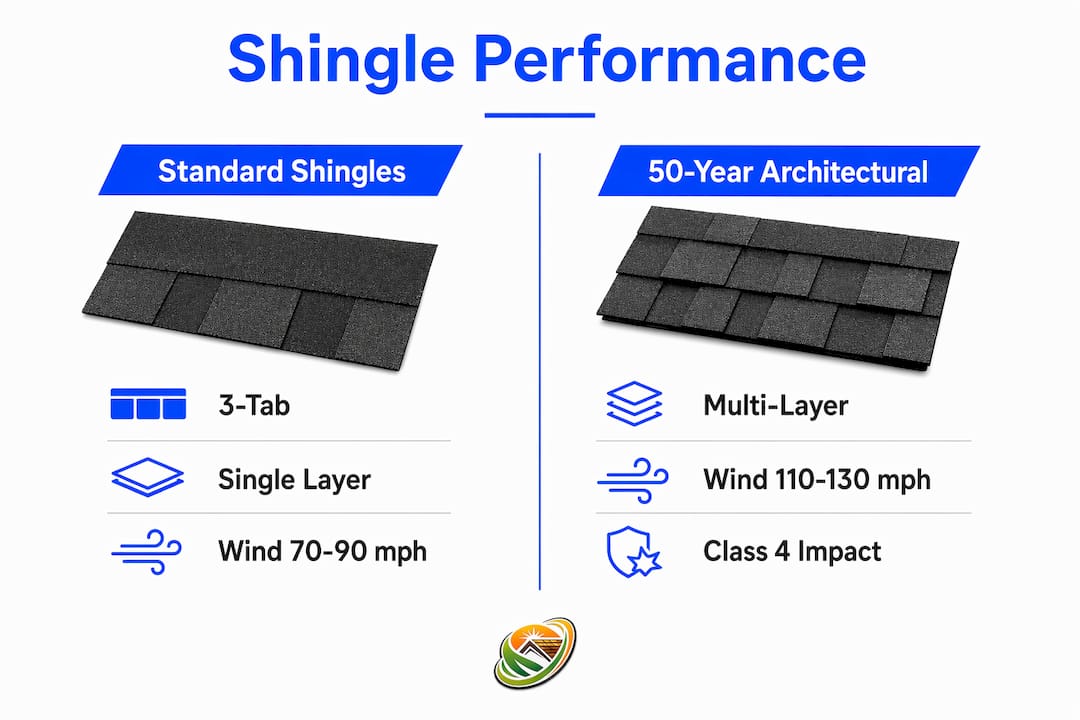
50-year architectural shingles, also called luxury or premium laminated shingles in the industry, are built with a fundamentally different construction than basic 3-tab or entry-level architectural products. The difference starts at the material level and shows up in every performance metric.
Multi-layer construction and weight
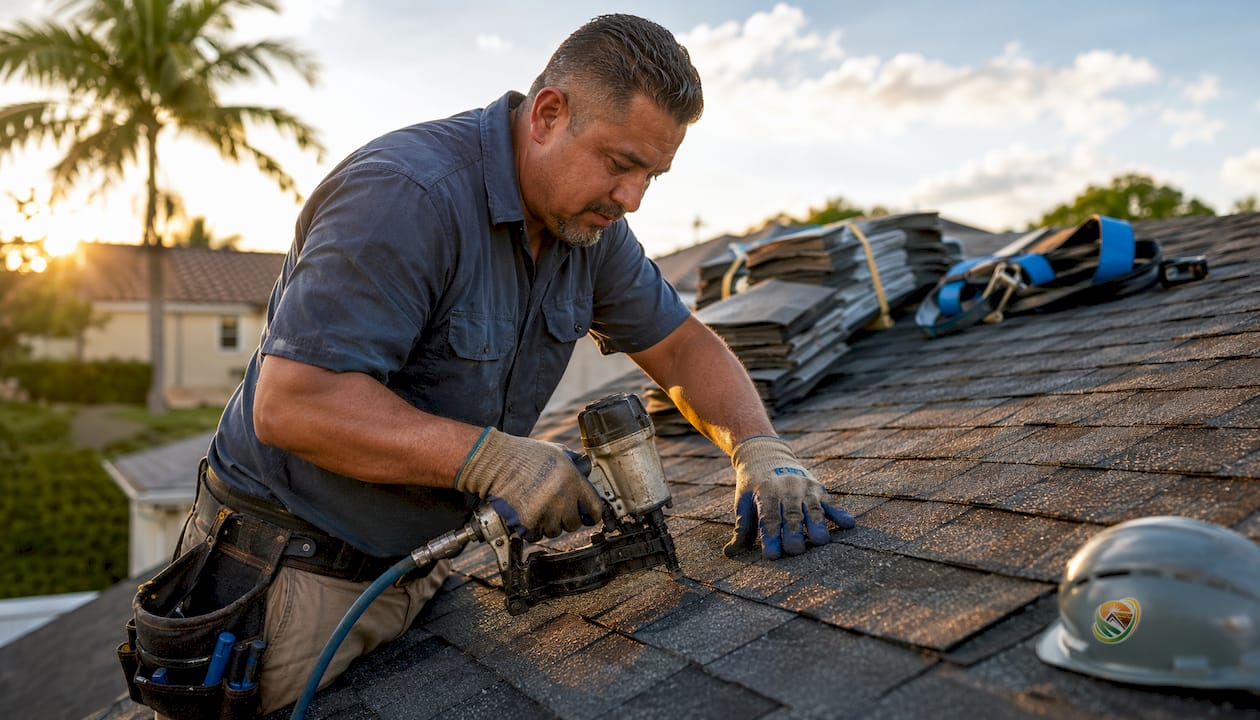
Standard 3-tab shingles use a single flat mat. Premium laminated shingles bond two or more fiberglass mat layers together with modified asphalt, creating a thicker, heavier product. 50-year shingles weigh up to 480 lbs per square and use SBS-modified asphalt for added flexibility. That extra mass translates directly into better resistance against wind uplift and impact damage.
Wind resistance and impact ratings
These shingles carry wind resistance ratings of 110–130 mph and Class 4 impact ratings for hail resistance. Class 4 is the highest rating under UL 2218 testing standards. For South Florida homeowners in hurricane country, that rating matters for both physical protection and insurance premium discounts.
Granule technology and algae resistance
Premium shingles use copper or zinc granules embedded in the surface layer. These metals inhibit algae growth, which is a serious problem in Florida's warm, humid conditions. Standard shingles without this treatment can show black streaking from algae within three to five years in South Florida. The algae-resistant granule technology in 50-year products extends the clean appearance and functional surface life of the shingle.
Aesthetics and shadow lines
The dimensional profile of premium laminated shingles creates deep shadow lines that mimic the look of wood shake or slate. This visual depth adds curb appeal that flat 3-tab shingles cannot replicate. For homeowners focused on resale value, that aesthetic difference is a real financial consideration.
Pro Tip: Ask your roofing contractor for the shingle's published wind warranty, not just the product warranty. Some 50-year shingles carry separate wind warranties requiring specific nailing patterns to remain valid.
How long do 50-year architectural shingles realistically last in South Florida?
The honest answer is shorter than the label suggests. Architectural shingles in Florida's coastal zones last 15–22 years, while inland locations can see 20–28 years of service life. The warranty period and the real-world lifespan are two very different numbers.
Climate stressors unique to South Florida
South Florida delivers a combination of stressors that no northern climate matches. Intense UV radiation breaks down asphalt binders faster than in cooler states. High humidity accelerates granule loss and promotes algae and moss growth. Salt air from the Atlantic and Gulf coasts corrodes metal components and degrades shingle surfaces. Hurricane-force winds test every fastener and seam during storm season. Florida's climate impacts on shingles are cumulative, meaning each stressor compounds the damage from the others.
How attic ventilation affects lifespan
Attic ventilation is the single most controllable factor in shingle longevity. Poor ventilation shortens roof life by 5–10 years and can void manufacturer warranties entirely. The IRC R806 standard requires a minimum net free ventilation area of 1:150 of the attic floor space. In South Florida, where attic temperatures can exceed 160°F, meeting or exceeding that standard is not optional. It is the difference between a roof that lasts 20 years and one that fails at 14.
What the warranty actually covers
The 50-year warranty is prorated after 10–15 years, meaning coverage drops significantly over time. Most warranties cover material defects only and exclude labor costs and storm damage. By year 30, coverage typically represents a small fraction of actual replacement cost. Industry experts describe the 50-year label as a warranty marketing tier rather than a literal lifespan guarantee. That framing is accurate and useful for planning purposes.
Insurance timelines in Florida
Florida insurance carriers add another layer of complexity. Insurers often assess end-of-useful life at 15–18 years for asphalt roofs, sometimes requiring replacement regardless of the roof's physical condition. This means a homeowner with a 17-year-old roof in good shape may still face a forced replacement to maintain coverage. Planning for a realistic 20–25 year replacement cycle, rather than 50, protects your budget and your insurance relationship.
Pro Tip: Request a copy of your insurance carrier's roof age policy before purchasing a home or scheduling a roof replacement. Some carriers in Florida will not write new policies on asphalt roofs older than 15 years, regardless of condition.
Are 50-year architectural shingles worth the cost for South Florida homeowners?
Premium laminated shingles cost more upfront. Installed costs run $400–$700 per 100 square feet, compared to lower figures for standard 3-tab products. The value case depends on how long you plan to stay in the home and how you calculate the cost over time.
Annualized cost and replacement cycles
The smarter way to evaluate roofing cost is annualized. A premium roof that lasts 25 years costs less per year than a budget roof replaced at 15 years, even if the upfront price is higher. Over a 50-year period, a homeowner with standard shingles may replace the roof three times. A homeowner with premium shingles in a well-maintained, well-ventilated home may replace it only twice. That one fewer replacement cycle can save $15,000–$30,000 in today's replacement costs.
Where the value proposition is strongest
- Long-term homeowners benefit most. If you plan to stay 15 or more years, the extended lifespan and reduced repair frequency justify the premium.
- Homeowners in wind-prone areas gain real protection from the higher wind and impact ratings, which can also reduce insurance premiums.
- Homeowners focused on resale value benefit from the dimensional aesthetics and the marketing appeal of a newer, premium roof.
- Homeowners near the coast should weigh the shorter coastal lifespan (15–22 years) against the higher upfront cost before committing.
When the premium may not pay off
If you plan to sell within five to ten years, the cost premium of 50-year shingles may not return full value at resale. A well-maintained standard architectural roof can present just as well to a buyer in that timeframe. The long-term value of premium shingles is real, but it requires time to materialize.
How can South Florida homeowners extend the life of their architectural shingle roofs?
Regular maintenance extends asphalt shingle roof life by 5–10 years in Florida's climate. Most homeowners underestimate how much difference consistent care makes. The steps below apply to any architectural shingle roof, premium or standard.
-
Schedule annual professional inspections. A trained eye catches cracked flashing, lifted shingles, and granule loss before they become water intrusion problems. Catching damage early costs far less than repairing the interior damage that follows a leak.
-
Clean the roof surface regularly. Algae and moss hold moisture against the shingle surface, accelerating granule loss and asphalt breakdown. Soft-wash cleaning removes biological growth without damaging the granule layer. Pressure washing does damage it, so avoid that method.
-
Verify and improve attic ventilation. Meeting IRC R806 ventilation standards is the highest-return maintenance investment you can make. Adding ridge vents or soffit vents to an under-ventilated attic can add years to your roof's life.
-
Trim overhanging tree limbs. Branches that scrape shingles during wind events abrade the granule surface. Falling limbs cause direct impact damage. Keep trees trimmed back at least six feet from the roof edge.
-
Repair damaged shingles and flashing promptly. A single cracked shingle or lifted piece of flashing can allow water to reach the roof deck. Deck rot spreads quickly in Florida's humidity. One $200 repair can prevent a $5,000 deck replacement.
-
Consider protective shingle treatments. Certified roof preservation treatments, like Shingleroofrenewal's Fresh Roof Green Soy Technology, restore flexibility to aging asphalt shingles at the molecular level. This type of treatment locks in granules, slows deterioration, and can extend a qualifying roof's life by 10–15 years. It is a fraction of the cost of full replacement.
Pro Tip: Light-colored or reflective shingles reduce roof deck temperatures significantly in South Florida's sun. Lower deck temperatures slow asphalt binder breakdown and reduce cooling costs inside the home. Ask about Energy Star-rated shingle options when comparing roofing materials.
Key Takeaways
50-year architectural shingles deliver real performance advantages over standard products, but South Florida homeowners must plan for a realistic service life of 20–28 years, not 50.
| Point | Details |
|---|---|
| Warranty vs. lifespan | The 50-year label is a warranty tier, not a guaranteed lifespan; expect 20–28 years in Florida. |
| Climate shortens roof life | UV, humidity, salt air, and wind reduce shingle life faster in South Florida than in northern states. |
| Ventilation is critical | Poor attic ventilation shortens roof life by 5–10 years and can void the manufacturer warranty. |
| Maintenance adds years | Regular inspections, cleaning, and protective treatments extend roof life by 5–10 years in Florida. |
| Insurance drives timelines | Florida insurers may require replacement at 15–18 years regardless of the roof's physical condition. |
What I've learned after years of watching South Florida roofs age
The most common mistake I see South Florida homeowners make is buying a 50-year shingle and then treating the roof as if the warranty is a maintenance plan. It is not. The shingle is only as good as the system around it: the ventilation, the installation quality, the flashing details, and the ongoing care.
Two identical roofs installed on the same day can have more than a 10-year difference in lifespan based solely on attic ventilation and installation quality. That is not a small variable. That is the difference between replacing your roof at year 18 and replacing it at year 28. In South Florida, where a full replacement runs $15,000–$30,000, that gap is a significant financial outcome.
My honest recommendation: plan for a 25-year replacement cycle, invest in proper ventilation from day one, and schedule annual inspections starting in year five. Do not wait until you see a stain on the ceiling. By then, the damage has already spread. The homeowners who get the most out of their premium shingles are the ones who treat the roof as an ongoing investment, not a one-time purchase.
And if your roof is aging but not yet failing, call a preservation specialist before you call a roofer. You may have more time, and more options, than you think.
— Daniellison
Shingleroofrenewal: protecting your South Florida roof before it's too late
South Florida homeowners with aging architectural shingle roofs have more options than replacement. Shingleroofrenewal specializes in roof preservation and renewal for homes in Broward and Palm Beach County, using certified Fresh Roof Green Soy Technology to restore shingle flexibility, lock in granules, and extend roof life by 10–15 years.
The process starts with a free inspection to assess whether your roof qualifies for renewal. If it does, you could save up to 80% compared to full replacement, backed by a 6-year transferable warranty. Most homeowners are surprised to learn their roof can still be saved. Shingleroofrenewal helps you protect your roof cost-effectively before a maintainable problem becomes a mandatory replacement. Schedule your free inspection today and find out where your roof stands.
FAQ
What does "50-year" mean on architectural shingles?
The "50-year" label refers to the manufacturer's warranty period, not a guaranteed roof lifespan. The warranty is prorated after 10–15 years and typically covers material defects only, excluding labor and storm damage.
How long do architectural shingles actually last in South Florida?
In coastal South Florida, architectural shingles typically last 15–22 years. Inland locations can see 20–28 years of service life, depending on ventilation quality, installation, and maintenance.
Does attic ventilation really affect how long my roof lasts?
Poor attic ventilation shortens shingle roof life by 5–10 years and can void the manufacturer warranty. Meeting IRC R806 ventilation standards is one of the highest-return steps a homeowner can take.
Will my insurance company replace my roof before it physically fails?
Florida insurance carriers often assess end-of-useful life at 15–18 years for asphalt roofs, which can trigger mandatory replacement requirements regardless of the roof's actual condition.
Can a roof preservation treatment extend the life of my 50-year shingles?
Yes. Certified treatments like Fresh Roof Green Soy Technology restore flexibility to aging asphalt shingles and can extend a qualifying roof's life by 10–15 years at a fraction of full replacement cost.