
TL;DR:
- Most asphalt shingles in South Florida last shorter due to intense UV exposure and heat. Regular inspections, proper attic ventilation, and avoiding pressure washing extend roof life and prevent early failure. Homeowners benefit from early repairs and preservation services to avoid costly replacements.
Asphalt shingles are the most common residential roofing material in the United States, covering roughly 80% of single-family homes. In South Florida, where intense UV exposure, heat, and storm seasons hit harder than almost anywhere else in the country, knowing the must-know shingle roof facts specific to this climate is the difference between a roof that lasts and one that fails years too early. The right information helps you catch problems before they become replacements, and it helps you spend money where it actually counts.
1. What are the types of asphalt shingles and their expected lifespans?
Three main types of asphalt shingles exist, and each performs differently under South Florida's conditions.
3-tab shingles are the most affordable option, with installed costs from $3.50 to $5.50 per square foot. They are flat, lightweight, and common on older homes in Broward and Palm Beach County. Their expected lifespan is 15–20 years, though South Florida's heat and UV exposure push them toward the lower end of that range.
Architectural shingles, also called dimensional shingles, are thicker and more wind-resistant. They cost $5.50–$8.50 per square foot installed and last 25–30 years under normal conditions. They are the most popular choice for new construction in South Florida today because they handle wind uplift better than 3-tab options.
Luxury shingles sit at the top of the range, costing $8.50 to $12 or more per square foot. They can last up to 50 years and mimic the look of slate or wood shake. For homeowners planning to stay long-term, the higher upfront cost often makes financial sense.
| Shingle Type | Installed Cost (per sq ft) | Expected Lifespan |
|---|---|---|
| 3-tab | $3.50–$5.50 | 15–20 years |
| Architectural | $5.50–$8.50 | 25–30 years |
| Luxury | $8.50–$12+ | 30–50 years |
South Florida's climate shortens all three lifespans. Constant UV exposure dries out the asphalt binder, making shingles brittle faster than in cooler states. Choosing the right type from the start is one of the best shingles decisions you can make for your home.
2. How often should you inspect your shingle roof?
Industry standards recommend professional inspections twice a year, in spring and fall, plus after any major storm. That schedule is not arbitrary. Spring inspections catch winter wind damage before summer storms arrive. Fall inspections prepare the roof for hurricane season's aftermath.
Post-storm checks are non-negotiable in South Florida. A storm that looks minor from the ground can lift shingle tabs, crack granule coatings, or shift flashing around vents and chimneys. Catching those issues within days prevents water intrusion from compounding the damage.
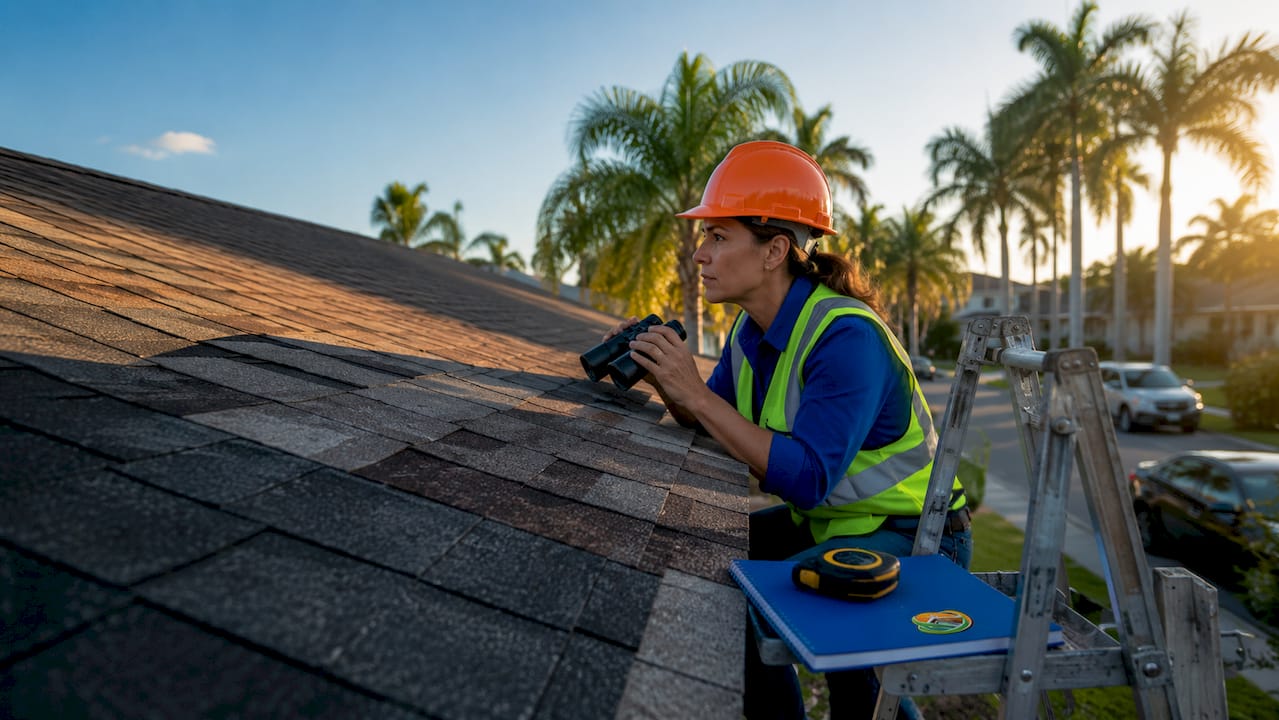
Pro Tip: You do not need to climb on your roof to do a basic check. Use binoculars from the ground to spot early warning signs like missing granules, curling edges, or lifted tabs. This keeps you safe and gives you enough information to know when to call a professional.
3. Why attic ventilation matters more than most homeowners realize
Poor attic ventilation is one of the leading causes of premature shingle failure, and most homeowners never think about it. Proper attic ventilation keeps attic temperatures below 110°F, which prevents the heat from baking shingles from the inside out. In South Florida, where attic temperatures can spike dramatically on summer afternoons, this protection is critical.
When heat builds up in an unventilated attic, it accelerates the drying of the asphalt binder in your shingles. The shingles become brittle, crack, and lose granules faster than their rated lifespan suggests. Adding or upgrading ridge vents, soffit vents, or powered attic fans is one of the most cost-effective shingle roof maintenance investments you can make.
Insulation works alongside ventilation. Proper insulation slows heat transfer from the living space into the attic, reducing the thermal load on your shingles from both directions.
4. What common shingle problems cause premature roof failure?
Most premature roof failures stem from systemic issues like poor attic ventilation and improper installation, not from the shingle material itself. That distinction matters because it means many failures are preventable.
Common problems to watch for include:
- Curling and cupping: Shingle edges lift or the center buckles. This signals moisture imbalance or heat stress.
- Granule loss: Bare patches on shingles mean UV protection is gone. Check your gutters for granule buildup after rain.
- Blistering: Small bubbles form on the shingle surface from trapped moisture or volatile compounds escaping during heat.
- Algae and moss growth: Dark streaks or green patches hold moisture against the shingle surface, accelerating decay.
- Missing shingles: Wind uplift from storms exposes the underlayment and deck to water damage immediately.
Installation errors compound these problems. Fastening errors like "high-nailing" compromise shingle attachment strength, causing wind uplift and failure long before the material naturally ages. Misaligned shingles and incorrect nailing patterns are common on roofs installed without proper oversight.
"Thermal shock causes shingle curling in hot climates through rapid contraction after intense heating. In South Florida, this cycle repeats daily during summer months, creating damage that simple patching cannot fix."
Knowing what to look for on your shingle damage guide puts you ahead of most homeowners who only notice problems after water is already inside.
5. Why pressure washing destroys your shingle roof
Pressure washing is one of the most damaging things you can do to an asphalt shingle roof. Pressure washing strips protective granules from the shingle surface, voids manufacturer warranties, and accelerates failure. Those granules are not decorative. They block UV rays and protect the asphalt layer underneath.
Once granules are gone, the asphalt binder is exposed directly to South Florida's sun. Deterioration accelerates rapidly from that point. No amount of maintenance reverses granule loss once it happens.
The correct cleaning method is gentle soft washing, which uses low pressure and a biodegradable cleaning solution to remove algae, moss, and debris without damaging the shingle surface. Any contractor who recommends pressure washing your shingles is giving you bad advice.
6. How gutter cleaning and tree trimming protect your roof
Clogged gutters cause water to back up under shingle edges, creating moisture damage along the eaves. Gutter cleaning at least twice a year, ideally in spring and fall, prevents this. In South Florida, where heavy rain is frequent, quarterly cleaning is a reasonable standard for homes with significant tree cover.
Keeping branches trimmed 6–10 feet from the roofline reduces debris accumulation and prevents physical abrasion from branches rubbing against shingles during wind events. Overhanging branches also create shade that traps moisture and promotes algae growth.
Tree trimming before hurricane season is especially important in Broward and Palm Beach County. A branch that falls during a storm can cause structural damage far beyond what any maintenance budget covers.
7. The repairability advantage of asphalt shingles
Asphalt shingles are modular by design. The Asphalt Roofing Manufacturers Association confirms that spot repairs are possible without disrupting the entire roof. A few damaged shingles do not require a full replacement. This repairability is one of the strongest benefits of shingle roofs and one of the most underused advantages homeowners have.
Addressing minor damage quickly prevents it from spreading. A single cracked shingle left unrepaired allows water to reach the underlayment, then the decking, then the interior. The repair cost at each stage multiplies. Catching damage early and fixing it at the shingle level is the most cost-effective path available.
Pro Tip: After any storm, walk your property and check your gutters for granule deposits. A heavy granule loss after one storm is a signal to schedule a professional inspection, not wait for the next scheduled visit.
8. Practical tips to extend your shingle roof's life in South Florida
South Florida homeowners face a specific set of climate challenges that general roofing guides do not fully address. These practices are tailored to your conditions:
- Schedule biannual professional inspections. Spring and fall inspections catch seasonal damage before it compounds.
- Use soft wash cleaning only. Never allow pressure washing on your shingles under any circumstances.
- Maintain attic ventilation. Have a professional assess your attic airflow if your roof is aging faster than expected.
- Repair minor damage immediately. Do not wait for the next inspection cycle if you spot a problem after a storm.
- Trim trees before hurricane season. June through november is peak storm season. Trim in may.
- Consider professional renewal services. If your roof shows early signs of aging but is structurally sound, renewal may extend its life significantly before replacement becomes necessary.
For homeowners looking at cost-effective roof longevity options, the gap between a maintained roof and a neglected one is often measured in years and thousands of dollars.
Key Takeaways
Asphalt shingle roofs in South Florida last longer when homeowners combine the right shingle type, consistent maintenance, proper ventilation, and early repairs before minor damage becomes a full replacement.
| Point | Details |
|---|---|
| Choose the right shingle type | Architectural shingles offer the best balance of cost, lifespan, and wind resistance for South Florida. |
| Inspect twice a year plus after storms | Professional inspections in spring and fall catch damage before it compounds into costly repairs. |
| Never pressure wash shingles | Pressure washing strips granules, voids warranties, and accelerates shingle failure permanently. |
| Ventilate your attic properly | Keeping attic temperatures below 110°F prevents shingles from baking and aging prematurely. |
| Repair damage early | Spot repairs on asphalt shingles are cost-effective and prevent water damage from spreading to the deck. |
What I've learned from watching homeowners wait too long
Most homeowners I talk to have the same story. They noticed something off with their roof, figured it could wait, and then got a quote for $20,000 or more. The frustrating part is that many of those roofs were still savable six months earlier.
The conventional wisdom is to call a roofer when you see a problem. My experience says that is already too late for the best outcome. The window between "this roof needs attention" and "this roof needs replacement" is real, and it closes faster in South Florida than anywhere else I know. The sun here does not give roofs a break.
There is also an environmental angle that rarely gets discussed. Every unnecessary roof tear-off sends thousands of pounds of asphalt shingles to a landfill. When a roof can be preserved and extended instead, that waste does not happen. Homeowners save money and the environment benefits. That is not a small thing.
The homeowners who come out ahead are the ones who treat their roof like they treat their HVAC system: scheduled maintenance, early repairs, and professional assessments before the system fails completely. A roof that gets that kind of attention in Broward or Palm Beach County will outlast one that gets ignored by years.
— Daniellison
Your South Florida roof may not need replacing yet
South Florida homeowners spend $15,000–$30,000 on roof replacements that could have been avoided with earlier intervention. Shingleroofrenewal is a certified applicator of Fresh Roof Green Soy Technology, which restores shingle flexibility at the molecular level, locks in granules, and extends qualifying roof life by 10–15 years.
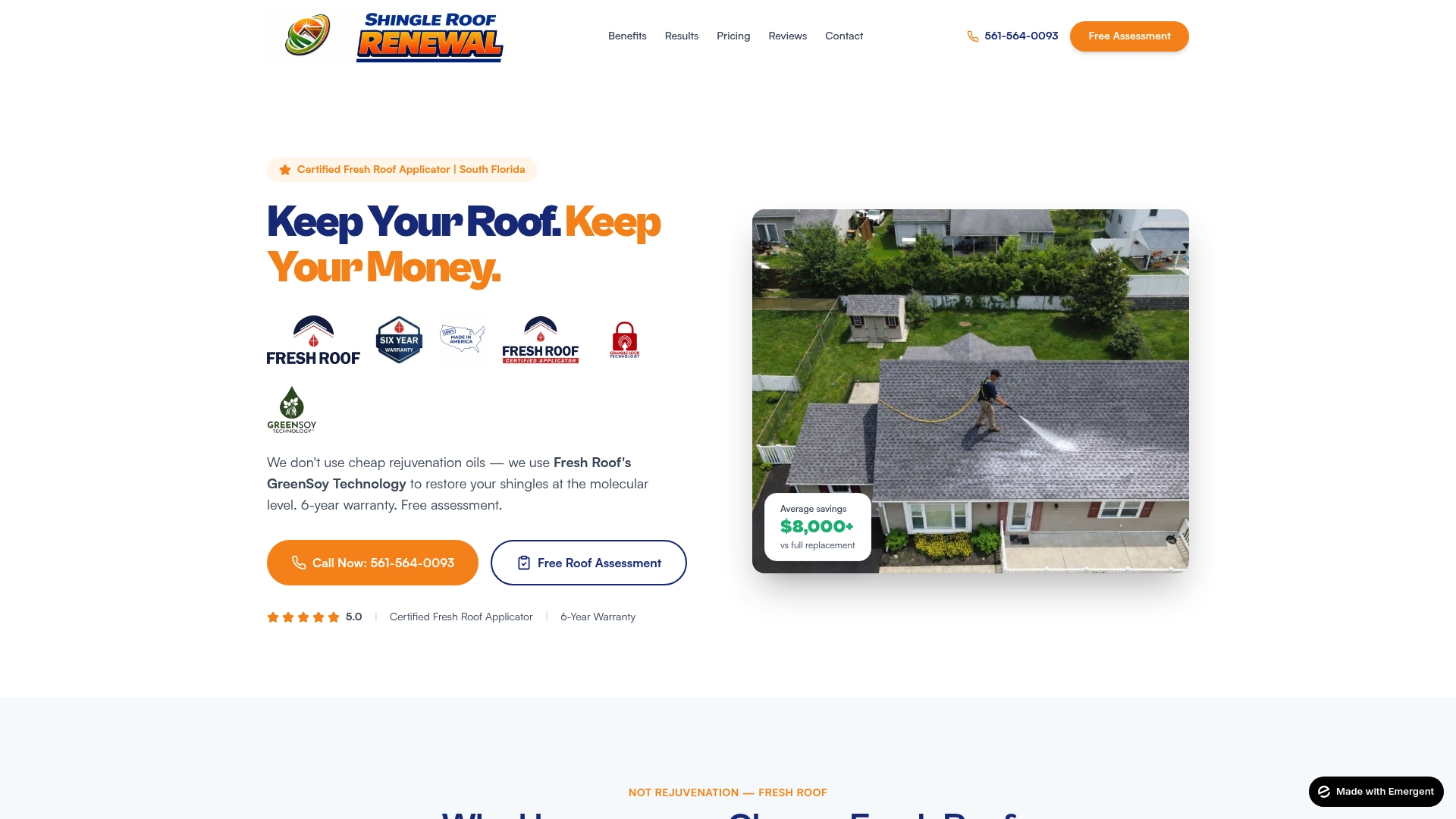
The process is straightforward. Shingleroofrenewal inspects your roof, assesses its condition, and tells you honestly whether it qualifies for renewal. If it does, you could save significantly compared to full replacement, backed by a 6-year transferable warranty. Homeowners in Broward and Palm Beach County can schedule a free inspection and find out if their roof qualifies before calling a roofer. Learn more about the full range of roof preservation services available for South Florida homes.
FAQ
How long do asphalt shingles last in South Florida?
Standard 3-tab shingles last 15–20 years, architectural shingles last 25–30 years, and luxury shingles can last up to 50 years. South Florida's heat and UV exposure push all three toward the shorter end of their rated lifespans.
What are the most common shingle roof issues in South Florida?
Curling, granule loss, blistering, and algae growth are the most frequent problems. Most failures trace back to poor attic ventilation or improper installation rather than the shingle material itself.
How do I know if my roof needs replacement or just maintenance?
A professional inspection is the only reliable way to know. Many roofs that appear worn can still qualify for preservation and renewal services rather than full replacement, especially when caught early.
Can I clean my shingle roof myself?
You can remove loose debris safely from the ground, but cleaning the shingle surface requires soft wash methods applied by a professional. Pressure washing permanently damages shingles and voids warranties.
What is a shingle roof inspection checklist?
A basic shingle roof inspection checklist covers missing or curling shingles, granule loss in gutters, algae or moss growth, flashing condition around vents and chimneys, attic ventilation, and signs of water intrusion in the attic. A professional inspection covers all of these plus structural assessment of the decking and underlayment.