
TL;DR:
- Most South Florida asphalt shingles deteriorate faster due to climate stresses, making restoration a cost-effective alternative to full roof replacement. Properly timed restoration with advanced technology can extend shingles' lifespan by 5 to 15 years, especially when systemic issues like ventilation are addressed. Regular maintenance and professional inspections help sustain durability, maximizing the investment in roof renewal.
Most South Florida homeowners assume once their asphalt shingles start curling, cracking, or losing granules, the only answer is a full roof replacement. That assumption costs thousands of dollars unnecessarily every year. The durability of restored shingles is far greater than most people realize, especially when restoration happens at the right time and with the right technology. In a region where intense heat, UV exposure, and storm seasons push roofs to their limits, understanding what restoration can actually deliver is the difference between a $5,000 investment and a $25,000 one.
Table of Contents
- Why asphalt shingles age faster in South Florida
- Typical lifespan of asphalt shingle roofs in South Florida
- How restoration improves durability and extends shingle life
- Factors influencing the durability of restored shingles in South Florida
- Restoration durability versus roof replacement: cost and lifespan comparison
- Maximizing the durability of your restored shingle roof: practical homeowner tips
- Why durable restored shingle roofs depend on more than just the coating
- Affordable shingle roof renewal options in South Florida
- Frequently asked questions
Key Takeaways
| Point | Details |
|---|---|
| South Florida climate impact | Intense UV and heat cause asphalt shingles to age faster, leading to granule loss and brittleness. |
| Restoration extends life | Proper roof restoration can add 5 to 15 years to roofing lifespan if shingles remain structurally sound. |
| System durability matters | Durability depends on the whole roofing system including ventilation, flashing, and deck condition. |
| Cost-effective alternative | Roof restoration typically costs up to 80% less than full replacement while delaying it significantly. |
| Regular maintenance essential | Ongoing care like inspections, cleaning, and ventilation upkeep maximize restored shingle durability. |
Why asphalt shingles age faster in South Florida
Your roof is working harder than almost any roof in the country. South Florida's climate creates a combination of stresses that simply don't exist at the same intensity in northern states.
Here's what your shingles are up against every single day:
- UV and heat: UV and heat oxidize asphalt binder and loosen granules, reducing lifespan by about 10 to 15%. When granules fall off, the black asphalt layer underneath is exposed directly to sunlight. That surface then dries out, becomes brittle, and cracks.
- Humidity and moisture: Broward and Palm Beach counties average over 75% humidity year-round. That constant moisture seeps under shingles, weakens adhesive strips, and creates conditions where algae and moss thrive.
- Storm stress: South Florida's storm season brings high winds, heavy rain, and repeated cycles of wet and dry. Each storm adds physical stress to already aging shingles.
- Thermal cycling: Days in the 90s and cooler nights cause shingles to expand and contract repeatedly. Over years, this constant movement weakens the material at a structural level.
Understanding shingle deterioration in South Florida helps you see why the same shingle product that lasts 30 years in Ohio might give out in 15 years here. The Florida climate impact on asphalt roofing is real, measurable, and worth taking seriously.
Now that you understand why South Florida's climate challenges asphalt shingles, let's explore how long unprotected shingle roofs typically last here.
Typical lifespan of asphalt shingle roofs in South Florida
Nationally, typical lifespan is 15 to 30 years depending on shingle quality and conditions. That range gives many homeowners false confidence about how long their Florida roof will hold up.
The reality is different here. Standard asphalt shingles last roughly 10 to 15 years in Florida, with premium architectural shingles reaching 15 to 25 years. Florida cuts the national average nearly in half for basic shingle types.
| Shingle type | National average lifespan | South Florida expected lifespan |
|---|---|---|
| 3-tab asphalt | 15 to 25 years | 10 to 15 years |
| Architectural (dimensional) | 25 to 35 years | 15 to 25 years |
| Premium architectural | 30 to 40 years | 20 to 28 years |
A few factors that further reduce these numbers:
- Poor installation: Shingles nailed too high or with insufficient overlap lose years quickly.
- Inadequate ventilation: Attic heat buildup bakes shingles from underneath, accelerating breakdown.
- Deferred maintenance: Small issues like broken flashing or clogged gutters become big problems fast in a climate this aggressive.
Knowing these baselines matters because it tells you where you stand. If your 3-tab roof is 12 years old and showing early signs of wear, you're not necessarily facing immediate replacement. You may be a strong candidate for extending shingle roof life through restoration, buying yourself another decade before replacement becomes unavoidable. Understanding shingle lifespan extension methods is the next step.
How restoration improves durability and extends shingle life
Restoration is not just spraying something on your roof and hoping for the best. When done correctly, it addresses the actual causes of shingle aging.
Here is how the process works, step by step:
- Cleaning: Algae, moss, and debris are removed. This isn't cosmetic. Organic growth traps moisture against the shingle surface, accelerating breakdown.
- Minor damage repair: Cracked or lifted shingles are repaired before treatment is applied. A coating on a damaged shingle still fails.
- Rejuvenator application: Oil-based rejuvenators penetrate the shingle and replenish the oils that UV and heat have dried out. Shingle rejuvenators restore flexibility and granule adhesion, slowing deterioration significantly.
- Protective coating: A UV-reflective layer is applied over the rejuvenated shingles to reduce heat absorption and prevent further oxidation.
- Final inspection: A professional checks that coatings have bonded correctly and that no areas were missed.
The result is a shingle that has recovered much of its original flexibility and protective capability. Restoration can add about 5 to 15 years of service life when shingles are aging but structurally intact. That's a meaningful number, especially compared to the cost of a full tear-off and replacement.
Understanding restoring shingle flexibility is key to seeing why this works. Flexible shingles shed water better, resist wind uplift more effectively, and don't crack under thermal stress the way dried-out shingles do. To learn more about specific methods, see shingle roof restoration methods.
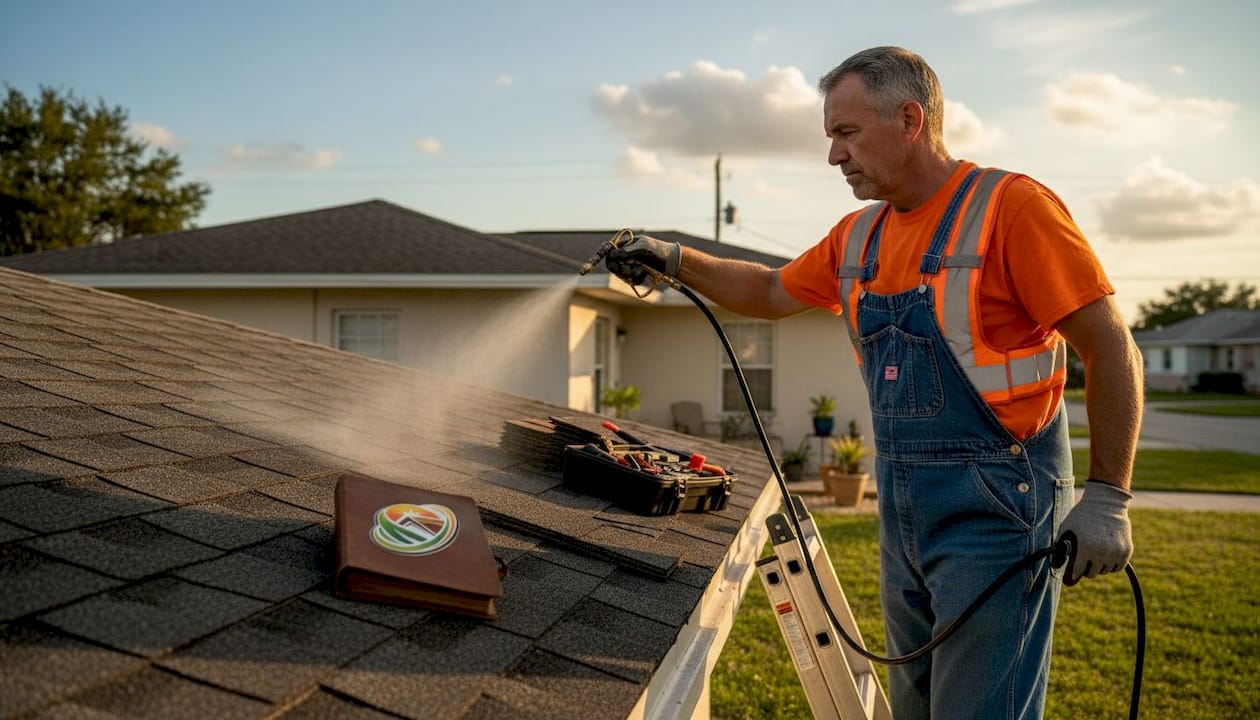
Pro Tip: Never attempt a full restoration as a DIY project. Professional application ensures the rejuvenator penetrates to the right depth and the coating bonds evenly, which is what actually delivers lasting results.
Understanding how restoration works, next we'll look at factors influencing how durable restored shingles really are in South Florida conditions.
Factors influencing the durability of restored shingles in South Florida
Not every restored roof performs the same. Shingle restoration durability depends on several variables working together.
Key factors that determine how long your restored shingles will last:
- Timing matters most: Granule loss level before restoration limits treatment durability. If shingles are already severely stripped, the rejuvenator has little healthy asphalt to bond with.
- Material compatibility: Durability depends on proper matching of materials and maintaining water-shedding system components. The wrong coating on certain shingle types can peel or blister.
- Attic ventilation: Attic ventilation and moisture control greatly affect roof aging and restored shingle longevity. Poor ventilation can reduce a restored roof's effective lifespan by 20% or more.
- Flashing and underlayment condition: Restoration doesn't fix bad flashing around chimneys, vents, or valleys. If water is getting under the shingles at these points, no coating will stop it.
- Roof drainage: Standing water due to clogged gutters or poor slope undermines the restored surface from below.
"Restoration durability hinges on knowing your roof is a coordinated system, not just shingles."
This is why we always recommend a full inspection before quoting any restoration work. A roof longevity checklist helps identify every component that affects the outcome, not just the shingles themselves. Our three-step renewal process builds this assessment into the start of every project.
Pro Tip: Schedule a professional inspection specifically focused on attic ventilation and moisture buildup. These are the most overlooked factors that quietly kill restored roofs from the inside.
Now that we understand durability influencers, let's compare restoration durability versus replacement costs and benefits for South Florida homeowners.
Restoration durability versus roof replacement: cost and lifespan comparison
This is the question most homeowners come to us with: Is restoration actually worth it, or should I just replace the roof?
The answer depends on your roof's condition. But when restoration is the right call, the financial case is compelling.
Restoration can save up to 80% compared to full roof replacement while adding 5 to 15 years to roof life. Full replacement ensures FBC compliance and comes with new warranties, but costs significantly more upfront.
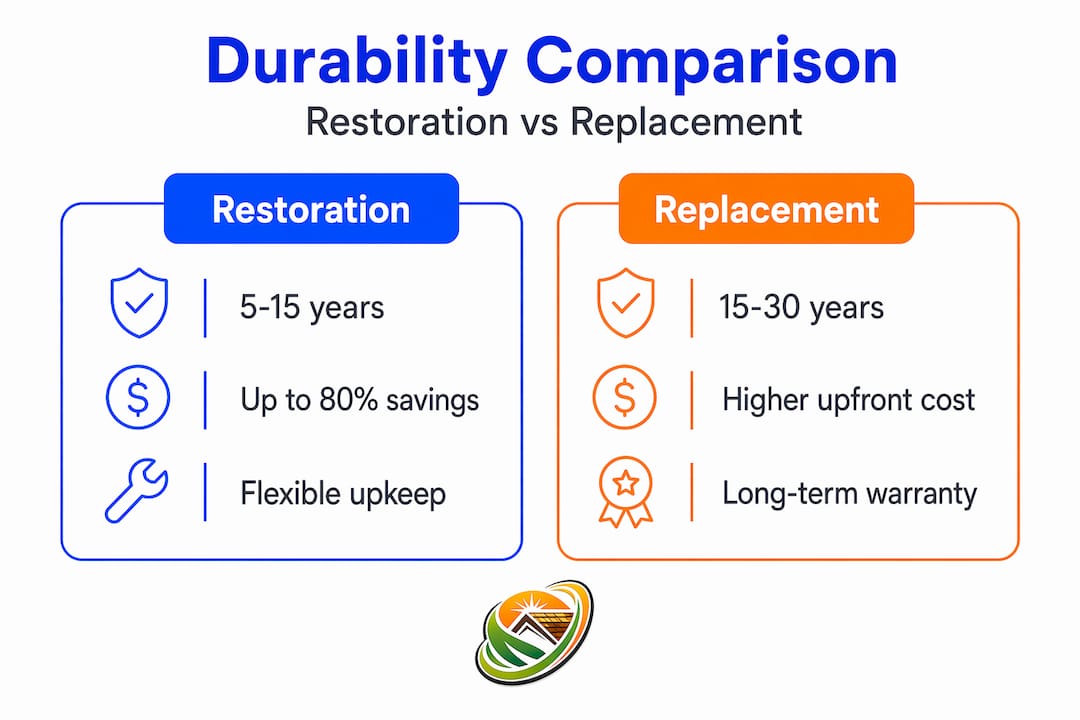
| Factor | Restoration | Full replacement |
|---|---|---|
| Typical cost | $2,000 to $5,000 | $15,000 to $30,000 |
| Lifespan added | 5 to 15 years | 20 to 30+ years |
| Florida Building Code compliance | Maintains existing | Full compliance update |
| Project disruption | 1 to 2 days, minimal | 3 to 7 days, significant |
| Warranty | Varies by applicator | Full manufacturer warranty |
How to decide which option is right for you:
- If your shingles still have structural integrity and moderate granule coverage, restoration is almost always the smarter financial move.
- If your decking is soft, shingles are cracked and curling across large sections, or you've had repeated leak failures, replacement is the correct answer.
- If you plan to sell your home within 5 years, restoration buys time and adds real estate value without overinvesting.
- If your roof is less than 10 years old in South Florida, restoration can add another full decade at a fraction of the replacement cost.
For a deeper look at this decision, our article on restoration vs replacement walks through the specific criteria we use during inspections. See also our guidance on saving with roof restoration.
Maximizing the durability of your restored shingle roof: practical homeowner tips
You've invested in restoration. Now your job is to protect that investment. The weather resistance of restored shingles doesn't maintain itself.
Follow these steps to keep your restored roof performing for the full expected lifespan:
- Inspect twice a year and after every major storm. Walk the property and look for missing shingles, visible granules in gutters, or lifted edges.
- Clear debris regularly. Leaves and branches trap moisture against shingles and speed up surface breakdown.
- Address minor damage immediately. A cracked shingle that costs $50 to fix today becomes a $3,000 water damage repair if ignored through storm season.
- Check and improve attic ventilation. Proper attic ventilation and professional restoration application improve durability markedly. This is one maintenance step most homeowners overlook completely.
- Skip the pressure washer. High-pressure water strips granules off restored shingles just as fast as UV does. Use low-pressure rinsing or hire professionals who know how to clean without causing damage.
- Schedule professional inspections annually. Regular maintenance and inspections detect issues early and preserve roof longevity. Many warranty terms also require documented professional checks.
Use our roof longevity checklist to stay organized between inspections. And if you want to understand what a professional does during a visit, our roof renewal process article explains every step.
Pro Tip: Keep a simple maintenance log with dates, photos, and any work performed. This documentation is valuable if you ever need to file an insurance claim or transfer your warranty to a new homeowner.
With practical care steps outlined, we'll now share our unique perspective on restored shingles durability in South Florida.
Why durable restored shingle roofs depend on more than just the coating
Here's something we've learned after working on hundreds of South Florida roofs: most restoration failures aren't caused by the product. They're caused by what the product was applied on top of.
We've seen homeowners invest in quality restoration, only to have problems resurface within two or three years. In nearly every case, the culprit wasn't the coating. It was an attic running 20 degrees hotter than it should because of blocked soffit vents. Or flashing that was never sealed properly around a bathroom vent. Or underlayment that had been quietly holding moisture against the decking for years.
Durability depends on the entire roofing system's water-shedding capability and ventilation, not just shingles or coatings. That's not a technicality. It's the reason why two identical roofs, treated with identical products on the same day, can perform completely differently five years later.
Attic heat and moisture management crucially constrain restoration lifespan. When an attic consistently reaches 140°F or higher because of poor ventilation, it bakes the underside of your decking. Restoration treatments on top can't undo that kind of stress.
The practical implication for you as a homeowner is this: before you ask how long a restoration will last, ask whether your roof system is set up to support it. Check your holistic roof longevity factors first. Understand how Florida roof system care differs from what works in other climates.
A good restoration company won't just spray and collect payment. They'll tell you if your ventilation needs addressing first. If they don't mention it, ask.
Pro Tip: Don't wait for a visible leak to get your roof system assessed. By the time water is dripping inside your home, you've likely already got deck damage that makes restoration less effective and replacement more likely.
Affordable shingle roof renewal options in South Florida
If you've been putting off dealing with your aging roof because of the price tag of replacement, there's good news.
At Shingle Roof Renewal, we specialize in certified asphalt shingle restoration for homeowners across Broward and Palm Beach County. Using Fresh Roof's proprietary GreenSoy Technology, we restore shingles at the molecular level, rebuilding flexibility and stopping deterioration before it forces a full replacement. The process is designed specifically for South Florida's climate conditions. Our roof restoration services include inspection, professional treatment, and a 6-year transferable warranty, all for a fraction of replacement costs.
Here's what you get when you work with us:
- Save up to 80% compared to a full roof replacement
- Extend your roof's life by 10 to 15 years with certified GreenSoy Technology
- Local expertise in Broward and Palm Beach County conditions
- Quick turnaround with minimal disruption to your home
- 6-year transferable warranty that adds value if you sell
Whether you're in Boca Raton or anywhere across South Florida, schedule your free roof inspection today and find out if your roof qualifies for renewal before a small problem becomes a very expensive one.
Frequently asked questions
How long can restoration extend the life of my asphalt shingle roof in South Florida?
Restoration can add 5 to 15 years of service life when shingles are aging but still structurally intact, making it a strong option for roofs that haven't yet reached the point of requiring full replacement.
What signs indicate my roof is a good candidate for restoration versus replacement?
Good candidates show minor granule loss, aging but intact shingles, and no structural decking problems. Restoration is not recommended if decking or a significant portion of shingles is already damaged, in which case replacement is the right answer.
How does South Florida's climate affect restored shingles durability?
South Florida's heat and UV accelerate granule loss and asphalt aging faster than most U.S. climates. Unaddressed granule loss reduces lifespan by 10 to 15%, so restoring shingles earlier and maintaining good ventilation meaningfully improves how long a restored roof holds up.
Can I restore a roof with extensive granule loss or severe shingle damage?
In most cases, no. Restoration is ineffective when widespread shingle or decking damage exists, and full replacement becomes the more reliable and code-compliant solution.
How can I maintain the durability of my restored shingle roof?
Regular maintenance and proper attic ventilation significantly extend shingle roof life. Biannual inspections, debris removal, and addressing minor damage quickly are the three habits that make the biggest difference after restoration.