
TL;DR:
- Homeowners in South Florida should evaluate whether their roof damage is localized or systemic to determine if repair or replacement is appropriate. Age, storm damage documentation, and cost comparisons influence the decision, with renewal options offering up to 15 additional years of lifespan at a fraction of full replacement costs. Prompt inspections and contractor consultations are crucial to prevent small issues from escalating into structural problems.
If you own a home in Broward or Palm Beach County, you have probably stared at your ceiling after a storm and wondered whether you need a repair or a full replacement. These common roof repair questions come up constantly, and the answers matter more here than in most parts of the country. South Florida's heat, humidity, and hurricane season put unique stress on asphalt shingles that homeowners in cooler climates simply don't face. This article gives you straight, practical answers, so you can make a confident decision before spending a dollar.
Table of Contents
- Key takeaways
- 1. Common roof repair questions: how do you know if your roof needs repair or replacement?
- 2. What does a typical roof repair cost in South Florida?
- 3. Will homeowners' insurance cover my roof repair?
- 4. What questions should I ask a roof inspector?
- 5. What are the most common types of asphalt shingle repairs?
- 6. Repair vs. replacement: which makes more financial sense?
- 7. How long does a roof repair take, and will it disrupt my life?
- My perspective on what homeowners get wrong about roof repair
- Save thousands with certified shingle roof renewal in South Florida
- FAQ
Key takeaways
| Point | Details |
|---|---|
| Age drives decisions | Asphalt shingle roofs over 15 years old with recurring issues need a serious repair vs. replacement evaluation. |
| Insurance covers storms, not aging | Homeowners' insurance pays for sudden storm damage, not gradual wear, so document damage quickly. |
| Repair costs have a ceiling | If repair quotes exceed 30-50% of replacement cost, replacing is usually the smarter financial move. |
| Roof renewal is a real option | Certified renewal services can extend your roof's life by 10-15 years at up to 80% less than full replacement. |
| Act before leaks escalate | Early inspection and intervention prevent small shingle problems from becoming structural ones. |
1. Common roof repair questions: how do you know if your roof needs repair or replacement?
This is the question most homeowners start with, and the answer depends on a few clear signals.
Signs you likely need a repair, not a replacement:
- Missing or cracked shingles in a localized area after a storm
- Flashing lifted around a chimney or vent pipe
- A single leak traced to one specific entry point
- Shingles with minor surface wear but still lying flat
Signs that point toward a full evaluation or replacement:
- Granule loss over 10-25% across wide sections of the roof, not just one patch
- Curling or cupping shingles across multiple roof slopes
- Multiple missing shingles spread across different areas
- Water stains on several different ceilings inside the home
Age matters a lot here. Asphalt shingle roofs last 20-30 years, but if your roof is over 15 years old and you're already booking repairs regularly, a replacement evaluation makes sense. South Florida's UV exposure and storm cycles accelerate deterioration faster than the national average.
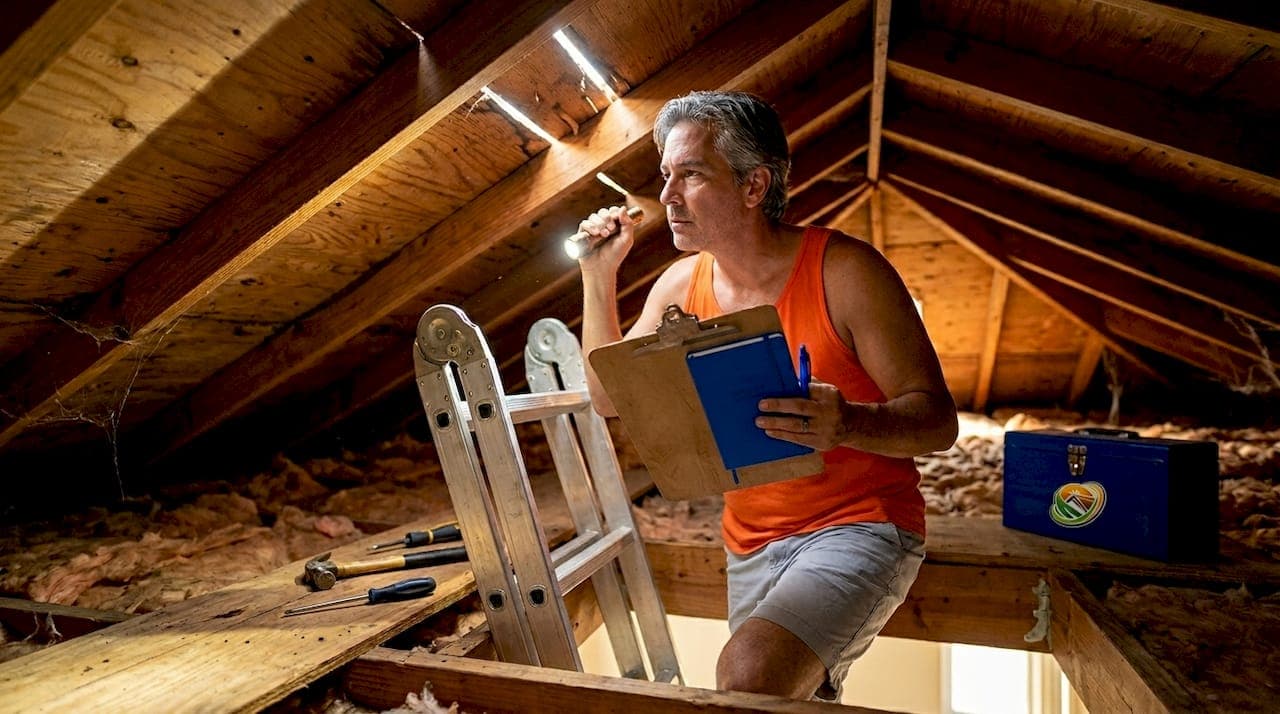
Pro Tip: Go into your attic on a sunny afternoon and look up. If you can see daylight through the decking, that is a structural red flag. Call a professional that same week.
2. What does a typical roof repair cost in South Florida?
Cost is always one of the first roof repair FAQs, and it varies more than most homeowners expect.
Typical repair costs in South Florida range from $350 to $1,800 depending on the type and scale of the damage. Replacing a few missing shingles after a wind event sits on the lower end. Repairing flashing around a chimney, addressing a persistent leak, or sealing a larger section of damaged decking pushes toward the higher range.
Several factors influence the final price:
- Roof pitch and accessibility (steeper roofs cost more to work on safely)
- Number of shingle layers already in place
- Whether the roof decking underneath is also compromised
- Labor costs in your specific county
The takeaway: get at least two written quotes, and make sure each one specifies exactly what work is included. Vague quotes lead to surprise charges.
3. Will homeowners' insurance cover my roof repair?
This is one of the most frequent roofing questions we hear, and the honest answer is: it depends entirely on the cause.
Homeowners' insurance covers sudden damage from storms like wind, hail, and falling debris. What it does not cover is normal aging, deterioration from years of sun exposure, or damage that resulted from deferred maintenance. In South Florida, that distinction matters because our roofs age faster due to constant UV exposure and humidity.
Here is what helps when filing a claim:
- Take photos immediately after the storm, before any cleanup
- Note the date and type of storm event (use local weather records if needed)
- Have a licensed contractor document the damage in writing
- Submit your claim promptly. Documenting damage timing is key to a successful outcome
"Insurance rarely covers roof aging or lack of maintenance. The homeowners who win their claims are the ones who document storm damage the same day it happens."
If an adjuster says the damage is "wear and tear," you have the right to request a second inspection or hire a public adjuster to represent your interests.
4. What questions should I ask a roof inspector?
Knowing the right questions to ask roof inspectors separates homeowners who get useful answers from those who nod along and sign a contract they don't fully understand.
These are the important questions for roof inspectors before any work begins:
- How old is my roof based on what you can see, and does that affect your recommendation?
- Is the damage isolated or spread across multiple areas?
- Is the roof decking compromised, or just the surface shingles?
- What is the difference between what you are recommending and a full replacement?
- Can you provide a written report with photos?
- Do you carry liability insurance and a Florida contractor's license?
One thing many homeowners skip: ask for recent references and call them. Professional contractors' references reveal reliability more accurately than online reviews alone. Ask those references whether the crew was punctual, whether the final bill matched the quote, and how the contractor handled any surprises.
5. What are the most common types of asphalt shingle repairs?
Understanding what common repairs involve helps you evaluate contractor quotes and spot anything that sounds off.
The most frequent shingle repair types include:
- Missing or damaged shingle replacement: Shingles lifted or cracked by wind are removed and replaced with matching material. This is the most straightforward repair when damage is localized.
- Flashing repair: Metal flashing seals the joints where your roof meets a chimney, vent, or wall. When it lifts or corrodes, water finds a direct path inside. Flashing repairs are often cheaper than homeowners expect but critical.
- Sealing active leaks: A contractor traces the leak source, seals the entry point, and replaces any rotted decking beneath. The tricky part is that the visible water stain inside is rarely directly below the actual leak.
- Granule loss treatment: When shingles shed granules at scale, they lose UV protection. Replacement is often the answer for large areas, but if the loss is early and localized, a certified roof renewal process can restore the shingle surface.
| Repair type | Typical cost range | Best for |
|---|---|---|
| Missing shingle replacement | $150 to $400 | Storm damage, small areas |
| Flashing repair | $200 to $500 | Chimney, vent, or edge leaks |
| Leak sealing and decking | $400 to $1,200 | Active water intrusion |
| Roof renewal treatment | Fraction of replacement | Aging shingles, wide granule loss |
Pro Tip: Before accepting a quote for full shingle replacement on a large section, ask whether a certified roof renewal could address the same deterioration. In many South Florida cases, it can.
6. Repair vs. replacement: which makes more financial sense?
This is the decision that costs homeowners the most money when they get it wrong. And they often do, because they either wait too long or replace too soon.
Here is the clearest financial rule in roofing: if repair quotes exceed 30-50% of your full replacement cost, replacement is usually the smarter long-term investment. If you are paying $4,000 to repair a roof where replacement would cost $18,000, that math works. If you are paying $9,000 to patch a deteriorated 20-year-old roof, you are likely buying very little time.
When repair or renewal is the right call:
- Damage is isolated to one section or one type of issue
- The roof is under 15 years old with no systemic deterioration
- A certified renewal service can restore the shingles and extend life by 10-15 years at a fraction of replacement cost
- You want to preserve the option to sell the home with a transferable warranty
When replacement makes more sense:
- Multiple problem areas across the whole roof surface
- Shingles over 20 years old with widespread granule loss and curling
- Structural decking damage covering a large area
- The roof has already been repaired multiple times in the last five years
South Florida homeowners who choose roof renewal instead of replacement can save up to 80% compared to a full tear-off and reroof. That is a real number, not marketing language. On a typical $20,000 replacement, the savings can exceed $15,000.
7. How long does a roof repair take, and will it disrupt my life?
Most roof repairs in South Florida are completed in a single day. Missing shingle replacements and flashing fixes are typically done in two to four hours. More involved repairs with decking replacement or larger leak mitigation might take a full day, occasionally stretching to two.
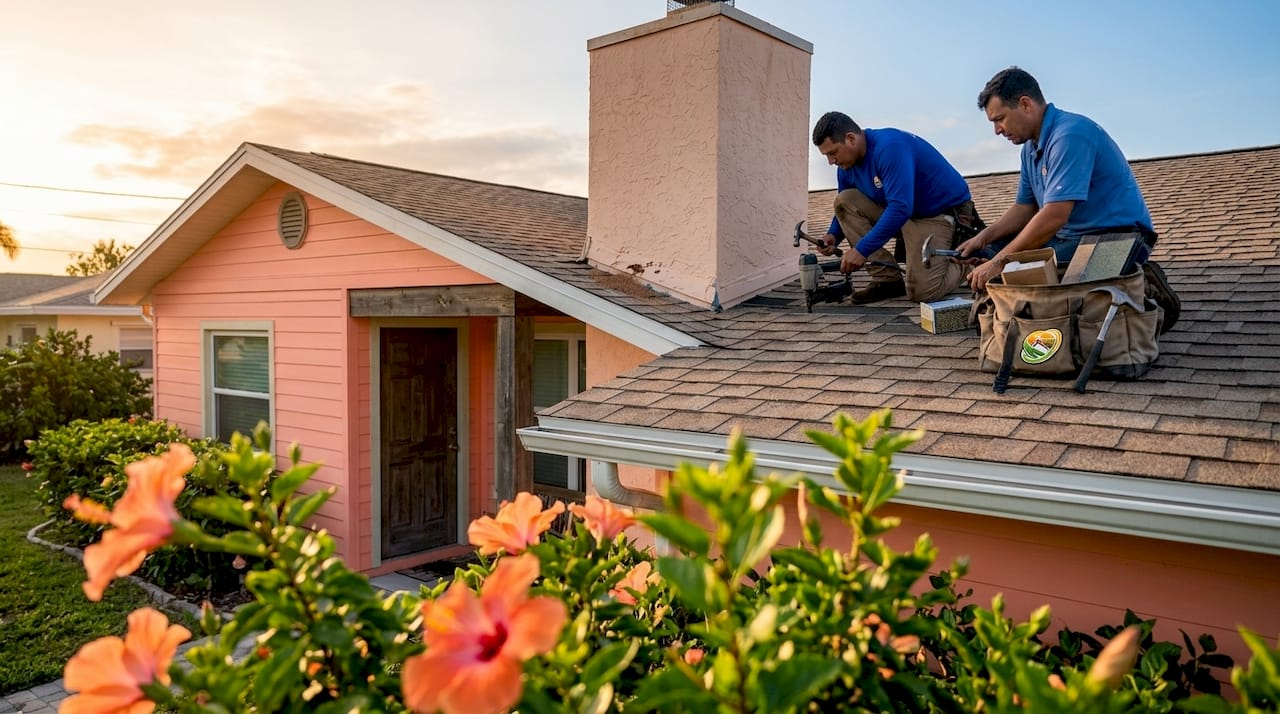
You do not need to leave your home. The crew works on the exterior. The main disruptions are noise during work hours and the need to keep children and pets away from the perimeter of the house while the crew is present.
Weather is the wildcard. South Florida's afternoon storms in the summer can push jobs to the next morning if rain arrives unexpectedly. A reputable contractor will account for this and keep you updated rather than rushing through deteriorating conditions.
My perspective on what homeowners get wrong about roof repair
I have seen the same pattern repeat itself dozens of times with South Florida homeowners. Someone notices a handful of damaged shingles, gets nervous, and immediately starts calling around for full replacement quotes. They spend $18,000 to $25,000 on a new roof when a thorough inspection would have revealed that most of their existing shingles were still structurally sound and simply needed restoration.
Here is what I know for certain: Florida's sun is harder on asphalt shingles than anything else in this country except maybe extreme cold. The oils in shingles dry out faster here. That causes brittleness and granule loss years before the shingle actually needs replacing. That is not a failure, it is just chemistry. And it is fixable if you catch it before the damage becomes structural.
The questions homeowners miss most often are the ones about their specific roof condition before agreeing to anything. Ask whether the decking is sound. Ask whether the damage is localized or widespread. Ask whether renewal or targeted repair could extend the life of what you already have. Most importantly, get that inspection before the next storm season makes the decision for you.
— Daniellison
Save thousands with certified shingle roof renewal in South Florida
If the questions covered in this article sound familiar, you are not alone. At Shingleroofrenewal, we work specifically with Broward and Palm Beach County homeowners who are facing this exact crossroads.

We are a certified Fresh Roof applicator, which means we use GreenSoy Technology to restore your asphalt shingles at the material level, not just coat the surface. The result is restored flexibility, stopped deterioration, and a roof that lasts 10-15 years longer. Our service costs a fraction of what a full replacement runs, backed by a 6-year transferable warranty.
Whether you are in Delray Beach, Plantation, or anywhere in between, we start with a free inspection and give you an honest answer about whether your roof qualifies. No pressure. No guesswork. Just a clear recommendation from certified professionals who know South Florida roofs and want to help you avoid an unnecessary replacement.
Schedule your free roof inspection today and find out how much you can save.
FAQ
How do I know if my asphalt shingle roof needs repair or replacement?
Look for granule loss, curling shingles, or multiple missing shingles across different areas. If your roof is over 15 years old with recurring damage, a full evaluation is warranted.
Does homeowners' insurance cover roof repairs in South Florida?
Insurance covers sudden storm damage like wind and hail, but not aging or wear. Document damage immediately after any weather event to support a successful claim.
What is the average cost of a roof repair in South Florida?
Repair costs typically range from $350 to $1,800 depending on the scope of damage, roof pitch, and whether decking is affected. Get at least two written quotes before committing.
What is the difference between roof repair and roof renewal?
Repair addresses specific physical damage like missing shingles or leaks. Roof renewal uses a treatment like GreenSoy Technology to restore the shingle material itself, extending the entire roof's life by 10-15 years.
When does it make sense to replace instead of repair?
If repair quotes exceed 30-50% of the full replacement cost, or if damage is widespread across your entire roof surface, replacement is usually the more practical long-term investment.