
TL;DR:
- In South Florida, early identification and basic DIY repairs can significantly extend shingle roof life and save money. Regular inspections, preventive treatments, and timely fixes prevent costly structural damage caused by humidity, storms, and UV exposure. Professional roof renewal services offer affordable solutions to restore aging roofs without full replacement costs.
A full roof replacement in South Florida can set you back $15,000 to $30,000 overnight. That kind of bill hits hard, especially when your home is already managing rising insurance costs and utility expenses. The good news is that most homeowners don't need a new roof as soon as they think. With the right knowledge, the right tools, and a bit of consistency, you can address real problems early, extend the life of your existing shingles by years, and keep serious money in your pocket.
Table of Contents
- Understanding common asphalt shingle roof problems
- Tools, materials, and budget-friendly products for DIY repairs
- Step-by-step cost-effective roof repair process
- Verifying results and maintaining roof health
- Why regular maintenance trumps reactive repairs in South Florida
- Cost-effective roof renewal solutions for South Florida homeowners
- Frequently asked questions
Key Takeaways
| Point | Details |
|---|---|
| Inspect early, repair often | Regular inspections and timely fixes prevent expensive roof replacements. |
| Use quality DIY products | Affordable, proven materials and sealants boost shingle longevity. |
| Follow step-by-step repairs | A structured approach delivers safer, longer-lasting results and saves money. |
| Don’t skip routine maintenance | Simple upkeep protects your roof and wallet over the years. |
| Restore before replacing | Most South Florida roofs benefit from cost-effective restoration, avoiding major costs. |
Understanding common asphalt shingle roof problems
Once you understand the cost risks, the next step is recognizing the early warning signs of shingle roof trouble.
Your roof faces a relentless daily grind here in South Florida. The combination of blazing UV rays, thick humidity, and seasonal storms creates conditions that wear shingles down faster than in most other parts of the country. High humidity and intense storms accelerate shingle aging in ways that homeowners often don't notice until real damage is already done.
The most common problems you'll spot on an aging shingle roof include:
- Curling edges: Shingles that curl upward at the corners or buckle in the middle have lost their flexibility. This opens the door to wind lift and water intrusion.
- Cracking: Dry, brittle shingles crack under foot traffic, falling debris, or strong gusts. Even small cracks let moisture in.
- Granule loss: Those tiny grit particles on your shingles protect the underlying asphalt from UV damage. When they wash away, your shingles age faster. Check your gutters for granule buildup.
- Algae and moss growth: Dark streaks across your roof are usually algae. Left untreated, algae and moss hold moisture against shingles and break them down over time.
- Missing shingles: A clear sign of storm damage or advanced age. Even one missing shingle exposes decking to water damage.
Some problems are routine maintenance issues. Others signal urgent action. A missing shingle, an active leak, or widespread cracking across large sections of your roof needs immediate professional attention. Isolated granule loss or a small patch of algae can often be addressed with simple DIY care.
Pro Tip: Don't wait for a visible leak inside your home. By the time water shows up on your ceiling, significant structural damage may already be underway. Use our roof inspection checklist to assess your roof's condition twice a year and after major storms.
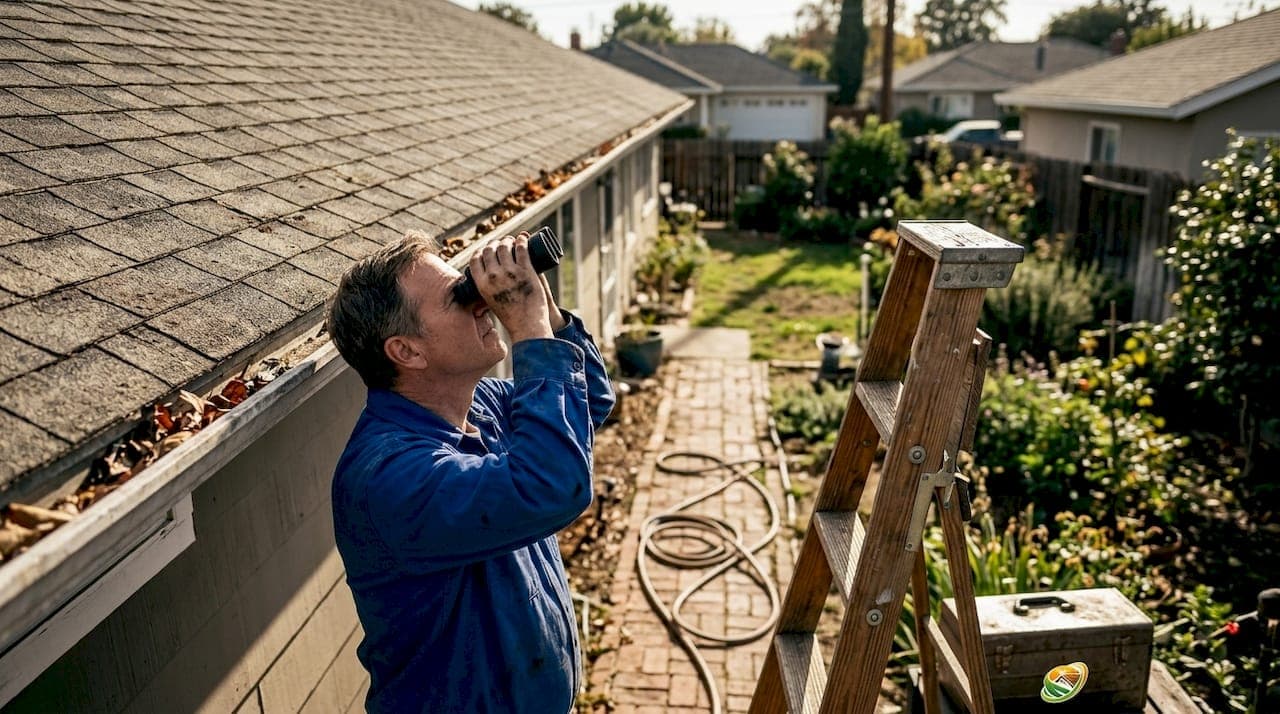
When walking your property, look at your roof from the ground with binoculars if needed. Check for uneven color patches, sagging areas near valleys, and lifted or buckling rows of shingles. A proper ground-level scan takes about 10 minutes and can catch issues early. Pair this with a closer look from a ladder at the gutters and fascia to extend your shingle roof life and avoid expensive surprises.
Tools, materials, and budget-friendly products for DIY repairs
Now that you can spot early signs of trouble, let's prepare you with the right kit for tackling basic repairs affordably.
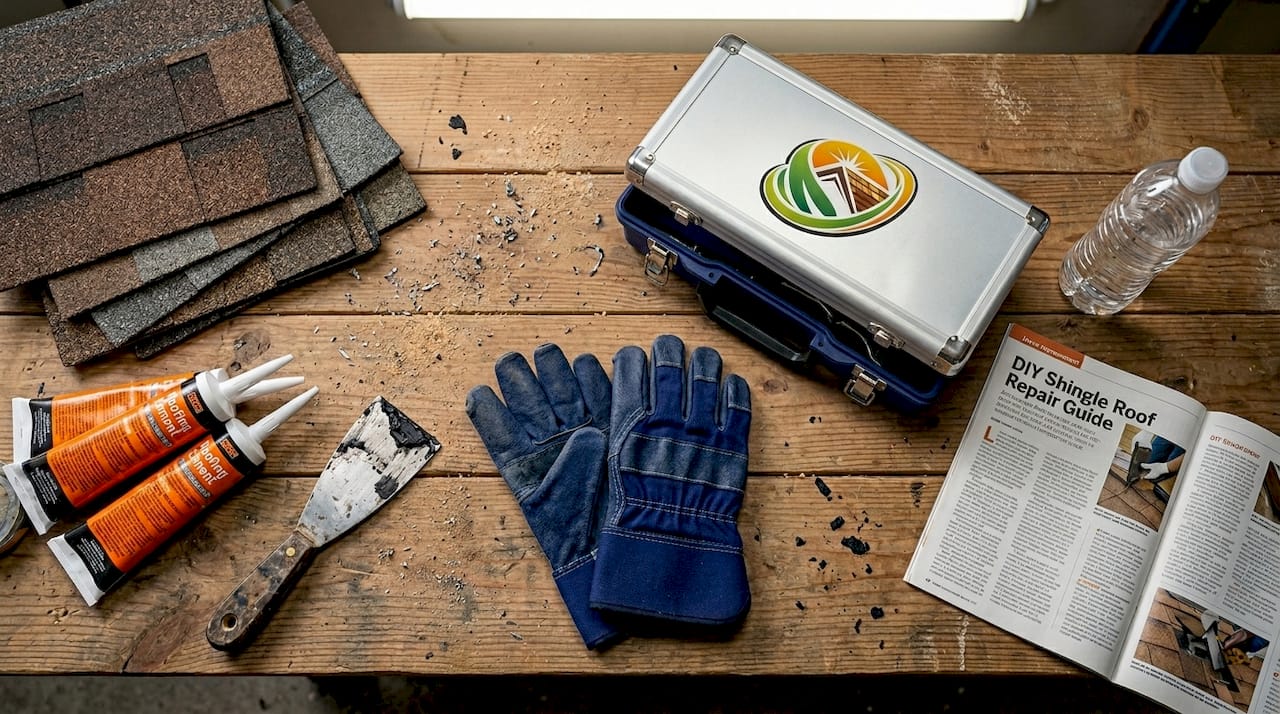
You don't need a contractor's truck to handle minor shingle repairs. A focused set of tools and the right products go a long way. Certain cost-effective roof products significantly extend shingle life and save thousands over replacement when used consistently and correctly.
Here are the essentials:
- Extension ladder: Tall enough to safely reach your roofline. Aluminum models are lightweight and durable.
- Safety harness and non-slip footwear: Never skip this. Roof work is dangerous without proper grip and fall protection.
- Replacement shingles: Buy a few extra matching shingles. Leftover shingles from the original installation are ideal.
- Roofing nails: Use galvanized nails to prevent rust in South Florida's humid climate.
- Roofing cement and caulk: Essential for patching lifted shingles and sealing small cracks.
- Algae treatment spray: A diluted bleach solution or commercial algae remover eliminates black streaks without harsh scrubbing that damages granules.
- Granule filler: Available at most home improvement stores, this fills in areas where granule loss is concentrated.
| Tool or material | Estimated cost | Best used for | Where to find it |
|---|---|---|---|
| Roofing cement | $8 to $15 per tube | Sealing lifted edges and small cracks | Home Depot, Lowe's, Amazon |
| Replacement shingles | $30 to $60 per bundle | Swapping out visibly broken or missing shingles | Local roofing supply, Home Depot |
| Algae treatment spray | $15 to $30 per gallon | Removing and preventing algae/moss growth | Amazon, Lowe's |
| Granule filler | $20 to $40 per bag | Patching granule-bare spots | Roofing supply stores, online |
| Roofing caulk | $6 to $12 per tube | Sealing flashing and minor gaps | Any hardware store |
| Safety harness | $30 to $80 | Fall protection on pitched roofs | Amazon, Home Depot |
Pro Tip: Preventive products give you the best return on investment. Spending $50 on algae treatment and sealant today can prevent $500 in shingle damage six months from now. Focus on prevention first, repairs second. Review cost-effective roof solutions for a broader list of products worth the investment.
If you're in Broward or Palm Beach County, local roofing supply stores often stock products better suited to South Florida's climate than what's found in national chain stores. Ask specifically for products rated for high UV exposure and humidity resistance.
Step-by-step cost-effective roof repair process
Equipped with supplies, you're ready to take action. Here's exactly how to execute cost-effective repairs safely and effectively.
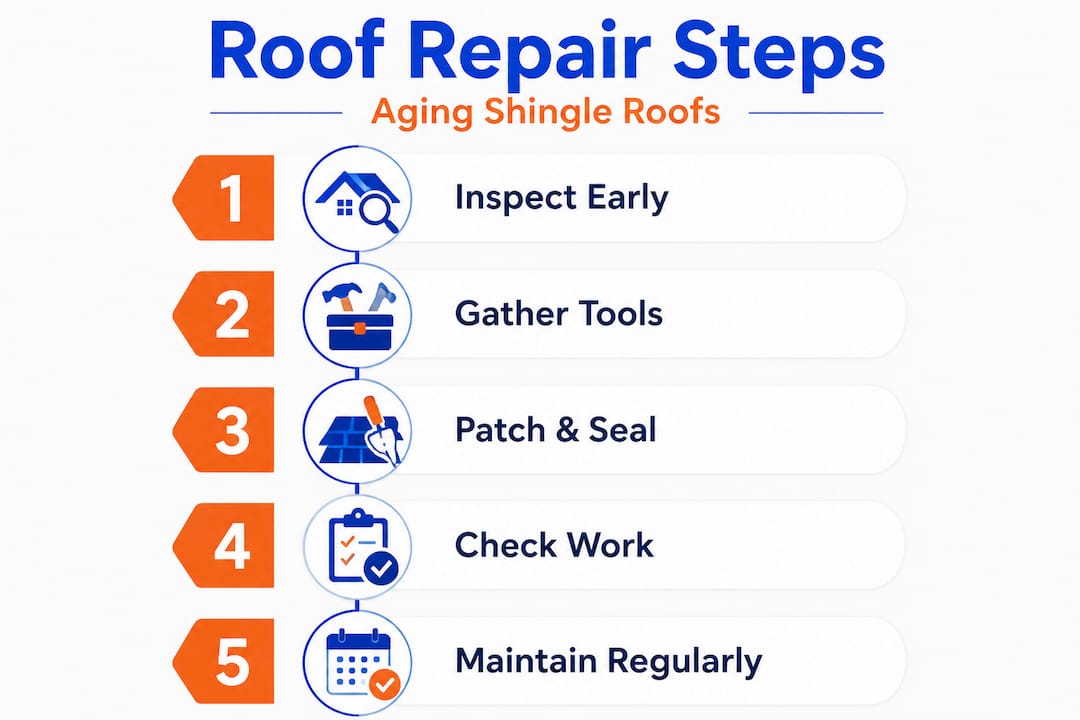
Following a structured repair process can restore shingle function and prevent leaks for years. And a thorough, scheduled roof assessment is key to identifying and prioritizing which repairs to tackle first.
Here's how to work through it:
-
Safety first: Before stepping on your roof, check the weather. Work only on dry, overcast days. Wet or sun-heated shingles are slippery and fragile. Wear non-slip shoes and secure your safety harness.
-
Assess the full roof: Walk the perimeter from the ground, then get a closer look from the ladder. Document every problem area with your phone camera. Note areas with cracking, missing granules, lifted shingles, and any dark stains.
-
Clean the surface: Use a low-pressure garden hose or a pump sprayer with algae treatment to clear debris, dirt, and biological growth. Avoid pressure washing since it strips granules and accelerates aging.
-
Remove and replace damaged shingles: Slide a flat pry bar under the damaged shingle to loosen the roofing nails. Lift the shingle edges above it, remove the nails, and slide out the old shingle. Slide the replacement shingle in, nail it down with four nails, and apply a bead of roofing cement under the overlapping shingle edges to seal them flat.
-
Seal lifted edges and cracks: Apply roofing cement under any lifted shingle edges and press them down firmly. Use roofing caulk to seal visible cracks on shingles that are otherwise intact. Smooth it flat so water runs off easily.
-
Apply granule filler where needed: If you spot bare patches where granules have washed away, apply granule filler and press it gently into the roofing cement while it's still tacky.
-
Final inspection: Walk the roof again and check every repaired area. Look for any missed cracks, loose edges, or gaps around flashing. Flashing (the metal strips around chimneys, vents, and valleys) is a common leak point. Seal any gaps with roofing caulk.
| Repair type | Average cost | Longevity | Difficulty |
|---|---|---|---|
| Emergency patch (roofing cement) | $10 to $30 | 1 to 3 years | Easy |
| Single shingle replacement | $50 to $150 | 5 to 10 years | Moderate |
| Full section repair (5 to 10 shingles) | $200 to $500 | 7 to 15 years | Moderate to hard |
| Professional repair (complex areas) | $300 to $1,000+ | 10 to 20 years | Professional only |
Pro Tip: Small, frequent repairs beat waiting for big ones every time. A $15 tube of roofing cement applied twice a year can prevent a $500 repair that turns into a $2,000 leak remediation job. Address issues the day you spot them.
When to call a professional: If your damage covers more than a third of the roof, if you find soft or rotten decking underneath a removed shingle, or if you're not comfortable at height, stop and call a licensed roofer. Some jobs are genuinely beyond DIY scope. Use the restore shingle flexibility guide and the roof assessment process resource to help determine when you've reached that line.
Verifying results and maintaining roof health
After repairs, ongoing verification ensures your roof stays strong and your investment keeps paying off.
Checking your own work is just as important as doing it. A repair that looks solid from above might still have a gap or soft spot that lets moisture in. Here's how to verify your work and set up a simple maintenance routine.
Post-repair checklist:
- Inspect every patched or replaced shingle from below the roofline. Look for any areas where the new shingle sits higher or lower than those around it.
- Check your attic within 24 hours of the next rain event. Look for any new moisture stains, drips, or daylight coming through.
- Verify that all flashing seals are flush and fully covered with caulk.
- Confirm gutters are free of fresh granule deposits, which would indicate continued shingle degradation.
Ongoing maintenance habits that protect your investment:
- Inspect your roof every 6 months, ideally in spring and fall.
- Schedule an inspection after every named storm or significant weather event.
- Keep gutters clean and clear so water drains quickly and doesn't back up under shingles.
- Trim any overhanging branches that could scrape shingles or deposit debris.
- Document repairs with photos and dates so you have a record if you ever sell or make an insurance claim.
- Apply algae treatment annually to prevent biological growth from taking hold.
Routine maintenance and periodic inspections maximize shingle longevity and help you avoid replacement costs year after year.
The numbers are compelling. Homeowners who restore rather than replace save up to 70% over a 10-year period compared to those who opt for full replacement. That's thousands of dollars kept in your pocket by staying proactive and informed.
Professional inspections are still worth scheduling every two to three years, even if your roof looks healthy. A licensed inspector can spot early signs of decking damage, flashing failure, and structural stress that aren't visible from a standard ground or ladder inspection. Pair this professional oversight with your own shingle roof care methods and you have a complete maintenance system that works.
Why regular maintenance trumps reactive repairs in South Florida
Here's the honest truth most roofing articles won't tell you: the biggest cost in roof ownership isn't the damage itself. It's the delay.
We've worked with homeowners across Broward and Palm Beach County who knew something was wrong with their roof for months before they did anything about it. Many owners wait for leaks before acting, and that decision costs more money long-term, often far more than the original repair would have.
South Florida's climate makes that delay especially punishing. Humidity here doesn't give shingles a break. From June through November, storm season adds wind stress and water intrusion risk on top of daily UV degradation. A cracked shingle in January can become a leaking roof deck by August if nothing is done.
The conventional wisdom says "fix it when it's broken." But in roofing, by the time it's visibly broken, the damage is often already in the decking, the insulation, or the framing. That's when a $200 shingle repair becomes a $3,000 structural fix.
The homeowners we see make the best decisions are the ones who treat their roof like a car. They don't wait for the engine to fail before checking the oil. They schedule maintenance, document changes, and address small issues before the next storm season hits. That mindset shift alone, from reactive to proactive, is worth more than any single repair technique in this article.
We'd also challenge the idea that debunking roofing myths is just an online exercise. Real myths cost real money. The belief that "my roof looks fine from the street" keeps homeowners from catching granule loss, micro-cracks, and early algae growth that are invisible at ground level but doing serious damage every day.
Start treating your roof as a system, not just a surface. When one part fails, the whole system is at risk.
Cost-effective roof renewal solutions for South Florida homeowners
Taking care of your roof through regular DIY maintenance makes a real difference. But sometimes the damage is deeper than what patching and sealing can address alone.

That's where South Florida roof renewal comes in. At Shingle Roof Renewal, we specialize in restoring aging asphalt shingle roofs for homeowners in Broward and Palm Beach County using certified GreenSoy Technology. This process works at the molecular level to restore flexibility and stop further deterioration, adding 10 to 15 years to your existing roof without the $15,000 to $30,000 price tag of full replacement. Our roof maintenance services are designed specifically for the South Florida climate you deal with every day. We start with a free inspection and honest assessment, and we only recommend renewal if your roof truly qualifies. Homeowners in communities like Delray Beach have saved thousands by choosing renewal over replacement. Schedule your free inspection today and find out if your roof can be saved.
Frequently asked questions
What is the most affordable way to repair an asphalt shingle roof?
Basic patching, sealing, and regular maintenance are the most cost-effective strategies for keeping an asphalt shingle roof in good condition. Affordable DIY maintenance options keep shingle roofs functional at a fraction of professional repair costs.
How often should I inspect and repair my roof in South Florida?
Inspect your roof every 6 months and after major storms to catch problems early and avoid high repair costs. Frequent inspections help avoid major repairs by catching damage before it spreads.
Can I use roof sealants to extend the life of my shingle roof?
Yes, using approved roof sealants can add several years to your roof's effective lifespan when applied correctly. Preventive sealant applications extend roof life and protect against South Florida's intense UV exposure.
When should I call a professional for shingle roof repairs?
Contact a pro if you see widespread damage, active leaks, or soft decking, or if you're uncomfortable working at height. Some repairs require expert assessment to prevent further structural damage and identify problems that aren't visible to the untrained eye.
Is restoring an old roof better than replacing it?
Restoring an aging asphalt shingle roof can be up to 70% less expensive than total replacement and is often just as effective for many homes. Restoration saves significantly compared to replacement, especially when the underlying structure is still sound.