
TL;DR:
- South Florida's harsh climate accelerates roof aging, requiring proactive maintenance and early intervention.
- Professional rejuvenation treatments can extend roof lifespan by 10 to 15 years at a fraction of replacement costs.
- Regular inspections, timely repairs, and DIY care help maximize shingle durability and delay costly replacements.
Your roof is aging, and you're starting to notice the signs. Curling edges, missing granules in the gutters, a shingle or two that looks darker than the rest. Most homeowners in Broward and Palm Beach counties assume that means one thing: a $15,000 to $30,000 replacement is right around the corner. But that assumption costs people thousands of dollars every year. The truth is that many roofs showing early signs of wear can be extended, restored, and protected for a fraction of that cost. This guide walks you through exactly how to do it, from simple maintenance habits to professional treatments that can add 10 to 15 years to your existing roof.
Table of Contents
- Understanding what shortens shingle lifespan in South Florida
- Routine inspection and maintenance: the foundation of shingle longevity
- Professional rejuvenation treatments: a cost-saving alternative
- Smart DIY methods: small actions, big impact
- How to know when a replacement is the only option
- Why proactive care always pays off: a local expert's viewpoint
- Get professional help to maximize your roof's lifespan
- Frequently asked questions
Key Takeaways
| Point | Details |
|---|---|
| Climate challenges | Florida’s weather rapidly ages asphalt shingles, demanding proactive care. |
| Maintenance matters | Regular inspections and maintenance can prevent expensive, premature roof failures. |
| Rejuvenation is cost-effective | Professional shingle treatments can add years to a roof for a fraction of replacement cost. |
| DIY steps have impact | Homeowners can extend shingle life by tackling simple, safe maintenance tasks. |
| Replacement signals | Know when damage is too extensive and replacement, not another fix, is the best investment. |
Understanding what shortens shingle lifespan in South Florida
Many homeowners don't realize how quickly local conditions can degrade a roof. South Florida is one of the harshest environments for asphalt shingles in the entire country. It's not just the occasional hurricane. It's the daily punishment your roof takes from heat, UV radiation, humidity, and sudden heavy rain.
The climate impacts on shingles in this region are compounding. Each factor builds on the last, accelerating wear faster than most national roofing standards account for. A shingle roof rated for 25 years in a northern climate may realistically perform for 15 to 18 years here without proper care.
Here are the primary threats your roof faces in Broward and Palm Beach counties:
- UV radiation: Intense daily sun breaks down the oils inside asphalt shingles. When those oils dry out, shingles become brittle, crack, and curl at the edges.
- Heat cycling: Temperatures swing dramatically between day and night. Shingles expand and contract repeatedly, weakening the material over time.
- Tropical storms and wind: High winds lift shingle edges and drive rain underneath, creating opportunities for water intrusion and rot.
- Algae and mold growth: South Florida's humidity creates ideal conditions for black algae streaks and mold. These organisms eat away at shingle granules and accelerate deterioration.
- Heavy rainfall: Frequent intense rain events stress your roof's drainage system. Standing water and clogged gutters lead to moisture damage along the edges and valleys.
"Factors such as weather, climate, and local conditions that affect the durability of shingle roofs in Florida are significantly more severe than in most other U.S. regions, making proactive care essential rather than optional."
The good news is that understanding these threats puts you ahead of most homeowners. Early intervention is the single most important factor in extending your roof's life. Once you know what you're fighting, you can take real steps to slow the damage.
Routine inspection and maintenance: the foundation of shingle longevity
Understanding the threats is step one. The next is adopting a reliable maintenance routine. Consistent, scheduled inspections are the most cost-effective tool you have. They catch small problems before they become expensive ones.
A roof inspection checklist tailored for South Florida homes should cover these key areas every year, and ideally before and after hurricane season:
- Clear all debris from the roof surface. Leaves, branches, and dirt trap moisture and accelerate algae growth. Remove them carefully without scraping the shingle surface.
- Inspect shingles for curling, cracking, or missing granules. Granule loss is one of the earliest signs that shingles are drying out and losing their protective coating.
- Check all flashing points. Flashing around chimneys, vents, and skylights is a common entry point for water. Look for rust, gaps, or lifted edges.
- Examine gutters and downspouts. Clogged gutters cause water to back up under the shingle edge. Clean them at least twice a year, more often if you have nearby trees.
- Look for algae or dark streaking. Black or green streaks signal biological growth that needs treatment before it spreads.
- Check the attic after heavy rain. Water stains on the underside of your roof deck are a clear sign of active leaks that need immediate attention.
- Note any sagging areas. Sagging indicates structural moisture damage and should be evaluated by a professional right away.
Pro Tip: Schedule your roof inspection in May, before hurricane season officially begins, and again in November after the season ends. This timing lets you catch storm damage early and address vulnerabilities before the next season arrives.
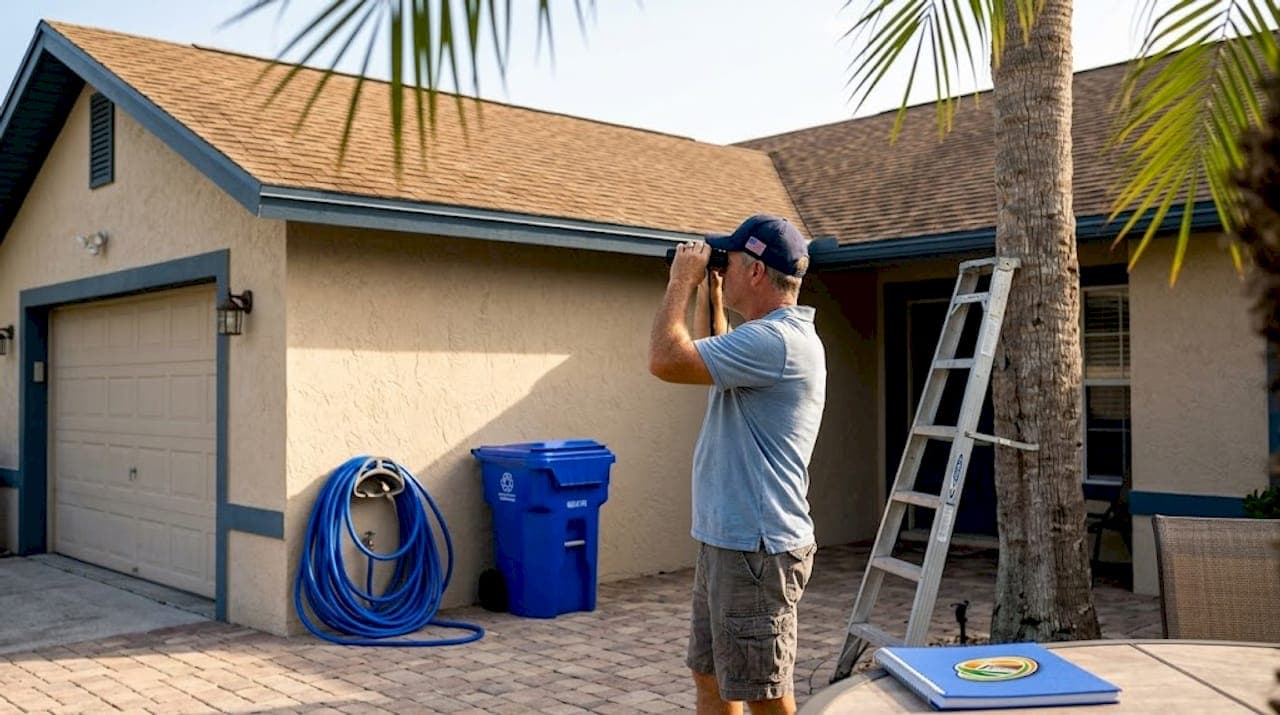
Staying on top of this roof assessment process doesn't require climbing on your roof every month. A pair of binoculars from the ground covers most visual checks. Reserve the detailed up-close inspection for a qualified professional at least once a year.
Professional rejuvenation treatments: a cost-saving alternative
While DIY care goes a long way, new technologies and professional services offer another path to maximize your roof's lifespan. Rejuvenation treatments represent one of the most significant advances in roofing maintenance over the past decade. And for South Florida homeowners, they can be genuinely life-changing from a financial standpoint.
Here's a direct comparison of what rejuvenation offers versus a full replacement:
| Factor | Rejuvenation treatment | Full roof replacement |
|---|---|---|
| Average cost | $1,500 to $4,000 | $15,000 to $30,000 |
| Time to complete | 1 day | 2 to 5 days |
| Life extension | 10 to 15 years | 20 to 25 years (new roof) |
| Disruption to home | Minimal | Significant |
| Warranty | 6-year transferable | Varies by contractor |
| Ideal candidate | Structurally sound, aging roof | Severely damaged or failed roof |
Savings of up to 80% compared to full replacement are achievable when your roof qualifies for professional renewal. That's real money staying in your pocket rather than going to a full tear-off and reinstall.
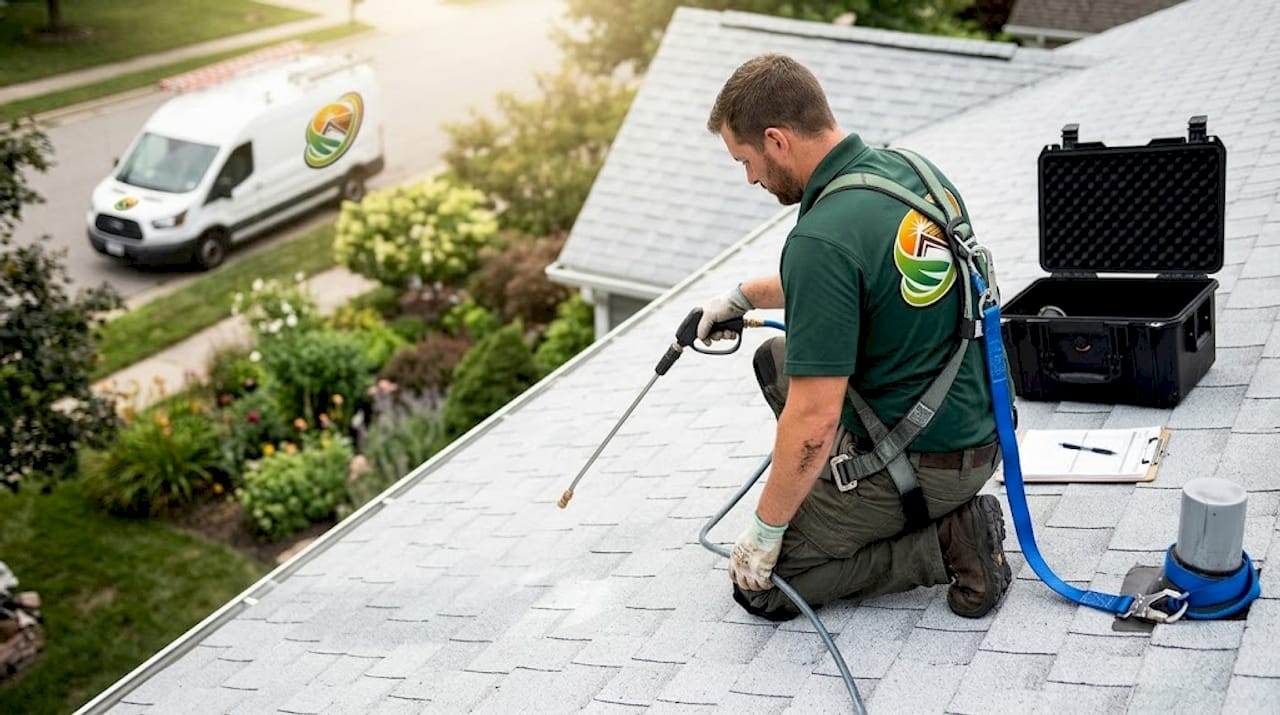
Our shingle roof renewal services use GreenSoy Technology, a certified process that works at the molecular level inside your shingles. It restores the oils that UV radiation and heat have dried out, bringing flexibility back to brittle shingles and stopping further cracking and curling. This isn't a surface coating. It penetrates deeply into the shingle material itself.
The key question is whether your roof qualifies. Not every roof is a candidate. Roofs with widespread structural damage, severe rot, or shingles that have already lost most of their granules may be beyond the point where rejuvenation makes sense. That's why the first step is always an honest assessment. Our roof renewal methods are designed to give you a clear, straightforward answer about whether renewal is the right path for your specific roof.
Statistic to know: Professional rejuvenation treatments can extend shingle life by 10 to 15 years at a fraction of replacement cost, making them one of the highest-return investments a South Florida homeowner can make in their property.
Smart DIY methods: small actions, big impact
Professional help isn't always required. Some tasks you can do yourself to extend roof life further between professional treatments. The key is knowing which jobs are safe to tackle on your own and which ones need a trained eye.
Here are the most effective DIY actions for South Florida homeowners:
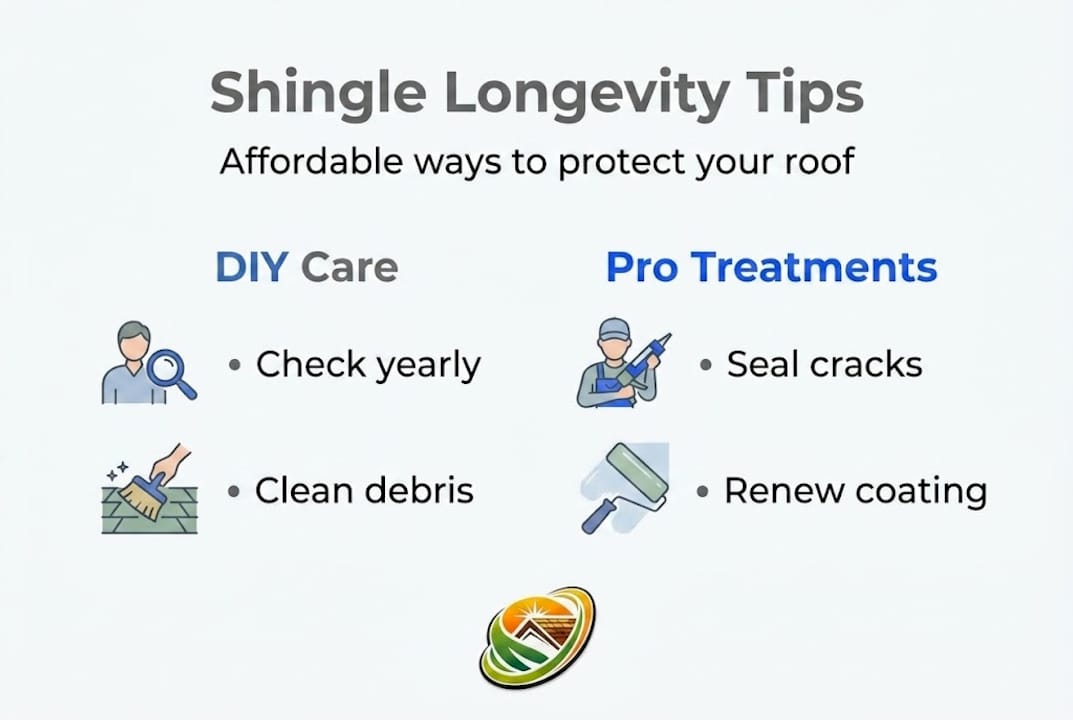
- Clean gutters every three to four months. In our climate, gutters fill fast. Overflowing gutters push water back under shingles and cause edge rot.
- Apply zinc or copper strips near the ridge. These metal strips release ions when it rains, running down the roof and inhibiting algae growth naturally. It's a low-cost, long-lasting solution.
- Use a diluted bleach solution for algae removal. Mix one part bleach with one part water, apply with a low-pressure sprayer, and rinse gently. Never use a pressure washer directly on shingles. It strips granules aggressively.
- Seal minor cracks with roofing caulk. Small cracks around flashing or at shingle edges can be sealed with a quality roofing caulk. This is a temporary fix, but it prevents water from getting in while you plan next steps.
- Trim overhanging tree branches. Branches scrape shingles during wind events and drop debris constantly. Keeping them trimmed back at least six feet from the roof surface makes a real difference.
| DIY product | Best use | Approximate cost | Effectiveness |
|---|---|---|---|
| Roofing caulk | Sealing small cracks and flashing gaps | $8 to $15 per tube | High for minor repairs |
| Algae-resistant wash | Removing and preventing biological growth | $20 to $50 per gallon | Moderate to high |
| Zinc strips | Long-term algae prevention | $30 to $80 per roll | High over time |
| Gutter guards | Reducing debris buildup | $100 to $300 installed | High for maintenance reduction |
| Roof sealant spray | Surface protection on aging shingles | $40 to $100 per can | Low to moderate |
Following DIY roof inspection best practices while performing these tasks keeps you safe and ensures you're actually helping your roof rather than accidentally causing more damage.
Pro Tip: Always work on your roof in the early morning during South Florida summers. Afternoon heat makes shingles soft and easier to damage underfoot. It also reduces your risk of heat exhaustion significantly.
Safety note: If your roof pitch is steep, if you're unsure about what you're seeing, or if you spot sagging or soft spots, stop and call a professional. No DIY savings are worth a fall or a misdiagnosed problem that leads to a bigger repair bill later.
How to know when a replacement is the only option
Not every roof can be saved. Here's how to determine if it's time to invest in a replacement rather than continue extending your current roof's life.
There are clear signals that a shingle roof has reached the end of its serviceable life:
- More than 25 to 30 percent of shingles are damaged or missing. At this point, spot repairs become impractical and rejuvenation treatments can't overcome the widespread structural weakness.
- The roof deck is soft, spongy, or visibly sagging. This indicates moisture has penetrated to the structural layer. No surface treatment can fix this.
- Multiple active leaks are present inside the home. One leak may be repairable. Multiple simultaneous leaks signal systemic failure.
- Shingles are completely bare of granules. Granules protect the asphalt layer from UV damage. Without them, the shingle itself deteriorates rapidly and cannot be restored.
- The roof is more than 20 years old with no prior maintenance. A roof that has never been inspected or treated in South Florida's climate may have accumulated damage that goes beyond what renewal can address.
"Delaying a necessary replacement doesn't save money. It typically leads to interior water damage, mold remediation costs, and structural repairs that far exceed what the replacement itself would have cost."
If you're in this situation, explore your roof replacement alternatives carefully before committing to a contractor. Get multiple quotes, understand what's included, and ask about financing options. A full replacement is a major investment, and you deserve to make that decision with complete information.
The honest truth is that most homeowners who end up needing a full replacement wish they had acted sooner. A roof that could have been renewed at age 12 or 14 often becomes a mandatory replacement by age 18 or 20 simply because the warning signs were ignored.
Why proactive care always pays off: a local expert's viewpoint
Here's something we've observed consistently working with homeowners across Broward and Palm Beach counties: the "wait and see" approach almost always costs more in the end.
We understand the instinct. Roof work feels like a big expense, so homeowners put it off until something goes obviously wrong. But by the time there's a visible leak or a shingle blowing off in a storm, the damage has usually been building for years. What could have been a $2,000 renewal becomes a $25,000 replacement.
The homeowners who come out ahead financially are the ones who treat their roof like any other major system in the home. You wouldn't skip oil changes on your car for five years and expect the engine to be fine. Your roof deserves the same logic.
What we've also learned is that the right combination of professional treatment and consistent DIY maintenance produces dramatically better outcomes than either approach alone. A professionally renewed roof that never gets its gutters cleaned or its algae addressed will decline faster than one that receives basic ongoing attention. The two strategies reinforce each other.
Understanding the full roof assessment wisdom behind proactive care changes how you think about your roof entirely. It shifts from a reactive cost to a managed asset. And in South Florida, where roofs age faster than almost anywhere else in the country, that mindset shift is worth thousands of dollars over the life of your home.
The homeowners we work with who get the best results share one trait: they act before the problem becomes obvious. They schedule inspections. They address small issues promptly. And when their roof qualifies for renewal, they choose that path over replacement without hesitation. The savings are real, and the peace of mind is even better.
Get professional help to maximize your roof's lifespan
If you've read this far, you already know more about protecting your roof than most homeowners in South Florida. Now the question is what to do with that knowledge.
At Shingle Roof Renewal, we make it simple. Our our renewal services start with a free roof inspection where we assess your shingles honestly and tell you exactly what condition your roof is in. If it qualifies for renewal using our certified GreenSoy Technology process, you could save up to 80% compared to a full replacement, all backed by a 6-year transferable warranty. If it doesn't qualify, we'll tell you that too, because the right answer for your home matters more to us than any single job. Whether you're in Fort Lauderdale, Boca Raton, or looking for Delray Beach shingle renewal, local expertise is ready to help you protect your investment.
Schedule your free inspection today and find out if your roof can be saved.
Frequently asked questions
What is the most effective way to extend shingle lifespan in South Florida?
A combination of regular inspections, prompt repairs, and professional rejuvenation treatments is most effective, as outlined in our shingle maintenance guide. No single method works as well as all three working together consistently.
How does South Florida weather affect asphalt shingle roofs?
The region's intense heat, humidity, frequent storms, and algae growth accelerate shingle wear significantly compared to cooler or drier climates, often cutting expected roof lifespan by five to ten years.
Are rejuvenation treatments safe for older roofs?
When applied to roofs in reasonably sound structural condition, professional rejuvenation is considered safe and effective, restoring flexibility to dried-out shingles without damaging the underlying roof deck.
How often should my roof be professionally inspected?
Annual professional inspections are recommended for South Florida homes, with an additional check after any major storm event, as consistent early detection prevents small issues from becoming costly structural problems.