
A full asphalt shingle replacement in South Florida typically runs $12,000–$22,000 for a 2,000 sq ft home, with Palm Beach and Broward County sitting at the higher end due to HVHZ requirements. A professional preservation treatment using Fresh Roof Green Soy Technology costs a fraction of that. If your roof qualifies, you can extend its life by 10–15 years without a tear-off.
Quick cost snapshot:
- Minor repair can be a few hundred to a few thousand dollars
- Full asphalt replacement for a 2,000 sq ft home is often in the mid to high thousands
- Metal or tile replacement is significantly more costly
- Preservation or renewal treatments typically cost between $1,500 and $3,000 for a qualifying 2,000 sq ft roof, representing roughly 10–15% of the full replacement cost.
One-line qualification rule: If your roof has less than 40% granule loss, no active leaks, and sound decking, it likely qualifies for preservation rather than replacement.
Pro Tip: Before you call a roofer, schedule a free inspection with Shingleroofrenewal. Most homeowners are surprised to learn their roof can still be saved.
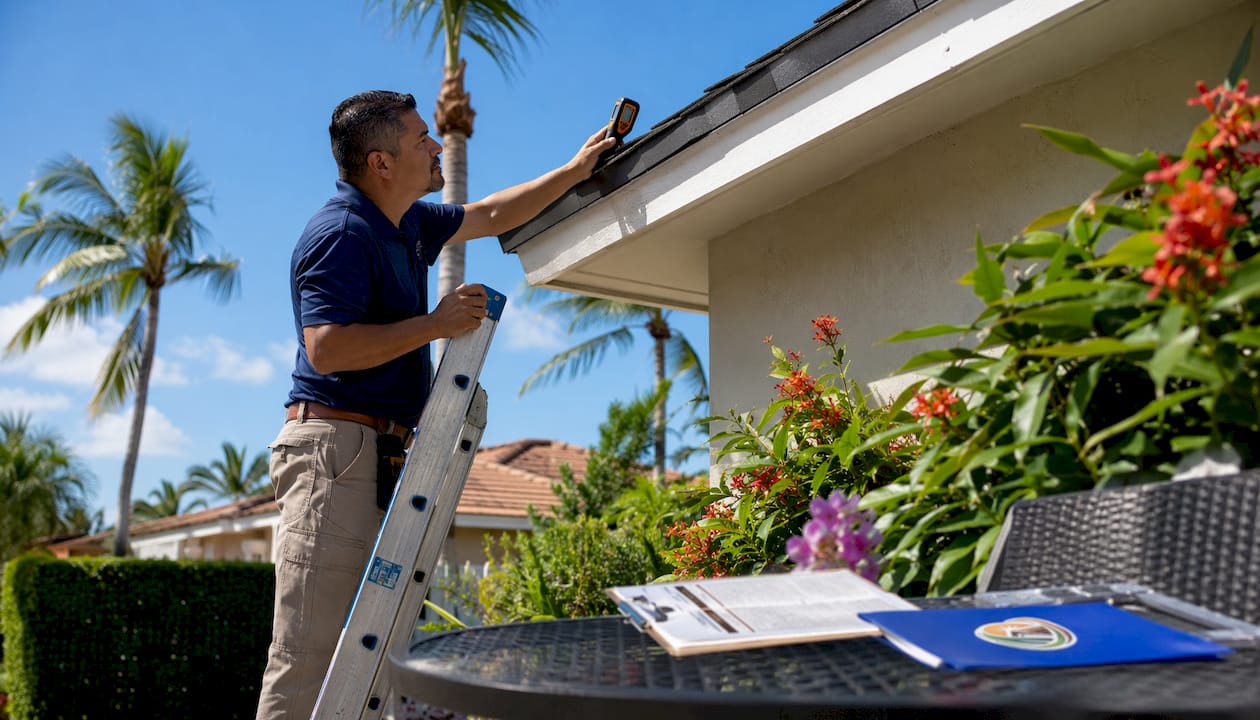
Table of Contents
- What drives the total cost of your roof?
- Does your roof qualify for preservation instead of replacement?
- What does preservation actually cost compared to full replacement?
- What should you expect from a professional roof inspection?
- How the Shingleroofrenewal renewal process works
- How Florida insurance rules affect your decision
- How to decide after your inspection results come in
- Key Takeaways
- Why preservation is the smarter first call in South Florida
- Find out if your roof qualifies before spending $15,000 or more
- Useful sources
What drives the total cost of your roof?
Understanding what moves a quote up or down helps you evaluate any estimate you receive. Here are the primary factors:
- Roof size (squares): Every additional 100 sq ft adds labor and material cost. South Florida homes average 1,500–2,400 sq ft of roof area.
- Pitch: Steep slopes require safety equipment and slow installation, adding to labor costs.
- Material choice: Architectural asphalt is the most common; impact-rated shingles required in HVHZ zones cost more upfront.
- Tear-off vs. overlay: Florida code typically requires tear-off after two layers, adding roughly $1.25 per sq ft for removal and disposal.
- Decking condition: Rotted or soft plywood runs approximately $70–$120 per 4×8 sheet to replace.
- Permits and inspections: Expect $200–$600 statewide; Miami-Dade and Broward often require two inspections, pushing that higher.
- HVHZ compliance: Palm Beach and Broward County require Miami-Dade NOA-approved materials and peel-and-stick underlayment, adding a 5–10% material premium.
- Insurance involvement: Adjuster timelines, temporary repair costs, and permit-triggered replacement rules can add weeks and thousands to a project.
South Florida labor rates run above the state average, and storm-recovery demand tightens contractor schedules fast after a hurricane. That combination pushes quotes higher than most national cost guides suggest.
Pro Tip: Off-season scheduling — January through April — can save 30–50% compared to peak hurricane-season pricing. Book early.
Does your roof qualify for preservation instead of replacement?
Not every aging roof needs to be torn off. The qualification threshold is specific, and knowing it can save you thousands.
Green-light criteria (preservation is likely viable):
- Granule loss under 40% across the roof surface
- No active leaks or water intrusion
- Decking and underlayment structurally intact
- Roof age generally under 20 years
Disqualifiers (replacement is the responsible call):
- Decking rot or widespread underlayment failure
- Active leaks in multiple locations
- Widespread shingle cracking, curling, or delamination
- Insurer has issued ACV-only coverage or non-renewal notice
- Roof at or past 20–25 years with cumulative failure signs
The 20–25-year window is a real warning zone. Preservation rarely reverses damage at that stage. Understanding how roof age affects safety in South Florida's climate helps you read those signs early.
Key threshold: Roofs with less than 40% granule loss, no active leaks, and no structural decking damage are strong candidates for rejuvenation. Roofs 20–25 years old with widespread failure generally require replacement.
Pro Tip: Ask your inspector for moisture meter readings and close-up photos of granule loss. Those two data points tell you more than a visual walk-alone ever will.
What does preservation actually cost compared to full replacement?
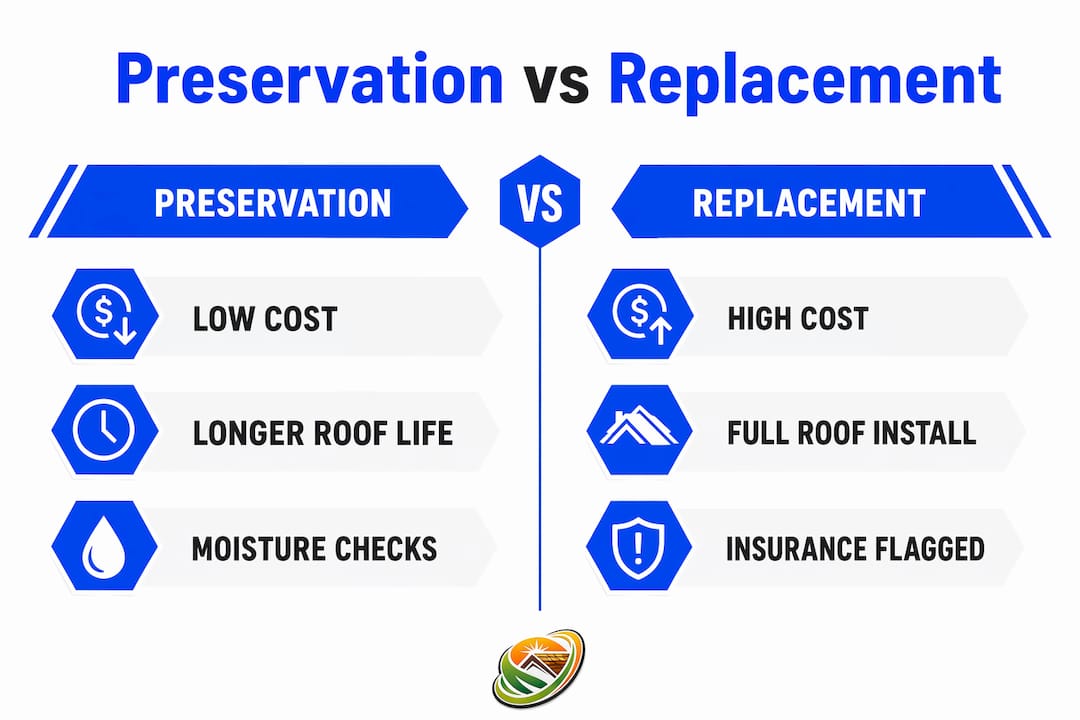
Here is where the math gets compelling. Rejuvenation costs roughly 10–15% of a full replacement in qualifying cases.
Typical South Florida cost ranges:
- Minor repair: $400–$3,200 (state average around $1,300; South Florida skews higher)
- Full architectural asphalt replacement: $12,000–$22,000 for a 2,000 sq ft home
- Impact-rated shingle replacement: $14,000–$20,000+
- Metal replacement: $32,000–$51,000
- Preservation/renewal treatment: roughly $1,500–$3,000 for a qualifying 2,000 sq ft roof (10–15% of full replacement cost)
Scenario A — Preserve now: A 12-year-old roof with moderate granule loss qualifies for renewal. Treatment cost: approximately $2,000. Life extension: 10–15 years. Total 10-year cost: ~$2,000 plus routine maintenance.
Scenario B — Replace now: Same roof, same age, but homeowner waits until insurer flags it. Full replacement: $16,000–$20,000, plus permit fees and disposal. No preservation window remains.
| Full Replacement | Preservation/Renewal | |
|---|---|---|
| Typical cost (2,000 sq ft) | $12,000–$22,000 | ~$1,500–$3,000 |
| Warranty | 25–30 years (materials) | 6-year transferable |
| Expected lifespan extension | New roof lifespan | 10–15 years |
| Typical timeline | 2–5 days | 1 day |
| Qualifies all roofs? | Yes | No (condition-dependent) |
The savings math on roof restoration is straightforward when the roof qualifies. The risk is waiting too long and losing that window entirely.
What should you expect from a professional roof inspection?
A thorough inspection is the only way to know which path makes sense for your roof. Here is what a proper assessment covers:
- Roof walk and visual survey: Inspector checks for cracked, curling, or missing shingles across all slopes.
- Granule-loss measurement: Quantifies the percentage of surface affected, the key qualification threshold.
- Moisture readings: A calibrated moisture meter identifies trapped water under shingles or in decking before it becomes rot.
- Underlayment and decking check: Soft spots, delamination, or prior water staining signal structural issues.
- Written report with photos: Before-and-after documentation matters for insurance claims and future buyers.
An independent inspection typically costs $300–$500. That fee often returns the highest ROI of any roofing decision you make, because it tells you whether a low-cost preservation is valid or whether a repair might accidentally trigger the 25% Rule and force a full replacement.
Questions to ask your inspector:
- What percentage of the roof area shows granule loss?
- Are there any moisture readings above baseline in the decking?
- Does any repair work risk crossing the 25% threshold?
- What documentation will you provide for insurance purposes?
Pro Tip: Save every photo and written report. If you sell the home, a documented renewal with a transferable warranty is a real selling point.
How the Shingleroofrenewal renewal process works
Shingleroofrenewal follows a clear three-step process on every job.
- Step 1 — Inspection: A certified technician walks the roof, takes moisture readings, and photographs granule loss and shingle condition across every slope.
- Step 2 — Assessment: The team evaluates whether the roof meets qualification criteria and provides a written recommendation. No pressure, no upsell.
- Step 3 — Renewal application: If the roof qualifies, Fresh Roof Green Soy Technology is applied. The formula penetrates shingles at the molecular level, restoring flexibility, locking granules in place, and slowing the UV-driven deterioration that South Florida's climate accelerates.
The warranty transfers to a new owner if you sell, which adds measurable value at closing. The full application typically completes in one day, with before-and-after photos and a maintenance guide provided on every job. Learn more about how Green Soy Technology extends roof life in Florida's climate.
How Florida insurance rules affect your decision
Insurance behavior in Florida can turn a straightforward repair decision into a forced replacement. These are the rules every homeowner needs to know.
- The 25% Rule: If repair work affects more than 25% of the roof area within a 12-month period, Florida law requires the entire roof be brought up to current code. That almost always means full replacement.
- Age-based carrier cutoffs: Many private carriers refuse new policies on asphalt roofs older than 15 years and may require inspections at renewal that trigger ACV-only coverage or non-renewal.
- ACV downgrades: Actual Cash Value coverage pays depreciated value, not replacement cost. On a 17-year-old roof, that gap can be $8,000–$12,000 out of pocket.
- Citizens Insurance: Roofs flagged by private carriers often end up with Citizens, Florida's insurer of last resort, at significantly higher premiums.
- Hurricane-season surcharges: Roof work during peak season costs 30–50% more than off-season rates.
Policy checklist to review with your agent before authorizing any work:
- What is my current coverage basis (RCV or ACV)?
- Does my policy have an age cutoff that triggers a coverage change?
- Will a permitted repair trigger a full code-compliance inspection?
- Does a new roof or renewal affect my wind mitigation discount?
How to decide after your inspection results come in
Use this framework after you receive the inspection report.
Green (preserve now):
- Granule loss under 40%, no active leaks, decking sound, roof under 15 years old
- Action: Schedule preservation treatment, confirm warranty transferability
Amber (repair first, then preserve):
- Isolated damage on one slope, granule loss 25–40%, minor flashing issues
- Action: Complete targeted repairs (stay under the 25% threshold), then schedule renewal
Red (plan replacement):
- Active leaks in multiple areas, decking rot, granule loss over 40%, roof 20+ years old, insurer has flagged the roof
- Action: Get two to three replacement bids, review insurance coverage basis, confirm HVHZ material requirements
Suggested next steps regardless of outcome:
- Collect written inspection documentation and photos
- Confirm whether any repair scope risks the 25% Rule
- Ask about warranty transferability before signing any contract
- Contact Shingleroofrenewal for a free preservation evaluation if the roof is in the green or amber zone
Key Takeaways
Preservation is the smarter first call for most South Florida homeowners with a roof under 15–20 years old and less than 40% granule loss — the cost difference versus full replacement is substantial.
| Point | Details |
|---|---|
| Replacement cost range | Full asphalt replacement in South Florida runs $12,000–$22,000 for a 2,000 sq ft home. |
| Preservation savings | Renewal treatment typically costs between $1,500 and $3,000 for a 2,000 sq ft roof, which is roughly 10–15% of full replacement when the roof qualifies. |
| Qualification threshold | Less than 40% granule loss, no active leaks, and sound decking are the three key criteria. |
| Insurance risk | Florida carriers often refuse new policies on roofs older than 15 years; early preservation can prevent insurer-forced replacement. |
| Shingleroofrenewal next step | Shingleroofrenewal offers free inspections in Broward and Palm Beach County, backed by a 6-year transferable warranty. |
Why preservation is the smarter first call in South Florida
Most homeowners we talk to in Broward and Palm Beach County made the same mistake: they waited. No visible leak meant no urgency. By the time an insurer flagged the roof or a storm exposed the granule loss, the preservation window had closed and a $16,000 replacement was the only option left.
The honest truth is that South Florida's climate is unusually hard on asphalt shingles. Constant UV exposure, heat cycling, and salt air dry out shingles faster than almost anywhere else in the country. A roof that looks fine from the ground can be well past the preservation threshold when you actually measure granule loss. Catching that early, before the 25% Rule becomes a factor or an insurer downgrades coverage, is where the real savings live.
Shingleroofrenewal is a certified Fresh Roof applicator serving Broward and Palm Beach counties. Every job includes a documented inspection, before-and-after photos, and a 6-year transferable warranty. We are not roofers. We are the call you make before the roofer, and that distinction matters.
Find out if your roof qualifies before spending $15,000 or more
Shingleroofrenewal gives South Florida homeowners a clear answer before they commit to a costly replacement. The free inspection covers granule-loss measurement, moisture readings, and a written assessment, so you know exactly where your roof stands.
Homeowners in Delray Beach and Plantation can book a free on-site inspection directly. If your roof qualifies, the renewal treatment is completed in a single day and backed by a 6-year transferable warranty. Schedule your free assessment at shingleroofrenewal.com.
Useful sources
- Florida shingle roof replacement costs by type and location — PITCH Roofing's 2026 pricing guide covering Palm Beach, Tampa, and coastal markets
- Florida roof replacement cost averages — CostFigure modeled ranges for architectural asphalt, metal, and steep-slope projects
- Roof replacement cost by Florida city — BuildPriced city-level data including Fort Lauderdale and West Palm Beach
- Roof repair vs. replacement decision guide for Florida — covers the 25% Rule, insurer behavior, ACV downgrades, and seasonal pricing
- Florida roof repair cost ranges — Modernize data on repair costs statewide with South Florida context
- Roof rejuvenation vs. replacement qualification thresholds — granule-loss criteria and age limits for preservation eligibility
- Shingle Roof Renewal — certified Fresh Roof applicator — service details, Green Soy Technology, and 6-year transferable warranty