
TL;DR:
- Many Florida homeowners mistakenly believe aging shingles require full roof replacement, which can be costly.
- Roof restoration, involving cleaning and sealing, can extend a roof's life by 5 to 10 years at a fraction of replacement costs.
- Timely restoration preserves structural integrity and saves homeowners money, especially in Florida's harsh climate.
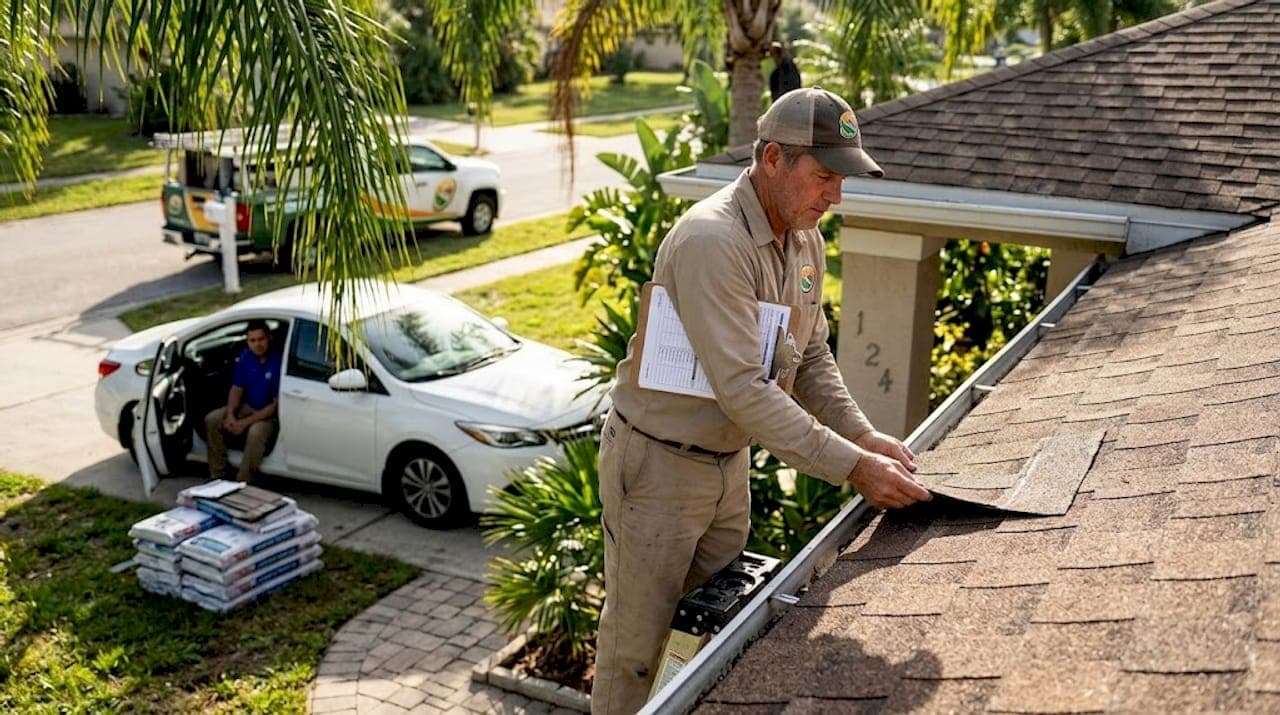
Many Florida homeowners in Broward and Palm Beach County assume that aging or damaged shingles mean one thing: a full roof replacement. But that assumption could cost you $15,000 to $30,000 more than necessary. The truth is that a well-maintained asphalt shingle roof often qualifies for professional restoration, which can add real years to its life at a fraction of replacement cost. This guide breaks down exactly when restoration makes sense, when it does not, and how Florida's unique climate shapes that decision for homeowners right here in South Florida.
Table of Contents
- Understanding roof restoration and roof replacement in Florida
- When is restoration a smart move and when is replacement necessary?
- Florida climate impact: How weather affects your roof decision
- The financials: Cost, insurance, and long-term value
- Why most homeowners get the Florida roofing choice wrong
- Get expert Florida roof restoration for less
- Frequently asked questions
Key Takeaways
| Point | Details |
|---|---|
| Restoration saves money | Restoring your roof costs about one-third as much as replacing it while adding years of life. |
| Know when to replace | Choose replacement only if there is structural damage, severe leaks, or very old shingles. |
| Florida's climate matters | Hot, stormy Florida weather shortens roof lifespan but proper restoration still adds value. |
| Insurance may favor replacement | Insurers often push for replacement, so ask about restoration coverage early in your claims process. |
| Don't wait until too late | Early restoration helps avoid emergency replacements and maximizes your investment. |
Understanding roof restoration and roof replacement in Florida
These two options are not the same thing, and the difference matters a lot to your wallet.
Roof restoration means cleaning, repairing, and applying a protective coating or treatment to your existing shingles. It addresses surface-level wear: cracking, brittleness, granule loss, and minor leaks. The shingles stay in place. The decking and structure stay intact. You are essentially refreshing what is already there.
Roof replacement means a full tear-off. The old shingles come off down to the wood decking, new underlayment goes down, and brand-new shingles get installed. It solves structural problems too, not just surface ones.
Here is a quick side-by-side look at what each option typically involves and costs:
| Factor | Restoration | Replacement |
|---|---|---|
| Average cost | $1,500 to $5,000 | $15,000 to $30,000 |
| Lifespan added | 5 to 10 years | Full new lifespan (25 to 30 years) |
| Process | Coating, sealing, minor repairs | Full tear-off and reinstall |
| Structural fix | No | Yes |
| Best for | Surface wear, mild aging | Rot, severe damage, old age |
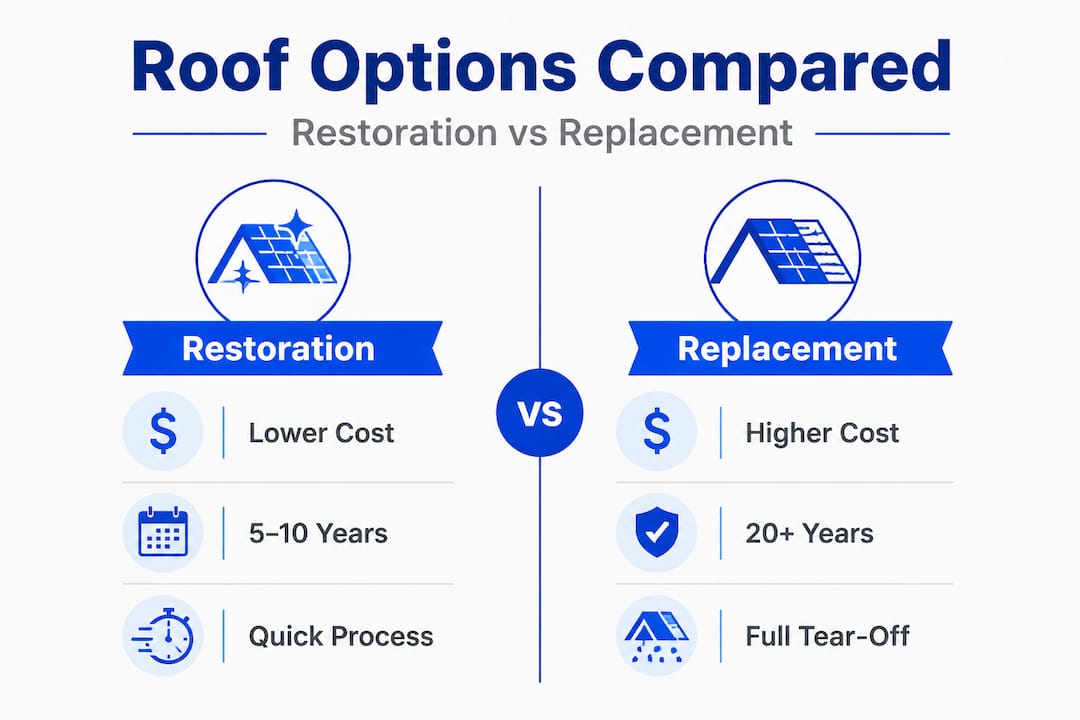
The cost difference between restoration and replacement is significant. Pro-restoration sources point to a 10 to 15 year extension at roughly one-third the cost of replacement, while skeptics note that real-world lifespan gains in Florida's climate may be closer to 5 to 10 years due to intense UV, storm exposure, and humidity. Both sides agree on one thing: restoration only works on shingles with intact structure.
What restoration can fix:
- Dried-out, brittle shingles that have lost flexibility
- Minor granule loss and surface cracking
- Small leaks at seams or edges
- Early-stage weathering and oxidation
What restoration cannot fix:
- Rotting or sagging decking underneath shingles
- Structural damage from hurricanes or major impacts
- Shingles that are missing, severely broken, or beyond repair
- Moisture intrusion that has reached the wood
For homeowners interested in learning more about restoring different shingle types, the process and eligibility can vary depending on the specific material and age of your roof. If you want to understand exactly what a professional restoration involves from start to finish, a step-by-step restoration guide walks through each phase clearly.
Pro Tip: The earlier you act, the better your options. Restoration is most effective when shingles still have their basic structure. Waiting until you see active leaks or sagging can push you past the point where restoration is viable, forcing a much more expensive replacement.
When is restoration a smart move and when is replacement necessary?
The right choice depends on your roof's actual condition, not just its age. Here is a clear breakdown of which situations call for which solution.
| Condition | Restoration | Replacement |
|---|---|---|
| Minor leaks at flashing or edges | Yes | No |
| Shingles mostly intact, good granule coverage | Yes | No |
| No rot or sagging in decking | Yes | No |
| Roof is under 18 years old | Usually yes | Maybe |
| Major leaks spreading through ceiling | No | Yes |
| Visible rot or soft spots on decking | No | Yes |
| Severe hurricane or impact damage | No | Yes |
| Missing large sections of shingles | No | Yes |
Follow these steps to assess your own roof's condition before calling anyone:
- Inspect for active leaks. Check your attic and ceilings after rain. Small stains near edges suggest minor issues; large spreading water damage is a red flag.
- Check shingle flexibility. Shingles that have become brittle and snap easily are losing their oils. This is exactly what restoration addresses before it gets worse.
- Look for sagging or soft spots. Press carefully at the roofline or inspect from the attic. Any give in the decking means structural damage is present.
- Consider your roof's age. Roofs under 18 years old with no structural damage are typically strong candidates for restoration. Roofs over 20 years old with significant wear may be better served by replacement.
- Document visible damage. Take photos. This helps both restoration professionals and insurers assess what is needed accurately.
Florida adds specific factors to this equation. The intense UV exposure here accelerates shingle degradation, meaning a 12-year-old Florida roof may show wear equivalent to a 16-year-old roof in a cooler climate. That does not automatically mean replacement is necessary. It does mean earlier intervention with restoration pays off more here than almost anywhere else.
For a deeper look at exactly which factors point to restoration over replacement, the reasons to restore instead of replace covers the full picture. If you want a clear process for checking your own roof's damage level, the damage assessment steps walks you through a reliable inspection workflow.
Pro Tip: Before filing an insurance claim, ask specifically whether your policy covers restoration as an alternative to replacement. Many adjusters default to recommending full replacement. Asking upfront can save you time and help you advocate for the most cost-effective solution.
Florida climate impact: How weather affects your roof decision
Florida is not like other states when it comes to roofing. The combination of daily sun, hurricane season, tropical humidity, and algae growth creates one of the harshest environments for asphalt shingles in the entire country.
Here is what your roof faces every single year in Broward and Palm Beach County:
- Intense UV radiation. South Florida gets more sun exposure than most of the continental U.S. UV rays break down the oils in asphalt shingles, causing them to dry out, crack, and curl faster than in northern states.
- Hurricane and tropical storm winds. Even a Category 1 hurricane can lift shingles, break seals, and allow water intrusion. Repeated storm seasons add cumulative damage over time.
- High humidity and moisture cycling. Daily heat and humidity cause shingles to expand and contract. Over time, this weakens adhesion and seals along the edges.
- Algae and mildew growth. Florida's warm, wet climate makes roofs prone to algae streaking and mildew, which can accelerate granule loss and surface breakdown if left untreated.
These threats explain why Florida roofs fail earlier than roofs in other parts of the country. They also explain why restoration timing matters so much here.
Key insight: According to a review of asphalt restoration real-world outcomes, properly prepared shingle roofs reliably gain 5 to 10 years from professional restoration, even in demanding climates like Florida's. The critical word is "prepared." Surface cleaning, repair of damaged sections, and proper product application are what separate a lasting restoration from a short-lived one.
The climate impact on shingles in South Florida is documented and measurable. Shingles here lose flexibility and granule coverage faster, which is exactly why catching the problem early with restoration can extend your roof's useful life by nearly a decade, even under these conditions. Waiting until after severe storm damage or visible rot sets in removes the restoration option entirely.
The financials: Cost, insurance, and long-term value
Let us talk numbers, because this is where the restoration vs. replacement decision becomes very clear for most homeowners.
Average cost comparison:
- Roof restoration in South Florida: $1,500 to $5,000 depending on roof size and condition
- Full roof replacement in South Florida: $15,000 to $30,000 for a typical single-family home
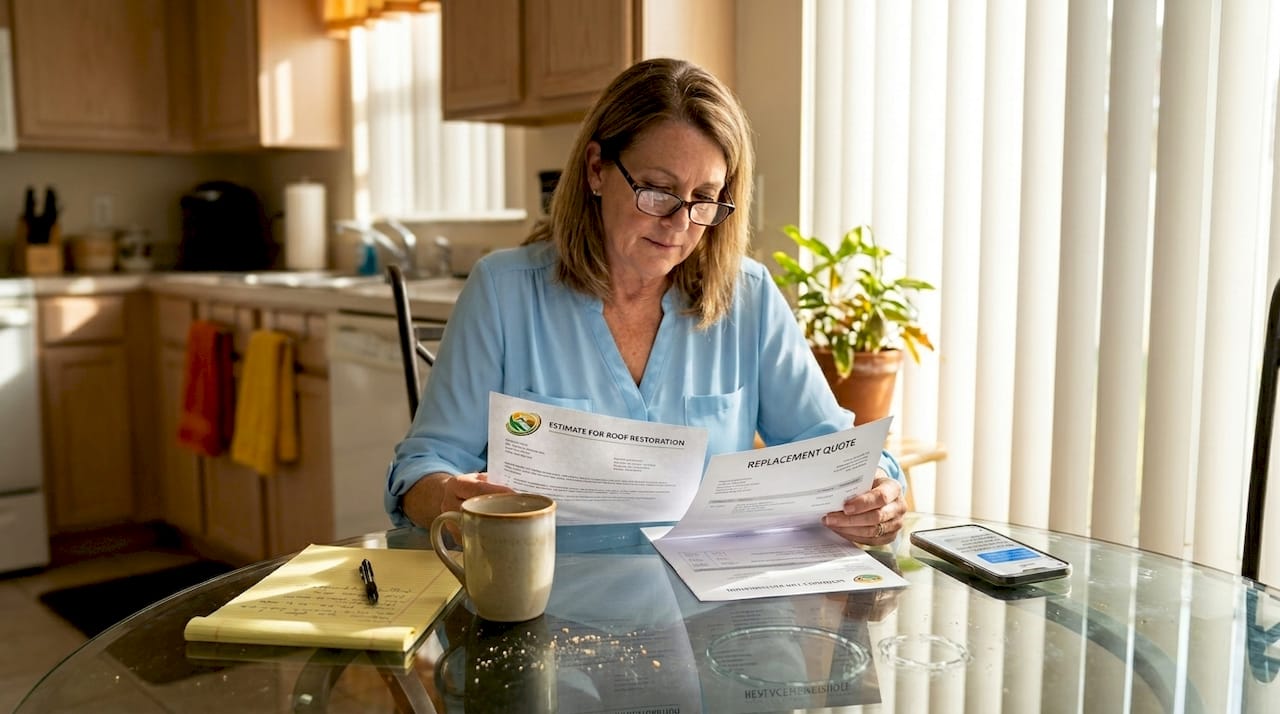
That is not a small difference. Restoration typically runs at about one-third the cost of a full replacement. For a homeowner facing a $20,000 replacement quote, a qualified restoration could deliver 5 to 10 additional years of protection for $3,000 to $5,000. That is money that stays in your pocket.
Insurance dynamics in Florida:
Florida's insurance market is complicated. Many carriers push homeowners toward full replacement because it fully resolves the liability. Restoration is a newer category for many adjusters, and not all policies cover it the same way. Here is what you need to know:
- Some insurers view restoration as maintenance, not a covered repair
- Others will consider it under specific circumstances, especially when damage is minimal
- Florida's property insurance challenges mean premiums and coverage decisions are increasingly tied to roof age and condition
- A restored roof with a valid warranty may help you maintain or improve your insurability compared to an unaddressed aging roof
For a full breakdown of how to make the financial case for restoration, including how to approach your insurer, the cost-saving analysis covers this in detail. Practical steps for protecting your roof cost-effectively are also outlined in the cost-effective roof protection guide.
Quick financial pros and cons:
Restoration benefits:
- Cost is dramatically lower than replacement
- No disruption to your home during the work
- Backed by warranties when done professionally
- Can be repeated as needed before full replacement is required
Restoration drawbacks:
- Does not fix structural or rot-related damage
- Insurance may not cover it
- In Florida's climate, gains may be toward the lower end of the 5 to 10 year range without proper prep
- Eventually, replacement is still necessary
The honest answer is that restoration is not a permanent solution. It is a smart, financially sound way to extend your roof's life while you plan ahead for eventual replacement, rather than being forced into it unexpectedly.
Why most homeowners get the Florida roofing choice wrong
Here is what we see over and over working with homeowners in Broward and Palm Beach County. A roofing contractor comes out, looks at an aging roof, and immediately quotes a full replacement. The homeowner, trusting that the professional knows best, signs the contract. A $20,000 check later, they have a new roof when a $4,000 restoration could have given them 7 more solid years.
We are not saying replacement is never the right call. Sometimes it absolutely is. But the bias toward replacement is real, and it costs Florida homeowners millions every year.
Insurance adjusters do the same thing. A claim goes in after a storm, an adjuster tags the roof as "at end of useful life," and suddenly the homeowner is navigating a full replacement process when the actual storm damage was limited to a few rows of shingles.
The evidence is clear. Asphalt restoration delivers 5 to 10 reliable years when the roof is properly prepared and the product is correctly applied. That is not a marginal benefit. For a homeowner with a 12-year-old roof showing early signs of wear, restoration buys time, preserves budget, and protects the home.
The biggest mistake is waiting. Homeowners who notice shingles curling or granules washing off often think they still have time. Sometimes they do. But every month of delay narrows the window where restoration is still viable. The roof that qualifies for renewal today may only qualify for replacement six months from now.
The question to ask any contractor or adjuster who recommends replacement is simple: "Is restoration a viable option for this roof?" If they cannot give you a clear answer backed by an honest inspection, get a second opinion. The top reasons to restore before replacing give you the specific evidence to have that conversation with confidence.
Restoration done at the right time, by certified professionals, is not a compromise. It is a smart financial decision backed by real-world results, even here in South Florida.
Get expert Florida roof restoration for less
If your roof is showing signs of wear but you are not ready to commit to a $20,000 replacement, you have options worth exploring. At Shingle Roof Renewal, we specialize in helping Broward and Palm Beach County homeowners figure out exactly where their roof stands and what it needs.
We use GreenSoy Technology, a certified process that works at the molecular level to restore flexibility to dried-out shingles and stop further deterioration. It is not a surface paint or a temporary patch. It is a proven restoration method backed by a 6-year transferable warranty. Our process is simple: we inspect your roof, assess its condition honestly, and tell you whether it qualifies for renewal. If it does, you could save up to 80% compared to full replacement. If it does not, we will tell you that too, because honesty is how we work. Schedule your free roof inspection today and find out if your roof can still be saved before it reaches the point of no return.
Frequently asked questions
How many years can restoration actually add to a Florida shingle roof?
A properly applied restoration typically adds 5 to 10 years to an asphalt shingle roof in Florida, provided the shingles are structurally sound and the roof is well-prepped before treatment.
Does insurance cover roof restoration in Florida?
Coverage varies widely; most Florida insurance policies favor full replacement but some will consider restoration when damage is minimal and the work is backed by a professional warranty.
What are signs that my roof needs full replacement instead of restoration?
Major leaks spreading through the ceiling, visible rot or soft spots in the decking, sagging rooflines, or severe structural storm damage all indicate that restoration is not sufficient and full replacement is the necessary path.
Is restoration worth it if my roof is over 20 years old?
Roofs older than 18 to 20 years are generally better candidates for replacement, since restoration may not provide reliable protection across a shingle surface that has already lost most of its useful integrity.
Can I restore my own shingle roof or do I need a professional?
Professional application ensures shingles are correctly prepped and the coating bonds properly for maximum longevity. DIY attempts often skip critical prep steps, which can reduce performance significantly and void any product warranty.