
TL;DR:
- Roof age contributes to the gradual deterioration of shingles and structural components, increasing safety hazards over time. South Florida's climate accelerates this process, demanding regular inspections and proactive maintenance to ensure roof safety and longevity. Proper assessment helps homeowners decide between repair and replacement, avoiding unnecessary costs and structural risks.
Roof age affects safety by driving the gradual breakdown of shingles, underlayment, and structural decking, which increases the risk of leaks, collapses, and storm damage over time. In the roofing industry, this process is called roof lifecycle deterioration, and it follows predictable patterns that every homeowner in Broward and Palm Beach County should understand. According to GAF, asphalt shingles enter a critical evaluation phase between 15 and 20 years, and roofs past 20 years with visible damage typically require replacement. Knowing where your roof stands on that timeline is the first step toward protecting your home and your family.
How roof age affects safety across different materials
Not all roofs age at the same rate. The material your roof is made from sets the baseline for when safety risks begin to climb.
| Roof Material | Typical Lifespan | Safety Risk Onset |
|---|---|---|
| Asphalt shingles | 20–30 years | 15–20 years |
| Wood shake | 20–25 years | 15 years |
| Metal roofing | 40–70 years | 30–40 years |
| Slate | 75–100 years | 50+ years |
Asphalt shingles are by far the most common roofing material in South Florida. They are also the most vulnerable to the region's intense heat and UV exposure. Wood shake roofs deteriorate faster in humid climates because moisture accelerates rot and fungal growth. Metal roofing holds up well against heat but can suffer from fastener corrosion and panel separation over decades.
South Florida's climate compresses these timelines. The combination of year-round sun, high humidity, and hurricane-season storms means an asphalt shingle roof here may show accelerated underlayment failure years before a comparable roof in a cooler, drier climate would. The underlayment is the waterproof barrier between your shingles and the roof deck. When it fails, water reaches the wood structure of your home even if the shingles above still look intact.
The industry's 50% rule is a reliable financial benchmark. Repair costs exceeding 50% of full replacement cost signal that replacement is the more responsible choice. That threshold matters because repeated small repairs on an aging roof rarely address the underlying structural decline.
Pro Tip: Ask your roofing inspector specifically about underlayment condition, not just shingle condition. Shingles can look acceptable while the underlayment beneath them has already failed, leaving your home exposed to water damage.
What signs of roof aging signal real safety hazards?
Homeowners often confuse cosmetic aging with structural failure. Knowing the difference can save you from either ignoring a serious hazard or spending money you do not need to spend.
Common signs of an aging roof fall into two categories: cosmetic and structural. Cosmetic signs are worth monitoring. Structural signs require immediate professional attention.
Cosmetic aging signs to monitor:
- Granule loss in gutters or downspouts
- Minor algae or moss streaking on shingles
- Slight surface cracking on individual shingles
- Fading or color inconsistency across the roof
Structural warning signs that indicate safety hazards:
- Sagging or dipping rooflines anywhere on the roof
- Shingles that are curling at the edges or buckling upward
- Daylight visible through the attic ceiling boards
- Active leaks or water stains on interior ceilings
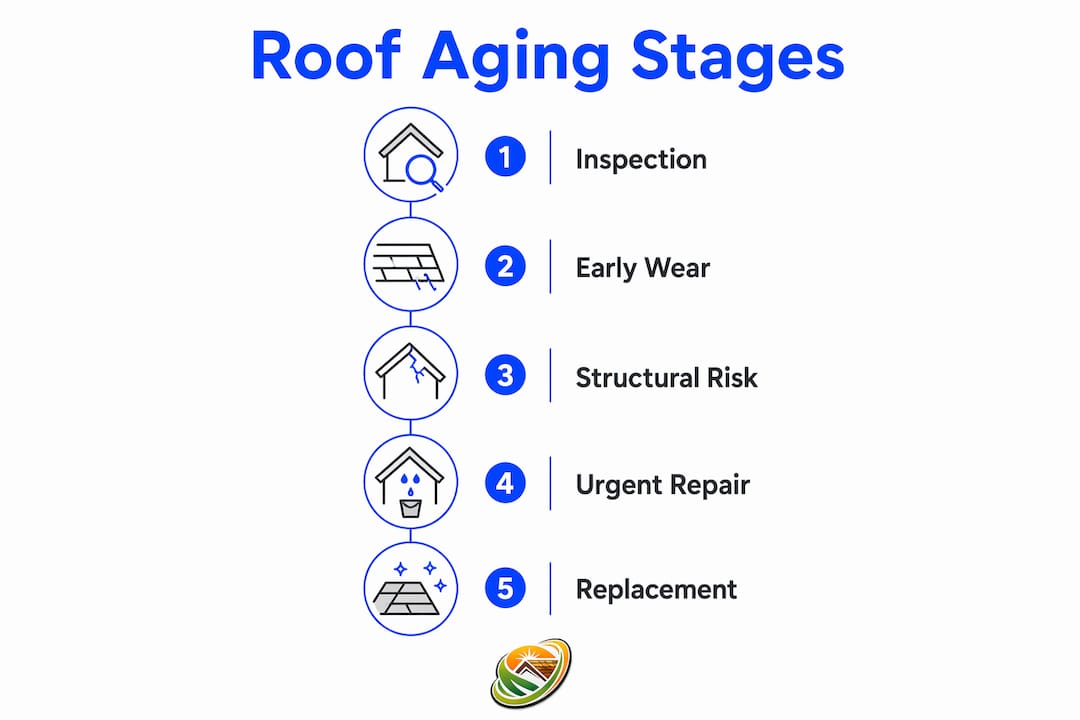
A sagging roofline is the most urgent warning sign. Deck deflection indicates severe structural compromise and requires immediate professional evaluation. This is not a repair-and-monitor situation. A sagging deck means the wood structure supporting your entire roof is weakened, and that creates a collapse risk.
Granule loss is more gradual but equally serious over time. Granule loss exposes the asphalt layer directly to UV radiation, which accelerates brittleness and cracking. Once the asphalt layer degrades, the shingle loses its waterproofing ability entirely.
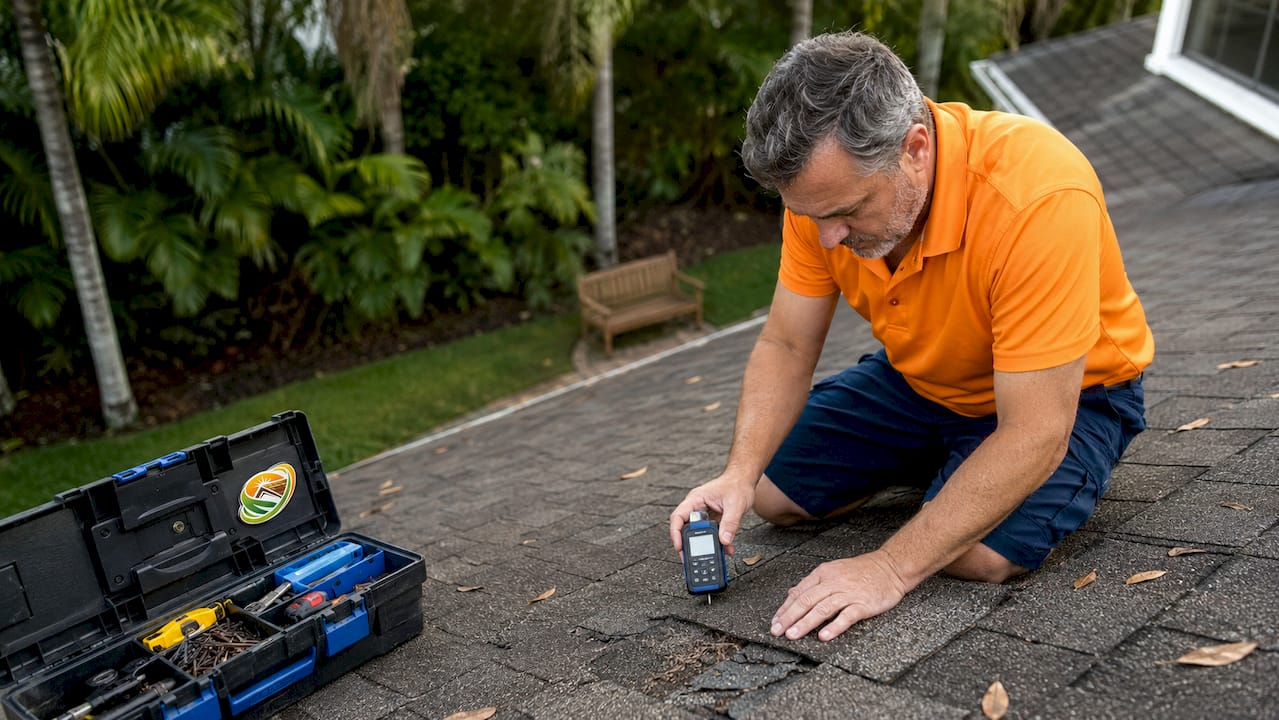
Deck moisture above 18% signals active water intrusion and compromised structural integrity. That number matters because wood begins to rot and lose load-bearing strength at sustained moisture levels above that threshold. A HAAG-certified inspector can measure deck moisture directly, giving you a factual basis for your repair or replacement decision rather than a visual guess.
Pro Tip: A visual inspection from the ground tells you very little about your roof's true condition. Schedule a professional inspection every two to three years once your roof passes the 12-year mark, especially in South Florida.
How does south florida's climate accelerate roof deterioration?
South Florida does not give roofs an easy life. The region's specific combination of environmental stressors speeds up every phase of roof lifecycle deterioration.
The four primary climate stressors in Broward and Palm Beach County:
- Intense UV exposure: Year-round sun bakes asphalt shingles, drying out the oils that keep them flexible. Brittle shingles crack and curl faster than shingles in northern climates.
- High humidity: Persistent moisture promotes algae and moss growth. Both organisms trap water against the shingle surface, accelerating granule loss and surface degradation.
- Hurricane-season wind and rain: Storm-force winds lift and loosen shingles. Even a roof that survives a storm without visible damage may have compromised fastener seals that allow water infiltration during the next rain event.
- Heat-driven underlayment stress: High heat and humidity accelerate underlayment degradation, and this layer can fail silently while shingles above it still appear functional.
Attic ventilation plays a larger role in roof longevity than most homeowners realize. Poor attic ventilation can shorten roof life by up to half. In South Florida's heat, a poorly ventilated attic traps superheated air that cooks shingles from below while the sun bakes them from above. That double-sided heat stress accelerates aging dramatically.
Installation quality also matters. A roof installed with improper fastener patterns or inadequate flashing will fail years ahead of schedule regardless of material quality. This is why condition matters more than age as the primary safety determinant. A well-maintained 18-year-old roof with proper ventilation and no storm damage may be structurally safer than a poorly installed 10-year-old roof that has never been inspected.
Understanding how South Florida's climate affects roof aging gives you a clearer picture of why local expertise matters when evaluating your roof's condition.
When should you repair vs. replace an aging roof?
This is the question most South Florida homeowners eventually face. The answer depends on three factors: the roof's age, its current condition, and the cost of the work needed.
-
Apply the 50% rule first. If the cost of repairs exceeds 50% of what a full replacement would cost, replacement is the financially sound choice. Repair costs over 25–50% of replacement cost typically signal that the roof has reached the end of its practical service life.
-
Evaluate cumulative repair history. A roof that has needed three or four repairs in the past five years is showing systemic decline. Each patch addresses a symptom, not the cause. Cumulative repairs on an aging roof can mask structural deterioration until a major failure occurs.
-
Check your insurance policy. Insurance companies often refuse renewal or reduce coverage for roofs older than 20 years. A new roof can lower your premiums by 5–20%. In South Florida, where homeowner insurance rates are already high, that savings adds up quickly.
-
Consider seasonal timing. Roof replacement costs in South Florida tend to be more competitive outside of peak hurricane season preparation periods. Scheduling work in the late fall or winter months can give you more contractor options and better pricing.
-
Get a written inspection report. Before accepting any roofing quote, request a detailed written report from a HAAG-certified or licensed inspector. That report should document deck condition, underlayment status, flashing integrity, and shingle condition separately. A quote without a written inspection is a guess, not a diagnosis.
Understanding cost-effective repair options for aging roofs can help you ask better questions and avoid overpaying for work your roof may not actually need yet.
Pro Tip: Before calling a roofer for a replacement quote, have an independent preservation specialist assess your roof. Many roofs that appear to need replacement can be restored at a fraction of the cost if caught early enough.
Key takeaways
An aging roof's safety risk is determined by its condition and maintenance history, not by age alone.
| Point | Details |
|---|---|
| Age triggers evaluation, not automatic replacement | Asphalt shingles need professional assessment between 15 and 20 years, not automatic replacement. |
| Structural signs require urgent action | Sagging decks and active leaks are safety hazards that need immediate professional evaluation. |
| South Florida accelerates deterioration | Heat, humidity, and storms compress roof lifespans, making local climate awareness critical. |
| The 50% rule guides financial decisions | When repair costs exceed half of replacement cost, full replacement is the responsible choice. |
| Condition outweighs age | A well-maintained older roof can be safer than a neglected newer one, per HAAG-certified inspectors. |
What 15 years of roof inspections taught me about south florida homes
I have seen homeowners spend $22,000 on a full roof replacement when a $3,000 preservation treatment would have bought them another decade of safe, functional coverage. I have also seen homeowners patch the same leak three times in four years while the deck beneath them quietly rotted. Both mistakes come from the same root problem: acting without a clear, professional assessment of what the roof actually needs.
The conventional wisdom says "if it's old, replace it." That advice sells a lot of new roofs. It does not always protect homeowners. Age is a data point, not a verdict. A 19-year-old roof in Boca Raton that has been inspected regularly, had its granule loss addressed, and maintained proper attic ventilation may have years of safe service left. A 12-year-old roof that was installed over an existing layer, never inspected, and battered by two hurricane seasons may be a genuine hazard right now.
What I tell every homeowner is this: get the facts before you get the quote. A written inspection from a qualified professional gives you leverage. You know what you are dealing with. You can make a real decision instead of a fear-based one. Shingleroofrenewal was built around exactly that principle. Inspect first. Assess honestly. Then recommend the right path, whether that is preservation, targeted repair, or replacement.
The homeowners who come out ahead financially are the ones who catch problems at the maintenance stage, before they become structural failures. Early intervention is almost always cheaper, faster, and less disruptive than emergency replacement.
— Daniellison
Protect your roof before it becomes a problem
If your South Florida home has an asphalt shingle roof that is 10 years or older, the time to act is now, not after the next storm season.
Shingleroofrenewal is not a roofing contractor. We are the company you call before the roofer. Our certified Fresh Roof Green Soy Technology restores shingle flexibility at the molecular level, locks in granules, and extends qualifying roof life by 10–15 years, backed by a 6-year transferable warranty. We serve homeowners throughout Broward and Palm Beach County with a simple three-step process: inspect, assess, and recommend. If your roof qualifies for preservation and renewal, you could save up to 80% compared to full replacement. Schedule your free roof inspection today and find out where your roof actually stands.
FAQ
How does roof age affect structural safety?
As a roof ages past 15–20 years, shingles lose flexibility, underlayment degrades, and deck moisture can rise above safe thresholds, all of which weaken the structure's ability to resist leaks and storm loads. HAAG-certified inspectors assess condition alongside age to determine actual safety risk.
What are the most serious signs of an aging roof?
A sagging or dipping roofline is the most urgent sign, indicating structural deck failure that requires immediate professional attention. Curling shingles, active interior leaks, and visible granule loss in gutters are also serious indicators that the roof's waterproofing ability is compromised.
Does a 20-year-old roof always need to be replaced?
Not automatically. A well-maintained 20-year-old roof in good condition may still be safe and functional, while a neglected 12-year-old roof could pose real hazards. Condition, maintenance history, and a professional inspection determine the right course of action.
How does south florida's climate shorten roof lifespan?
Intense UV exposure, year-round heat, high humidity, and hurricane-season storms all accelerate shingle brittleness, granule loss, and underlayment failure. Poor attic ventilation compounds the problem by trapping heat that degrades shingles from below.
When is roof repair no longer worth the cost?
When repair costs exceed 50% of the cost of a full replacement, replacement becomes the more financially responsible choice. Repeated repairs on a systemically aging roof also signal that the underlying structure needs full attention, not another patch.