
TL;DR:
- Proactive roof maintenance in South Florida involves regular inspections, gutter cleaning, and resealing to prevent costly damage from extreme weather. Timely identification of exterior, attic, and interior warning signs allows homeowners to act early and preserve roof integrity beyond its expected lifespan. Soft washing, understanding the 25% repair rule, and thorough documentation are essential for extending asphalt shingle roofs efficiently and affordably.
Early intervention roof care consists of routine inspections, proactive maintenance, and targeted repairs that catch problems before they escalate into expensive replacements. For South Florida homeowners with aging asphalt shingle roofs, this approach, known in the industry as preventive roof maintenance, is the difference between a $500 repair and a $20,000 replacement. Broward and Palm Beach County's relentless sun, heat, and storm cycles dry out shingles faster than almost anywhere else in the country. The early intervention roof care steps in this guide are built specifically for that climate, with seasonal timing, regulatory awareness, and practical actions you can start this week.
What are the essential early intervention roof care steps?
The most effective preventive roof maintenance program follows a clear sequence. Skip steps, and small problems compound. Follow them consistently, and your roof can outlast its expected lifespan by years.
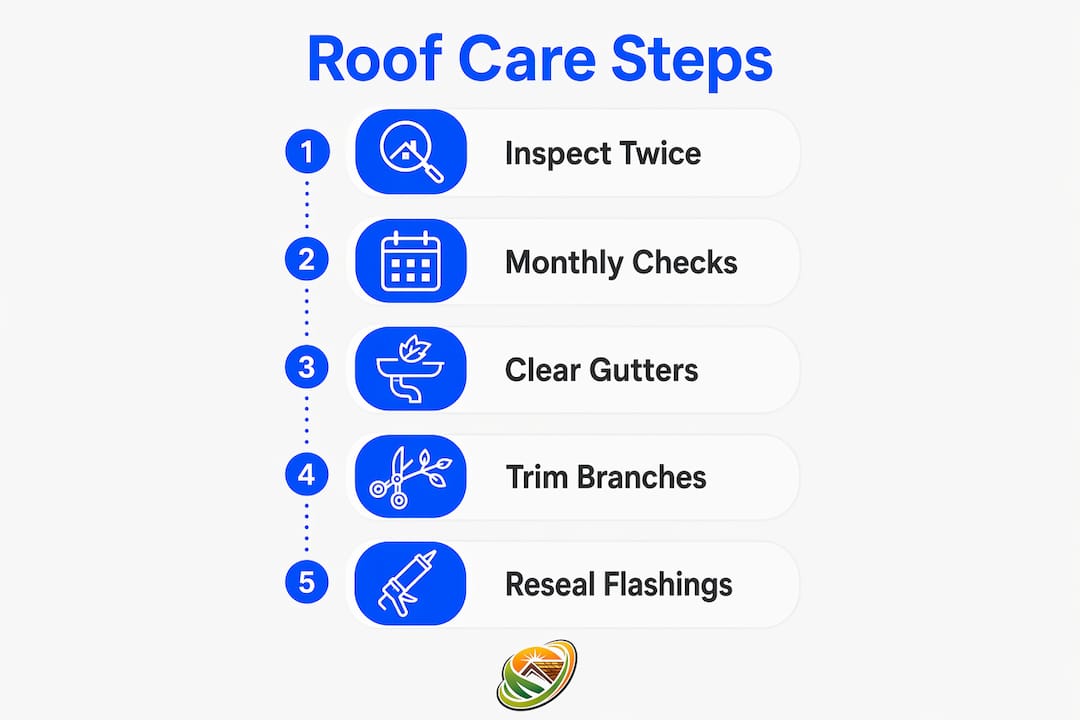
Step 1: Schedule two professional inspections per year. Professional inspections are recommended in April or May before hurricane season opens, and again in late fall after storm season closes. These are not optional in South Florida. A certified inspector identifies cracked caulking around flashings, lifted shingle edges, and compromised vent pipe boots that you cannot safely see from the ground.
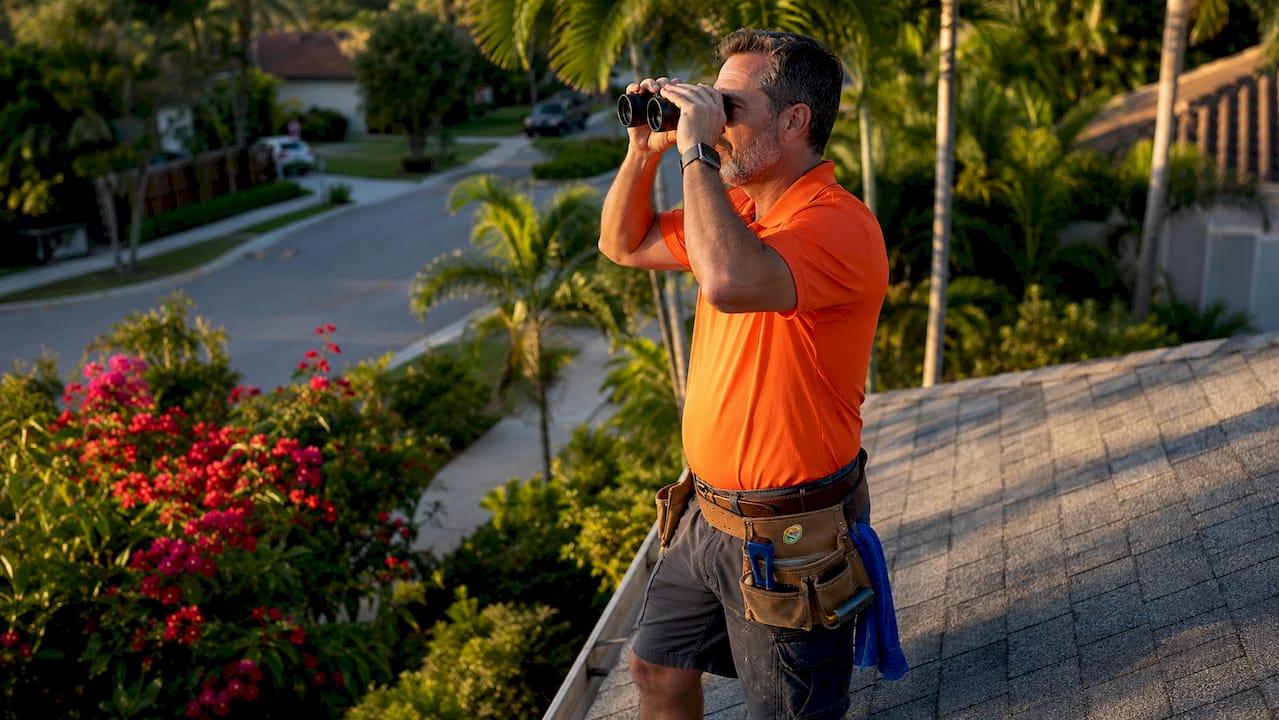
Step 2: Perform monthly ground-level visual checks. Walk the perimeter of your home and scan the roofline with binoculars. Look for missing shingles, dark streaking from algae, sagging sections, or granule deposits collecting in gutters. This takes ten minutes and costs nothing.
Step 3: Clear gutters and downspouts before May 31. Gutter clearing before hurricane season prevents water ponding during tropical downpours, which loads weight onto your roof deck and accelerates soffit rot. Do this every spring without exception.
Step 4: Trim overhanging branches. Branches scraping shingles during wind events strip granules and create entry points for moisture. Cut back any limb within six feet of the roof surface.
Step 5: Reseal vent pipe boots and flashings annually. Small openings at penetrations cause slow, hidden degradation that compounds over months. Rubber boots around vent pipes crack under UV exposure. Resealing them costs under $50 and prevents water from tracking down into your attic.
Pro Tip: Take date-stamped photos of your roof after every inspection and after every named storm. This documentation supports insurance claims and helps you track cumulative repair areas, which matters under Florida's building code.
How to identify early warning signs of roof damage before leaks appear
Roof damage progresses from exterior signs to attic symptoms before becoming visible as interior leaks, giving you a window of weeks to months to act before water reaches your living space. Knowing what to look for at each stage is the core skill of any early intervention roof guide.
Exterior warning signs
- Missing or cracked shingles: Any gap in your shingle field exposes the underlayment to UV and rain.
- Granules in gutters: Asphalt shingles shed granules as they age. Heavy granule loss means the shingle surface is thinning and losing its UV protection.
- Lifted or separated flashings: Metal flashings around chimneys, skylights, and walls pull away from the roof surface over time. Even a quarter-inch gap lets water in.
- Dark streaking or green patches: Algae and moss growth holds moisture against shingles, accelerating deterioration.
Attic warning signs
Roof leaks in South Florida often travel from the damage point to the attic before appearing on your ceiling. After any significant storm, go into your attic with a flashlight and look for:
- Visible daylight through the roof deck
- Damp or discolored rafters
- Wet or compressed insulation
- Mold spots on wood surfaces
Interior warning signs
- Ceiling stains or water rings
- Peeling paint near exterior walls
- Musty odors in upper rooms
Pro Tip: Use your phone to photograph every attic inspection. Time-stamped documentation is required for insurance compliance and helps contractors scope repairs accurately, especially when cumulative damage is involved.
| Warning sign | Location | Action required |
|---|---|---|
| Granules in gutters | Exterior | Schedule professional inspection within 30 days |
| Lifted flashings | Exterior | Reseal or replace within 2 weeks |
| Damp rafters or wet insulation | Attic | Call a professional within 48 hours |
| Ceiling stains | Interior | Emergency inspection; document immediately |
| Mold on attic wood | Attic | Professional assessment required; do not delay |
What are the best early intervention roofing methods for asphalt shingles?
The right maintenance technique protects your shingles and your warranty. The wrong one can void both.
Soft washing is the correct cleaning method for asphalt shingle roofs. ARMA endorses soft washing because chemical low-pressure cleaning kills algae and biological growth without stripping granules. Pressure washing does the opposite. It blasts granules off the shingle surface, accelerates aging, and voids most manufacturer warranties. Schedule soft washing every two to three years as a preventive measure, not just when you see visible growth.
Repair damaged shingles and flashings promptly. A single cracked shingle left unaddressed for one season can allow enough moisture intrusion to rot the decking beneath it. That converts a $150 shingle repair into a $2,000 deck repair.
Understand Florida's 25% rule before you authorize repairs. Florida Building Code Section 706 triggers mandatory full roof replacement if repairs exceed 25% of the total roof area within any rolling 12-month period. This rule applies cumulatively, meaning three separate small repairs can add up to the threshold. Knowing this prevents a situation where deferred maintenance forces a full replacement you were not financially prepared for.
| Maintenance method | Recommended | Reason |
|---|---|---|
| Soft washing | Yes | Preserves granules and warranty; ARMA-aligned |
| Pressure washing | No | Strips granules, voids warranties |
| Prompt flashing repair | Yes | Prevents moisture intrusion and deck rot |
| Deferred shingle repair | No | Compounds damage and repair costs |
| Annual vent boot resealing | Yes | Closes hidden entry points for water |
Routine preventive maintenance extends roof life by five to ten years and reduces the landfill waste created by unnecessary tear-offs. For South Florida homes in Broward and Palm Beach County, where replacement costs run $15,000 to $30,000, that extension represents real financial protection. You can review a full roof longevity checklist to build out your complete maintenance program.
How to plan a seasonal roof care workflow in South Florida
South Florida does not have four equal seasons. It has a hurricane season and an off-season, and your roof maintenance calendar should reflect that reality.
Spring: April through May
- Schedule your pre-hurricane professional inspection by May 15 at the latest.
- Clear all gutters and downspouts completely.
- Trim overhanging branches.
- Photograph the entire roof from ground level and document any visible changes since your last inspection.
- Reseal vent pipe boots and check all flashing edges.
Summer: June through September
- Minimize all foot traffic on the roof. Heat makes asphalt shingles soft and vulnerable to compression damage.
- After any named storm or tropical system passes within 50 miles, conduct a post-storm inspection within 72 hours when it is safe to do so.
- Check the attic after every significant rain event, not just after storms.
Fall and winter: October through March
- Schedule your post-season professional inspection in October or November.
- If algae or moss growth is visible, schedule soft washing before the next spring.
- Review your repair documentation and calculate your cumulative repair area to stay aware of the 25% threshold.
- Check wind mitigation features and confirm your insurance documentation is current.
Pro Tip: Keep a simple roof log in a notes app or a folder on your phone. Record every inspection date, every repair, every storm event, and every photo. This log becomes your most valuable asset when filing an insurance claim or selling your home.
The South Florida roof care workflow guide from Shingleroofrenewal breaks this seasonal calendar down further with specific checklists for each month.
Key takeaways
Consistent early intervention roof care steps, applied seasonally and documented carefully, are the single most effective way to extend an asphalt shingle roof's life in South Florida's climate.
| Point | Details |
|---|---|
| Two inspections per year | Schedule professional inspections in spring and late fall to catch damage before it compounds. |
| Soft washing over pressure washing | ARMA-aligned soft washing preserves granules and keeps manufacturer warranties intact. |
| Know the 25% rule | Florida Building Code Section 706 can convert cumulative small repairs into a mandatory full replacement. |
| Document everything | Time-stamped photos support insurance claims and help track repair totals against the 25% threshold. |
| Act on attic signs early | Damp rafters and wet insulation signal active moisture intrusion before ceiling stains ever appear. |
Why I think most South Florida homeowners wait too long
I have seen the same pattern repeat itself more times than I can count. A homeowner notices a few granules in the gutter, maybe a small dark streak on the roof, and decides it can wait until next year. By the time they call someone, the attic insulation is wet, the decking has soft spots, and what could have been a $400 repair is now a conversation about full replacement.
The uncomfortable truth is that South Florida's climate does not give you the same grace period that homeowners in cooler, drier states get. UV intensity here is extreme. Rain events are sudden and heavy. Shingles age faster, and damage compounds faster. A professional early-stage survey takes 30 to 60 minutes and costs a fraction of what you will spend if you wait for a ceiling stain to appear.
What I also see is homeowners who assume their only options are "do nothing" or "replace the whole roof." That is a false choice. Many roofs that look tired and weathered are still structurally sound candidates for preservation and renewal. The key is getting an honest assessment before the damage crosses the point of no return. Working with certified professionals who specialize in roof longevity, not just replacement, gives you that honest picture. Routine maintenance is not a luxury. It is the most responsible thing you can do for your home and your budget.
— Daniellison
How Shingleroofrenewal helps you protect your roof before it's too late
If you have been following these early intervention steps and want to know whether your aging asphalt shingle roof still qualifies for preservation, Shingleroofrenewal is the call to make before you call a roofer.

Shingleroofrenewal is a certified applicator of Fresh Roof's Green Soy Technology, which restores shingle flexibility at the molecular level and extends qualifying roof life by 10 to 15 years. The process is straightforward: inspect, assess, and recommend. If your roof qualifies, you could save up to 80% compared to full replacement, backed by a 6-year transferable warranty. Shingleroofrenewal serves homeowners across Broward and Palm Beach County. Visit Shingleroofrenewal.com to schedule your free roof inspection and find out if your roof can be saved.
FAQ
What are the most important early intervention roof care steps?
The most critical steps are scheduling two professional inspections per year, clearing gutters before hurricane season, resealing vent boots annually, and documenting all repairs with time-stamped photos. Acting on exterior and attic warning signs before they reach your interior ceiling is the core goal.
How often should South Florida homeowners inspect their roofs?
Inspections are recommended at least twice annually, in April or May before hurricane season and again in late fall after storm season. Post-storm inspections within 72 hours are also advised after any nearby tropical system.
What is Florida's 25% rule and why does it matter?
Florida Building Code Section 706 requires a full roof replacement if cumulative repairs exceed 25% of the total roof area within any rolling 12-month period. Tracking your repair history prevents small maintenance decisions from accidentally triggering a mandatory full replacement.
Is pressure washing safe for asphalt shingle roofs?
Pressure washing is not safe for asphalt shingle roofs. It strips granules, accelerates aging, and voids most manufacturer warranties. Soft washing with chemical low-pressure application is the ARMA-endorsed method for cleaning asphalt shingles safely.
What are the first signs of roof damage I should look for?
Start with your gutters. Heavy granule deposits signal shingle surface loss. Then check for lifted flashings, missing shingles, and dark algae streaking from the ground. After any storm, inspect your attic for damp rafters or wet insulation before any ceiling stains appear.