
TL;DR:
- Green roofing systems layer vegetation, media, drainage, and waterproofing to reduce heat and manage stormwater. Most South Florida homes benefit from shallow, extensive systems that are less costly and easier to support structurally. Proper installation and structural assessment are crucial to ensure long-term durability and return on investment.
Green roofing solutions are engineered systems that layer vegetation, growing media, drainage, and waterproof membranes on top of a roof structure to reduce heat, manage stormwater, and extend roof lifespan. South Florida homeowners are paying closer attention to these systems because Broward and Palm Beach County's relentless sun, heavy rain, and heat create exactly the conditions where a living roof delivers measurable benefits. Understanding how green roofing works, what it costs, and what it demands structurally helps you decide whether it fits your home before committing to a major investment.
What are the main components of green roofing solutions?
A green roof is a complex engineered system. Its success depends on precise layer integration across waterproofing, root barriers, drainage, and growing medium. Miss one layer or install it incorrectly, and the entire system fails.
Every green roof, regardless of type, includes these five layers from bottom to top:
- Waterproof membrane: The foundation of the system. It protects the roof deck from water infiltration and must be fully intact before any other layer goes down.
- Root barrier: A certified high-density polyethylene (HDPE) sheet that prevents plant roots from penetrating and damaging the membrane below.
- Drainage layer: Typically a plastic mat or aggregate that channels excess water off the roof and prevents root rot.
- Growing medium (substrate): A lightweight engineered blend, usually pumice, perlite, and compost, optimized for porosity and weight. This is not garden soil.
- Vegetation layer: The plants themselves, selected for climate tolerance, weight, and maintenance requirements.
Extensive vs. intensive green roofs
The two primary green roofing options differ significantly in depth, weight, and purpose.
Extensive green roofs use a shallow substrate, typically 2–6 inches deep. They support low-growing, drought-tolerant plants like sedums and native grasses. They weigh less, cost less, and require minimal maintenance. For most South Florida residential rooftops, this is the realistic option.
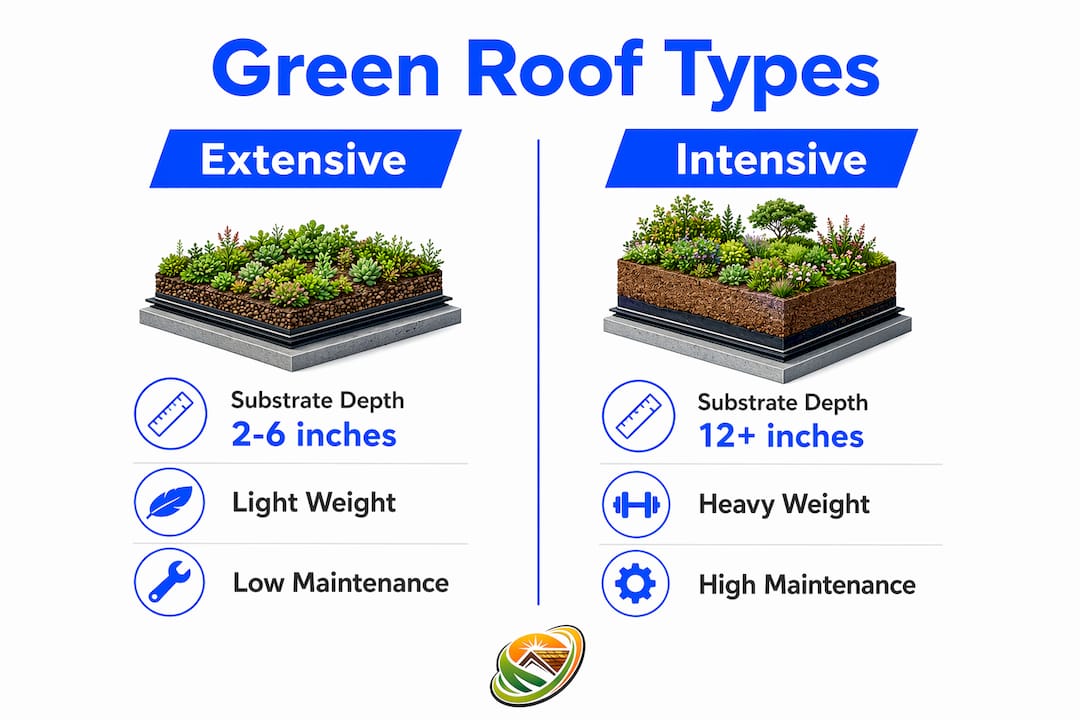
Intensive green roofs use substrate 12 inches deep or more. They can support shrubs, small trees, and even walkable garden spaces. They are heavier, more expensive, and demand regular irrigation and upkeep. These systems are more common on commercial buildings with engineered structural support.
| Feature | Extensive | Intensive |
|---|---|---|
| Substrate depth | 2–6 inches | 12+ inches |
| Weight load | 80–100 lbs/sq ft | 150+ lbs/sq ft |
| Plant types | Sedums, native grasses | Shrubs, trees, perennials |
| Maintenance | Low | High |
| Installation cost | Lower | Significantly higher |
Pro Tip: For South Florida homes, extensive systems are almost always the right starting point. They deliver real benefits without the structural reinforcement costs that intensive systems require.
How do green roofs reduce energy costs and protect your roof?
Green roofs lower indoor temperatures by reducing the heat your roof absorbs and transfers into your home. Nature-based roofing systems, including green roofs, have been shown to lower indoor temperatures by 4°C to 6°C and cut cooling electricity consumption by more than 11%. In South Florida, where air conditioning runs nearly year-round, that reduction translates directly to lower monthly utility bills.
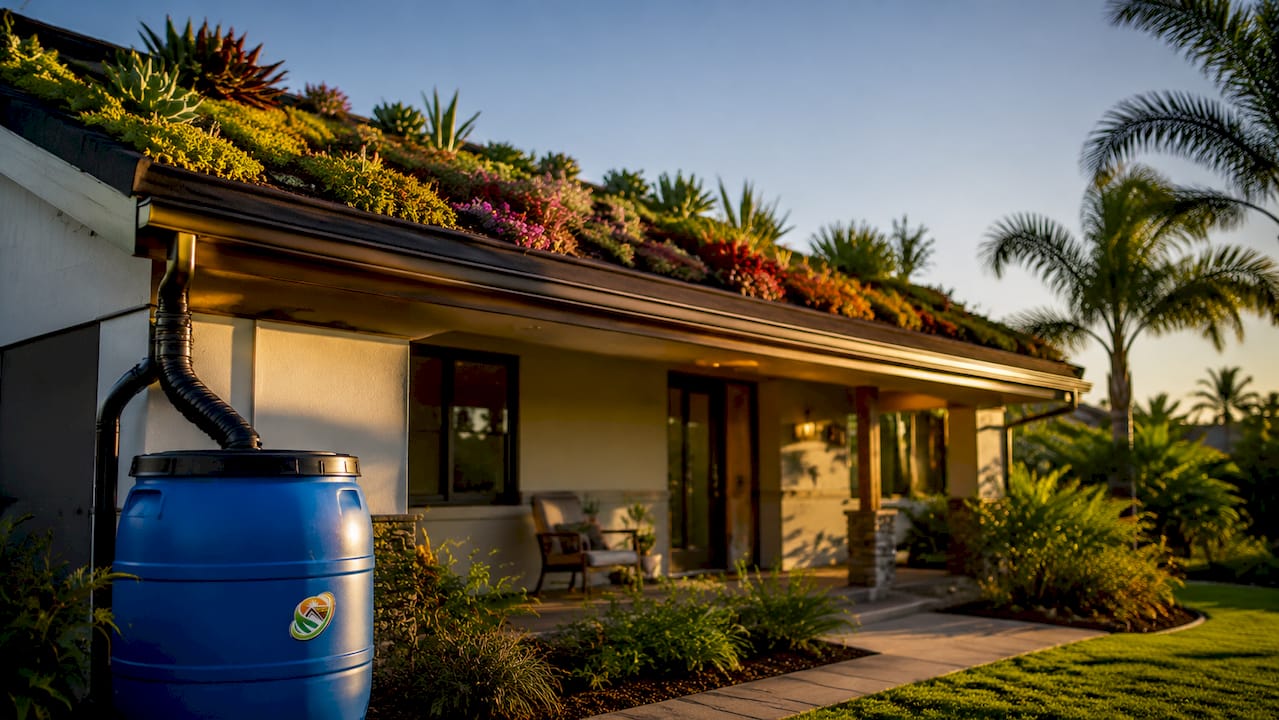
The cooling mechanism works through evapotranspiration. Plants release moisture through their leaves, which cools the surrounding air the same way sweating cools your skin. This process also helps mitigate the urban heat island effect, the phenomenon where densely built areas trap heat and raise local temperatures above surrounding rural areas.
Stormwater management in South Florida
South Florida's rainy season delivers intense, fast-moving downpours that overwhelm drainage systems. Green roofs absorb and slow that water before it reaches the ground. Extensive green roofs reduce stormwater runoff by an average of 57%, while intensive systems can achieve up to 79% reduction. That means less flooding risk, less erosion, and in some municipalities, potential reductions in stormwater utility fees.
Roof membrane protection
UV radiation and thermal shock are the two leading causes of waterproofing membrane failure. Every day, your roof heats up and cools down, and that repeated expansion and contraction degrades roofing materials over time. A green roof's substrate and vegetation layer act as a physical shield, blocking UV rays and stabilizing temperature swings. Extending the life of a membrane through this protection is one of the most financially significant advantages of living roofs.
Pro Tip: Select native South Florida plants like railroad vine or beach sunflower for your green roof. Native species require far less irrigation and are naturally adapted to the heat and humidity, which means lower upkeep and better long-term performance.
What structural and maintenance factors should South Florida homeowners know?
Structural capacity is the first question to answer before any green roof installation. Extensive green roofs weigh 80–100 pounds per square foot, which often exceeds the load capacity of standard residential framing. A licensed structural engineer must assess your roof framing before any work begins. Retrofitting a home to support a green roof adds cost and complexity, and skipping this step risks serious structural damage.
Here are the key steps every homeowner should take before and after installation:
- Hire a structural engineer. Get a load assessment before signing any contract. This protects you from costly surprises after installation begins.
- Verify waterproofing integrity. The membrane beneath the system must be in excellent condition. Any existing leaks or weak spots will worsen under a green roof.
- Install certified HDPE root barriers. Root penetration causes failures that are expensive to repair. HDPE barriers rated for 30+ years, with seam overlaps sealed by heat or adhesive, are the standard.
- Test substrate annually. Substrate compaction beyond 40 lb/ft³ reduces water retention and insulation. Annual penetrometer testing catches this problem before it requires costly aeration or full substrate replacement.
- Plan for irrigation during dry spells. Even drought-tolerant plants need supplemental water during South Florida's dry season, which runs roughly november through april.
- Control weeds early. Invasive species establish quickly in warm climates. Quarterly inspections and early removal prevent weeds from destabilizing the growing medium.
Pro Tip: Ask your installer for documentation on the HDPE root barrier's warranty and seam sealing method. Improper seam installation is the most common cause of early green roof failure, and it is not visible once the system is complete.
What does a green roof cost, and is it worth it for South Florida homeowners?
The average installed cost of a green roof ranges from $185 to $245 per square foot, depending on substrate depth and system complexity. That is a significant upfront investment compared to a standard asphalt shingle replacement. The cost difference between a 4-inch and a 12-inch substrate system is substantial, so choosing the right system type from the start matters.
The financial case for green roofing rests on long-term savings, not short-term price. A properly installed green roof extends the life of the waterproof membrane beneath it, reduces cooling costs, and may qualify your home for LEED sustainability credits or local stormwater fee reductions. Some South Florida municipalities offer incentives for properties that reduce runoff.
Key financial factors to weigh:
- Upfront installation cost: $185–$245 per square foot, varying by system type
- Structural reinforcement: Potentially significant additional cost if framing requires upgrades
- Energy savings: Cooling cost reductions from lower indoor temperatures
- Extended membrane lifespan: Delaying membrane replacement saves thousands over time
- Stormwater fee reductions: Available in select municipalities based on runoff reduction
- LEED certification credits: Applicable for homeowners pursuing green building certifications
The honest reality is that a green roof is not the right choice for every South Florida home. Older homes with standard residential framing often face structural reinforcement costs that push the total investment beyond what the long-term savings justify. For those homeowners, cost-effective roof preservation strategies may deliver better value before committing to a full green roof installation.
Key Takeaways
Green roofing solutions deliver real financial and environmental benefits, but structural assessment and proper installation are non-negotiable prerequisites for South Florida homeowners.
| Point | Details |
|---|---|
| System layers matter | All five layers, membrane, root barrier, drainage, substrate, and vegetation, must be correctly installed for the system to work. |
| Extensive roofs suit most homes | Shallow substrate systems weigh less and cost less, making them the realistic choice for standard residential structures. |
| Energy and stormwater savings are real | Green roofs cut indoor temperatures by 4°C–6°C and reduce stormwater runoff by 57%–79% depending on system type. |
| Structural assessment comes first | Extensive green roofs weigh 80–100 lbs/sq ft, which often exceeds standard residential framing capacity without reinforcement. |
| Native plants reduce long-term costs | South Florida native species require less irrigation and maintenance, improving sustainability and lowering upkeep expenses. |
What I've learned after years of watching South Florida roofs age
I have seen homeowners spend $200 per square foot on a green roof installation and then watch it underperform because the structural assessment was rushed or the root barrier seams were not properly sealed. The technology works. The engineering is sound. The failure almost always comes down to execution.
What surprises most homeowners is how much of a green roof's value comes from what it protects rather than what it grows. The vegetation is visible. The membrane beneath it is not. But protecting that membrane from UV and thermal shock is where the real lifespan extension happens. Most people focus on the plants. The professionals focus on the layers underneath.
South Florida's climate is genuinely well-suited to green roofing. The heat, the rain, the sun intensity. These are exactly the conditions where evapotranspiration cooling and stormwater absorption deliver measurable results. But the same climate that makes green roofs effective also accelerates failures when installation shortcuts are taken. Roots grow fast here. Weeds establish quickly. Substrate compaction happens sooner than in cooler climates.
My honest advice: if you are considering a green roof, get the structural assessment done first, before you talk to any installer. That single step will tell you whether the investment makes sense for your specific home. And if your roof is an aging asphalt shingle system, address its condition before layering anything on top of it. A green roof on a compromised deck is money lost.
— Daniellison
How Shingleroofrenewal helps South Florida homeowners protect their roofs
Before you invest in any major roofing system, knowing the current condition of your roof is the most important step you can take.
Shingleroofrenewal specializes in roof preservation and preventative maintenance for homes in Broward and Palm Beach County. We inspect your roof, assess its condition, and tell you honestly whether it qualifies for renewal using Fresh Roof Green Soy Technology. That process can extend your roof's life and save you thousands compared to a full replacement. Whether you are exploring green roofing technology benefits or simply want to know if your current roof still has life left in it, we give you a clear answer. Schedule your free inspection today and find out where your roof stands before making any major decisions.
FAQ
What is green roofing?
Green roofing is an engineered system that layers vegetation, growing media, drainage, a root barrier, and a waterproof membrane on top of a roof structure to reduce heat, manage stormwater, and extend roof lifespan.
How does a green roof reduce energy costs?
Green roofs lower indoor temperatures through evapotranspiration and substrate insulation, with documented reductions of 4°C to 6°C and cooling electricity savings of more than 11%.
Are green roofs suitable for South Florida homes?
Extensive green roofs are the most practical option for South Florida residential homes, but a structural engineer must confirm the roof framing can support 80–100 lbs per square foot before installation begins.
How much does a green roof cost to install?
Installed green roof costs range from $185 to $245 per square foot, varying with substrate depth and system complexity, making upfront structural and financial planning critical.
What plants work best on a South Florida green roof?
Native species suited to South Florida's heat and humidity, such as railroad vine and beach sunflower, perform best because they require less irrigation and maintenance than non-native plants.