
Yes, you can extend shingle life on most aging asphalt roofs, and it starts before you ever call a roofer. Fix ventilation problems, clear gutters and debris, reseal lifted tabs, and repair flashing first. Once those basics are handled, a professional inspection can determine whether targeted rejuvenation makes sense. Stop pressure washing the roof today. That single habit destroys granules faster than sun and storms combined.
TL;DR:
- Regular inspections twice a year and after storms can add up to 10 years of service life when combined with prompt repairs.
- Maintaining attic ventilation ratios of 1:150 to 1:300 significantly slows shingle deterioration caused by heat and trapped moisture.
- Rejuvenation treatments can extend roof lifespan by 5 to 15 years but only work on roofs that are dried out and structurally sound.
- Homeowners should avoid pressure washing and walking on shingles in extreme heat to prevent granule loss and shingle damage.
- Choosing a preservation company requires verifying clear inspections, warranties, and certified treatments, not rushing into quick sales or vague promises.
Table of Contents
- Quick Actions to Extend Roof Life This Weekend
- What Should a Twice-Yearly Maintenance Routine Include?
- Why Does Attic Ventilation Affect How Long Shingles Last?
- Does Roof Rejuvenation Actually Work, and What Are Its Limits?
- Repair, Rejuvenate, or Replace: How Do You Decide?
- What DIY Roof Care Should You Avoid?
- How Do You Vet a Roof Preservation Company?
- A Publisher's Take on Preservation-First Roofing
- Get a Free Inspection Before You Spend on Replacement
- Sources
Quick Actions to Extend Roof Life This Weekend
You do not need a ladder and a Saturday to make real progress on shingle longevity. Most of the highest-impact tasks take less than an hour and cost nothing but attention.
Start with these, in order of impact:
- Schedule an inspection twice a year, plus one after any major storm, hail event, or high wind. Spring and fall work well for most climates.
- Clean gutters and valleys so water sheets off the roof instead of backing up under shingles.
- Clear debris like leaves, branches, and pine needles from valleys and roof planes where moisture collects.
- Trim overhanging trees to cut down on shade, since constant shade breeds moss and algae that trap moisture against the shingle surface.
- Check soffit and ridge vents for blockages from paint, insulation, or nesting animals, and look at attic insulation baffles to confirm airflow is not being smothered.
- Reseal or replace lifted tabs and damaged flashing as soon as you spot them, before wind gets underneath and rips them free.
None of this requires specialized tools. A pair of binoculars from the ground and a flashlight in the attic will tell you most of what you need to know before deciding whether to climb up or call in help.
What Should a Twice-Yearly Maintenance Routine Include?
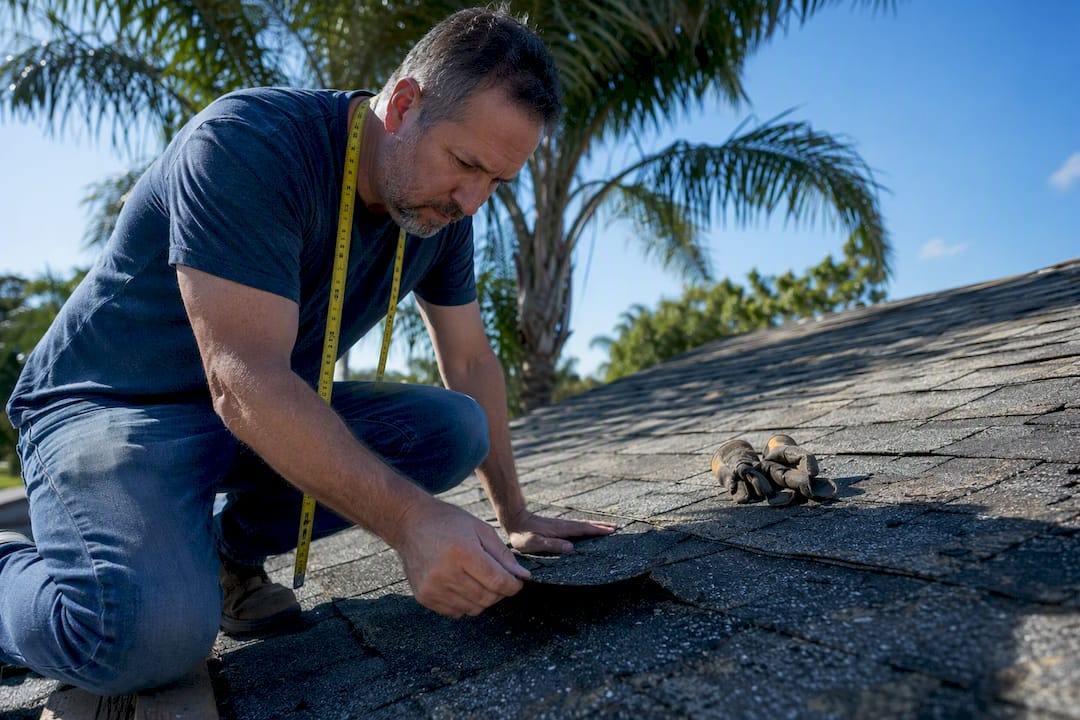
A real maintenance routine goes beyond a quick glance from the driveway. Industry inspection data and maintenance checklists consistently show that a twice-yearly inspection cadence paired with prompt repairs adds roughly 5 to 10 years of service life to an asphalt shingle roof. That is not a marginal gain. It is often the difference between replacing a roof at year 15 versus year 23.
Here is the routine broken into steps:
- Photograph the roof from all four sides before you start, plus close-ups of any suspicious areas. If you end up calling a professional, these photos speed up the assessment.
- Clean gutters and check for granule buildup in the downspouts. Heavy granule accumulation in the gutter is an early warning sign of shingle wear, even before curling or cracking shows up visually.
- Reseal lifted tabs with roofing cement designed for that purpose, applied in dime-sized dabs, not thick globs that trap moisture.
- Inspect flashing around chimneys, skylights, and roof-to-wall transitions for gaps, rust, or separation from the shingle field.
- Check pipe boots for cracking, since rubber boots around plumbing vents typically fail years before the shingles around them do, and a $15 boot replacement can prevent a $2,000 ceiling repair.
Individual tasks contribute unevenly to that overall life-added estimate. Gutter maintenance alone tends to add 2 to 4 years, while resealing or replacing damaged tabs contributes several more years, since exposed underlayment fails faster than intact shingle coverage.
Pro Tip: Keep a simple log with dates and photos every time you inspect. When a roof does eventually need professional attention, that history helps a preservation company assess wear patterns accurately instead of guessing at your roof's maintenance record.
A pro inspection becomes essential once you see soft spots underfoot, daylight through the attic decking, or granule loss heavy enough to change the shingle's color. Those are signs a visual check from the ground will miss entirely.
Why Does Attic Ventilation Affect How Long Shingles Last?
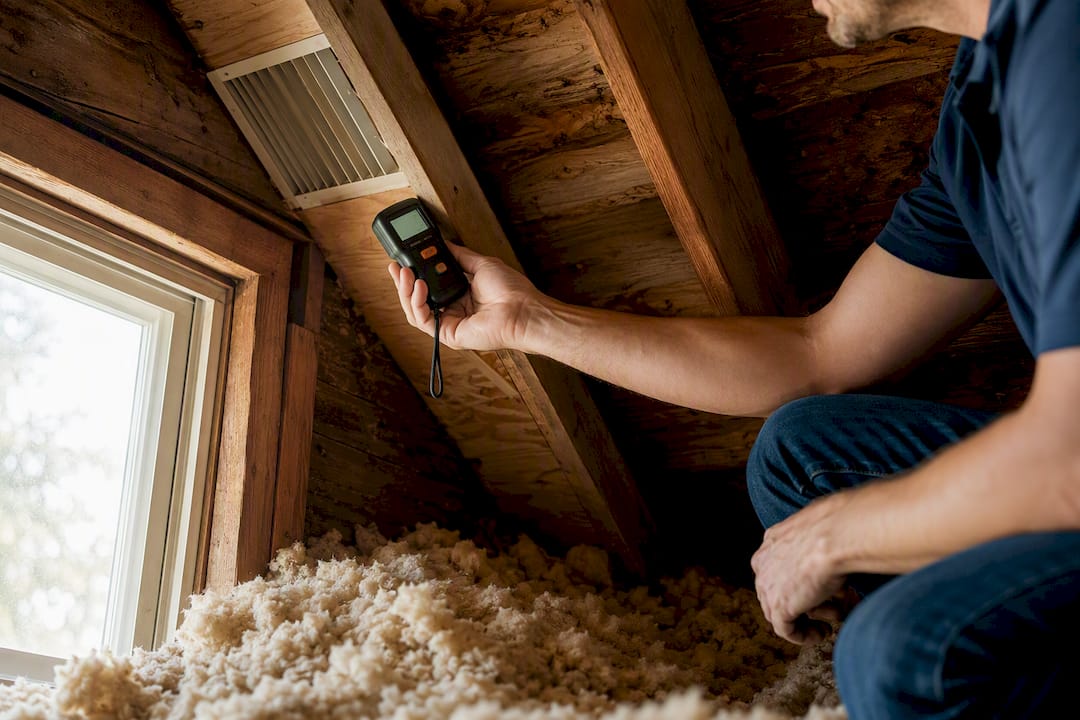
Attic heat and trapped moisture cook shingles from underneath, and most homeowners never think to look up there until there's already a stain on the ceiling. Heat that builds up under a poorly ventilated roof deck accelerates the loss of protective granules and breaks down the asphalt binder that keeps shingles flexible. Moisture compounds the damage by weakening the seal strips that hold tabs down against wind.
The IIBEC's ventilation guidance uses a net free ventilating area ratio, commonly written as 1:150, meaning one square foot of vent area for every 150 square feet of attic floor. A 1:300 ratio is allowed when a vapor barrier and balanced intake/exhaust are both present. Getting this ratio wrong is common, and it shows up in three predictable ways:
- Blocked soffit vents, often painted over or stuffed with insulation during a remodel.
- Short-circuited airflow, where ridge vents pull air from the nearest opening instead of drawing it across the whole attic.
- Insufficient total vent count, leaving intake and exhaust out of balance even when both types exist.
Many homes never meet that 1:150 standard, and correcting that shortfall frequently does more for shingle lifespan than any surface treatment applied afterward. A quick homeowner check involves feeling for excessive heat near the attic hatch on a hot afternoon and confirming that soffit vents are not blocked by insulation baffles pushed the wrong way. If the attic feels like an oven or you spot condensation on nail heads in winter, that is a ventilation and insulation problem, not a shingle problem, and it deserves a professional airflow diagnosis before anyone talks about coatings or rejuvenation.
Does Roof Rejuvenation Actually Work, and What Are Its Limits?
Rejuvenation treatments work by restoring oils and flexibility to asphalt that has dried out under years of sun exposure, not by fixing leaks or structural problems. That distinction matters more than most marketing for these products lets on. Trade reporting and lab testing summaries on soy- and corn-based spray treatments show they can restore flexibility and, on suitable roofs, contribute to condition-dependent life gains in the range of 5 to 15 years. That range is wide because it depends heavily on the roof's starting condition.
Rejuvenation should be treated as an option that follows inspection and repair, not a substitute for either one. Warranties on these treatments are typically limited to around five years and cover flexibility restoration, not leak prevention.
That caution from the National Roofing Contractors Insurance Association is worth taking seriously before signing anything. A roof that qualifies for rejuvenation generally shows these characteristics:
- Shingles are dried out and curling but not yet cracked through or missing large granule patches.
- The roof deck underneath is sound, with no soft spots or visible sagging.
- Flashing and seals are intact or easily repairable, not failing across wide areas.
- There is no active leak history tied to the shingle field itself.
Red flags that point toward replacement instead include widespread bald patches where granules have worn through to bare asphalt, cracked shingles that flex and split rather than bend, and any sign of deck rot found during inspection. Rejuvenation cannot restore a shingle that has already lost its structural integrity, and no reputable preservation company should claim otherwise.
Repair, Rejuvenate, or Replace: How Do You Decide?
The right path depends entirely on what an inspection actually finds, not on how old the roof looks from the street. Two roofs of the same age can need completely different treatments.
Replacement is the right call when:
- Bald or heavily granule-stripped areas cover multiple roof planes, not just one isolated section.
- Seal failures show up across many courses of shingles, indicating widespread aging rather than a localized issue.
- The inspection reveals deck rot, soft spots, or structural sagging.
- Flashing has failed in multiple locations with water intrusion already documented.
Repair or preservation fits when:
- Damage is limited to isolated flashing points or a handful of lifted tabs.
- The decking underneath tests solid with no rot or moisture damage.
- Granule loss is present but even, without exposed asphalt patches.
Deferring a decision rarely saves money. A roof with early-stage dryness that gets rejuvenated and maintained often costs a fraction of a full tear-off and replacement, while the same roof left untreated for another five years may cross the line into replacement territory anyway, just with added interior water damage on top of it.
What DIY Roof Care Should You Avoid?
Pressure washing tops the list of homeowner mistakes, and it is the fastest way to shorten a roof's remaining life. The concentrated spray strips away the protective granules embedded in the asphalt, and Consumer Reports notes this can also void manufacturer warranties outright.
- Skip pressure washing entirely. Use gentle rinsing or leave algae and moss removal to a professional with proper technique.
- Don't walk the roof in extreme heat. Shingles soften in high temperatures and scuff or dislodge granules underfoot.
- Don't hide leaks with sealant alone. Caulking over a symptom without finding the source lets rot spread unseen.
- Stick to safe ground-level tasks: gutter cleaning, photographic inspection with a zoom lens, and trimming back branches.
Pro Tip: If you can't see the full roof clearly from a ladder against the gutter line, don't climb higher. A pair of binoculars and patience beat a fall every time.
How Do You Vet a Roof Preservation Company?
Not every company offering rejuvenation or preservation services backs its work the same way, so ask direct questions before signing anything.
- Request a written inspection scope with photos and clear qualification criteria explaining why your roof does or doesn't qualify for preservation.
- Ask for the full warranty text, including length, whether it transfers to a new homeowner if you sell, and what it excludes.
- Confirm installer certification for the specific treatment being applied, and ask whether third-party lab testing supports the product's claims.
- Watch for red flags: pressure to sign same-day, no written inspection report, or a warranty that sounds generous but reads vague when you ask for specifics.
A company confident in its process will hand over documentation without hesitation.
A Publisher's Take on Preservation-First Roofing
Call us before you call the roofer. Our inspect, assess, and recommend process exists because most roofs still have life left in them. Fresh Roof Green Soy Technology fits condition-dependent cases, backed by certification and a transferable warranty, never a blanket sale.
— Daniellison
Get a Free Inspection Before You Spend on Replacement
Shingleroofrenewal is the alternative to jumping straight to a $15,000 to $30,000 roof replacement quote. We inspect your roof, assess its actual condition, and tell you honestly whether it qualifies for preservation using certified Green Soy Technology, before any repair conversation even starts.

This service is built for homeowners in Palm Beach and Broward counties dealing with the kind of sun and storm exposure that dries out shingles faster than almost anywhere else. Most homeowners assume replacement is their only option long before they've actually confirmed that with an inspection.
Schedule your free roof inspection today and find out exactly where your roof stands before you spend a dollar on anything.
Sources
- Are Roof Rejuvenation Products a Good Investment for Asphalt Roofs? - NRCIA
- Eco Roof Sprays Promise Longer Life, Less Waste - Roofing Contractor
- Attic Ventilation 101 | IIBEC
- Asphalt Roof Maintenance: Checklist to Extend Life - The Roofing Brief
- 5 Ways to Help Your Roof Last Longer - Consumer Reports