
TL;DR:
- South Florida roofs face rapid aging due to intense UV rays, heat cycles, heavy rains, windstorms, and humidity, which accelerate shingle deterioration. Early inspection, cleaning, sealing, and professional renewal can extend a roof's lifespan by years while avoiding costly replacements. Regular maintenance and prompt action prevent minor issues from becoming major and preserve roof integrity amidst the region's harsh climate.
Your South Florida roof is aging faster than it should — and you may not even realize it yet. The combination of relentless UV rays, summer rainstorms, and hurricane-season wind gusts puts pressure on asphalt shingles that most roofs in cooler climates simply never face. A full roof replacement can run between $15,000 and $30,000, but the good news is that most aging roofs don't need to be replaced. With the right knowledge and early action, you can extend your roof's useful life by years — sometimes a decade or more — without breaking the bank.
Table of Contents
- Why asphalt shingle roofs age quickly in South Florida
- What you need: tools, materials, and readiness checklist
- Step-by-step guide to extending your roof's lifespan
- How to know it worked: verification and ongoing maintenance
- Why most homeowners wait too long — and what actually works
- Affordable roof renewal solutions for South Florida homes
- Frequently asked questions
Key Takeaways
| Point | Details |
|---|---|
| Florida roofs age fast | Extreme sunlight and weather shorten asphalt shingle roof lifespan compared to other regions. |
| Preventive care saves money | Routine inspections and early fixes can add years to your roof and save thousands compared to early replacement. |
| DIY and pro solutions | Most South Florida homeowners can handle basic upkeep, but pro renewal services can dramatically boost results. |
| Verification matters | Testing your roof after maintenance ensures leaks and damage are caught before they become expensive. |
Why asphalt shingle roofs age quickly in South Florida
South Florida is not kind to roofing materials. The climate here is genuinely one of the harshest in the country for asphalt shingles, and understanding why helps you take better action.
The main climate threats your roof faces:
- Extreme UV exposure. Florida averages more than 230 sunny days per year. Constant UV radiation breaks down the oils inside asphalt shingles, causing them to dry out, become brittle, and crack.
- Heat cycles. Roof surfaces in South Florida can reach 160 to 180 degrees Fahrenheit on a summer afternoon. That daily expansion and contraction weakens the shingle structure over time.
- Heavy seasonal rains. South Florida's wet season brings intense downpours that can strip granules (the small protective particles embedded in shingles) and push water under loose or cracked shingles.
- Windstorms and hurricanes. High winds lift shingle edges, break seals, and can completely tear off shingles, leaving the roof deck exposed.
- Humidity and algae. Constant moisture encourages algae and mold growth, which discolors shingles and accelerates material breakdown.
As noted in research on Florida roof wear factors, harsh UV exposure and heavy rains accelerate shingle wear significantly in Florida compared to other regions. A shingle roof that might last 25 to 30 years in the Midwest could show serious signs of aging after just 12 to 15 years in Broward or Palm Beach County.
The critical mistake: Many homeowners only notice the damage after a leak appears inside the home. By that point, water has already been working its way through the roof deck, insulation, and potentially into walls. Catching problems early costs a fraction of what late-stage repairs demand.
When granules start washing off shingles in noticeable amounts, that's your roof sending a clear warning. When shingles start curling at the edges or cracking down the center, the clock is ticking. Ignoring these signs does not make them go away. It just makes the eventual repair more expensive.
Now that you know why your roof may be showing its age, let's see what you need before getting started.
What you need: tools, materials, and readiness checklist
Before you climb on the roof or hire anyone to do so, preparation matters. Having the right tools and asking the right readiness questions protects you from injury and ensures the work actually gets done correctly.
Basic tools and materials checklist:
- Work gloves and non-slip rubber-soled boots
- Safety harness and anchor point (essential for Florida's steep-pitch roofs)
- Sturdy extension ladder
- Garden hose with adjustable nozzle
- Mild biodegradable roof cleaner (avoid bleach-heavy products that strip granules)
- Roofing caulk or sealant for flashings and small gaps
- Pry bar for removing damaged shingles
- Replacement shingles that match your existing color and style
- Roof coating product (optional but highly recommended for added UV and water protection)
Readiness questions to ask yourself first:
- Is the roof surface safe to walk on? Wet or algae-covered shingles are extremely slippery.
- Has your area experienced a major storm recently? If yes, have an inspection done before DIY work.
- Do you see any sagging areas on the roof line from the ground? Sagging can indicate structural issues that require professional evaluation.
Regular roof maintenance done with the right tools can dramatically prolong roof lifespan. The key is not waiting until a problem forces your hand.
| Material/Tool | Purpose | Estimated cost |
|---|---|---|
| Safety harness and anchor | Prevent falls on pitched roof | $60 to $120 |
| Roofing caulk and sealant | Seal gaps around vents and flashings | $10 to $25 |
| Replacement shingles (bundle) | Swap out cracked or missing shingles | $30 to $60 |
| Mild roof cleaner | Remove algae, mold, and debris | $20 to $40 |
| Roof coating | UV protection and water resistance | $80 to $200 |
Best time to do this work in Florida: The dry season, which runs from late October through April, is your ideal window. Lower humidity, fewer afternoon thunderstorms, and cooler morning temperatures make roof work safer and more effective. Avoid summer months if possible, especially during active hurricane season.
Pro Tip: Always check the weather forecast for a minimum of three dry days before applying any sealant or coating. Florida's pop-up afternoon storms can ruin fresh applications and waste materials.
Once you have the right tools and prep work done, follow this practical, step-by-step guide.
Step-by-step guide to extending your roof's lifespan
This is where the real work happens. These steps are organized in order of priority so you get the most protection for your time and money.
Step 1: Inspect for damage and take immediate action
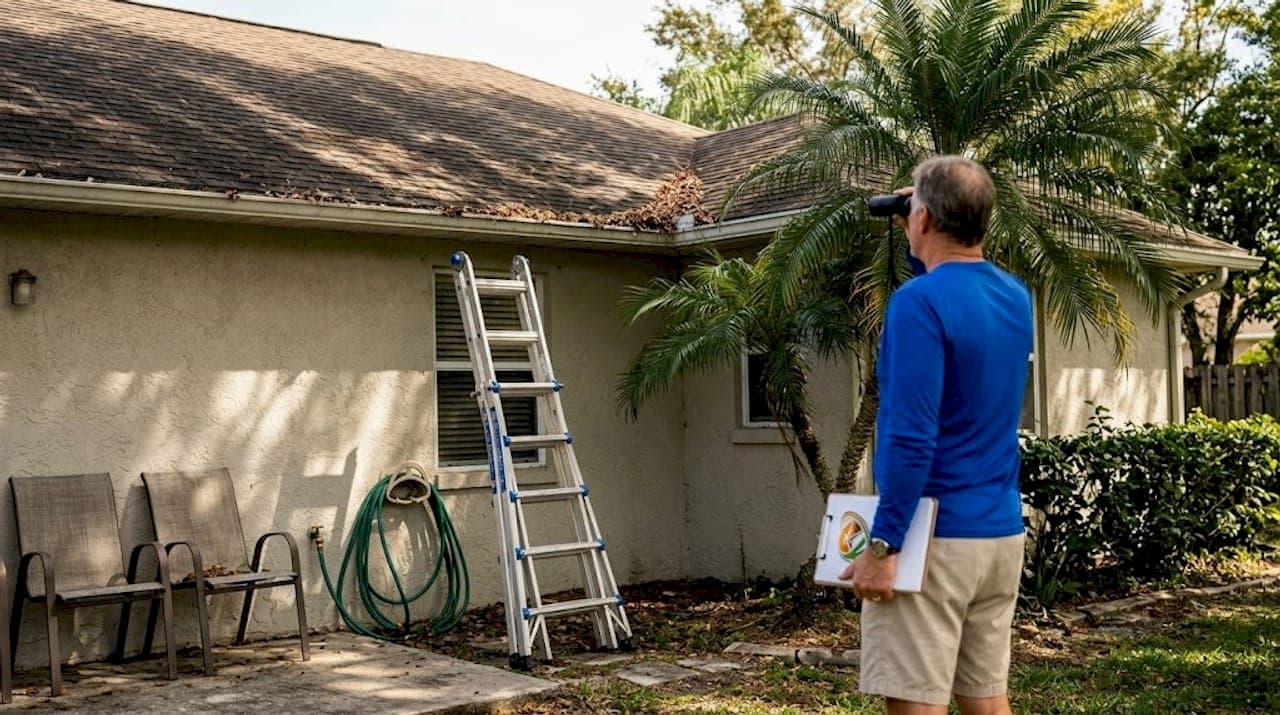
Start at ground level. Walk around your home and look at the roofline from multiple angles. Use binoculars if needed. Look for missing shingles, curling edges, cracked shingle faces, and visible gaps around chimneys, vents, or where two roof planes meet (these are called flashings).
Then get up on the roof carefully. Check each flashing with your hand. It should be flat, sealed, and have no raised edges. Push lightly on shingles. A healthy shingle feels firm. A shingle that crumbles or feels brittle needs to be replaced. Following solid roof inspection tips during this phase helps you avoid missing small problems that grow into large ones.
Step 2: Clean the roof and gutters thoroughly
Debris buildup traps moisture. Leaves, dirt, and algae sitting on your shingles for extended periods speed up deterioration. Use your garden hose and a mild biodegradable cleaner to rinse the surface gently. Never use a pressure washer on asphalt shingles. The force strips granules directly off the surface.
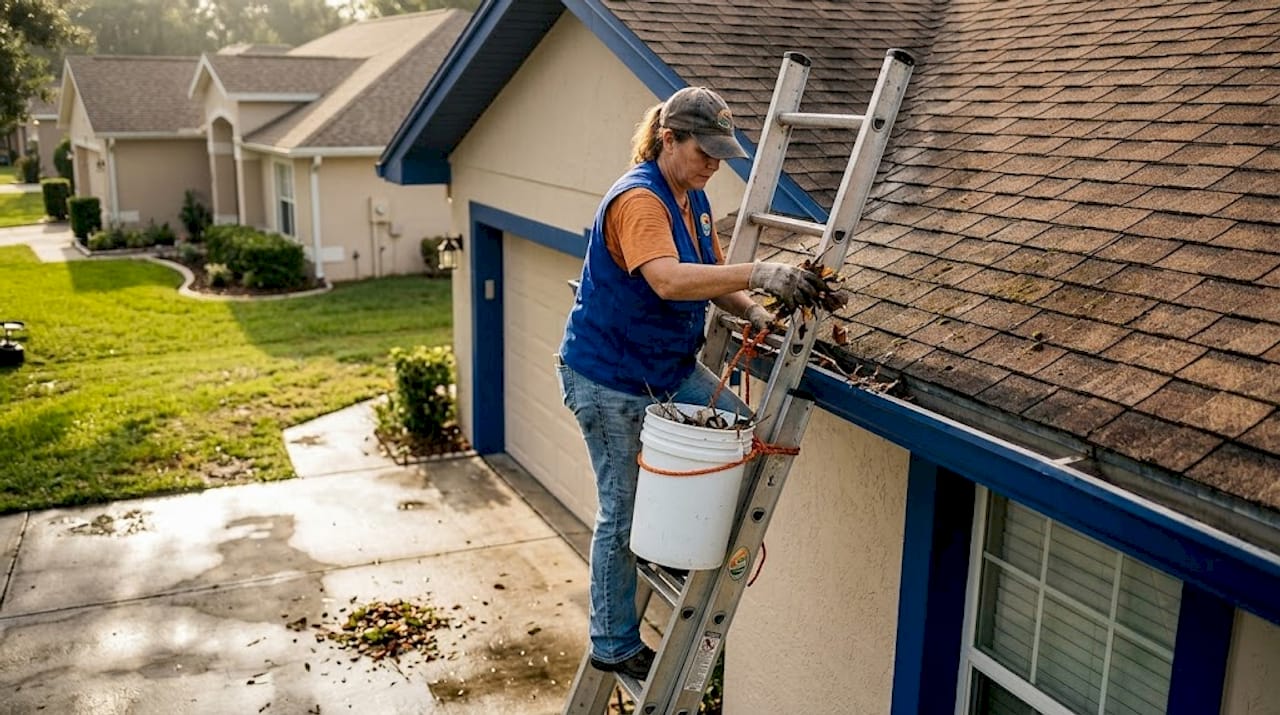
While you're at it, clean your gutters completely. Clogged gutters cause water to back up under the roof edge, a condition called ice damming in colder climates and simply called "roof edge moisture damage" in Florida. Either way, it rots the fascia boards and can push water under your starter shingles.
Step 3: Seal, repair, and apply protective coating
Replace any shingles that are cracked, missing, or badly curled. Use roofing caulk to seal any small gaps around vents, pipe boots, and flashing edges. This is the most cost-effective step you can take. A $12 tube of roofing caulk can prevent a $3,000 water intrusion repair.
Once repairs are complete, consider applying a professional-grade roof coating. These products add a layer of UV protection and water resistance that significantly slows further shingle degradation. As shown in cost-effective roof care steps, cost-effective care can genuinely add years to your roof's life and save thousands compared to premature replacement.
For roofs that have significant granule loss or shingle dryness, a three-step renewal process can restore shingle flexibility and weatherproofing in ways that standard coatings cannot match.
DIY vs. professional maintenance comparison:
| Factor | DIY maintenance | Professional service |
|---|---|---|
| Upfront cost | $150 to $400 | $500 to $3,000+ |
| Time required | 1 to 2 full days | 4 to 8 hours |
| Results quality | Good for minor issues | Best for widespread wear |
| Warranty coverage | None | Often backed by warranty |
| Long-term ROI | Moderate | High (adds 5 to 15 years) |
Pro Tip: If your roof is 10 years or older and showing signs of widespread granule loss or brittleness, skip the basic DIY path and go straight to a professional renewal assessment. The cost difference between an early professional renewal and a late-stage emergency repair is substantial.
"Investing a few hundred dollars in professional roof renewal now can save you $20,000 or more in replacement costs later. The math is simple — but most homeowners only see it after it's too late." — Shingle Roof Renewal
With the main steps complete, it's important to know how to double-check your work and keep your roof in top shape.
How to know it worked: verification and ongoing maintenance
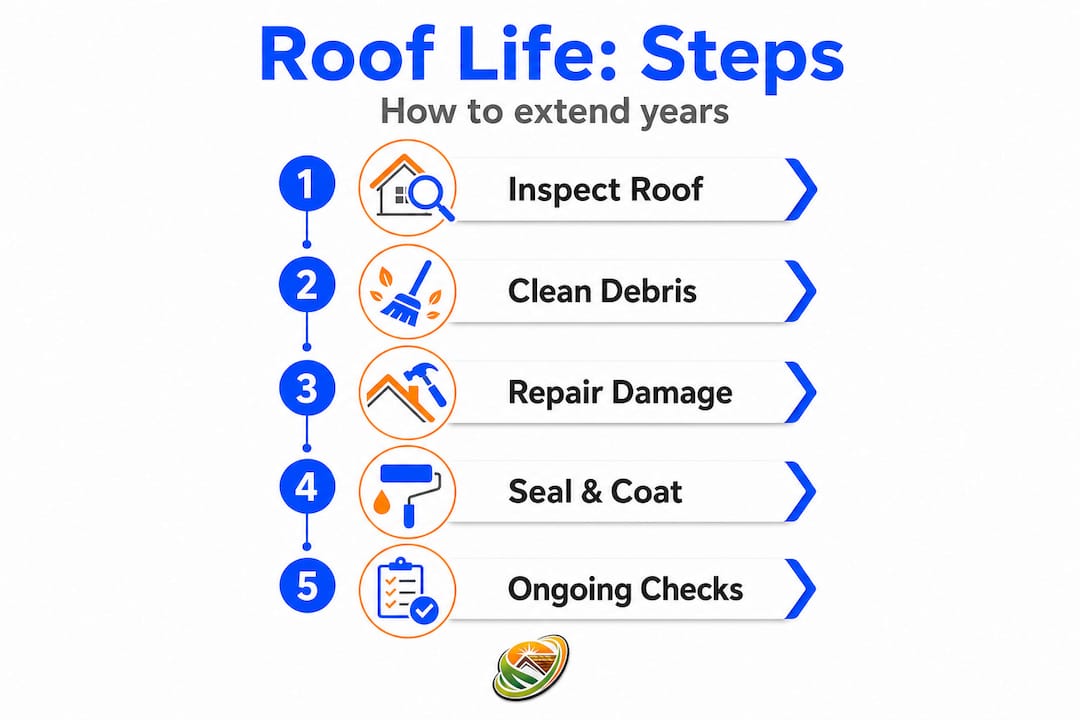
Once you've completed your inspection, cleaning, and repairs, you need to verify the work actually achieved something. Good intentions don't protect your home. Results do.
Signs your efforts are working:
- No water stains appear on ceilings or walls after the next heavy rain
- Shingles lie flat with no raised edges or curling visible from the ground
- Sealant around all vents and flashings is smooth, uncracked, and fully adhered
- Gutters drain cleanly without water spilling over the sides
- No new granule deposits accumulating in gutters or downspouts after storms
Simple verification tests:
- After a heavy rain, walk through your attic with a flashlight and look for any daylight coming through the roof deck or wet spots on the wood.
- Run your garden hose over one section of roof for a few minutes and have someone check the attic from inside during that time.
As emphasized in research on roof care for longevity, regular inspections and timely touch-ups are the single most effective habit for extending shingle roof life. That one habit, consistently practiced, does more than any single repair job.
Ongoing maintenance schedule for South Florida homeowners:
| Task | Frequency | Season |
|---|---|---|
| Visual inspection from ground | Monthly | Year-round |
| Full roof and gutter cleaning | Twice per year | Spring and fall |
| Professional inspection | Once per year | Before hurricane season |
| Sealant and caulk check | Once per year | Dry season |
| Shingle condition assessment | Every 2 to 3 years | Dry season |
When should you call a professional? If you find soft spots on the roof deck, multiple layers of cracked shingles, or any signs of structural sagging, contact a certified roofing professional immediately. A roof value assessment from a trained expert can tell you exactly where your roof stands and what the most cost-effective path forward looks like.
You're almost an expert. Here's the deeper truth about extending roof life in South Florida, from our experience in the field.
Why most homeowners wait too long — and what actually works
We've inspected thousands of roofs in Broward and Palm Beach County. There is one pattern we see over and over again. Homeowners know something looks off. Maybe the shingles look faded. Maybe granules keep showing up in the gutters. But they wait. They tell themselves it's cosmetic. They figure they'll deal with it after the holidays, or after summer, or when they have more time.
Then a storm hits. Or a slow leak finally soaks through the ceiling drywall. And suddenly that $800 maintenance job has become a $25,000 decision.
This is the uncomfortable truth about roof care in South Florida. The gap between "needs attention" and "needs full replacement" is not as wide as most homeowners think. And the climate here compresses that timeline faster than anywhere else in the country.
The conventional wisdom is to wait for visible problems before spending money on the roof. We think that's exactly backwards. Timely intervention is consistently more cost-effective than waiting for serious problems to develop. Small investments in inspection and early repair are where the biggest savings actually live.
There's also a persistent myth that once shingles start cracking or losing granules, replacement is the only answer. That's simply not true for most roofs. Shingles that have lost flexibility due to UV and heat damage can often be restored at the molecular level using advanced technologies like GreenSoy Technology. This isn't just a surface coating. It actually rebuilds the oils inside the shingle material, restoring shingle flexibility and extending weatherproofing performance significantly.
The homeowners who come out ahead financially are not the ones who spend the most. They're the ones who act early, maintain consistently, and choose professional renewal before the damage reaches the point of no return.
Affordable roof renewal solutions for South Florida homes
If your roof is showing signs of wear but hasn't failed yet, you're in the best possible position to save money.
At Shingle Roof Renewal, our shingle roof renewal services are built specifically for homes in Broward and Palm Beach County. We use certified GreenSoy Technology to restore your existing shingles rather than replace them, which means savings of up to 80% compared to a full replacement — all backed by a 6-year transferable warranty. Our process starts with a free inspection and honest assessment of your roof's condition. Explore our professional roof care solutions to see what's possible for your home. We also serve specific communities including Boca Raton roof renewal, Delray Beach roof renewal, and Plantation roof renewal. Schedule your free roof inspection today and find out if your roof qualifies before small problems turn into big ones.
Frequently asked questions
How much life can I realistically add to my shingle roof with maintenance?
With proper maintenance and timely repairs, most asphalt shingle roofs in South Florida can gain 5 to 10 additional years of useful life. Professional renewal treatments that extend roof life can push that figure even higher when applied early enough.
Is roof coating or sealant worth it in humid Florida climates?
Yes, absolutely. High-quality roof coatings add a layer of UV protection and water resistance that standard shingles lose over time, and research confirms that roof coatings preserve performance specifically in South Florida's demanding climate. They are a smart, low-cost investment when applied before major deterioration sets in.
How often should I inspect my roof for best results?
Inspect your roof at least twice per year, plus after any major storm. Frequent inspections are especially important in Florida because weather events can cause damage that isn't immediately visible from inside the home.
What are the signs I should call a professional instead of DIY?
If you notice wide cracks, active leaks, sagging roof sections, or large areas of missing granules, it's time to call a certified professional rather than attempt repairs yourself. A proper professional assessment ensures severe damage is diagnosed accurately and addressed before it spreads to the roof deck or interior structure.