
TL;DR:
- Florida's climate causes asphalt shingles to degrade rapidly, often failing within 10-15 years.
- Proactive maintenance, inspections, and renewal treatments can extend roof life significantly.
- Proper care and timely intervention are more effective than simply upgrading to premium shingles.
Your asphalt shingle roof may be failing years before you realize it. In South Florida, shingle roofs lose significant wind resistance after just 10 years due to UV degradation and storm exposure. That's a sobering reality for homeowners in Broward and Palm Beach County who assume their roof has years of protection left. The good news is that with the right knowledge and timely action, you can extend your roof's useful life, avoid a premature replacement, and protect your home without spending $15,000 to $30,000 before you have to.
Table of Contents
- Why asphalt roofs fail prematurely in Florida
- How aging shingle roofs lose wind and water protection
- Are modern shingle roofs really better? Separating hype from evidence
- Cost-effective ways to extend your roof's life before replacement
- Why Florida shingle roof failure is a maintenance, not just a material, problem
- Cost-saving roof renewal options in South Florida
- Frequently asked questions
Key Takeaways
| Point | Details |
|---|---|
| Florida roofs fail faster | Sun, heat, and storms cause shingle roofs to degrade in as little as 10-15 years. |
| Maintenance extends roof life | Regular inspections and professional treatments can add valuable years to your roof before replacement is needed. |
| Modern shingles offer limited gains | Independent hurricane studies show minor improvements in newer shingle products since 2004. |
| Know when to replace | After 15-18 years, most Florida asphalt roofs should be evaluated for full replacement, not just patch repairs. |
Why asphalt roofs fail prematurely in Florida
Now that you've seen how fragile some roofs can be, let's dig into exactly why shingle roofs in Florida have such a short life.
Florida is one of the harshest environments on earth for asphalt shingles. The combination of intense UV radiation, extreme heat, humidity, and hurricane-force winds creates a relentless cycle of stress that breaks shingles down from the outside in. Understanding how Florida's climate affects roofs is the first step toward protecting yours.
Here are the main forces working against your roof every single day:
- UV radiation: South Florida receives some of the highest UV exposure in the continental United States. UV rays break down the oils and polymers inside asphalt shingles, making them brittle and stiff over time.
- Heat cycling: Temperatures on a dark shingle surface can exceed 160°F on a summer afternoon. Every day, shingles expand in the heat and contract at night. This repeated movement loosens granules and weakens adhesive sealant strips.
- High winds and storms: Hurricane-force winds peel shingles at their edges, especially when sealant strips have dried out. Even tropical storms with sustained winds of 60 to 80 mph can lift tabs and allow water intrusion.
- Humidity and algae: South Florida's humidity creates ideal conditions for algae and mold growth. Black algae streaks are more than cosmetic. They trap moisture against the shingle surface, accelerating granule loss and softening the mat underneath.
- Heavy rain: Frequent heavy rainfall drives water under loose or cracked shingles, soaking the underlayment and eventually reaching the decking below.
"Asphalt shingle roofs in Florida lose significant wind resistance after 10 years due to UV degradation and environmental exposure, failing to protect against hurricane winds over 100 mph." — Palm Beach Post
The numbers are stark. Research shows that roughly 50% of shingle roofs fail during major hurricanes if they are over 10 years old. That's not a worst-case scenario. That's the documented pattern across multiple storm seasons in Florida. Your roof's age is not just a number. It's a risk factor.
The bottom line is that Florida's climate accelerates every form of shingle deterioration simultaneously. A roof that might last 25 years in a mild northern climate may reach the end of its functional life in 12 to 15 years here.
How aging shingle roofs lose wind and water protection
Understanding the causes is only the first step. Knowing how roof failure actually unfolds helps you spot problems before they turn expensive.
Shingle failure doesn't happen overnight. It follows a predictable sequence, and each stage leaves visible clues if you know what to look for. Here's how the decline typically progresses:
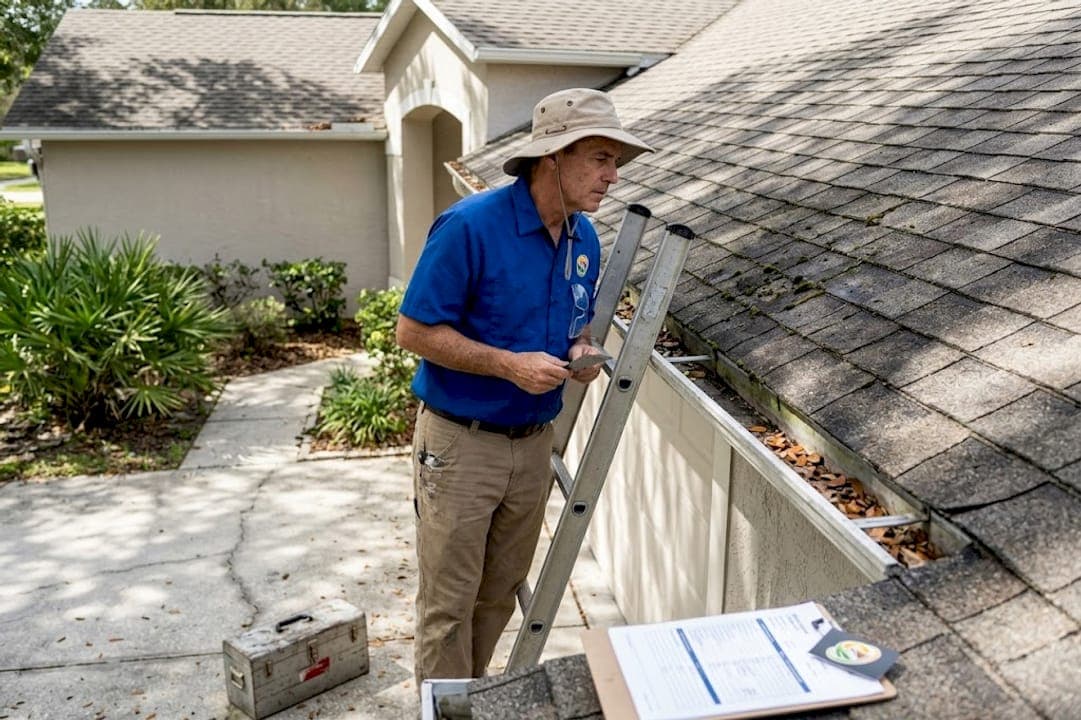
- Granule loss begins. Granules are the small mineral particles embedded in the surface of every asphalt shingle. They protect the asphalt layer beneath from UV exposure. As granules wash away, the dark asphalt underneath absorbs more heat, softens, and degrades faster. You'll notice granules collecting in your gutters.
- Sealant strips dry out. Each shingle has a factory-applied adhesive strip along its lower edge that bonds it to the shingle below. Florida's heat causes these strips to dry and lose adhesion within 10 to 12 years. Once sealant fails, shingle tabs become vulnerable to wind uplift.
- Cracking and curling appear. Without flexible oils in the asphalt, shingles become rigid and begin to crack under thermal stress. Edges curl upward (cupping) or downward (clawing), creating gaps where wind and water can enter.
- Tabs become loose or missing. Loose tabs are a direct path to water intrusion. During a storm, a single missing shingle can allow enough water in to damage insulation, drywall, and framing within hours.
- Underlayment and decking become compromised. Once water reaches the underlayment repeatedly, it breaks down. Decking begins to rot or delaminate, and at that point, you're no longer dealing with a shingle problem. You're dealing with a structural one.
Use a roof inspection checklist to track these warning signs systematically, and follow a damage assessment workflow if you suspect your roof is already in decline.
Once a shingle roof reaches stage 3 or 4 of this decline, patching individual shingles buys only limited time. The underlying material has already lost its structural integrity.
Pro Tip: After any storm with winds above 50 mph, walk your property and check your gutters for an unusual amount of granules. A significant increase in granule runoff is one of the earliest and most reliable signs that your shingles are aging out of their protective window.
The key insight here is timing. Catching the problem at stage 1 or 2 gives you real options. Waiting until stage 4 or 5 forces your hand toward full replacement, often at the worst possible moment financially.
Are modern shingle roofs really better? Separating hype from evidence
But does replacing or restoring with newer technology really protect better? Let's see what the science and claims reveal.
Shingle manufacturers have made significant marketing investments in recent years, promoting impact-resistant shingles, enhanced polymer blends, and improved sealant formulations. The pitch sounds compelling: newer shingles are engineered to withstand Florida's climate better than ever before.
The reality is more complicated.
| Feature | Manufacturer claims | Independent findings |
|---|---|---|
| Sealant adhesion | Improved bonding in heat | Minimal gains in wind uplift after 10 years |
| Impact resistance | Class 4 rated shingles available | Performance degrades significantly with age |
| UV protection | Enhanced polymer blends | Still loses flexibility within 10-12 years in FL |
| Hurricane performance | Rated for 130+ mph winds | IBHS data shows minimal advancement since 2004 |
The Insurance Institute for Business and Home Safety studied roof performance after Hurricane Ian in 2022. Their findings were clear: empirical data shows minimal advancement in real-world shingle performance since 2004 in high-wind zones. A newer shingle installed today may carry a better warranty on paper, but its actual resistance to Florida's conditions follows a similar degradation curve as older products.
This doesn't mean newer shingles are worthless. Some sealant improvements do offer modest gains in the first few years after installation. But the idea that you can install a premium shingle and then ignore maintenance for 20 years is simply not supported by the evidence.
What the data does support is this: maintenance is the variable that matters most. Roofs that receive regular inspections, cleaning, and timely treatment consistently outperform neglected roofs of the same age and material, regardless of shingle brand.
Pro Tip: Don't let a roofing contractor sell you on a premium shingle upgrade as a substitute for a maintenance plan. The shingle brand matters far less than what you do to protect it over time. Learn more about shingle roof risks in FL before making any investment decision.
The honest takeaway is that if your roof is under 15 years old and structurally sound, the most cost-effective path forward is almost always maintenance and renewal rather than full replacement.
Cost-effective ways to extend your roof's life before replacement
With realistic expectations in mind, here's what you can do right now to get the most value and years from your current roof.
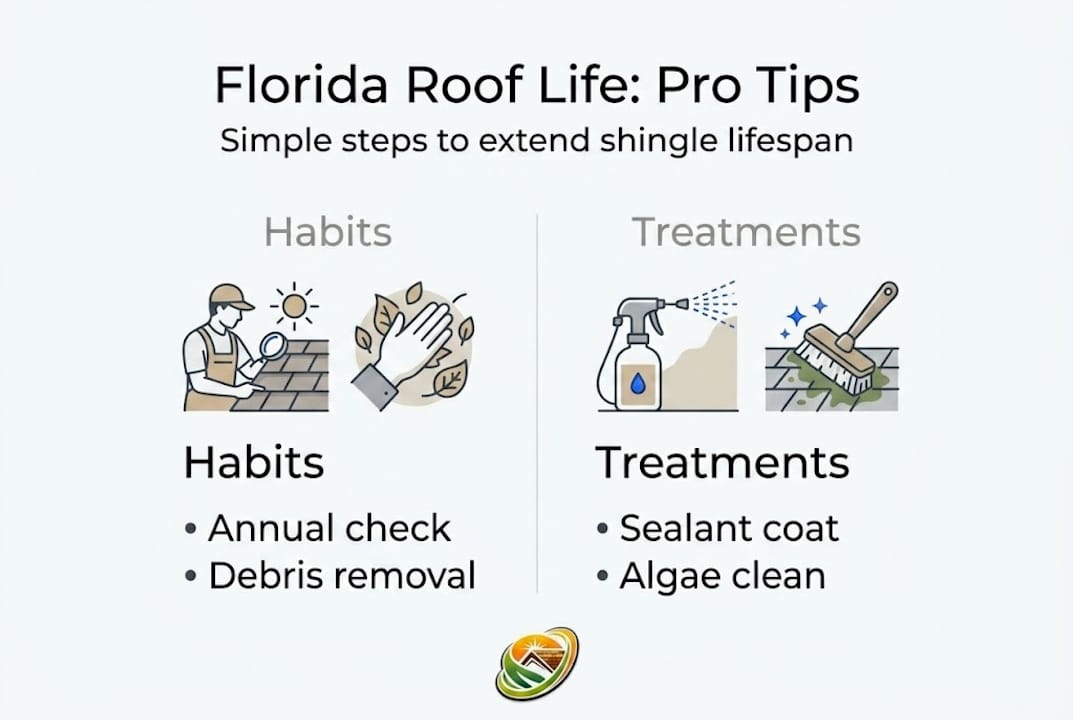
The good news is that proactive maintenance genuinely works. Homeowners who follow a consistent care routine can add meaningful years to a roof that might otherwise need early replacement. Here's what that looks like in practice:
Routine cleaning and algae removal
Algae and mold growth are extremely common in South Florida and cause more damage than most homeowners realize. A professional soft-wash cleaning removes biological growth without damaging granules the way pressure washing can. This should be done every 12 to 18 months in humid climates like ours.
Regular professional inspections
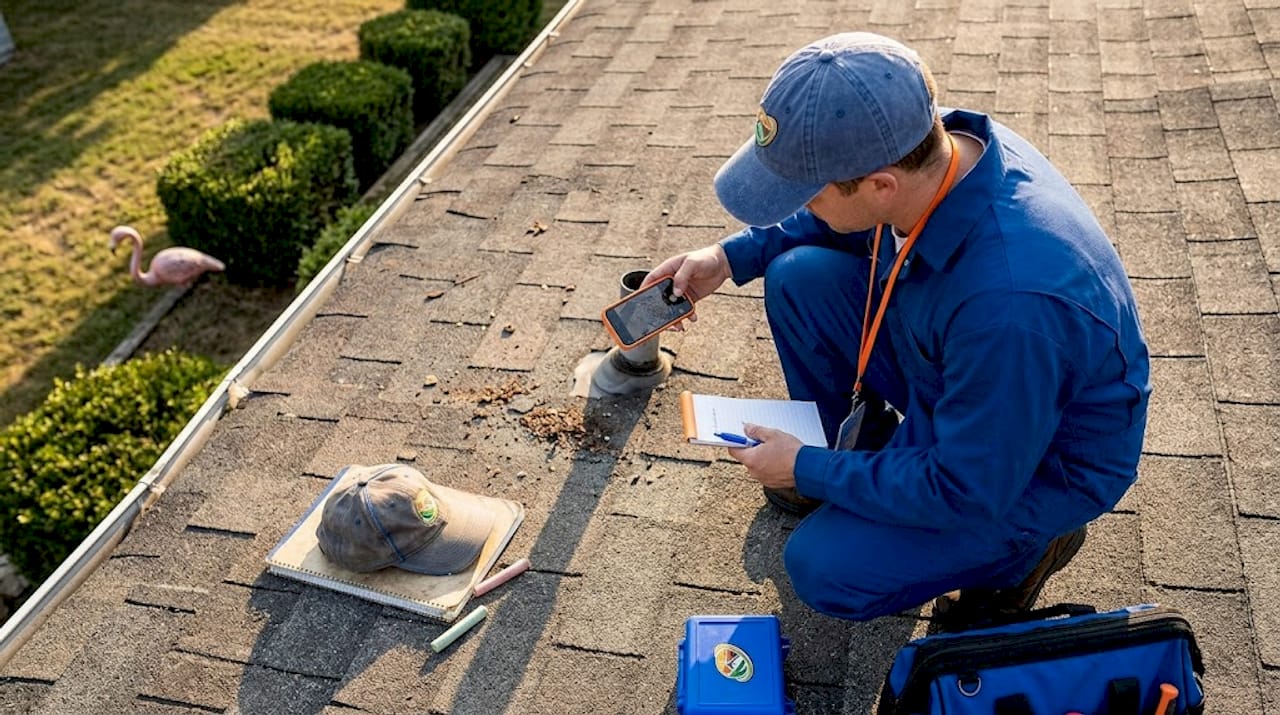
An annual professional inspection catches problems at stage 1 or 2 of the decline sequence described earlier. Early detection of cracked flashing, failed sealant strips, or granule loss gives you time to address the issue affordably, before water intrusion forces emergency repairs.
Maintenance coatings and sealant treatments
This is where significant value can be added. Modern maintenance coatings, including advanced renewal treatments, can restore flexibility to dried-out shingles and re-seal vulnerable areas. According to IBHS research on hurricane performance, maintenance is viable for roofs under 15 to 18 years old, after which replacement planning should begin.
| Roof age | Recommended action | Expected benefit |
|---|---|---|
| Under 10 years | Annual inspection and cleaning | Maintain peak performance |
| 10 to 15 years | Inspection, cleaning, renewal treatment | Add 5 to 10 years of useful life |
| 15 to 18 years | Professional assessment required | Renewal possible if structure is sound |
| Over 18 years | Plan for replacement | Maintenance offers limited return |
Warning signs that mean replacement, not repair:
- Widespread curling or cupping across multiple roof sections
- Missing shingles in multiple locations after a single storm
- Active leaks in more than one area of the home
- Soft or spongy decking when walking on the roof
- Visible daylight through the attic
- Roof age over 18 years with no prior maintenance history
Pro Tip: Before committing to a full replacement, get a professional renewal assessment. Many homeowners in Broward and Palm Beach County are surprised to learn their roof qualifies for restoration instead of replacement. A proper roof assessment process takes less than an hour and can save you tens of thousands of dollars.
The goal is to act before the problem forces your hand. Homeowners who wait until a major leak or storm damage appears consistently pay more, have fewer options, and face longer repair timelines.
Why Florida shingle roof failure is a maintenance, not just a material, problem
Here's a perspective we've developed after working with hundreds of homeowners across Broward and Palm Beach County: most roof failures we see were preventable. Not because the homeowner bought the wrong shingles, but because no one told them that shingles need active care to survive Florida's climate.
The roofing industry tends to focus on product upgrades. New shingle. Better warranty. Higher rating. But as IBHS data confirms, the real-world performance gap between premium and standard shingles is far smaller than the marketing suggests. What actually separates a roof that lasts 18 years from one that fails at 11 is consistent, informed maintenance.
We've seen homeowners spend $25,000 on a new roof and then neglect it for five years, only to face the same algae growth, granule loss, and sealant failure they had before. Conversely, we've helped homeowners extend a 12-year-old roof by a decade through timely renewal and care, saving them from a replacement they couldn't afford.
The uncomfortable truth is this: your shingle brand matters far less than your maintenance decisions. Focusing on smart renewal in Florida means asking the right questions early, acting before damage compounds, and choosing treatments that address the root cause of shingle aging rather than just patching symptoms.
Cost-saving roof renewal options in South Florida
If this article has shown you anything, it's that timing and maintenance are everything when it comes to your roof's lifespan.
At Shingle Roof Renewal, we specialize in helping South Florida homeowners get more life from their existing roofs. Our shingle roof renewal services use certified GreenSoy Technology to restore shingle flexibility at the molecular level, stopping deterioration before it forces a full replacement. Unlike standard rejuvenation products, our approach goes deeper. You can learn exactly how we compare in our Fresh Roof vs rejuvenation breakdown. If your roof qualifies, you could save up to 80% compared to replacement, backed by a 6-year transferable warranty. Schedule your free inspection today.
Frequently asked questions
How long do asphalt shingle roofs typically last in Florida?
In Florida, asphalt shingle roofs often start losing critical wind resistance after about 10 years and should be carefully maintained or replaced within 15 to 18 years, as UV degradation significantly reduces performance well before the manufacturer's rated lifespan.
What's the number one reason roofs fail early in South Florida?
The primary cause is UV damage and extreme heat that break down shingle oils and sealant strips, with UV and storm exposure working together to accelerate every form of shingle deterioration simultaneously.
Can I restore my old shingle roof instead of replacing it?
In many cases, professional cleaning and modern maintenance treatments can extend roof life by several years if the roof is under 18 years old and structurally sound, as maintenance remains viable up to that threshold before replacement planning should begin.
Do new shingles and sealants actually protect better in Florida storms?
While some improvements exist, recent hurricane data shows that shingle performance gains since 2004 have been minimal in high-risk areas, meaning maintenance matters more than shingle brand in real-world conditions.
How do I know if my roof needs replacement instead of repair?
Signs like widespread curling, missing shingles across multiple areas, active leaks in more than one location, or a roof age over 18 years with no maintenance history all indicate that replacement is the more appropriate path forward.