
TL;DR:
- Estimating a new roof's cost requires measuring the true roof surface area, considering material and labor costs, especially in hurricane zones. Homeowners should obtain multiple bids, understand local code requirements, and evaluate renewal options to avoid unnecessary expenses. Proper inspection before replacement helps homeowners make informed decisions and potentially save thousands of dollars.
Estimating the cost of a new roof means calculating your roof's true surface area, selecting materials that meet South Florida's High Velocity Hurricane Zone (HVHZ) standards, and accounting for labor, permits, and tear-off fees. A full roof replacement in Florida typically costs between $9,000 and $28,000 for a standard 2,000-square-foot home with architectural asphalt shingles. That range is wide because local building codes, roof complexity, and material choices all push the number in different directions. Knowing how to estimate roofing expenses before you call a contractor puts you in control of the conversation and protects you from overpaying.
What factors determine the total cost of a new roof in South Florida?
Roof size is the single biggest driver of replacement cost. A larger roof requires more materials and more labor hours, and the relationship is not linear. Complexity adds cost faster than raw square footage.
Material type shapes both the upfront price and the long-term value of your investment:
- Architectural asphalt shingles: The most affordable option, running $12,000–$18,000 for an average 2,000-square-foot home. They carry a lifespan of 20–30 years in South Florida's climate.
- Metal roofing: More durable against wind and heat, but priced significantly higher. Metal roofs often qualify for insurance discounts in HVHZ zones.
- Concrete or clay tile: The most expensive option, costing $25,000–$45,000 for the same home size. Tile lasts 40–50 years but adds structural load.
Miami-Dade and Broward counties sit inside the HVHZ, and that designation adds real money to every project. HVHZ code requirements push costs 20–30% higher than the state average. Every material, fastener, and installation method must meet stricter wind resistance standards.
Florida law also requires a complete tear-off of old shingles before any new roof goes down. That tear-off adds $1,000–$3,000 to the total, plus permit fees and waste disposal. Roof pitch matters too. A steep roof above an 8/12 slope increases labor costs by 20–40% because workers move slower and need additional safety equipment.
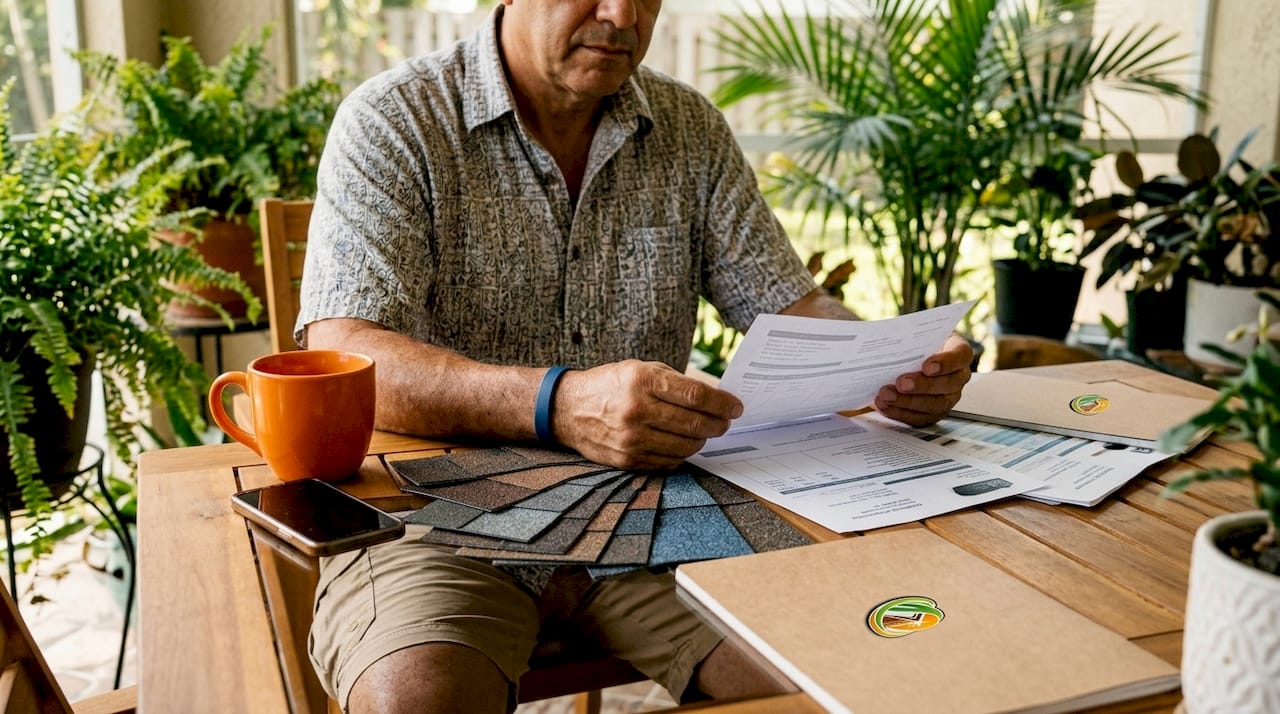
One cost most homeowners miss entirely is wood deck repair. Once the old shingles come off, contractors inspect the plywood decking underneath. Damaged or rotted sheets run $70–$120 per 4×8 sheet, and significant rot can push your final bill well above the original estimate.
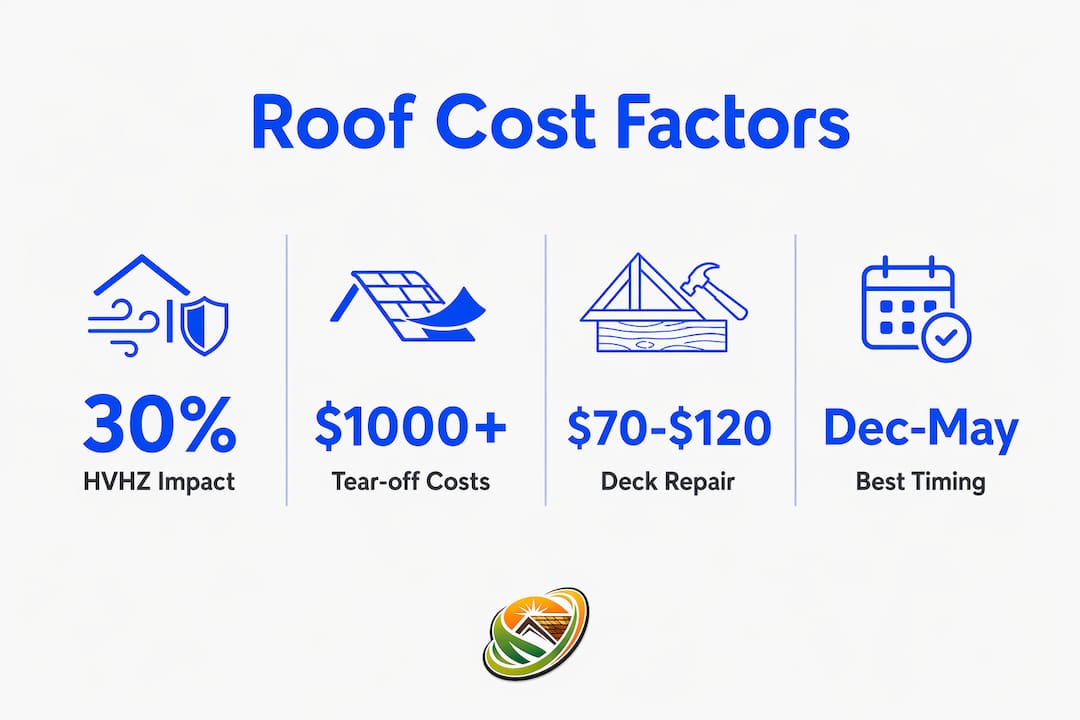
Pro Tip: Schedule your roof project between december and may. Hurricane season runs june through november, and seasonal demand can raise prices by 10–15%. Off-season scheduling gives you better pricing and faster contractor availability.
How do you measure your roof size for an accurate estimate?
Your home's square footage and your roof's actual surface area are not the same number. A 2,000-square-foot home can have 22–32 roofing squares of actual roof surface, where one roofing square equals 100 square feet. Pitch and overhangs account for the difference.
The pitch multiplier is the key concept here. A flat roof has a multiplier of 1.0, meaning the roof area equals the footprint. A steep 12/12 pitch carries a multiplier near 1.41. Roof pitch alone can add 10–60% to your home's footprint area, depending on slope and complexity.
Three practical methods exist for measuring your roof:
- Satellite measurement tools: Free online tools use aerial imagery to calculate roof area within a reasonable margin. Accuracy is generally good for simple gable roofs but less reliable for complex multi-plane designs.
- Existing roof plans or permits: If your home has building permits on file with your county, the roof plan may already list the square footage. Broward and Palm Beach county permit offices maintain these records online.
- Manual approximation: Measure your home's footprint from the ground (length × width), then multiply by the appropriate pitch factor. Add 10% for overhangs and waste.
| Measurement method | Equipment needed | Accuracy level | Best for |
|---|---|---|---|
| Satellite tool | Internet access | Moderate | Simple roof shapes |
| Existing roof plans | County permit records | High | Permitted homes |
| Manual approximation | Tape measure | Low to moderate | Quick budgeting |
| Professional measurement | Contractor visit | Highest | Final bid preparation |
Pro Tip: Use the roof inspection tools guide from Shingleroofrenewal to understand what contractors look for when they measure your roof. Knowing the process helps you verify their numbers.
How do you use a roofing cost calculator and evaluate contractor bids?
A roofing cost calculator works by multiplying your roof's square footage by a per-square material and labor rate, then adding line items for tear-off, permits, and disposal. Enter your measured roof area, select your material type, and the calculator outputs a ballpark range. Treat that number as a budget anchor, not a final price.
Reading a contractor quote requires the same attention you give a car repair estimate. Every legitimate bid should break out these line items separately:
- Material cost (shingles, underlayment, flashing, fasteners)
- Labor cost (installation hours, crew size)
- Tear-off and disposal fees
- Permit fees (required in Broward and Palm Beach counties)
- Deck inspection and repair allowance
Red flags in contractor bids are specific and recognizable. Very low bids almost always reflect corners cut on mandated materials or HVHZ-required installation methods. A bid that skips the permit line item is a serious warning sign. Unpermitted work fails insurance inspections and can void your homeowner's policy.
Getting 3–5 written estimates is the standard practice for any roof replacement. That range gives you enough data to identify outliers on both ends. The lowest bid and the highest bid both deserve scrutiny.
The "30% rule" offers a useful decision framework. If repair costs exceed 30% of full replacement cost, replacement is usually the better long-term investment. Roofs under 10–15 years old are generally good candidates for repair. Roofs over 15–20 years old often show systemic failure that patches cannot fix.
Florida's 25% Rule adds another layer of complexity. If more than 25% of a roof section is repaired or replaced within a 12-month period, the entire section must be upgraded to current building code. That rule often turns what looks like a partial repair into a full replacement project.
Pro Tip: Ask every contractor to confirm their HVHZ certification in writing before signing anything. Check the roofing certification checklist from Shingleroofrenewal to know exactly what documentation to request.
What are the cost-effective alternatives to full roof replacement?
Full replacement is not always the only option. Roof renewal and preventative maintenance can extend the life of a qualifying asphalt shingle roof at a fraction of replacement cost. Renewal treatments restore shingle flexibility and granule retention, slowing the deterioration that South Florida's sun and heat accelerate.
Renewal is most suitable for roofs that meet these conditions:
- Age: 10–15 years old, without systemic structural failure
- Condition: Shingles show drying, brittleness, or early granule loss, but no widespread cracking or curling
- Deck integrity: Underlying plywood is sound, with no active leaks or rot
- No multiple leak sites: Multiple leak locations generally signal systemic failure that renewal cannot address
The financial case for renewal is straightforward. A full replacement in Broward or Palm Beach county runs $15,000–$30,000 for most homes. A renewal treatment costs a fraction of that figure and can extend roof life by 10–15 years when applied by a certified applicator. Shingleroofrenewal uses Fresh Roof Green Soy Technology, which works at the molecular level to restore shingle oils and lock in protective granules.
The environmental benefit is real too. Renewal treatments reduce landfill waste from unnecessary tear-offs. Every avoided replacement keeps thousands of pounds of old shingles out of South Florida's waste stream.
Proper maintenance also affects your insurance position. Roofs over 15 years old trigger stricter insurance inspection requirements in Florida. Keeping your roof in certified condition through renewal and maintenance reduces the risk of coverage denial or emergency replacement costs. Learn more about extending your roof's life through preventative care before replacement becomes unavoidable.
Key Takeaways
Accurately estimating new roof costs in South Florida requires knowing your true roof area, your material options, HVHZ code requirements, and whether renewal is a viable alternative to full replacement.
| Point | Details |
|---|---|
| HVHZ adds significant cost | Miami-Dade and Broward homeowners pay 20–30% more due to mandatory building code compliance. |
| Roof area exceeds home footprint | A 2,000 sq ft home can have 22–32 roofing squares; always calculate with pitch multiplier. |
| Get 3–5 written estimates | Low bids often skip required materials; multiple bids expose outliers and protect your budget. |
| Apply the 30% rule | If repairs exceed 30% of replacement cost, full replacement is usually the smarter investment. |
| Renewal can save thousands | Qualifying roofs 10–15 years old may extend life by 10–15 years at a fraction of replacement cost. |
What I've learned after watching homeowners overpay for roofs they didn't need to replace
The most common mistake I see South Florida homeowners make is calling a roofer before they fully understand what they are buying. A contractor whose business depends on replacement has little incentive to tell you that your roof might qualify for renewal. That is not a criticism of roofers. It is just how the incentive structure works.
The second mistake is treating the first estimate as the real number. I have seen bids on identical homes in Broward County vary by $8,000 or more. That gap almost always traces back to compliance differences. One contractor prices in HVHZ-required materials and proper permitting. Another does not. The low bid looks attractive until the inspection fails.
The third mistake is ignoring the deck. Homeowners budget for shingles and forget that the plywood underneath is an unknown variable until tear-off begins. Wood deck repair is the largest hidden cost in South Florida roofing, and it nearly doubles the final bill when significant rot is present. Ask every contractor how they handle deck repair discovery and get that pricing in writing before work starts.
My honest recommendation: get your roof inspected before you get a replacement quote. Know what you have before you decide what to do about it. A roof that looks tired from the street may still have years of life left with the right treatment. A roof with multiple active leaks probably does not. The difference between those two situations is worth understanding before you write a check for $20,000.
— Daniellison
How Shingleroofrenewal helps South Florida homeowners avoid unnecessary replacement costs
Shingleroofrenewal is the call you make before you call the roofer. As a certified applicator of Fresh Roof Green Soy Technology, Shingleroofrenewal inspects your roof, assesses its condition, and tells you honestly whether it qualifies for renewal or needs replacement.
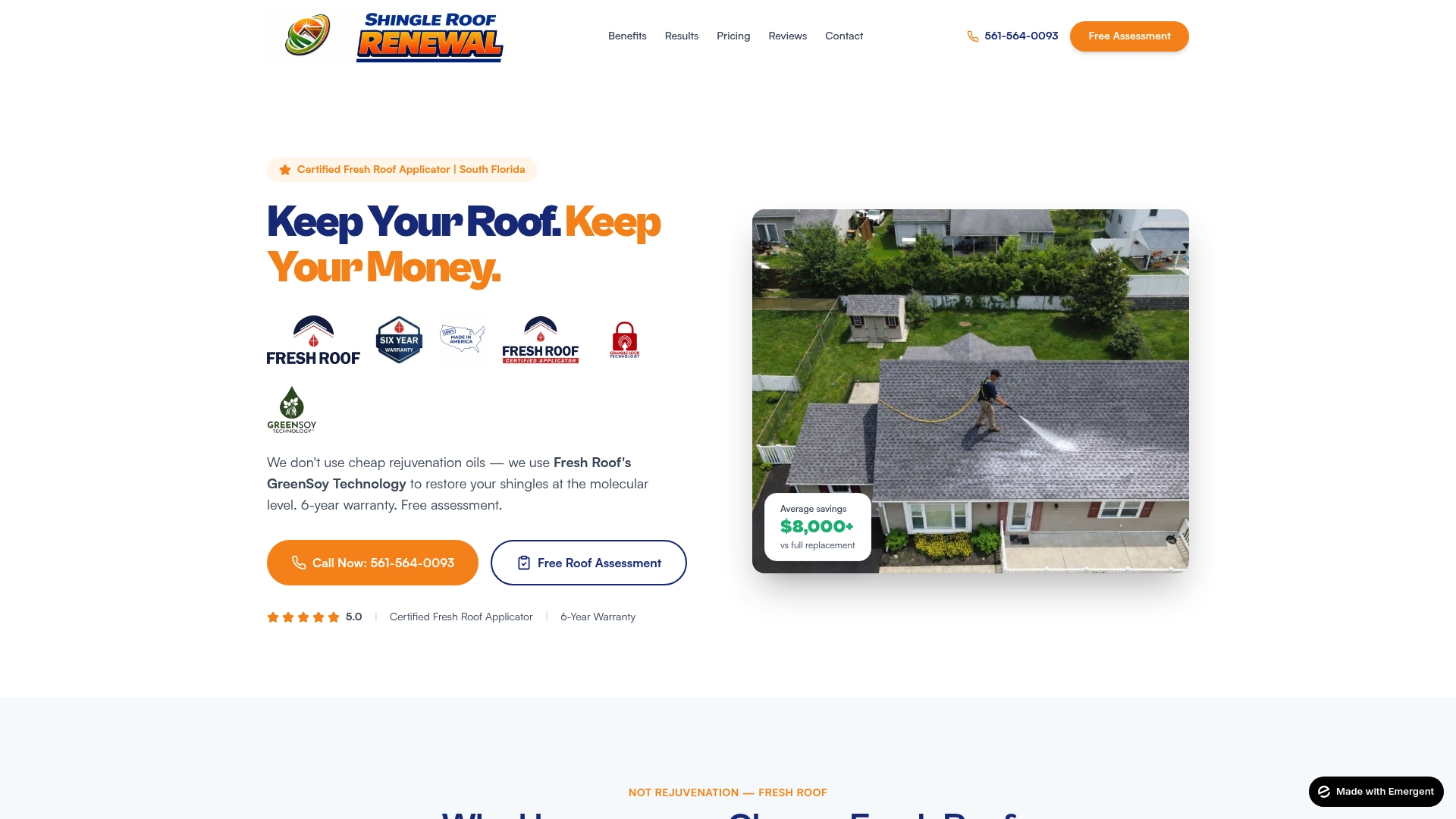
Qualifying homeowners in Broward and Palm Beach counties can save up to 80% compared to full replacement, backed by a 6-year transferable warranty. The process is straightforward: inspection, assessment, and a clear recommendation. No pressure. No upsell. Just an honest answer about your roof's condition. If your roof qualifies, you keep thousands of dollars in your pocket. If it does not, you go into the replacement process knowing exactly what you need. Schedule your free inspection today and find out where your roof stands.
FAQ
How much does a new roof cost in South Florida?
A full roof replacement in Florida typically ranges from $9,000 to $28,000 for a 2,000-square-foot home with asphalt shingles. Homes in Miami-Dade and Broward counties pay 20–30% more due to HVHZ building code requirements.
What is the best time of year to replace a roof in Florida?
Scheduling your roof replacement between december and may avoids hurricane season demand surges. Off-season projects cost 10–15% less and typically have faster contractor availability.
How do I know if my roof needs replacement or just renewal?
Roofs under 15 years old without systemic failure are often good candidates for renewal rather than replacement. Multiple active leaks, widespread shingle cracking, or significant deck rot generally indicate that full replacement is necessary.
What hidden costs should I watch for in a roofing estimate?
Wood deck repair is the most common hidden cost, running $70–$120 per sheet. Florida's 25% Rule can also force full code upgrades when more than 25% of a roof section is repaired within 12 months.
How many contractor estimates should I get before replacing my roof?
Get at least 3–5 written estimates. Wide price gaps between bids usually reflect differences in HVHZ compliance and material quality, not just contractor margin.