
TL;DR:
- Finding licensed local roofing contractors with experience in South Florida's climate is essential for reliable repairs and insurance claims.
- The My Safe Florida Home grant offers homeowners up to $10,000 for wind mitigation upgrades, but careful documentation is crucial for reimbursement.
- Proactive inspections, emergency tarping, and roof renewal treatments can extend roof lifespan, prevent costly damage, and save money over replacement.
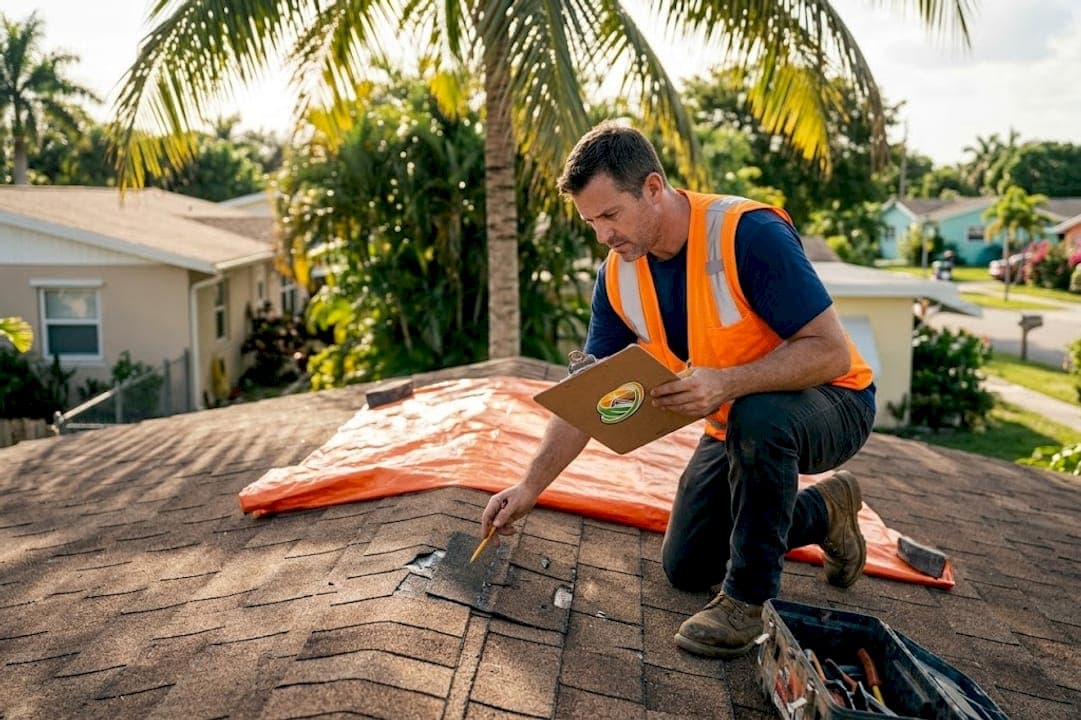
Finding the right help for a damaged or aging asphalt shingle roof in South Florida is harder than it sounds. Between unlicensed storm chasers, confusing insurance requirements, and the pressure of hurricane season, most homeowners don't know where to turn. The local roof repair resources available to you in Broward and Palm Beach County can make the difference between a $1,500 repair and a $25,000 replacement. This guide breaks down exactly what to look for, which resources are worth your time, and how to protect your roof before the next named storm rolls through.
Table of Contents
- Key takeaways
- 1. How to evaluate local roof repair resources in South Florida
- 2. Licensed local roofing contractors specializing in asphalt shingles
- 3. My Safe Florida Home grant program
- 4. Emergency roof repair help and tarping services
- 5. Professional roof inspection services
- 6. Community and nonprofit repair assistance programs
- 7. Comparison of local roof repair resources
- 8. Situational recommendations for South Florida homeowners
- My take on finding roof repair resources you can actually trust
- Save your roof and your budget with Shingleroofrenewal
- FAQ
Key takeaways
| Point | Details |
|---|---|
| Verify every contractor license | Use MyFloridaLicense.com to confirm active CCC licenses before signing anything. |
| Grants can cover major costs | The My Safe Florida Home program offers matching grants up to $10,000 for wind mitigation upgrades. |
| Act fast after storm damage | Emergency tarping within hours stops water intrusion and protects your insurance claim. |
| Inspections prevent major repairs | Schedule professional roof inspections twice yearly plus after any named storm within 50 miles. |
| Renewal beats replacement | Certified roof renewal can extend your asphalt shingle roof 10 to 15 years at a fraction of replacement cost. |
1. How to evaluate local roof repair resources in South Florida
Not every roofer who knocks on your door after a storm belongs there. Before you spend a dollar, you need a short checklist to separate trustworthy local roof repair resources from the rest.
Verify the contractor license. Florida requires roofing contractors to carry a CCC license for most residential shingle work. You can check license status free of charge at MyFloridaLicense.com. Look at both the license status and any disciplinary history. A clean license is the bare minimum for any contractor you hire.
- Active CCC license registered with the company doing the work
- Experience with Broward and Palm Beach County asphalt shingle roofs specifically
- Knowledge of Florida's High-Velocity Hurricane Zone (HVHZ) building codes
- Clear understanding of insurance claim documentation requirements
- Written warranties on both materials and labor
- A local physical office, not just a phone number
Pro Tip: Confirm that the license is registered to the actual company performing the work, not just the owner's name. License holders sometimes subcontract without disclosing it, which creates serious gaps in accountability.
Local contractors who handle insurance claim navigation are worth prioritizing. They know how to document damage correctly, communicate with adjusters, and reduce the risk of a lowball settlement or outright claim denial.
2. Licensed local roofing contractors specializing in asphalt shingles
Your first stop when searching for roof repair services near me should be licensed contractors with a track record in asphalt shingle roofs specifically. General contractors can pull permits, but specialized CCC-licensed roofers understand the HVHZ structural requirements that apply across Broward and Palm Beach counties.
What sets the best local roofers apart is not just the repair itself. It is knowing what the Florida building department inspector will look for, what your insurer expects in a claim, and which shingle products hold up under our specific mix of UV exposure, salt air, and wind load. A contractor who works exclusively in South Florida has seen every failure mode our climate produces.
Ask for references from homeowners in your specific city. A roofer who has worked in Plantation is not necessarily familiar with the permit process in Delray Beach. Local knowledge at the city level matters more than people realize.
3. My Safe Florida Home grant program
This is one of the most underused local roof repair resources in the state. The My Safe Florida Home program offers matching grants up to $10,000 for wind mitigation and roof hardening upgrades. For every dollar you spend on qualifying improvements, the state matches two dollars.
The program had $280 million allocated for 2025 to 2026, with $600 million proposed for the next fiscal year. That is real money available to South Florida homeowners right now.
Here is how to approach it:
- Confirm your home and income meet eligibility requirements
- Schedule your free wind mitigation inspection through the program
- Get contractor bids only for work approved in the official inspection report
- Keep detailed photo documentation of every work step completed
- Submit reimbursement documentation that matches the inspection report exactly
The state reimburses only work that matches the official wind mitigation inspection report. If your contractor does extra work outside that scope, you pay for it yourself. Stay within the approved plan and document everything.
4. Emergency roof repair help and tarping services
When a storm rips off shingles or causes a tree strike, you need emergency roof repair help within hours, not days. Water intrusion can cause hidden moisture damage that eventually costs between $12,000 and $20,000 to remediate fully.
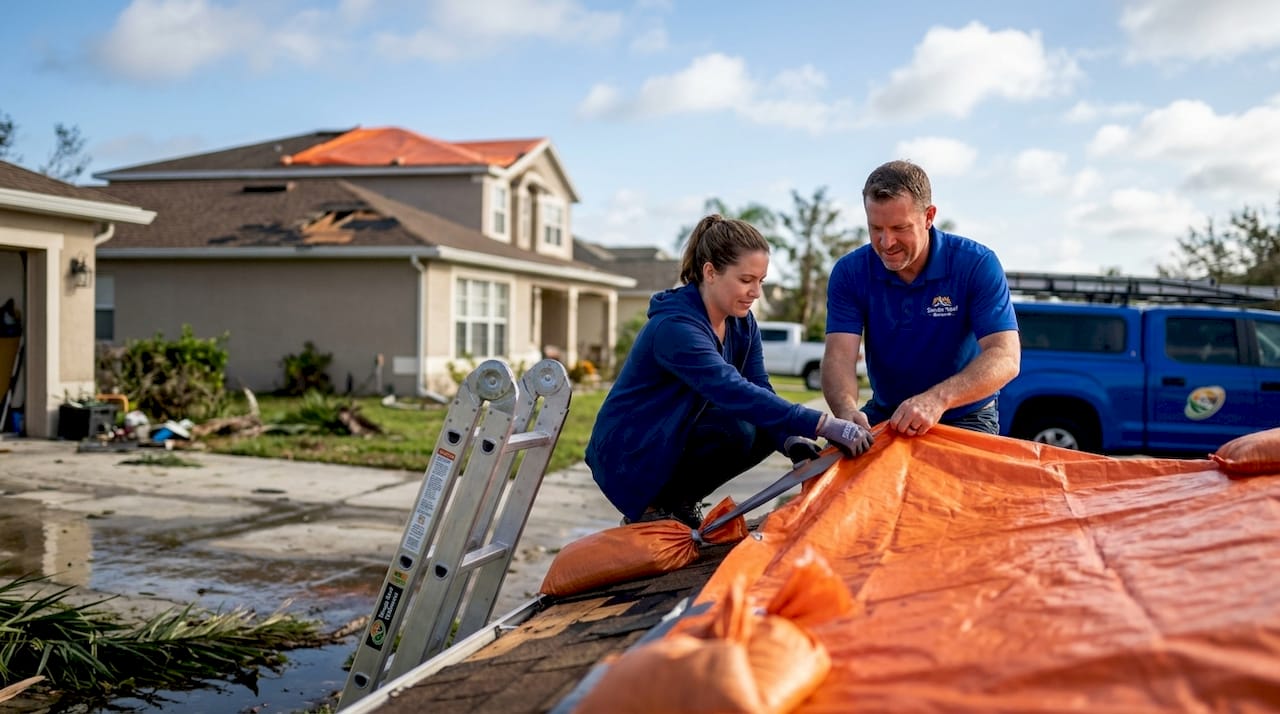
Emergency roof tarping in South Florida runs between $300 and $1,000 depending on the roof size and damage extent. That cost is typically covered under your homeowner's insurance policy, but only if you document the damage properly before tarping begins.
Take dated photos and video of every damaged area before any work starts. Your insurer may require proof of the original damage condition to process the claim. Skipping this step is one of the most common reasons claims get denied after storm events.
Emergency tarping is a short-term fix. It stops water from entering while you arrange for a full professional repair. Do not let a tarping contractor convince you to skip straight to a full replacement without getting a second opinion.
5. Professional roof inspection services
A professional roof inspection is the foundation of every smart roofing decision. You should schedule inspections twice yearly, once in spring and once in late fall, plus after any named storm that passes within 50 miles of your home.
A good inspection does more than spot visible damage. It produces a certified, dated report that serves as documentation for your insurer. That report can support future claims, help you qualify for the My Safe Florida Home grant, and give you a clear picture of your roof's remaining lifespan.
Pro Tip: Schedule your pre-hurricane inspection in April or early May at the latest. Booking in June when hurricane season officially starts means longer wait times and less time to act on findings before the first storm.
Look for inspectors who provide a written report with photos. Verbal assessments are not useful when you are sitting across from an insurance adjuster.
6. Community and nonprofit repair assistance programs
If replacement costs or even repair costs feel out of reach, there are local programs worth exploring. Several Broward and Palm Beach County municipalities run repair loan programs for income-qualified homeowners. Some nonprofits also offer direct repair grants, particularly for elderly or disabled homeowners.
Contact your county's Community Development Division to ask about any active home repair programs. Many homeowners are unaware these exist until they ask directly. Eligibility is typically based on household income and home ownership status, and priority often goes to health and safety repairs, which roofing qualifies as.
These resources move slowly compared to private contractors, but the cost savings can be substantial. If your situation is not an emergency, it is worth the wait to explore what is available at the county level before paying out of pocket.
7. Comparison of local roof repair resources
| Resource | Cost | Speed | Best For | Insurance Help |
|---|---|---|---|---|
| Licensed local roofer | Varies by project | 1 to 4 weeks | Any repair or renewal | Yes, if experienced |
| My Safe Florida Home grant | Free (state match) | 4 to 12 weeks | Wind mitigation upgrades | Not directly |
| Emergency tarping service | $300 to $1,000 | Same day | Post-storm protection | Yes, with documentation |
| Professional inspection service | $150 to $400 | 1 to 5 days | Pre/post-storm assessment | Yes, provides documentation |
| County repair assistance | Free to low interest | 4 to 16 weeks | Income-qualified homeowners | Varies |
| Certified roof renewal | 80% less than replacement | 1 to 2 days | Aging asphalt shingles | Not a claim, a proactive fix |
Pro Tip: Use the comparison above to match your situation to the right resource. If your shingles are aging but not yet leaking, roof renewal is almost always the most cost-effective path. If you have storm damage today, tarping and inspection come first.
8. Situational recommendations for South Florida homeowners
Knowing what resources exist is only half the battle. The other half is knowing when to use each one. Here is a practical decision framework based on the most common situations homeowners in Broward and Palm Beach counties face.
-
Storm just hit your home. Call a licensed local contractor or emergency tarping service within 24 hours. Take dated photos before any work begins. Notify your insurer the same day. Storm damage documentation handled quickly prevents claim denials later.
-
Your roof is aging but not actively leaking. Schedule a professional inspection immediately. Use the certified roof damage assessment to understand where your shingles stand. You may qualify for roof renewal instead of replacement, which saves tens of thousands of dollars.
-
You want to reduce insurance costs. Apply for the My Safe Florida Home grant program. The wind mitigation upgrades it covers can qualify you for insurance premium discounts. Proactive roof fortification in South Florida's HVHZ is one of the few home improvements that pays you back through lower premiums.
-
You cannot afford major repairs. Contact your county's Community Development Division to ask about repair loan or grant programs. These take time to process, so do not wait for an emergency before applying.
-
A contractor shows up at your door after a storm. Do not sign anything on the spot. Storm chasers with no local office often disappear after taking a deposit and leave work that fails HVHZ inspection. Verify their license at MyFloridaLicense.com before any conversation goes further.
-
You want to extend your shingle roof's remaining life. Look into certified roof renewal services that use proven technology specifically designed for South Florida's UV exposure and salt air. Renewal can add 10 to 15 years to an asphalt shingle roof at a fraction of the cost of a new installation. Follow a solid roof longevity checklist in between professional visits.
My take on finding roof repair resources you can actually trust
I've worked alongside South Florida homeowners long enough to know that the biggest mistake people make is waiting. They see curling shingles or granule loss in the gutters and assume it is cosmetic. By the time a storm reveals the real damage underneath, the repair cost has tripled.
What I've learned is that the homeowners who get the best outcomes are the ones who treat their roof like a financial asset, not a background feature of their house. They schedule inspections before hurricane season, not after. They verify licenses before they let anyone on their roof. And they ask about every available resource, including grants, before they write a check.
I've also seen too many homeowners get burned by out-of-state contractors who show up post-storm. These operators often have no knowledge of Florida's HVHZ requirements, no local office for accountability, and no intention of being around when the repair fails the permit inspection.
The truth is, most roofs I see do not need to be replaced. They need attention earlier. A certified inspection, a quality renewal treatment, and access to the right local resources can add years to a roof that most homeowners thought was finished. That early action is where real money gets saved.
— Daniellison
Save your roof and your budget with Shingleroofrenewal
If your asphalt shingle roof is showing signs of age, cracking, or granule loss, you may not need a full replacement. Shingleroofrenewal serves Broward and Palm Beach County homeowners with a certified renewal process using GreenSoy Technology. It restores shingle flexibility at the molecular level and extends roof life by 10 to 15 years. Most homeowners save up to 80% compared to a full replacement, all backed by a 6-year transferable warranty. If you are in Boca Raton, Fort Lauderdale, or anywhere in between, find out if your roof qualifies before the next storm season. Schedule your free inspection today with Shingleroofrenewal and get a clear picture of what your roof needs and what it will cost.
FAQ
What are the best local roof repair resources in South Florida?
The most practical options include licensed local roofing contractors with CCC credentials, the My Safe Florida Home grant program, certified roof inspection services, emergency tarping providers, and county repair assistance programs for income-qualified homeowners.
How do I verify a roofing contractor's license in Florida?
Visit MyFloridaLicense.com and search by the contractor's name or license number. Confirm the license is active, matches the company performing your work, and shows no disciplinary history.
How much does emergency roof tarping cost in South Florida?
Emergency tarping typically costs between $300 and $1,000 depending on roof size and damage. Most homeowner insurance policies cover this cost, but only if you document damage with dated photos before work begins.
Can roof renewal really replace a full replacement?
For many aging asphalt shingle roofs in South Florida, certified renewal extends roof life by 10 to 15 years at up to 80% less than full replacement cost. A professional inspection determines whether your roof qualifies.
When should I schedule a professional roof inspection?
Schedule inspections every spring and late fall, plus immediately after any named storm passing within 50 miles of your home. Early inspections catch hidden vulnerabilities before they become major repairs.