
TL;DR:
- Maintaining asphalt shingle flexibility is essential in South Florida to extend roof lifespan and avoid costly replacements. Regular inspections, elastomeric coatings, and compatible sealants prevent brittleness, cracking, and water intrusion caused by climate stress. Proactive, system-wide roof care preserves elasticity, saving homeowners money and safeguarding their investments.
Roof flexibility is defined as the ability of asphalt shingles to expand, contract, and bend without cracking under thermal stress, UV exposure, and storm impact. In South Florida, where Broward and Palm Beach County homeowners face relentless sun, heat, and hurricane-season storms, knowing how to maintain roof flexibility is the single most effective way to extend shingle life and avoid a $15,000 to $30,000 replacement. The industry term for this property is shingle elasticity, and preserving it requires more than occasional cleaning. It demands a consistent, system-wide maintenance routine built around inspection, protective coatings, and compatible repair materials.
How to maintain roof flexibility: what it means and why it matters
Shingle elasticity is the result of oils and polymers embedded in asphalt during manufacturing. Those oils keep shingles pliable enough to absorb daily movement from thermal expansion and contraction. South Florida's climate attacks those oils faster than almost any other region in the country. UV radiation bakes the surface, heat cycles stress the material from below, and heavy rain followed by rapid drying creates repeated expansion and contraction that drains flexibility over time.
When shingles lose elasticity, the consequences follow a predictable sequence:
- Granule loss begins as the asphalt surface hardens and can no longer hold granules in place
- Shingle curling develops as the dried-out material pulls away from its original flat position
- Surface cracking appears as the shingle can no longer absorb normal roof movement
- Water intrusion follows once cracks and curled edges create entry points for moisture
The crack-bridging capability of a flexible roof system allows it to stretch and adapt to movement from settling, thermal expansion, and weather stress. Roofs that lose this capability fail prematurely, and no amount of patching with rigid materials reverses the underlying problem.
Roof maintenance is not a single product fix. It is a balanced system effort that includes insulation, ventilation, and elastic materials to cope with South Florida heat and humidity.
Understanding the importance of roof flexibility means recognizing that your roof moves every single day. Morning sun heats the surface, afternoon shade cools it, and overnight temperatures drop further. Each cycle stresses the shingle material. A roof with preserved elasticity handles those cycles without damage. A brittle roof accumulates micro-cracks with every cycle until visible failure appears.
What tools and materials do you need to preserve shingle elasticity?
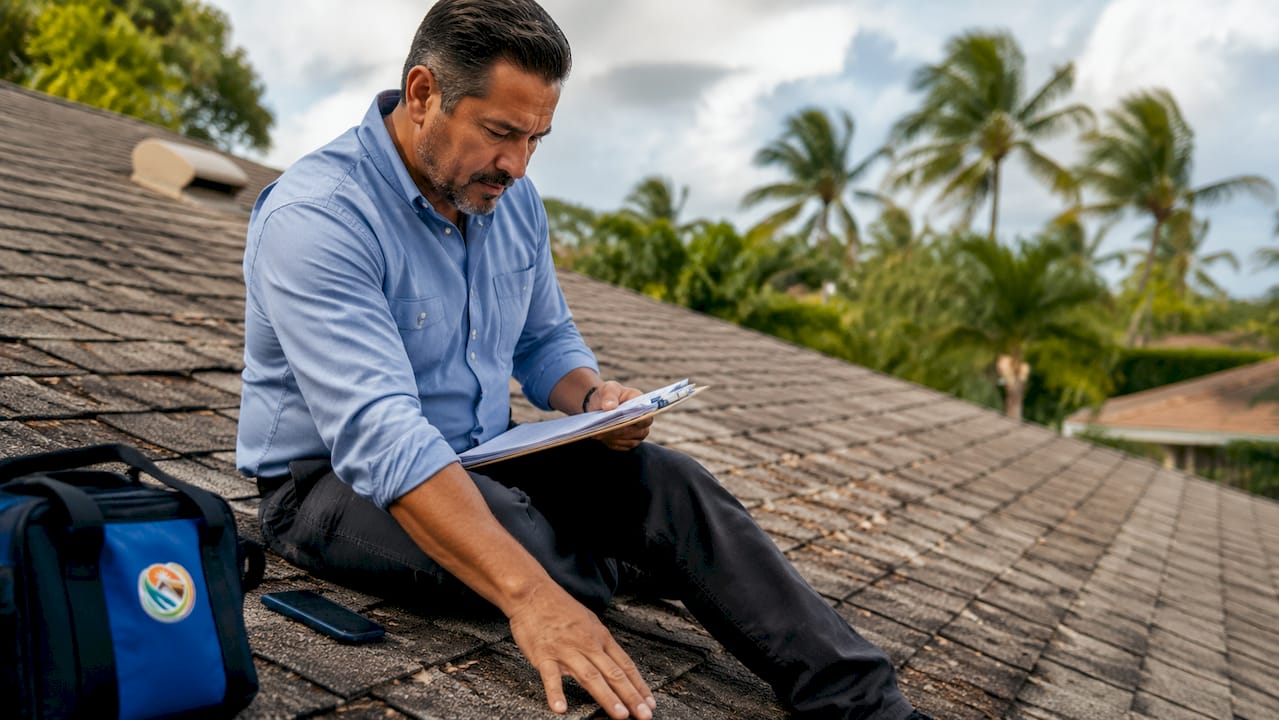
The right materials make the difference between a repair that lasts and one that fails within a season. The table below outlines what every South Florida homeowner should have on hand or source before starting a maintenance routine.
| Tool or Material | Purpose | Notes |
|---|---|---|
| Binoculars or drone camera | Visual inspection from ground level | Avoids unnecessary roof traffic |
| Elastomeric roof coating | Seals surface, restores UV protection, improves flexibility | Recoat every 5 to 10 years based on exposure |
| High-elongation sealant | Seals flashing transitions and penetrations | Must match roof's flex rating |
| Soft-bristle brush or low-pressure washer | Debris removal without granule damage | Never use high-pressure washing |
| Non-slip roof shoes and safety harness | Personal protection during inspection | Required for any roof access |
Elastomeric coatings effectively bridge small cracks, prevent UV damage, and improve roof flexibility, with recoating intervals ranging from 5 to 10 years depending on climate exposure. In South Florida, plan for the shorter end of that range. The constant UV load accelerates coating degradation faster than in northern states.
Flashing transitions are common failure points where rigid metal meets flexible roof surfaces. Using high-elongation, professional-grade sealants at every flashing joint prevents water intrusion and maintains the roof's overall waterproof integrity. Standard hardware-store caulk is not a substitute. It cures rigid, cracks within one to two seasons, and creates a worse problem than the gap it was meant to seal.
Pro Tip: When selecting a sealant for flashing repairs, look for products labeled "high elongation" or "elastomeric" with a minimum elongation rating of 300%. Anything below that will not move with your roof and will fail.
Step-by-step routine to preserve asphalt shingle flexibility
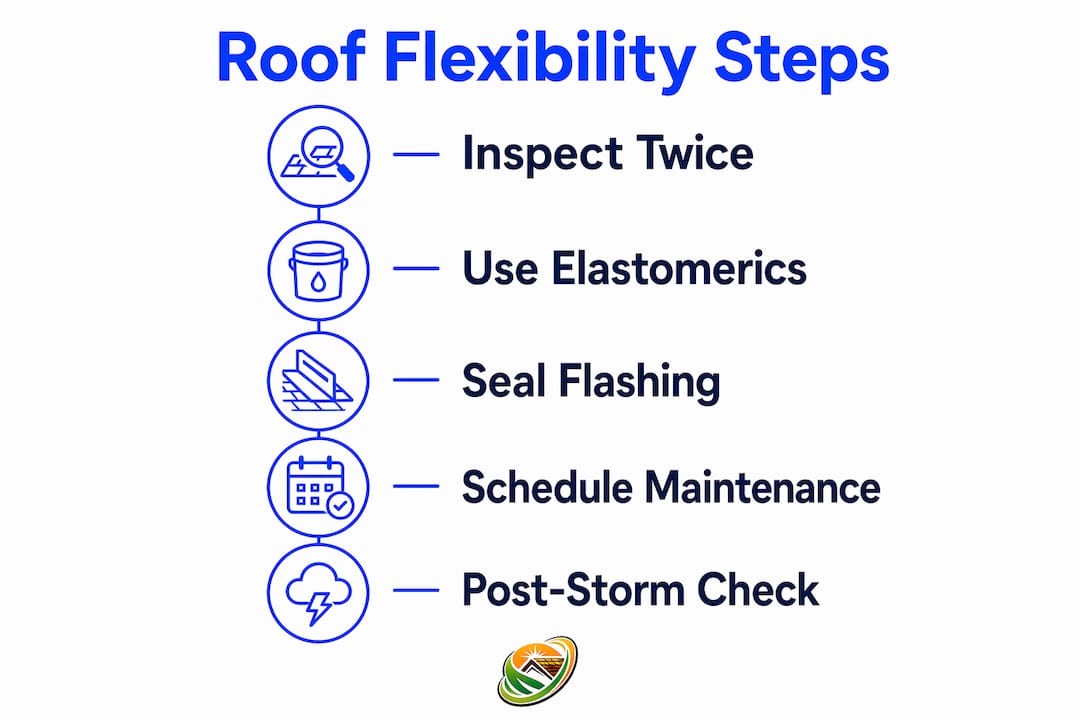
A consistent maintenance schedule is the most direct answer to how to improve roof flexibility over time. Experts recommend at least two inspections per year, ideally in spring and fall, plus an additional check after any major storm. That frequency catches problems while they are still small and inexpensive to address.
Follow this routine every spring and fall:
-
Conduct a visual inspection from the ground. Use binoculars or a drone to scan for granule loss in gutters, curling shingle edges, surface cracking, and lifted flashing. Document what you see with photos and date them. This record matters for warranty claims and insurance purposes.
-
Clear all debris from the roof surface and gutters. Wet leaves and organic debris trap moisture against shingles, accelerating oil depletion and granule loss. Use a soft-bristle brush or a leaf blower on a low setting. Never use a pressure washer. High-pressure water strips granules and damages the asphalt surface directly.
-
Inspect and reseal all flashing points. Check every area where metal flashing meets the shingle surface, including chimney bases, vent pipes, and roof edges. Apply a high-elongation sealant to any joint showing separation or cracking. This step alone prevents the majority of water intrusion events.
-
Apply or assess elastomeric coating condition. If your roof has an existing coating, check for peeling, bubbling, or thin spots. If the coating is due for renewal based on its age and your last application date, schedule a professional recoating. A properly applied elastomeric coating restores UV protection and adds a measurable layer of flexibility back to the surface.
-
Clear gutters and check drainage paths. Blocked gutters cause water to back up under shingle edges, saturating the material and stripping oils from the underside. Clean gutters completely and confirm that downspouts direct water at least three feet away from the foundation.
-
Record everything. Log the date, what you inspected, what you found, and what you did. Manufacturers and warranty providers require documented maintenance history. Shingleroofrenewal's 6-year transferable warranty is one example of how documented care translates directly into financial protection.
Pro Tip: Schedule your fall inspection in October, after hurricane season peaks but before winter cold fronts arrive. That timing lets you address any storm-related damage while conditions are still dry and safe for roof access.
Consistent professional maintenance, including biannual inspections and timely restoration, can add 5 to 10 years to a roof's lifespan and help homeowners avoid replacement costs that typically range from $15,000 to $30,000. That is not a minor savings. For most South Florida homeowners, it is the difference between a manageable maintenance budget and a financial emergency.
How to troubleshoot signs of lost roof flexibility
Early detection is the core of any effective roof flexibility strategy. The problem is that the earliest signs are subtle and easy to dismiss. Granule loss and shingle curling are the first visible indicators of flexibility loss, and they appear well before any leak develops. By the time water stains appear on your ceiling, the damage is already severe.
Watch for these warning signs during every inspection:
- Granule accumulation in gutters after rain, indicating the asphalt surface is hardening and releasing its protective layer
- Shingle edges that lift or curl upward, showing the material has dried out and lost its ability to lie flat
- Hairline cracks on shingle surfaces, visible under direct sunlight at a low angle
- Sealant separation at flashing joints, where the old material has cured rigid and pulled away from the metal
The table below maps each symptom to its risk level and the correct response:
| Symptom | Risk level | Recommended action |
|---|---|---|
| Granule loss in gutters | Moderate | Schedule professional assessment; consider renewal treatment |
| Curling shingle edges | Moderate to high | Inspect for moisture damage below; apply elastomeric treatment if qualified |
| Surface cracking | High | Elastomeric repair immediately; assess for full renewal |
| Flashing separation | High | Reseal with high-elongation sealant; inspect for water intrusion |
| Interior water stains | Critical | Professional inspection required before any other action |
Rigid patching materials fail on flexible roofs because of an elastic modulus mismatch. The patch cures hard while the surrounding shingle continues to move. That mismatch creates stress at the patch edges, which eventually tears the shingle worse than the original crack. Elastomeric repair materials expand and contract with the roof, which is why they produce better long-term results. When you see a crack, the repair material you choose matters as much as the repair itself.
After any named storm or hurricane, a professional post-storm inspection is the right call before attempting any DIY repairs. Wind uplift and impact damage can compromise shingle adhesion in ways that are not visible from the ground, and improper repairs on a storm-damaged roof can void insurance claims.
Key takeaways
Maintaining roof flexibility through biannual inspections, elastomeric coatings, and compatible repair materials is the most cost-effective way to extend asphalt shingle life in South Florida's climate.
| Point | Details |
|---|---|
| Inspect twice a year | Schedule spring and fall inspections plus a post-storm check after every major weather event. |
| Use elastomeric materials | Apply elastomeric coatings and high-elongation sealants to preserve flexibility and prevent crack failure. |
| Catch early warning signs | Granule loss and curling shingles signal flexibility loss before leaks appear. Act before damage worsens. |
| Avoid rigid patch materials | Standard caulk and rigid patches fail on flexible roofs; always match repair material to roof movement. |
| Document every maintenance step | Maintenance records protect your warranty and support insurance claims after storm damage. |
Why I think most homeowners wait too long
I have seen hundreds of South Florida roofs that were written off as replacements when they were actually candidates for preservation. The pattern is almost always the same. A homeowner notices a few curled shingles or some granules in the gutter, assumes the roof is done, and calls a roofer for a quote. The quote comes back at $20,000 or more, and suddenly a problem that started as a maintenance issue becomes a financial crisis.
The uncomfortable truth is that most homeowners do not realize their roof is losing flexibility until the damage is already advanced. The system-wide approach to roof maintenance, balancing insulation, ventilation, and material elasticity, is almost never discussed in the standard "clean your gutters" advice that circulates online. Reflectivity gets all the attention in Florida because of energy codes, but elasticity is what actually keeps the roof from failing.
What I have found actually works is treating roof maintenance the same way you treat car maintenance. You do not wait for the engine to seize before changing the oil. You follow a schedule, you use the right materials, and you address small problems before they compound. A $500 elastomeric coating application today is not comparable to a $25,000 replacement in three years. The math is obvious once you see it clearly.
The homeowners who preserve their roofs longest are not the ones who spend the most money. They are the ones who inspect consistently, use compatible materials, and call a preservation specialist before calling a roofer. That sequence matters more than any single product or repair.
— Daniellison
How Shingleroofrenewal helps South Florida homeowners protect their roofs
If your shingles are showing early signs of flexibility loss, the right move is an assessment before a replacement quote.
Shingleroofrenewal is a certified applicator of Fresh Roof Green Soy Technology, a treatment that restores shingle flexibility at the molecular level, locks in granules, and slows deterioration for qualifying asphalt shingle roofs in Broward and Palm Beach County. The process starts with a free inspection to determine whether your roof qualifies for preservation and renewal. If it does, you could save significantly compared to full replacement, backed by a 6-year transferable warranty. Most homeowners are surprised to learn their roof can still be saved. Find out if yours qualifies at Shingleroofrenewal.
FAQ
What is roof flexibility in asphalt shingles?
Roof flexibility, also called shingle elasticity, is the ability of asphalt shingles to expand, contract, and bend without cracking under heat, UV exposure, and storm stress. It depends on the oils and polymers within the asphalt compound remaining intact over time.
Why does South Florida's climate damage shingle flexibility faster?
South Florida's combination of intense UV radiation, high heat, and frequent storm cycles depletes the oils in asphalt shingles faster than most other climates. This accelerated oil loss causes shingles to harden, curl, and crack sooner than their rated lifespan.
How often should I inspect my roof for flexibility loss?
Experts recommend two inspections per year, in spring and fall, plus an additional inspection after any major storm. Early detection of granule loss and curling prevents minor flexibility issues from becoming major structural failures.
Can I use standard caulk to repair cracked shingles?
Standard caulk cures rigid and fails quickly on a flexible roof surface. Elastomeric repair materials that expand and contract with the shingle are the correct choice. Using rigid patch materials creates secondary damage at the patch edges over time.
When should I call a professional instead of doing maintenance myself?
Call a professional after any named storm, when you notice interior water stains, or when granule loss and curling are widespread across multiple roof sections. A post-storm roof assessment by a qualified specialist identifies hidden damage that DIY inspection cannot reliably detect.