
TL;DR:
- Preventing roof leaks in South Florida involves regular gutter cleaning, inspecting flashing, and maintaining attic ventilation to avoid water intrusion. Homeowners should schedule biannual inspections aligned with seasonal weather patterns and promptly address small damages to extend roof lifespan. Consistent, early maintenance based on these best practices significantly reduces the risk of costly roof failures.
Preventing roof leaks is defined as a system of routine maintenance, targeted inspections, and timely repairs that stop water from penetrating your shingle roof before damage becomes irreversible. In South Florida, where Broward and Palm Beach County homeowners face relentless sun, tropical downpours, and hurricane-force winds, knowing how to prevent roof leaks is not optional. It is the difference between a roof that lasts and one that fails years ahead of schedule. Guidance from GAF, State Farm, and IKO consistently points to the same conclusion: most leaks are preventable when homeowners act early and stay consistent with maintenance.
What routine maintenance tasks effectively prevent roof leaks?
Roof leak prevention starts at ground level, with the parts of your roof system you can manage without climbing up. Gutters and downspouts cleaned at least twice a year are the single most accessible defense against water backup and rot. When drainage is blocked, water pools at the roof edge and works its way under shingles. That is how a $50 gutter cleaning prevents a $5,000 interior repair.
Here are the core maintenance tasks every South Florida homeowner should schedule:
- Clean gutters and downspouts in spring before hurricane season and again in fall after storm season ends.
- Clear roof valleys and flat surfaces of leaves, twigs, and organic buildup that trap moisture against shingles.
- Trim overhanging tree branches to reduce debris fall and eliminate the moisture-retaining shade that accelerates algae and moss growth. Trimming branches and clearing debris also cuts off rodent access points to your roof.
- Check downspout extensions to confirm water discharges at least four feet from your foundation.
- Inspect visible shingle surfaces from the ground using binoculars for curling edges, missing granules, or discoloration.
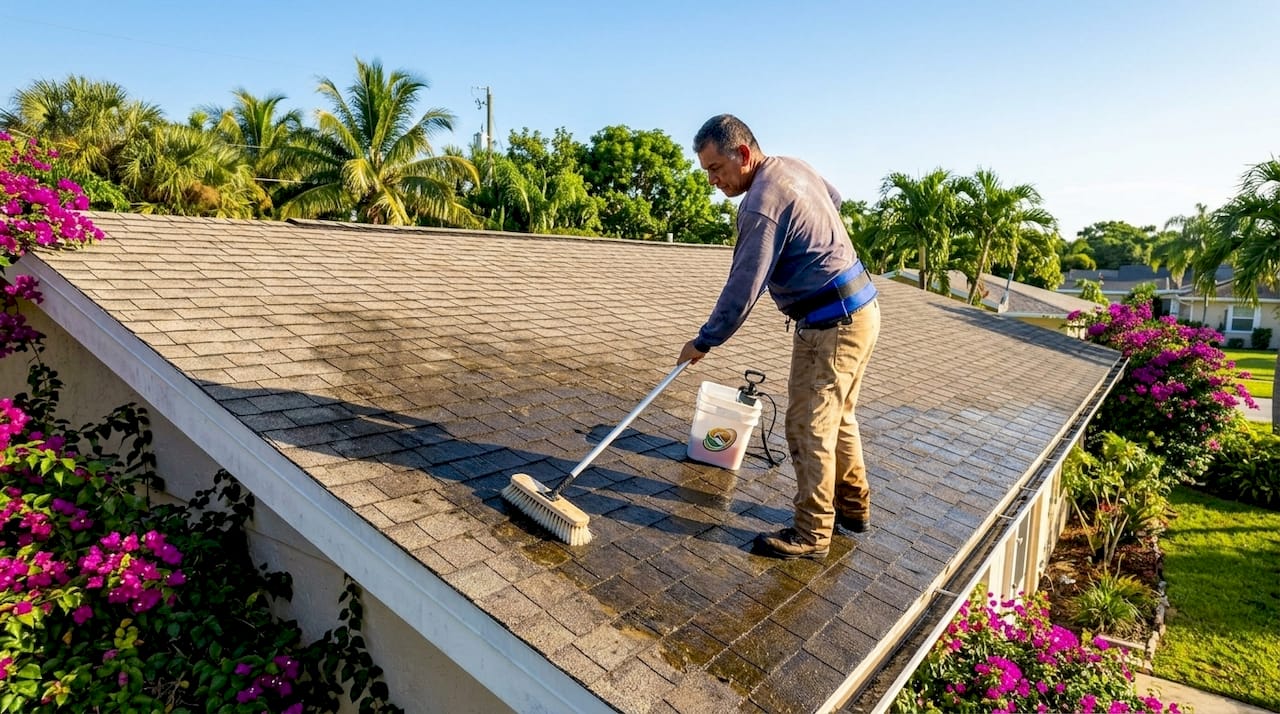
Dark stains on shingles are frequently caused by algae. Algae removal preserves shingle integrity and prevents the premature granule loss that leaves shingles exposed to UV damage. This Old House recommends careful, low-pressure cleaning rather than aggressive power washing, which strips granules and shortens roof life.
Pro Tip: Schedule your maintenance on a dry, overcast day. Wet surfaces hide granule loss and make it harder to spot cracked caulk or lifted shingle edges. Dry conditions give you a clearer read on your roof's actual condition.
Why is inspecting roof flashing and seals crucial to leak prevention?
Flashing failures are the leading cause of residential roof leaks. IRC R903.2 requires metal flashing at every roof-wall intersection, chimney, valley, vent, and slope change. This is not a suggestion. It is a building code requirement, and when flashing is missing, improperly lapped, or corroded, water finds a direct path into your home.
The most common mistake homeowners make is treating a flashing problem as a caulk problem. Sealant is a maintenance aid, not a structural fix. Caulk alone cannot substitute for correctly lapped, corrosion-resistant metal flashing. A bead of roof cement over a failed chimney flashing may hold for one season. It will not hold for five.
"Persistent leaks often start at roof edges or valleys where improper flashing or blocked drainage causes water intrusion." — IRC 2024 drip edge guidance via Jaspector
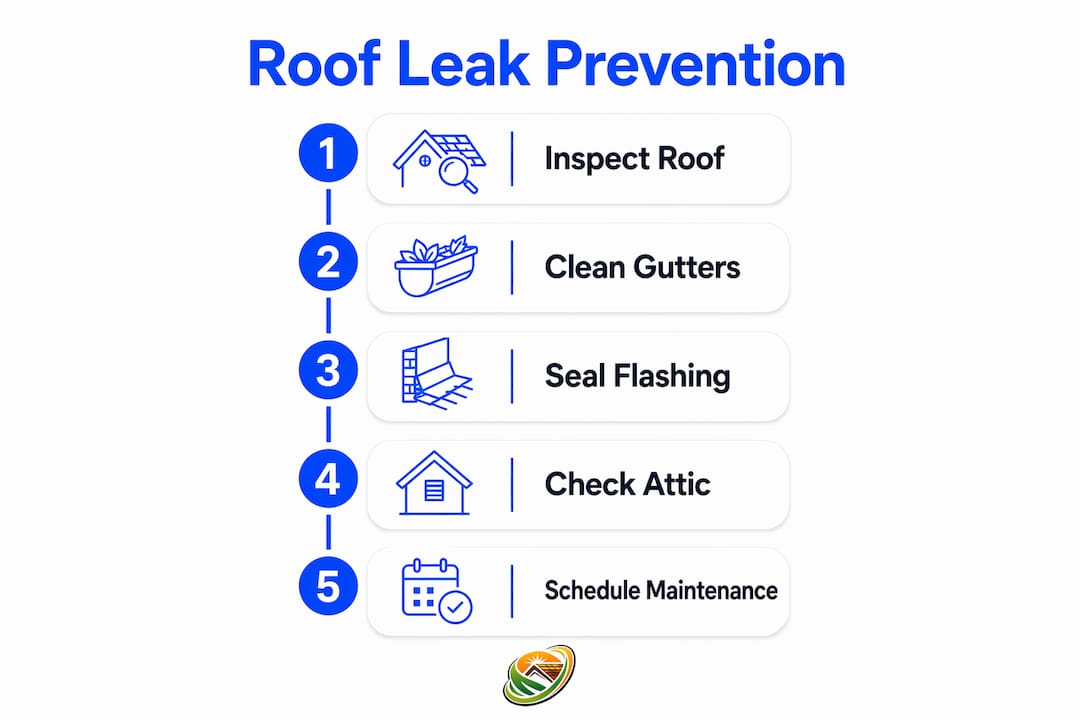
When you inspect your flashing, look for these specific warning signs:
- Rust or corrosion on metal flashing at chimneys, skylights, or vent pipes
- Cracks or gaps in the sealant around pipe boot flashings
- Missing or lifted pieces of step flashing along roof-wall intersections
- Excessive roof cement applied in thick layers, which signals repeated patch attempts over a structural problem
- Counterflashing separation around chimney bases, where the flashing has pulled away from the mortar joint
Drip edge flashing must project at least one-quarter inch beyond the roof edge per IRC 2024 requirements. This small overhang diverts water away from the fascia and prevents edge rot. Many older South Florida homes lack proper drip edge, making this a priority item during any inspection.
For flashing repairs beyond resealing a pipe boot, hire a licensed roofing contractor. Integrated metal flashing work requires proper lapping technique and material compatibility. A DIY patch that fails during a Category 1 storm creates far more damage than the original gap.
How does attic ventilation and interior inspection support roof leak prevention?
Your attic is the first place water announces itself after a roof breach, and it is also where poor ventilation silently destroys shingles from the inside out. Keeping attic vents unblocked and maintaining proper airflow prevents moisture buildup that blisters shingles, warps decking, and creates the conditions for mold growth. IKO and GAF both identify ventilation failure as a primary driver of premature roof aging in humid climates like South Florida.
Here is how to conduct a thorough attic inspection:
- Enter the attic on a sunny day and look for any pinpoints of daylight coming through the roof deck. Light means a gap. A gap means water.
- Check for water stains or dark streaks on rafters and decking. Stains that follow a straight line typically trace back to a specific penetration or flashing failure.
- Smell for musty odors. Mold and mildew establish themselves quickly in South Florida's humidity. A musty attic is a wet attic.
- Inspect soffit vents, ridge vents, and gable vents for blockages from insulation, bird nests, or debris. Blocked vents trap heat and moisture against the underside of your roof deck.
- Check insulation for wet spots or compression. Saturated insulation loses its R-value and holds moisture against the decking for weeks after a rain event.
Attic examination for stains, odors, or daylight gaps is one of GAF's primary recommendations for early leak detection. The reason this works so well is that water travels. A leak at a flashing point on the south slope may not show up as a ceiling stain for weeks, but it will show up as a rafter stain in your attic within hours of the next rain.
Pro Tip: Inspect your attic during or immediately after a heavy rain. This is the fastest way to pinpoint exactly where water is entering, rather than guessing from dried stains that could be months old.
What seasonal inspection schedule should South Florida homeowners follow?
South Florida's climate demands a specific rhythm for roof inspections. Biannual inspections timed for local seasonal weather patterns are the standard recommended by both State Farm and IKO. For Broward and Palm Beach County homeowners, that means two fixed inspection windows every year.
| Inspection Window | Timing | Primary Focus |
|---|---|---|
| Spring inspection | April to May, before hurricane season | Flashing integrity, granule loss, gutter condition |
| Fall inspection | October to November, after storm season | Storm damage, missing shingles, debris buildup |
| Post-storm check | Within 48 hours of any named storm | Visible damage, sagging areas, displaced flashing |
After any significant storm, inspecting for visible damage promptly is the most time-sensitive step in your roof care routine. Missing shingles, sagging gutters, and debris-filled valleys are all conditions that worsen with every subsequent rain. A roof that survives a hurricane with two missing shingles can develop a serious leak within two weeks if those shingles are not replaced.
For your post-storm ground inspection, focus on these areas:
- Shingle edges along the eaves and rakes for lifting or separation
- Gutters and downspouts for dents, separation, or debris blockage
- Visible valleys for accumulated debris or displaced flashing
- Fascia boards for water staining or soft spots indicating rot
Use your attic inspection as a complement to the ground view. The South Florida roof care workflow published by Shingleroofrenewal provides a season-by-season breakdown tailored specifically to Broward and Palm Beach County conditions. Pairing ground-level observation with an attic check gives you the most complete picture of your roof's condition without requiring you to walk the surface.
Which homeowner mistakes increase roof leak risks the most?
The most expensive roof leaks in South Florida are not caused by catastrophic storms. They are caused by small problems that homeowners ignored for one season too long. Recognizing these patterns is the fastest way to protect your investment.
- Relying on caulk over failed flashing. Sealant applied over a structural flashing gap is a temporary patch that delays a larger repair. Flashing integration with roofing materials is what creates durable leak prevention. Surface sealants are not a substitute.
- Skipping gutter cleaning. Proper roof drainage through clear valleys, gutters, and downspouts is critical. Clogged gutters force water to back up under shingles at the eave, which is one of the most damaging and least visible leak pathways.
- Delaying shingle repairs. A curling or cracked shingle is a warning. Left unaddressed through one rainy season, it becomes a rotted deck board and a mold problem. The repair cost multiplies with every month of delay.
- Ignoring ventilation signs. Blistered shingles, granule loss concentrated in one area, or a consistently hot attic all point to ventilation failure. Addressing ventilation early extends shingle life and prevents the moisture-driven deterioration that leads to leaks.
- Walking the roof unnecessarily. Foot traffic on asphalt shingles in South Florida's heat dislodges granules and cracks brittle shingle surfaces. Use binoculars and attic inspections instead of walking the surface for routine checks.
Knowing how to spot successful roof restoration outcomes helps you evaluate whether a repair has actually solved the problem or just covered it. If a repair area shows new staining within one rain cycle, the underlying cause was not addressed.
Key takeaways
Preventing roof leaks in South Florida requires consistent maintenance of gutters, flashing, and attic ventilation combined with biannual inspections timed to the hurricane and storm seasons.
| Point | Details |
|---|---|
| Clean gutters twice yearly | Schedule spring and fall cleanings to prevent water backup and edge leaks. |
| Flashing requires metal, not caulk | Sealant is a temporary aid. Proper corrosion-resistant metal flashing is required by IRC code. |
| Inspect your attic after rain | Water stains and odors in the attic reveal leak sources faster than any rooftop inspection. |
| Follow a seasonal schedule | Spring and fall inspections, plus a 48-hour post-storm check, catch problems before they compound. |
| Act on small damage immediately | Curling shingles and minor flashing gaps become major leaks within one rainy season if ignored. |
What I have learned after years of watching South Florida roofs fail early
Most roof leaks I have seen in Broward and Palm Beach County were not inevitable. They were the result of one or two seasons of skipped maintenance compounding into a problem that looked like it needed a full replacement. That pattern repeats itself constantly, and it is frustrating to see because the fix was almost always available much earlier at a fraction of the cost.
The piece of advice I give homeowners that surprises them most is this: your attic tells you more about your roof than your roof does. Homeowners spend time looking at shingles from the driveway and miss the water stain on a rafter that has been there since last August. Go into the attic. Bring a flashlight. Do it after the next heavy rain. You will learn more in ten minutes than you would from an hour on a ladder.
The other thing I have noticed is that South Florida homeowners underestimate how fast the sun degrades shingles here compared to other parts of the country. The UV exposure in this climate is relentless. Shingles that look fine from the ground may already be losing flexibility and shedding granules at a rate that puts them years closer to failure than their age suggests. That is why a roof longevity checklist is worth running through at least once a year, not just when something looks wrong.
Consistency is the real answer to roof leak prevention. Not a single big repair. Not a one-time inspection. A repeatable habit of checking the same things at the same times every year. That habit is what separates homeowners who replace their roofs at 15 years from those who get 25 years out of the same materials.
— Daniellison
How Shingleroofrenewal helps South Florida homeowners protect their roofs
If you have worked through this guide and are wondering whether your roof is already showing signs of wear beyond routine maintenance, Shingleroofrenewal is the company to call before you call a roofer. We specialize in roof preservation and preventative maintenance for asphalt shingle roofs in Broward and Palm Beach County.

Our process starts with a free inspection to assess your roof's current condition. If your roof qualifies for renewal using Fresh Roof's Green Soy Technology, you could save significantly compared to a full replacement, backed by a 6-year transferable warranty. Most homeowners are surprised to learn their roof can still be preserved. Explore our roof preservation services or visit Shingleroofrenewal to schedule your free inspection today.
FAQ
What are the most common causes of roof leaks?
Flashing failures at chimneys, vents, and roof-wall intersections are the leading cause of residential roof leaks, followed by clogged gutters and damaged or missing shingles. Most leaks develop gradually from deferred maintenance rather than sudden storm damage.
How often should I inspect my roof for leaks?
Inspect your roof twice a year, in spring before hurricane season and in fall after storm season, plus within 48 hours after any named storm. State Farm and IKO both recommend this biannual schedule for South Florida homeowners.
Can I fix a roof leak myself?
Minor repairs like resealing a pipe boot flashing or replacing a single shingle are within reach for a careful homeowner. Structural flashing repairs, valley work, and any repair requiring you to walk the roof surface should be handled by a licensed roofing contractor.
What are the early signs of a roof leak?
Water stains on attic rafters, musty odors in the attic, blistered or curling shingles, and granule accumulation in gutters are all early warning signs. GAF recommends checking the attic for stains and daylight gaps as the most reliable early detection method.
How does attic ventilation affect roof leaks?
Poor attic ventilation traps heat and moisture against the roof deck, accelerating shingle deterioration and creating conditions for mold growth. Keeping soffit, ridge, and gable vents clear reduces moisture buildup and extends the life of your shingle roof.