
TL;DR:
- Premature roof failure in South Florida is mainly caused by installation errors, inadequate attic ventilation, and flashing failures, not just age. Early signs like granule loss, curling shingles, ceiling stains, and attic mold can be mitigated through timely inspections and repairs. Certified renewal processes may extend roof lifespan by up to 15 years, offering a cost-effective alternative to full replacement.
Your asphalt shingle roof is only seven years old, yet you're already seeing cracked shingles, ceiling stains, and granules piling up in the gutters. Sound familiar? Understanding why roofs fail prematurely is more complex than most homeowners in Broward and Palm Beach Counties realize. Age is rarely the main culprit. The real causes of roof failure are usually hidden: installation shortcuts, poor attic ventilation, and failed flashing. This guide breaks down exactly how roofs deteriorate before their time, what warning signs to watch for, and what you can do right now to avoid a costly replacement.
Key takeaways
| Point | Details |
|---|---|
| Installation errors drive early failure | Over 60% of denied warranty claims trace back to improper fastening and nail placement. |
| Ventilation is non-negotiable in Florida | Trapped attic heat bakes shingles from underneath, accelerating granule loss and adhesive failure far ahead of schedule. |
| Flashing is the first place leaks start | Poor overlaps and sealant failure at penetrations and transitions are among the most common causes of early water intrusion. |
| Early signs are your warning window | Curling shingles, ceiling stains, and granule loss are signals that a repair or renewal may still save your roof. |
| Renewal can save up to 80% | If caught early, restoring your existing shingles through a certified renewal process can extend roof life by 10 to 15 years. |
Why roofs fail prematurely: installation is the biggest culprit
When a shingle roof fails before it should, most homeowners assume the materials were defective or the Florida sun was too harsh. In reality, improper installation causes over 62% of denied shingle warranty claims. The roof was built wrong from day one.
Nail placement is the most common installation mistake, and it is one that is invisible once the job is complete. Every shingle has a designated nailing zone specified by the manufacturer. Nails placed above that zone, a mistake called "high nailing," reduce the shingle's ability to resist wind uplift. Nails placed below the zone can pierce the sealant strip on the shingle below, breaking the seal that keeps water out. Per IRC 2018 R905.2.6, roofing nails must be corrosion-resistant, placed within the manufacturer's nailing zone, and penetrate the sheathing by at least 3/4 inch.
How a nail is driven matters just as much as where it lands. An overdriven nail cuts through the shingle mat, eliminating its holding power. An underdriven nail leaves the shingle loose, allowing it to lift in the next storm.
Here is a quick comparison of proper versus improper fastening:
| Fastening factor | Proper practice | Common error |
|---|---|---|
| Nail count | 4 to 6 nails per shingle per code | Only 2 to 3 nails used to save time |
| Nail placement | Within manufacturer's nailing zone | Too high or too low on the shingle |
| Nail depth | Flush with shingle surface | Overdriven or underdriven |
| Nail type | Corrosion-resistant roofing nails | Standard fasteners that rust |
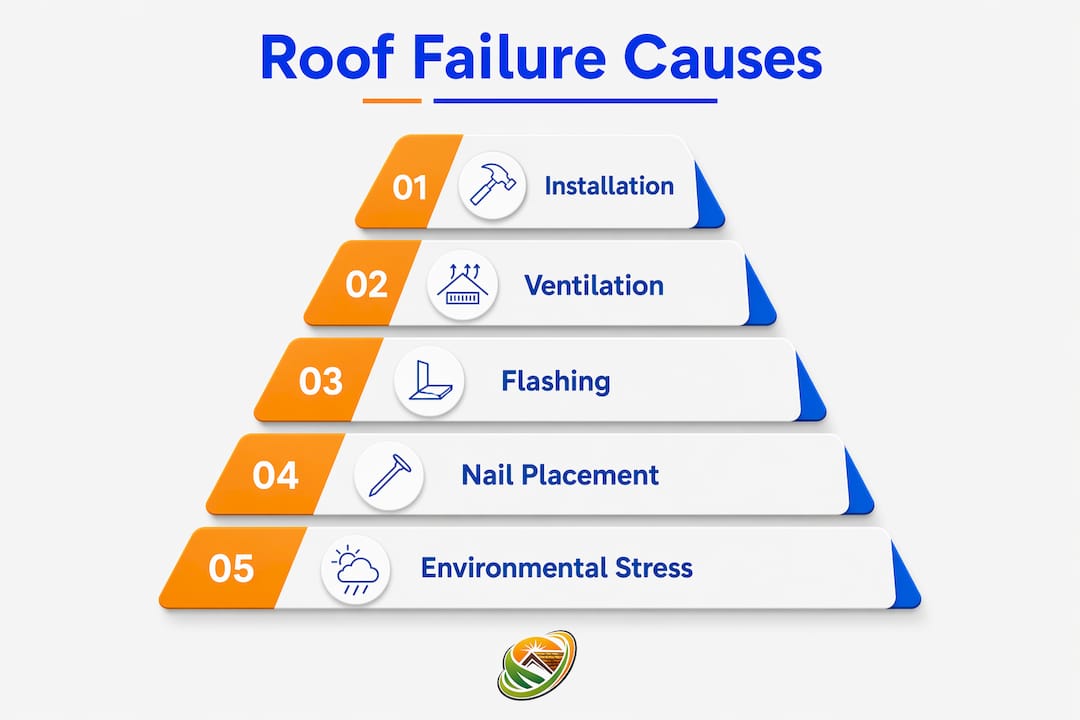
These errors do not just shorten roof life. They create the conditions for shingle blow-off during hurricane season, which is a very real risk for every home in Broward and Palm Beach Counties.
Pro Tip: Before your contractor leaves the job site, ask for a copy of the installation documentation showing nail type, count per shingle, and compliance with local code. This record is your primary evidence if a warranty claim becomes necessary later.
How poor attic ventilation destroys shingles from underneath
Here is something most homeowners never consider. The biggest threat to your shingles may not be coming from the sky. It is rising from inside your own attic.
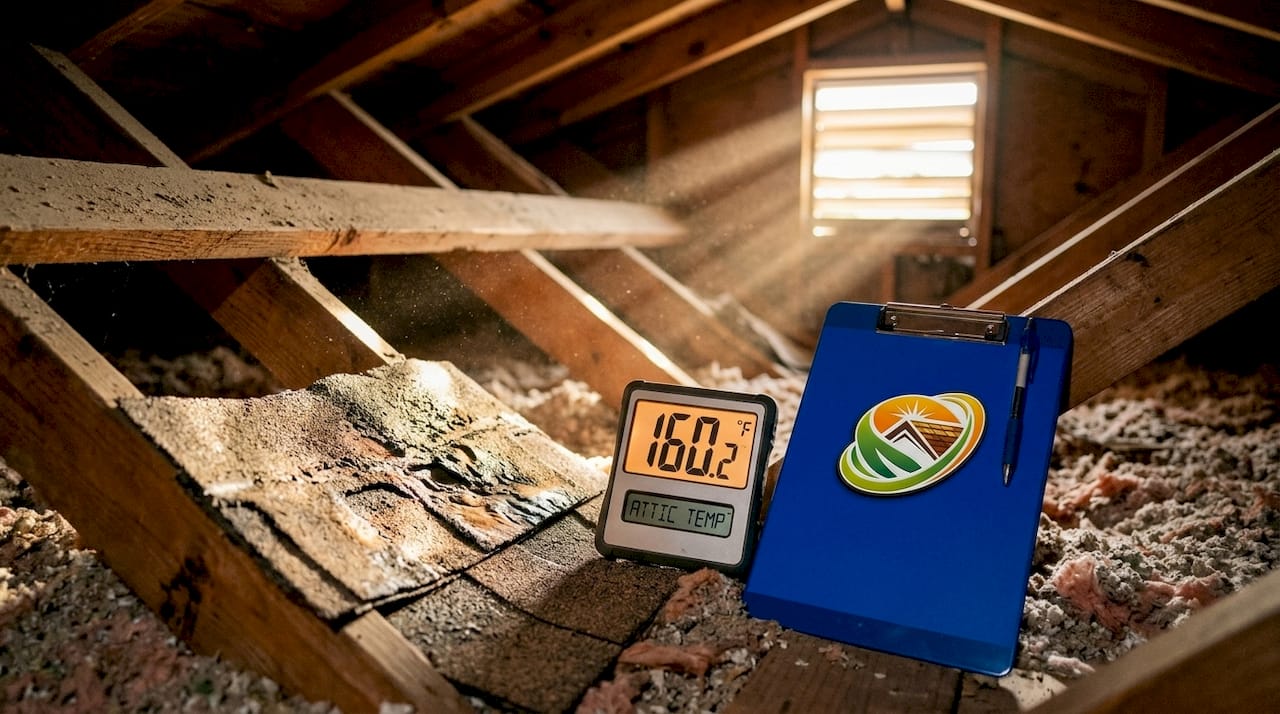
South Florida attics without adequate ventilation can reach temperatures above 160°F on a summer afternoon. That sustained heat does not just make your home uncomfortable. It traps heat and humidity beneath the shingles, causing adhesive failure, granule loss, and wood rot in the decking below. You can have brand-new shingles on a roof that is cooking itself from the inside.
The IRC recommends a balanced 1:150 or 1:300 ventilation ratio between intake and exhaust. This means your soffit vents at the bottom and ridge vents at the top must work together as a system. When either side is blocked or missing, the whole system fails.
Common ventilation mistakes in South Florida homes include:
- Blocked soffit vents: Insulation pushed up against the eaves covers soffit vents completely. This is one of the most common ventilation pitfalls in Florida and is usually invisible unless someone goes into the attic to look.
- Missing baffles: Baffles are the channels that keep insulation from covering the soffit vent opening. Without them, blown-in insulation seals off airflow within weeks of installation.
- Ridge vents without intake vents: Installing a ridge vent without matching soffit intake is like opening only one window in a sealed room. No air moves.
- Wrong vent placement: Exhaust vents placed too low on the roof pull air sideways rather than allowing hot air to rise and escape naturally.
The signs that ventilation is actively damaging your roof show up both inside and outside. Outside, you will notice shingles curling upward at the edges or cracking along their length. Inside the attic, heat-stained decking, dark discoloration, and a persistent musty smell all signal that moisture and heat have been building up for some time. Poor ventilation is also directly linked to mold growth in attic decking, which can spread to structural members and insulation.
Pro Tip: During your next attic inspection, look toward the soffits with a flashlight. If you cannot see daylight coming through, your intake vents are likely blocked. This single issue can take years off your roof's life.
Flashing failures and where leaks really begin
You probably picture a leak as rain coming straight through a cracked shingle. That happens, but it is not where most water intrusions start. Flashings at penetrations and roof transitions are typically the first places inspectors examine when diagnosing early leaks.
Flashing is the metal material installed around chimneys, pipe boots, skylights, and roof valleys. Its job is to seal the gaps where different surfaces meet. When it is done right, water has no path inside. When it is done wrong, it creates a funnel that directs water directly into your home's structure.
The most frequent flashing failures seen on South Florida homes include:
- Sealant-only installations: Some contractors skip mechanical fasteners and rely entirely on caulk or roofing cement to hold flashing in place. Florida's heat and UV exposure degrade sealants quickly, often within two to three years.
- Insufficient overlap: Flashing pieces that do not overlap enough allow water to travel sideways under the joint during heavy rain, which is exactly the kind of rain that comes with every South Florida thunderstorm.
- Corrosion: Galvanized flashing corrodes over time, especially in the salt-laden air near the coast in Broward and Palm Beach Counties. Once rust begins, the seal breaks down fast.
- Improper step flashing at walls: Where a roof meets a vertical wall, step flashing must be woven between each shingle course. Contractors who use a single continuous piece of flashing instead create a direct water entry point.
A small flashing leak rarely stays small. Water follows wood grain and insulation into wall cavities and attic decking, causing rot and mold damage that costs far more to repair than the original flashing replacement would have. Inspecting flashing conditions is one of the most important parts of any roof assessment.
Signs your roof may be failing ahead of schedule
You do not need to be a roofer to spot early warning signs of premature roofing problems. Knowing what to look for gives you time to act before a repair becomes a full replacement.
The exterior signs to watch for on an asphalt shingle roof include:
- Granule loss: Granules are the protective coating on every shingle. They block UV radiation and give shingles their color. When granules wash away, the asphalt layer beneath is exposed directly to the sun. This accelerates brittleness, cracking, and curling. If your gutters are filling with sandy, gravel-like material after rain, your shingles are telling you something important.
- Curling or cupping shingles: Shingles that curl upward at the edges or cup inward at the center are reacting to heat and moisture imbalance. This is often a sign of ventilation problems, age-related drying, or both.
- Cracked or missing shingles: A single missing shingle creates an open door for water. In South Florida's storm season, that door gets pushed wide open.
The interior signs are just as telling:
- Ceiling stains or bubbling paint: Brown rings on your ceiling mean water has already moved past the roof deck and into your living space.
- Musty smell in the attic or upper floors: Mold does not wait for a visible stain before it starts growing. A persistent musty odor often signals moisture is already present.
- Dark spots on attic decking: These indicate either long-term moisture contact or early mold growth on the wood.
Catching any of these signs early is the difference between a repair and a full roof replacement. Delayed repairs allow small leaks to spread across decking and insulation, multiplying the scope and cost of the fix.
Preventing early roof damage: what you can do now
Preventing early roof failure is not complicated. It does require consistency. Here is a practical plan for homeowners in Broward and Palm Beach Counties:
- Schedule a roof inspection every year. Annual inspections catch fastening problems, flashing gaps, and ventilation issues before they become leaks. Do not wait for visible damage.
- Check your attic after every major storm. Look for new dark spots, moisture, or light coming through the decking. Early detection is everything in Florida's storm season.
- Clear your soffit vents. At least once a year, go into the attic and confirm that insulation is not blocking intake vents. Install baffles if they are missing.
- Repair small issues immediately. A cracked pipe boot or loose flashing piece costs under $200 to fix. Left alone, it can cause $5,000 or more in deck and insulation damage.
- Document everything. Take photos of your roof after installation and after any repair. Keep records of contractor names, materials used, and dates. This documentation is critical for warranty claims if early failure occurs.
- Consider roof renewal before replacement. If your shingles show signs of aging but are not yet structurally compromised, renewal may restore flexibility and stop deterioration without the cost of full replacement. You can learn more about extending your shingle roof's life with the right maintenance strategy.
The goal is not to spend more money. It is to spend it at the right time, on the right thing, before the damage forces a much bigger decision.
My perspective: what experience has taught me about early roof failure
I have worked around enough South Florida roofs to say this clearly: most premature failures are preventable. And the homeowners who get hurt the most are not the ones with old roofs. They are the ones who had a roof replaced or installed in the past decade, assumed everything was fine, and never looked again.
The pattern I see repeatedly involves systemic installation and ventilation defects that show no obvious surface symptoms for the first three to five years. Then one storm, one bad rainy season, and suddenly there is interior damage that goes well beyond the roof itself.
What I find most frustrating is how avoidable it is. A single attic inspection would have caught the blocked soffits. A closer look at the nailing pattern during installation would have flagged the high nailing. These are not expensive problems to prevent. They are expensive problems to fix after the fact.
My honest advice: do not rely on how your roof looks from the ground. Get into the attic. Hire someone who will actually check ventilation and flashing, not just walk the surface. And if your shingles are showing signs of wear that you catch early, ask whether renewal is an option before anyone talks you into a full replacement.
— Daniellison
Your roof may still be saveable
If your South Florida home is showing any of the warning signs discussed here, the most important step is getting a professional assessment before the damage escalates.

Shingleroofrenewal is a certified applicator of Fresh Roof's GreenSoy Technology, a process that restores asphalt shingles at the molecular level, bringing back flexibility and stopping further deterioration. For homes in Broward and Palm Beach Counties, this means you may be able to extend your roof's life by 10 to 15 years at up to 80% less than the cost of a full replacement. The service is backed by a 6-year transferable warranty. Whether you are in Delray Beach or Plantation, the process starts with a free inspection. Visit Shingleroofrenewal to schedule yours today and find out if your roof qualifies for renewal.
FAQ
What are the most common causes of premature roof failure?
Improper nail placement, poor attic ventilation, and failed flashing are the leading causes of premature shingle roof failure, particularly in South Florida where heat and humidity accelerate every defect.
How do I know if my roof is failing too early?
Look for granule loss in your gutters, curling or cracked shingles, ceiling stains inside your home, and musty odors in the attic. Any of these signs on a roof less than 15 years old warrants a professional inspection.
Can poor ventilation really shorten my roof's lifespan?
Yes. Attic temperatures in unventilated Florida homes regularly exceed 150°F, which softens shingle adhesive, accelerates granule loss, and causes wood rot in the decking. A balanced ventilation system is one of the most cost-effective ways to preserve your roof.
Is roof renewal a real alternative to replacement?
For shingle roofs that are deteriorating but not yet structurally compromised, certified renewal processes like GreenSoy Technology can restore flexibility and extend life by 10 to 15 years at a fraction of replacement cost.
How does flashing cause roof leaks?
Flashing seals the gaps around chimneys, vents, and roof valleys. When sealant degrades, overlaps are insufficient, or corrosion sets in, those gaps open up and direct water straight into your roof's structure, often long before any surface shingle shows visible damage.