
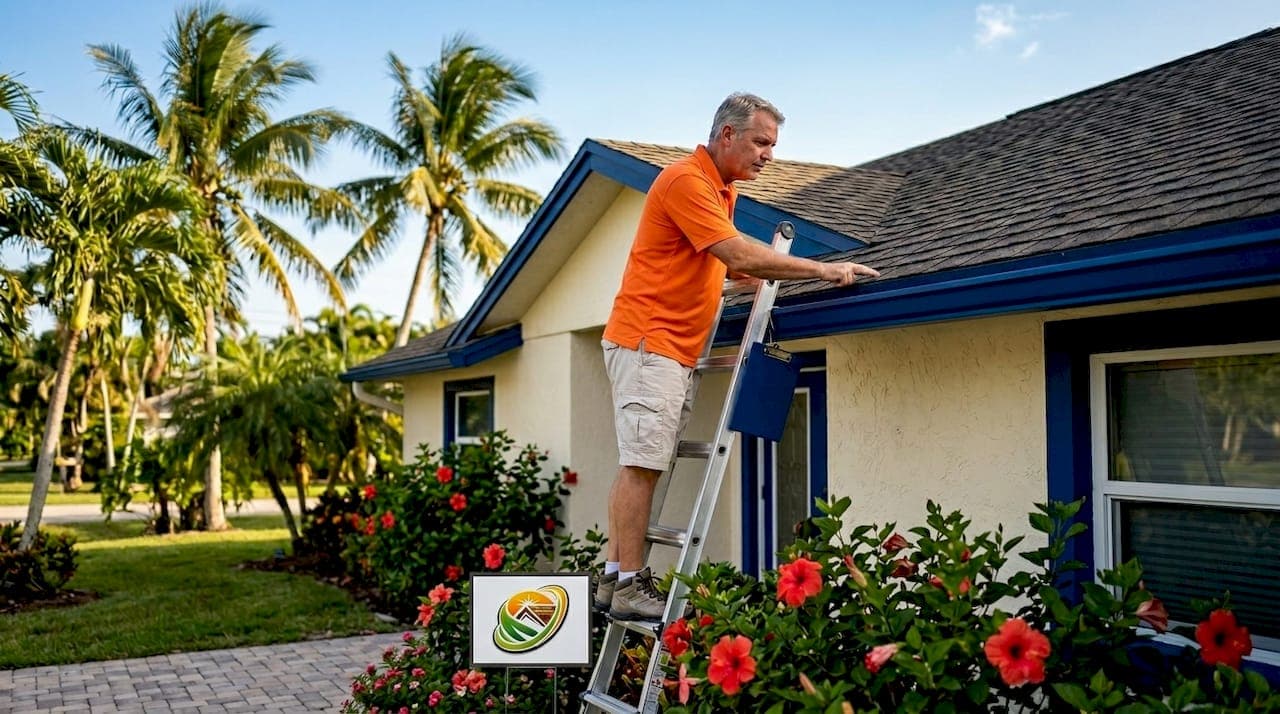
TL;DR:
- Roof damage in South Florida often involves missing, cracked, or curling shingles caused by intense UV radiation and storms. Early signs include attic moisture, water stains, and granule loss, which homeowners should inspect regularly. Proper assessment and timely repair or renewal can save homeowners significant costs and prolong roof lifespan.
Roof damage is defined as any deterioration to your asphalt shingles, flashing, gutters, or underlying decking that compromises your home's protection against water, wind, and heat. In South Florida, Broward County and Palm Beach County homeowners face a specific threat: the combination of intense UV radiation, hurricane-season storms, and daily heat cycles accelerates shingle wear faster than almost anywhere else in the country. Knowing how to spot roof damage early is the difference between a manageable repair and a $15,000 to $30,000 full replacement. This guide walks you through every warning sign, from surface shingle damage to hidden attic moisture, so you can act before the problem takes over.
What are the visible signs of shingle damage on your roof?
Shingle damage is the most direct and readable indicator of roof deterioration, and most of it is visible from the ground with a pair of binoculars. Missing or damaged shingles are immediate warning signs after storms, requiring urgent attention to prevent further water intrusion. In South Florida, a single afternoon thunderstorm or a tropical system can strip shingles, crack them, or lift their edges in ways that are not always obvious from street level.
Here are the key surface signs to look for on your asphalt shingles:
- Missing shingles: Bare patches on your roof expose the underlayment and decking directly to rain and UV rays. Even one missing shingle creates a water entry point.
- Cracked or split shingles: Florida's heat causes shingles to expand and contract daily. Over time, this creates cracks that let water seep underneath.
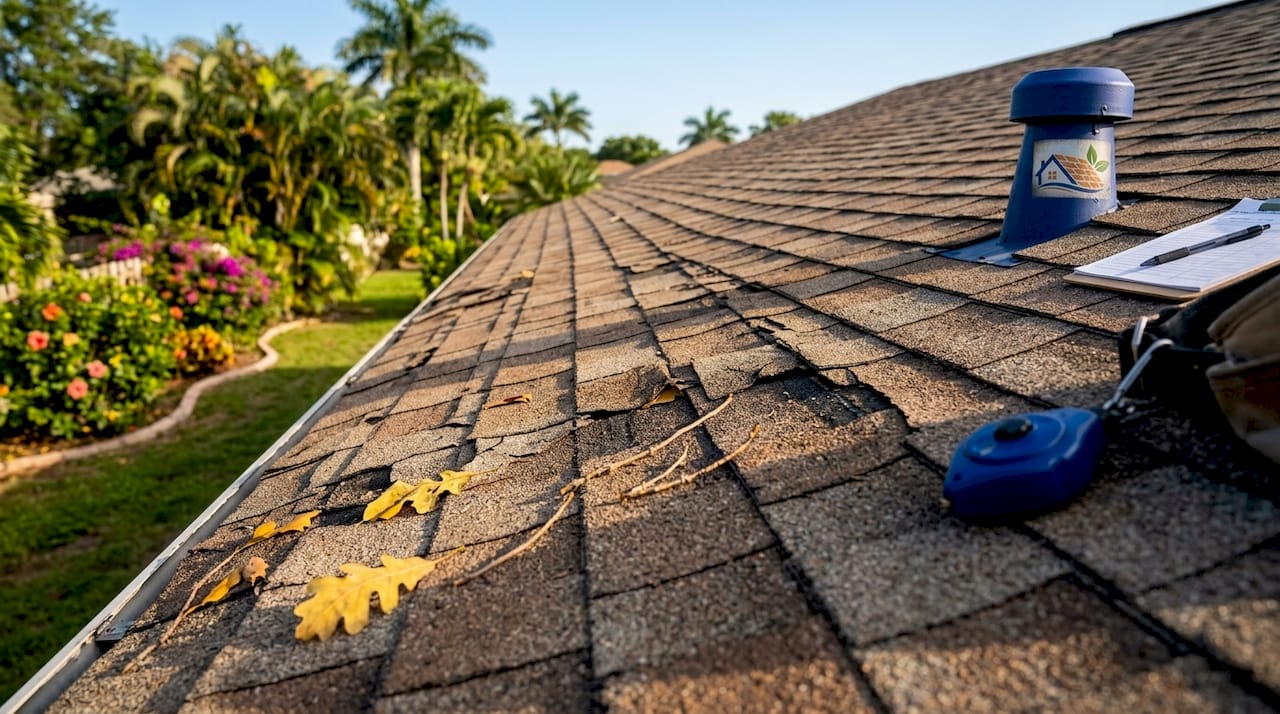
- Curling edges: Shingles that curl upward at the corners or cup in the center are drying out and losing flexibility. This is a classic sign of UV and heat damage in Broward and Palm Beach County.
- Hail dents: After a hail event, look for circular impact marks or soft spots on shingles. These dents break down the shingle's surface and accelerate wear.
- Granule loss: Granules protect shingles against UV rays, and their loss reduces shingle effectiveness significantly. Check your gutters and downspouts after storms. A heavy accumulation of sand-like granules is a clear sign your shingles are deteriorating.
Granule loss deserves special attention because it signals two different problems depending on the pattern. Natural aging causes gradual, even granule loss across the whole roof. Hail damage, by contrast, creates localized granule loss patterns concentrated in impact zones. Understanding this distinction matters for both repair decisions and insurance claims. You can learn more about the specific causes behind these patterns in this guide on shingle damage causes.
Pro Tip: After any storm, photograph your gutters and downspouts before cleaning them. That photo documents granule accumulation and helps you build a clear record for your insurance company or roofing professional.
How to identify hidden damage: attic signs and interior water leaks
Not all roof damage shows up on the surface. Some of the most serious signs of roof deterioration appear inside your home, specifically in your attic and on your ceilings, long before a visible leak develops. Wind-driven rain entering through roof openings causes attic moisture, with dark spots on the decking and wet insulation as the first indicators.
In South Florida's humid climate, musty attic smells and damp insulation are early indicators of moisture intrusion that appear before visible stains develop. That means your nose can alert you to a problem before your eyes do. If your attic smells like mildew after a storm, treat it as a roof leak until proven otherwise.
Look for these signs in your attic and interior spaces:
- Dark spots or staining on roof decking: These indicate water has been sitting or traveling across the wood. Fresh stains appear darker and may feel damp to the touch.
- Wet or compressed insulation: Insulation that has absorbed water loses its effectiveness and becomes a breeding ground for mold.
- Mold or mildew growth: The Florida Department of Health confirms that mold can develop within 24 hours when moisture remains unattended. In South Florida's heat, that timeline is even tighter.
- Water stains on ceilings or walls: Yellow or brown rings on your interior ceilings are a classic sign of a roof leak above.
- Bubbling or peeling paint: Paint that blisters on your ceiling or upper walls indicates moisture is trapped beneath the surface.
One critical nuance: ceiling stains alone do not confirm a roof leak. Plumbing leaks, HVAC condensation, and poor attic ventilation can all produce similar interior symptoms. Always check the attic directly above the stain before assuming your roof is the source. This step prevents unnecessary roof work and keeps you focused on the real problem.
Pro Tip: Inspect your attic within 24 to 48 hours after any significant storm. Early detection gives you the best chance of drying out moisture before mold takes hold in South Florida's warm, humid conditions.
Inspecting gutters, flashing, and other roof components for damage
A thorough roof inspection goes well beyond the shingles themselves. Gutters, downspouts, flashing, vents, and chimneys are all part of your roof system, and damage to any one of them can lead to serious water intrusion. Hail can dent metal gutters and loosen or break plastic parts, while damaged flashing is one of the most common and underdiagnosed causes of roof leaks.
Here is what to check on each component:
- Gutters and downspouts: Look for dents, cracks, or sections pulling away from the fascia. Check for granule buildup inside gutters after storms. Clogged gutters force water to back up under shingles, causing damage that looks like a roof leak but originates at the gutter line.
- Flashing: Flashing is the metal strip that seals joints around chimneys, skylights, and roof valleys. Loose, bent, or corroded flashing is a direct water entry point. This is where water leaks often travel far from their actual source, making flashing inspection critical for finding the true origin of a leak.
- Roof vents and pipe boots: Rubber seals around plumbing vents crack and shrink in Florida's heat. A cracked pipe boot is one of the most common sources of attic moisture in Broward and Palm Beach County homes.
- Roof valleys: The V-shaped channels where two roof slopes meet collect the most water during heavy rain. Damaged or missing shingles in these areas accelerate wear and increase leak risk significantly.
| Component | What to look for | Risk if ignored |
|---|---|---|
| Gutters | Dents, cracks, granule buildup | Water backup under shingles |
| Flashing | Loose, bent, or corroded metal | Direct water entry at roof joints |
| Pipe boots | Cracked or shrunken rubber seals | Attic moisture and mold |
| Roof valleys | Missing or worn shingles | Accelerated leak risk in heavy rain |
How do you inspect your roof safely and effectively?
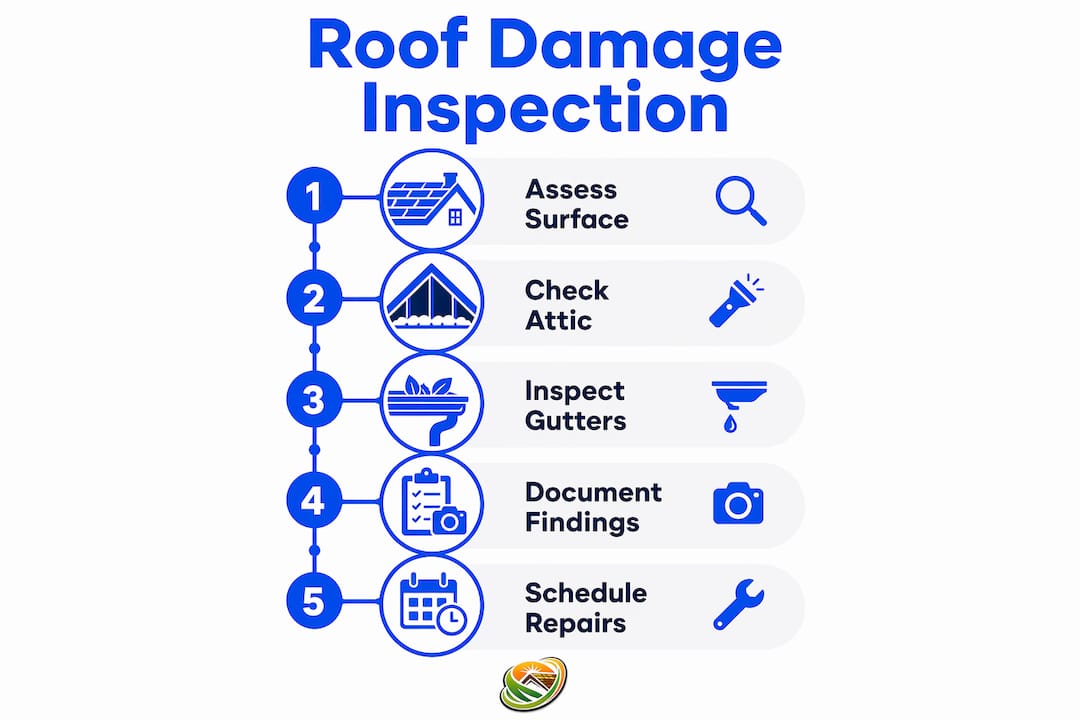
A safe and effective roof inspection follows a specific sequence: start from the ground, move to the attic, and only then consider the roof surface. Skipping steps or rushing the process leads to missed damage and wasted repair costs. This roof damage assessment workflow is especially relevant after South Florida storm events.
Follow these steps:
- Ground-level visual check: Stand at each corner of your home and use binoculars to scan the full roof surface. Look for missing shingles, curling edges, discoloration, and any areas where the roofline sags or dips.
- Gutter and downspout inspection: Walk the perimeter and check gutters for granule accumulation, dents, and separation from the fascia. This takes five minutes and reveals a lot about shingle condition.
- Attic inspection: Go into your attic with a flashlight during daylight hours. Look for light coming through the decking, dark stains, wet insulation, or any sign of mold. This step catches hidden damage that the surface check misses entirely.
- Roof surface scan (if safe): If you choose to go on the roof, wear rubber-soled shoes and never walk on wet shingles. Focus on flashing, valleys, vents, and any area that looked suspicious from the ground. Avoid walking on shingles more than necessary, as foot traffic accelerates granule loss.
- Document everything: Photograph granule loss patterns and any visible damage before touching or cleaning anything. Consistent photo records are the foundation of accurate damage assessment and insurance claims.
Common mistakes to avoid: inspecting only after major storms (routine checks every 12 to 24 months catch aging damage before it worsens), ignoring the attic entirely, and assuming a clean-looking roof surface means no damage exists underneath.
When to call a professional: If you see a sagging roofline, active leaks, or widespread shingle damage, stop the DIY inspection and call a certified roofing professional immediately. Sagging rooflines signal structural damage with safety risks that require expert assessment, not a homeowner walking on the roof.
Pro Tip: Use the Shingleroofrenewal roof inspection checklist to track your findings systematically. A written record helps you spot patterns over time and gives any professional you hire a clear starting point.
When should you repair, renew, or replace your roof?
The right response to roof damage depends on the severity of what you find and how quickly you act. Not every damaged roof needs full replacement, and in South Florida, many homeowners spend $15,000 to $30,000 on a new roof when renewal was still a viable option.
Here is how to think through the decision:
- Minor damage (a few missing or cracked shingles, small flashing issues): Targeted repairs are appropriate. Address these within weeks, not months, to prevent water from reaching the decking.
- Moderate deterioration (widespread granule loss, curling, early cracking across multiple areas): This is the ideal window for roof renewal. Shingleroofrenewal's process uses Fresh Roof's GreenSoy Technology to restore shingle flexibility at the molecular level, stopping further deterioration and extending roof life by 10 to 15 years. Homeowners who qualify can save up to 80% compared to full replacement, all backed by a 6-year transferable warranty.
- Severe damage (sagging decking, widespread missing shingles, active leaks with mold growth): Full replacement is likely necessary. The longer you wait at this stage, the more the structural damage compounds.
Proactive inspections after storms extend roof longevity and reduce costly emergency repairs, particularly in South Florida's climate where storm frequency is high. The homeowners who avoid the largest bills are the ones who catch deterioration in the moderate stage, before it crosses into replacement territory. Insurance considerations also matter here: many South Florida insurers scrutinize roof age and condition closely, and a documented renewal with a transferable warranty strengthens your coverage position.
Key takeaways
Catching roof damage early is the single most effective way to avoid a full replacement and protect your home's value in South Florida.
| Point | Details |
|---|---|
| Surface signs come first | Look for missing, cracked, curling, or granule-depleted shingles after every storm. |
| Attic inspection is non-negotiable | Dark spots, wet insulation, and musty odors reveal hidden moisture before interior stains appear. |
| Gutters and flashing matter | Dented gutters and loose flashing are direct water entry points that shingle checks alone will miss. |
| Document damage immediately | Photograph granule loss and impact patterns right after storms to support insurance claims. |
| Act in the moderate stage | Widespread granule loss and curling are the renewal window. Waiting pushes you into replacement territory. |
What I've learned from watching South Florida roofs age
I've seen the same pattern repeat itself across Broward and Palm Beach County: a homeowner notices a water stain on their ceiling, waits a few months to "see if it gets worse," and by the time they call someone, the decking is compromised and the mold has spread into the insulation. What started as a $500 flashing repair becomes a $20,000 replacement.
The uncomfortable truth is that South Florida's climate is genuinely harder on asphalt shingles than most homeowners realize. The UV intensity here is not comparable to what shingle manufacturers test for in northern climates. Shingles dry out, lose flexibility, and shed granules faster. A roof that would last 25 years in Ohio might show serious deterioration in 12 to 15 years in Delray Beach or Plantation.
What I tell every homeowner is this: your inspection schedule should match your climate, not the national average. Inspect twice a year in South Florida, and always within 48 hours after a named storm. The homeowners who do this consistently are the ones who catch problems in the renewal window, not the replacement window. That difference is often $12,000 to $25,000 in savings. A proactive 20-minute attic check is the highest-return maintenance task you can do on your home.
— Daniellison
Protect your South Florida roof before it's too late
If your inspection turned up granule loss, curling shingles, or any of the warning signs covered in this article, the next step is a professional assessment, not a guess.

Shingleroofrenewal specializes in asphalt shingle roofs across Broward and Palm Beach County. As a certified applicator of Fresh Roof's GreenSoy Technology, we restore shingles at the molecular level, stopping deterioration and extending your roof's life by 10 to 15 years. If your roof qualifies, you could save up to 80% compared to a full replacement, backed by a 6-year transferable warranty. Schedule your free inspection at Shingleroofrenewal today and find out exactly where your roof stands before a small problem becomes a very large bill.
FAQ
What are the first signs of roof damage to look for?
The first visible signs are missing, cracked, or curling shingles and granule accumulation in your gutters. Inside the home, water stains on ceilings and musty attic odors are early indicators of moisture intrusion.
How do I spot hail damage on my roof?
Hail damage appears as circular dents or soft spots on shingles and as localized granule loss concentrated in impact zones rather than spread evenly across the surface. Dented gutters and downspouts are also reliable hail damage indicators.
Can I inspect my roof myself?
Yes, a ground-level inspection with binoculars and an attic check are safe for most homeowners. Avoid walking on the roof surface unless you have proper footwear and safety equipment, and call a professional if you see sagging or widespread damage.
How often should South Florida homeowners inspect their roofs?
Inspect your roof at least twice per year and within 48 hours after any significant storm. South Florida's UV intensity and storm frequency accelerate shingle wear faster than in most other regions.
When is roof renewal a better option than replacement?
Roof renewal is the right choice when shingles show moderate deterioration such as widespread granule loss, early curling, or reduced flexibility, but the decking remains structurally sound. Shingleroofrenewal's process can extend roof life by 10 to 15 years at up to 80% less than the cost of full replacement.