
The most dependable roofing services share a short checklist you can verify in one afternoon. Before you sign anything, confirm these eight non-negotiables:
TL;DR Checklist
- Active state contractor license (verify on the Florida DBPR portal)
- Certificate of Insurance (COI) with sufficient general liability and current workers' comp, sent directly from the insurer
- Local permit history in the contractor's exact business name covering recent years
- Many verified reviews on Google, Yelp, or BBB with visible complaint resolution
- Manufacturer certification (GAF Master Elite, Owens Corning Platinum, or CertainTeed SELECT)
- Fully itemized written estimate (materials, tear-off policy, decking allowance, underlayment, flashing, disposal)
- Workmanship warranty of several years, transferable, in writing
- Milestone payment schedule with lien waivers; no large upfront cash demands
Miss any one of these and you are taking on real financial risk.
Table of Contents
- Why South Florida changes what "reliable" actually means
- What documents prove the qualities of reliable roofing services
- What a trustworthy written estimate and contract must contain
- Red flags that should make you stop and walk away
- How to decide between repair and replacement in South Florida
- Key Takeaways
- Prevention beats panic for South Florida roofs
- Your free second opinion before you commit to replacement
- Useful sources and public tools
Why South Florida changes what "reliable" actually means
South Florida is not a typical roofing market. The combination of intense UV exposure, year-round humidity, salt air in coastal Broward and Palm Beach counties, and annual hurricane-season wind loads reduces asphalt shingle lifespans compared to northern climates.
That compression matters for every decision you make, from vetting a contractor to deciding between repair and replacement. A contractor who does not account for it in their inspection scope is already working from the wrong baseline.
"Documented maintenance supports warranty and insurance claims — and insurers are increasingly requiring annual inspection records before they honor post-storm damage claims." — NRCIA, Why is roof maintenance important?
Ventilation failures, flashing corrosion from salt air, and UV-brittled underlayment are the failure modes that catch South Florida homeowners off guard. A reliable contractor inspects all three, not just the shingles. Understanding why roofs fail prematurely in South Florida helps you know exactly what to ask about before anyone climbs on your roof.
Pro Tip: Ask every bidder: "What is the typical effective lifespan of an asphalt shingle roof in this zip code?" A contractor who answers "25 to 30 years" without adjusting for South Florida conditions has not done enough local work to earn your trust.
What documents prove the qualities of reliable roofing services
These documents prove accountability. Ask for them at the first phone call, not after you receive a bid.
- Look up the state license. Visit the Florida Department of Business and Professional Regulation (DBPR) at myfloridalicense.com. Search the contractor's exact business name and confirm the license is active, not expired or suspended. The name on the license must match the name on the quote.
- Verify the COI directly with the insurer. Ask the contractor to have their insurer send the certificate to you. Require a COI with $1M+ general liability and current workers' compensation, and call the insurer's number on the certificate to confirm coverage dates. Do not accept a PDF the contractor emails you directly.
- Check local permit records. Search your county's public permit portal (Broward County ePermits or Palm Beach County ePlans). Look for permits pulled in the contractor's exact business name over the past three years. A verified local permit trail is the single most effective public check to filter out storm-chasers, because out-of-town crews rarely have one.
- Read reviews for complaint resolution, not just star ratings. Target 50+ verified reviews across Google, Yelp, and BBB. Look at the one- and two-star reviews specifically. How the contractor responds to complaints tells you far more than the average score. Prioritize how contractors handle complaints rather than selecting solely on price.
- Confirm manufacturer certification. GAF Master Elite, Owens Corning Platinum Preferred, and CertainTeed SELECT ShingleMaster are recognized manufacturer certification tiers. These require documented installation training and allow the contractor to offer extended manufacturer warranties.
Pro Tip: Match the license number, business name, and COI name across all three documents before the contractor sets foot on your roof. Borrowed credentials are a real problem in post-storm markets.
What a trustworthy written estimate and contract must contain
A reliable contractor gives you a fully itemized, scope-specific written estimate. Vague line items like "roofing materials" or "labor" are red flags, not placeholders.
A complete estimate covers:
- Shingle brand, model, and color
- Underlayment type and brand
- Tear-off vs. overlay (tear-off is almost always the right call; see Section 5)
- Decking replacement terms, priced per sheet
- Flashing scope (step, counter, valley, pipe boots)
- Ventilation work (ridge vents, soffit vents)
- Dumpster, disposal, and magnetic nail sweep
- Permit fees, itemized separately
- Labor, broken out from materials
- Milestone payment schedule
A high-quality estimate includes line items for tear-off scope, decking allowances, underlayment brand, flashing detail, cleanup, a milestone payment schedule, and disposal. If a contractor resists this level of detail, they are likely planning substitutions or scope creep once work begins.
"Detailed, itemized estimates empower homeowners and reduce surprise change orders. Contractors that resist itemization often rely on substitutions or scope creep." — 2-10 Home Buyers Warranty, 7 tips for choosing a roofing contractor
Your contract must also include: a milestone payment schedule (never pay more than 10–15% upfront), lien waivers at each payment stage, a written change order process, workmanship warranty language with transferability terms, and firm start and completion dates.
Reject any contract that includes: large upfront cash-only requests, vague material substitution language, mandatory out-of-state arbitration clauses, or assignment of insurance benefits to the contractor.
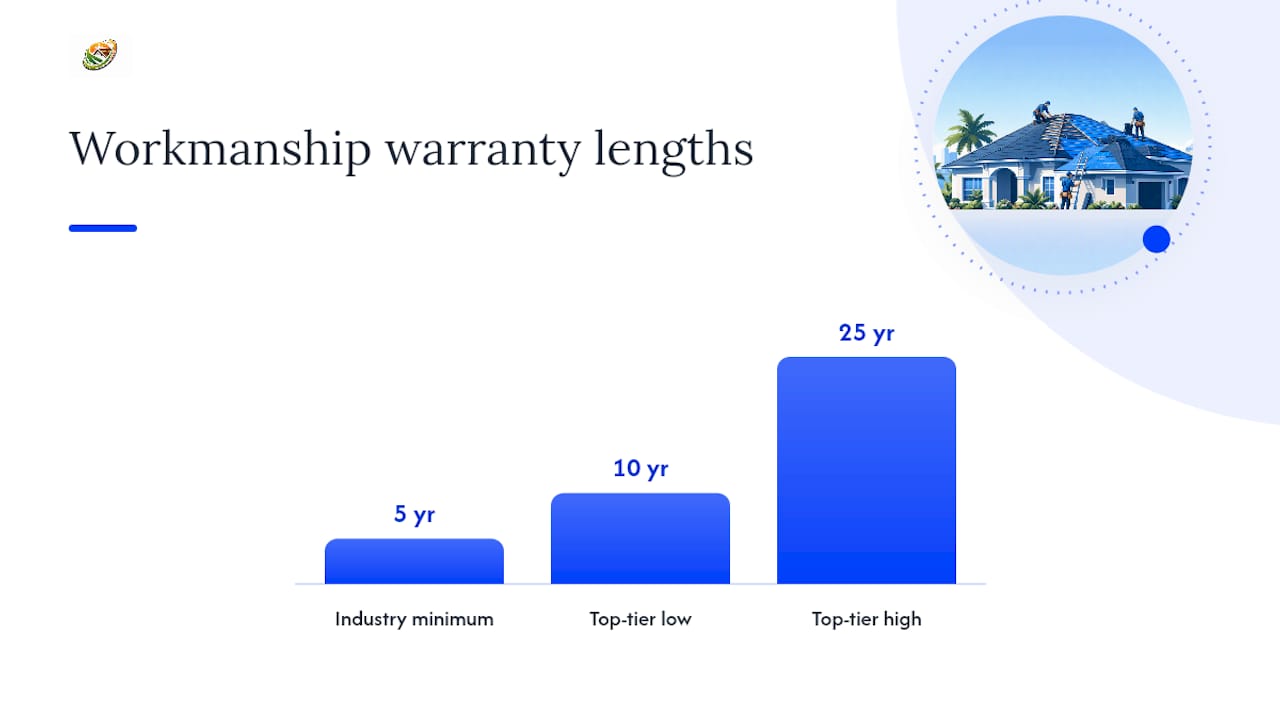
Pro Tip: Ask for the workmanship warranty in writing before signing. Industry guides recommend a minimum of 5 years; 10 to 25 years is the standard for top-tier contractors. Confirm it is transferable to the next owner.
Red flags that should make you stop and walk away
Fail any one of the first four checks (license, COI, local permit history, written warranty) and eliminate the bidder. No exceptions.
Additional warning signs to act on immediately:
- Aggressive same-day sign-up pressure or "today only" pricing
- Bid price far below what local permit-declared project values suggest
- Refusal to pull permits, or offering to pull them "in your name"
- No local permit trail in their business name over the past three years
- COI sent by the contractor rather than the insurer
- Workers' comp listed as "exempt" for a crew of more than one or two people
- Evasive answers about whether they use their own crew or subcontractors
- No written workmanship warranty offered
Door-knockers who appear immediately after a storm are a specific risk in South Florida. Check public permit records to filter out storm-chasing crews; insist the roofer pulls permits in their own business name. A crew with no local permit history is not accountable to your community.
Pro Tip: Ask on the first call: "Will you pull the permit in your company's name?" A legitimate contractor says yes without hesitation. Any other answer is a disqualifier.
How to decide between repair and replacement in South Florida
Use a combined rule of thumb: roof age plus damage pattern plus cost percentage. If a repair estimate reaches 30% of full replacement cost, replacement is usually the smarter financial decision. At 50% or more, it almost always is.
South Florida lifespan compression changes the math. A 12-year-old architectural shingle roof in Broward County may already be at 60–70% of its effective life. A 25-year-old roof is almost certainly past it.
- Calculate the repair-to-replacement ratio. Get a full replacement quote, then divide the repair estimate by it. Use age, damage scope, and cost rules (30% and 50% benchmarks) to decide repair vs. replacement, adjusted for Gulf Coast conditions.
| Scenario | Age | Damage Pattern | Recommended Path |
|---|---|---|---|
| Post-storm isolated damage | Under 12 years | Single slope, no decking rot | Repair |
| Widespread granule loss | 15–20 years | Multiple slopes, brittleness | Preservation assessment first |
| Major structural damage | Over 20 years | Decking rot, multiple failures | Replacement |
| Minor wear, no leaks | 10–18 years | Surface aging only | Preservation/renewal |
Key Takeaways
Vetting a roofing contractor in South Florida comes down to eight verifiable checks: license, COI, local permit trail, reviews, manufacturer certification, itemized estimate, workmanship warranty, and a milestone payment schedule.
| Point | Details |
|---|---|
| License and COI first | Verify both independently before any site visit; COI must come directly from the insurer. |
| Local permit trail matters | Three years of local permits in the contractor's exact business name filters out storm-chasers. |
| Itemized estimate required | Every line item (materials, tear-off, decking, flashing, disposal) must appear in writing before you sign. |
| Workmanship warranty in writing | Minimum 5 years, transferable; confirm it covers labor defects separately from the manufacturer warranty. |
| Shingleroofrenewal preservation first | Before committing to replacement, get a free preservation assessment to see if your roof qualifies for renewal. |
Pro Tip: Save every document: the COI, permit numbers, estimate, contract, and warranty paperwork. Insurers in South Florida increasingly require maintenance records to honor post-storm claims.
Prevention beats panic for South Florida roofs
The conventional wisdom in roofing is reactive: wait until something fails, then fix it. That model is expensive in any market. In South Florida, where UV exposure, humidity, and storm cycles accelerate every failure mode, it is especially costly.
What most homeowners do not realize is that the window between "aging roof" and "failed roof" is where the real savings live. A roof showing early brittleness, minor granule loss, or surface cracking is not necessarily a replacement candidate. It is a preservation candidate. The difference between catching it at year 14 versus year 18 can be thousands of dollars and years of additional life.
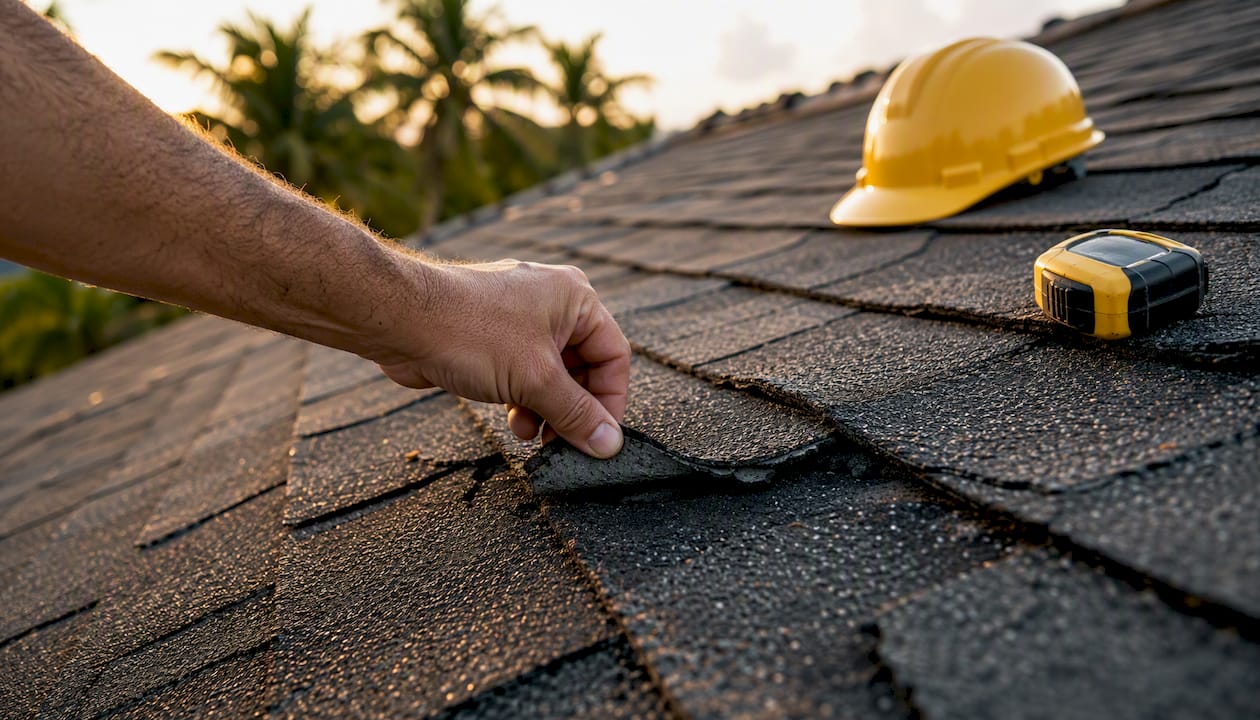
Documented maintenance also changes the insurance conversation. Insurers are tightening requirements in Florida, and a roof with no maintenance record is a liability in a claim dispute. A preservation treatment with a transferable warranty is documentation. It tells the next buyer, the insurer, and the appraiser that this roof was cared for.
The best roofing decision you can make is not choosing the right contractor for replacement. It is finding out whether you need replacement at all.
Your free second opinion before you commit to replacement
Most homeowners in Broward and Palm Beach County spend $15,000–$30,000 on roof replacement without ever asking whether their roof could be preserved instead. Shingleroofrenewal offers a free inspection and assessment to answer that question before you sign a replacement contract.
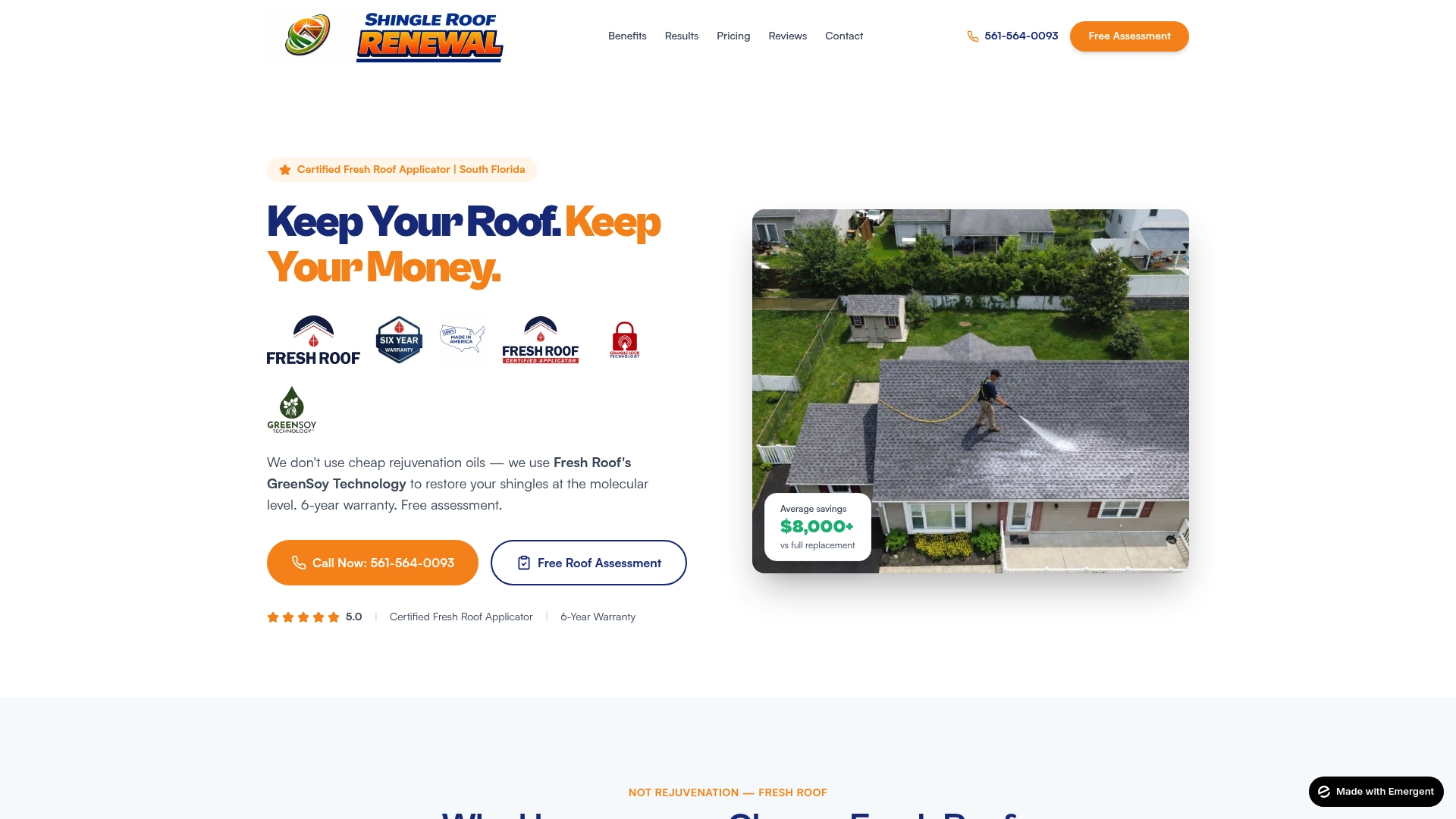
The process is straightforward: Shingleroofrenewal inspects your roof, assesses its condition, and tells you honestly whether it qualifies for preservation using certified Fresh Roof Green Soy Technology. Qualifying roofs can save up to 80% compared to full replacement, backed by a 6-year transferable warranty. If your roof does not qualify, you will know exactly why and can move forward with a roofer from an informed position.
Schedule your free roof assessment today and find out if your roof qualifies for renewal before you call a roofer.
Useful sources and public tools
Public verification tools:
- How to choose a reputable roofing contractor in Florida
- 7 tips for choosing a roofing contractor
- Why is roof maintenance important?
- How to hire a roofer you can trust · Proven Pros
- Roof Repair vs Replacement: How to Decide (2026) | FindRoofingPros
- How to Choose a Roofing Contractor: 15-Point Checklist | The Roofing Brief
- Six reasons preventative maintenance for your roof is a necessary investment
How to read a permit record: Look for the permit type (roofing), the contractor's business name (must match the quote exactly), the issue date, and the final inspection status. An open or failed inspection is a red flag on any contractor's history.
What to expect on a COI: The certificate lists the insurer name, policy numbers, coverage types (general liability and workers' comp), coverage limits, and expiration dates. Call the insurer's number on the document to confirm the policy is active.
Save everything: Store your COI, permit numbers, signed contract, estimate, and warranty documents together. South Florida insurers increasingly require maintenance records to process post-storm claims, and documented roof health monitoring creates the paper trail that protects you at claim time.
| Document | Why You Need It | Where to Get It |
|---|---|---|
| Contractor license | Confirms legal authorization to work | Florida DBPR portal |
| Insurer-issued COI | Proves active liability and workers' comp coverage | Contractor's insurer (not the contractor) |
| Local permit record | Filters storm-chasers, confirms local accountability | County permit portal |
| Itemized written estimate | Prevents substitutions and scope creep | Contractor (demand it in writing) |
| Workmanship warranty | Covers labor defects after installation | Contractor (must be transferable) |