
A 20-year-old asphalt shingle roof sits at a decision point. Many roofs at this age genuinely need replacement, but condition and shingle type still determine the right next step for your house. A 3-tab shingle at 20 years is likely near the end of its service life. An architectural shingle at 20 years may have another 5 to 10 years left if the attic ventilation is sound and the decking is dry.
This week, do three things. Photograph every slope, the flashing, and the gutter runoff so you have a dated record. Call your insurance agent and ask directly whether your policy still pays replacement cost value or has shifted to actual cash value because of your roof's age. Then schedule a professional inspection if you see any of the warning signs below or simply aren't sure what condition your roof is in.
The factors that actually decide this, more than age alone, are:
- Shingle type (3-tab, architectural, or Class 4 impact)
- Visible brittleness or curling when you look closely
- Number of active leaks versus isolated staining
- Decking condition underneath the shingles
- How your insurer treats roofs at your specific age
A 20-year-old roof is not automatically a lost cause. It's a roof that needs an honest look before anyone spends $15,000 to $30,000 on a full tear-off.
Key Takeaways
A 20-year-old roof needs a condition-based assessment, not an automatic replacement, because shingle type, decking health, and insurance status determine the real timeline.
| Point | Details |
|---|---|
| Age alone doesn't decide | Shingle type matters more: 3-tab roofs near 20 years are likely due, architectural roofs may have years left. |
| Insurance status shifts around year 15–20 | Confirm with your insurer, in writing, whether your policy has moved from RCV to ACV coverage. |
| Repair only makes sense below 30% damage | Beyond that threshold, or with decking rot and multiple leaks, replacement is the more reliable choice. |
| Document before you decide | Photograph shingles, flashing, gutters, and attic condition before hiring anyone or filing a claim. |
| Preservation can extend qualifying roofs | Restoration can add 10 to 15 years of life on sound but aging roofs, backed by a transferable warranty. |
Table of Contents
- How to Check if You Need to Replace a 20 Year Roof
- How Long Do Different Shingle Types Really Last?
- Should You Repair or Replace Your Roof?
- What Does a Roof Replacement Actually Cost?
- How Does Roof Age Affect Your Insurance and Home Sale?
- What Should a Professional Roof Inspection Cover?
- Restoring an Aging Roof Instead of Replacing It
- What the Data Actually Tells Homeowners at Year 20
- Sources
How to Check if You Need to Replace a 20 Year Roof
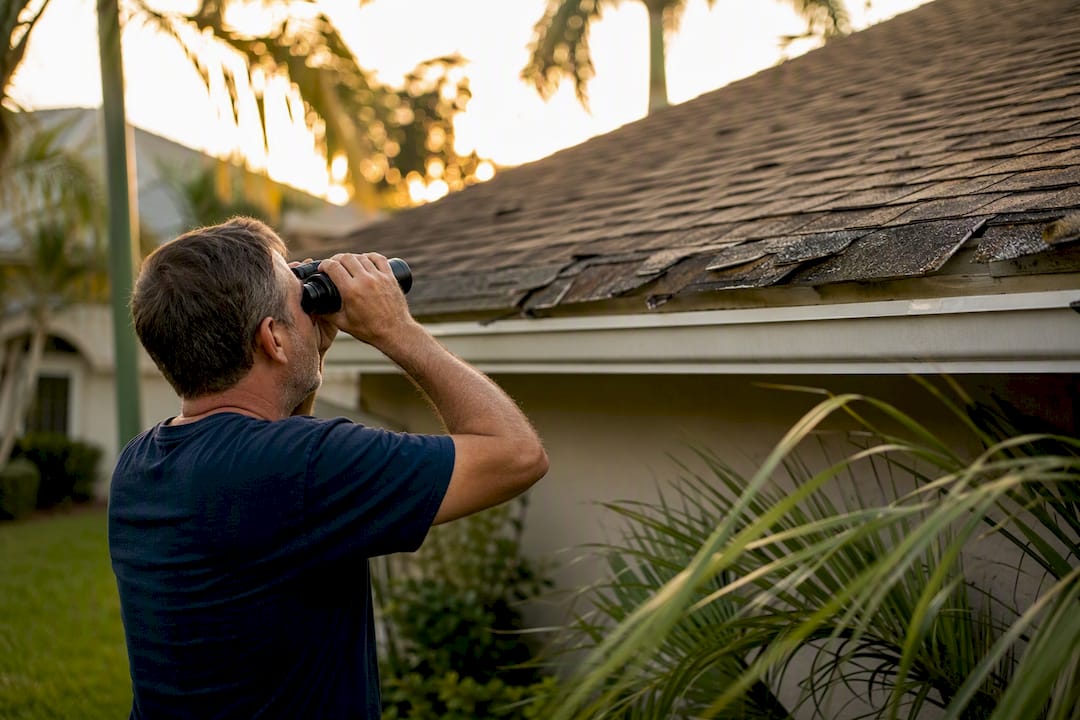
Start from the ground with a pair of binoculars before you ever touch a ladder. You're looking for patterns, not perfection: shingles that curl up at the corners, bald patches where granules have worn away, cracks running through the shingle body, and any spot where a shingle is simply missing. Sagging along the ridge or between rafters is a bigger red flag than surface wear. It often points to decking that has absorbed moisture and is losing structural integrity.
Pro Tip: Check your gutters and downspouts after a hard rain. A handful of loose granules is normal wear. A steady stream of black, sandy grit means your shingles are shedding their protective coating faster than they should.
Here's a simple sequence to work through:
- Scan from the ground. Walk the perimeter of your house and look at each slope with binoculars, checking for curling, bald spots, and color inconsistency.
- Check the valleys and flashing. These are where leaks start. Look for rust, lifted metal, or cracked sealant around chimneys, vents, and skylights.
- Inspect the gutters. Granule buildup, moss, or standing debris tells you how the roof is aging.
- Look inside the attic. Water stains, daylight through the roof deck, or a musty smell are signs a leak already exists.
- Skip climbing if you're not confident. A steep pitch, brittle 20-year-old shingles, and a homeowner without fall protection are a bad combination. Use a drone photo service or call a professional for close-up documentation instead.
For photo documentation, capture close-ups of any cracked or curled shingle, wide shots of each roof plane, the gutter interior after a rain, every flashing point, and any interior ceiling stains. Keep a short written note with the date, weather conditions, and what you observed at each location. This record becomes valuable if you later file an insurance claim or negotiate with a buyer or seller. Owens Corning's guidance on common signs you need a new roof lines up closely with what field inspectors flag first: curling, buckling, and granule loss top the list.
How Long Do Different Shingle Types Really Last?
Real-world lifespan varies a lot more by shingle class than most homeowners expect. Standard 3-tab shingles typically last 15 to 20 years, architectural or dimensional shingles run 25 to 30 years, and Class 4 impact-resistant shingles can reach 30 to 40 years under decent conditions. Premium designer shingles can stretch even longer when installation and ventilation are close to ideal.
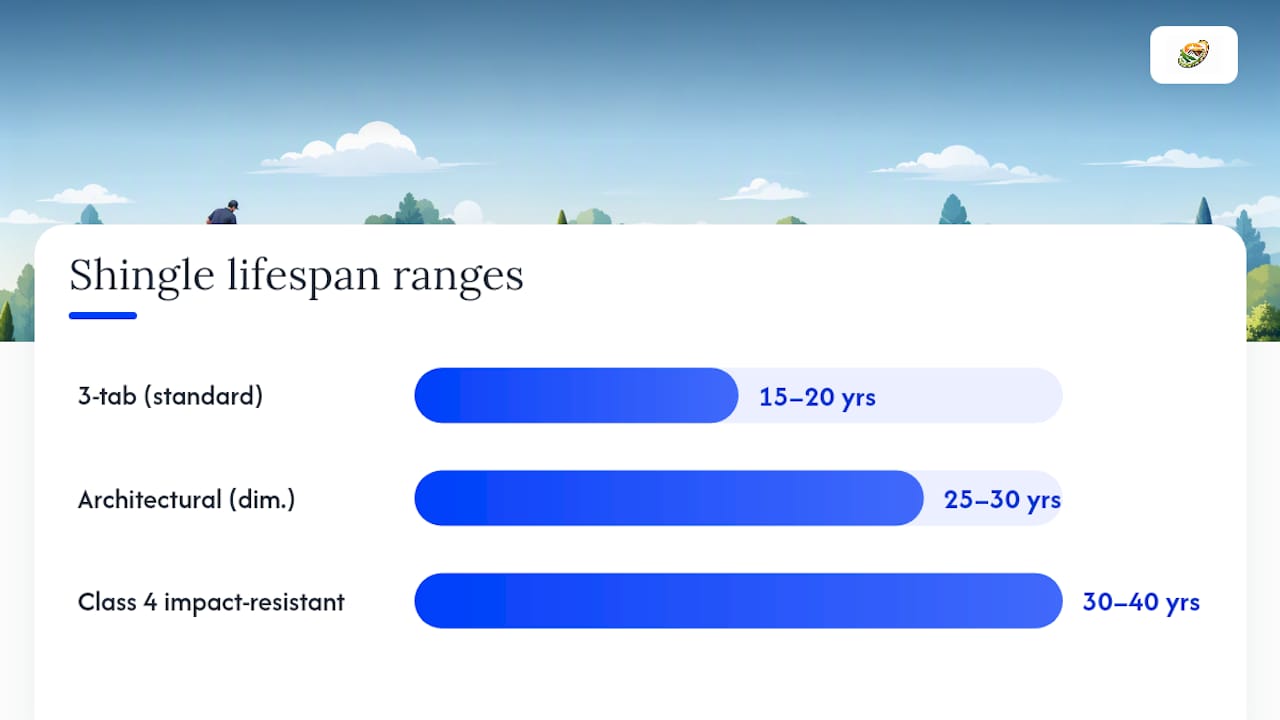
That gap matters enormously if you're trying to figure out whether your specific roof at year 20 is old or middle-aged. A homeowner with 3-tab shingles at 20 years is likely past the design life. A homeowner with architectural shingles at the same age still has meaningful life left, assuming the roof was installed correctly and maintained.
Manufacturer warranties advertising "30-year" or "lifetime" coverage create false confidence here. Those warranties prorate: full coverage typically applies only in the first several years, and by year 20, payout often covers just a fraction of what a full replacement actually costs. A warranty year and a real service year are not the same thing.
The factors that swing lifespan the most:
- Attic ventilation. Poor airflow traps heat and moisture under the deck, and correcting it under IRC R806 ventilation standards can extend shingle life by 20 to 30%.
- Installation quality. Improper nailing patterns or missed underlayment steps shorten life regardless of shingle grade.
- Climate exposure. Intense sun, heat cycling, and storm frequency accelerate brittleness faster than moderate climates.
- Routine maintenance. Simple annual upkeep, like clearing debris and resealing flashing, can add 5 to 10 years to a roof's usable life.
Should You Repair or Replace Your Roof?
The math here is more concrete than most homeowners realize. Industry guidance generally points to repair when damage covers less than 25% of the roof and the shingles are still relatively young, and replacement when damage reaches 30% or more, when there are multiple active leaks, when the decking has rotted, or when repair costs approach roughly a third of full replacement cost.
A 20-year-old 3-tab roof presents challenges as the shingles become brittle over time, making repairs less effective compared to newer shingles. A repair crew can patch a section, and within a season or two, the surrounding shingles crack from the same stress that caused the original failure. You end up paying for the repair and the replacement.
| Situation | Recommendation | Reason |
|---|---|---|
| Under 25% damage, roof under 15 years old | Repair | Shingles are still flexible enough to hold new material |
| 25–30% damage, roof 15–20 years old | Targeted repair with monitoring | Limited life remains, but full replacement isn't urgent yet |
| 30%+ damage, roof 20+ years old | Replace | Repair cost approaches replacement cost with lower reliability |
| Multiple active leaks or decking rot | Replace | Structural damage compounds and repairs won't hold |
| Isolated damage, otherwise sound roof | Repair | Localized fix extends life without full-roof cost |
If your roof falls in that middle band, a cost-effective roof repair approach can buy real time while you plan and budget for the eventual larger job.
What Does a Roof Replacement Actually Cost?
Installed costs scale directly with shingle tier. Basic 3-tab shingles sit at the lower end of the per-square-foot range, architectural shingles run higher, and Class 4 impact shingles carry the highest upfront cost but the longest service life, which changes the lifecycle math significantly. A cheaper roof that needs replacing again in 15 years often costs more over 30 years than a pricier roof that lasts the full three decades.
Staged repairs make financial sense when damage is isolated and the roof still has structural years left. Preemptive full replacement makes more sense when your insurer has already signaled a shift toward actual cash value coverage, since replacing before a claim protects your replacement-cost benefit rather than leaving you exposed to depreciation math after storm damage.
Delaying replacement on a brittle, failing roof often backfires financially. Repeated small repairs on a 20-year-old roof frequently add up to a meaningful fraction of full replacement cost, and material and labor prices tend to climb year over year, so the "wait and see" roof often costs more by the time it finally gets replaced.
If you're in the 15 to 20 year band, plan for replacement within a 12 to 36 month window rather than waiting for a failure. That gives you time to:
- Collect at least three written quotes from licensed contractors
- Compare shingle tiers against your climate and how long you plan to stay in the home
- Budget in stages rather than facing an emergency expense after storm damage
- Ask your insurer how timing affects your coverage terms
How Does Roof Age Affect Your Insurance and Home Sale?
Insurance carriers pay close attention to roof age, often more than homeowners expect. Many policies shift from replacement cost value to actual cash value somewhere between years 15 and 20, meaning a claim after that point pays out depreciated value rather than the full cost to rebuild. Past roughly 25 years, some carriers decline new policies altogether or decline to renew existing ones.
This underwriting shift is exactly why some homeowners choose to reroof before anything fails. Protecting your RCV coverage while you still have it can be worth more than the cost of the new roof itself, especially in regions with frequent storm activity. Confirm your specific coverage terms with your agent in writing rather than assuming your policy works the way a neighbor's does.
Selling or buying a home with a 20-year roof adds another layer. Sellers should expect buyers' inspectors to flag roof age regardless of visible condition, and having your own documented inspection ready can prevent last-minute price renegotiation. Buyers should ask directly for maintenance records and any past insurance claims tied to the roof, since a "cosmetically fine" roof can still carry hidden decking issues that only show up in an attic inspection.
- Ask your insurer to confirm RCV versus ACV status in writing
- Get a written inspection report before listing or buying a home with an aging roof
- Expect roof age to factor into negotiation regardless of visible surface condition
What Should a Professional Roof Inspection Cover?
A credible inspection goes well beyond a walk around the yard. A thorough report should document the condition of the decking, note any soft spots found by probing suspect areas, photograph flashing and seam adhesion, and measure attic ventilation airflow against building code ratios. Granular embedment testing on representative shingle samples tells an inspector how much protective coating remains, which is a better predictor of remaining life than a visual glance alone.
Before you hire anyone, ask a few direct questions:
- Will you document decking and flashing condition with photos, not just a summary?
- Will you measure attic ventilation, or just estimate it visually?
- Can you provide a written report I can share with my insurer?
- Do you offer a preservation or restoration option, or only full replacement?
That last question matters more than most homeowners realize. If your roof qualifies, which means it hasn't gone structurally brittle and the decking is sound, a professionally applied restoration can restore shingle flexibility, lock in remaining granules, and extend usable life by roughly 10 to 15 years for qualifying asphalt shingle roofs. This is not appropriate for every roof. A roof with widespread cracking, extensive decking rot, or multiple unresolved leaks is past the point where restoration helps, and replacement becomes the honest recommendation.
Pro Tip: Ask your insurer, in writing, whether roof restoration resets or extends your RCV eligibility window. Carrier policies vary, and getting the answer on paper protects you later.
Shingleroofrenewal's inspection process follows three steps: we inspect the roof, assess its actual condition, and tell you plainly whether it qualifies for renewal or needs replacement. We're not roofers, and we're not trying to sell you a tear-off you don't need yet.
Restoring an Aging Roof Instead of Replacing It
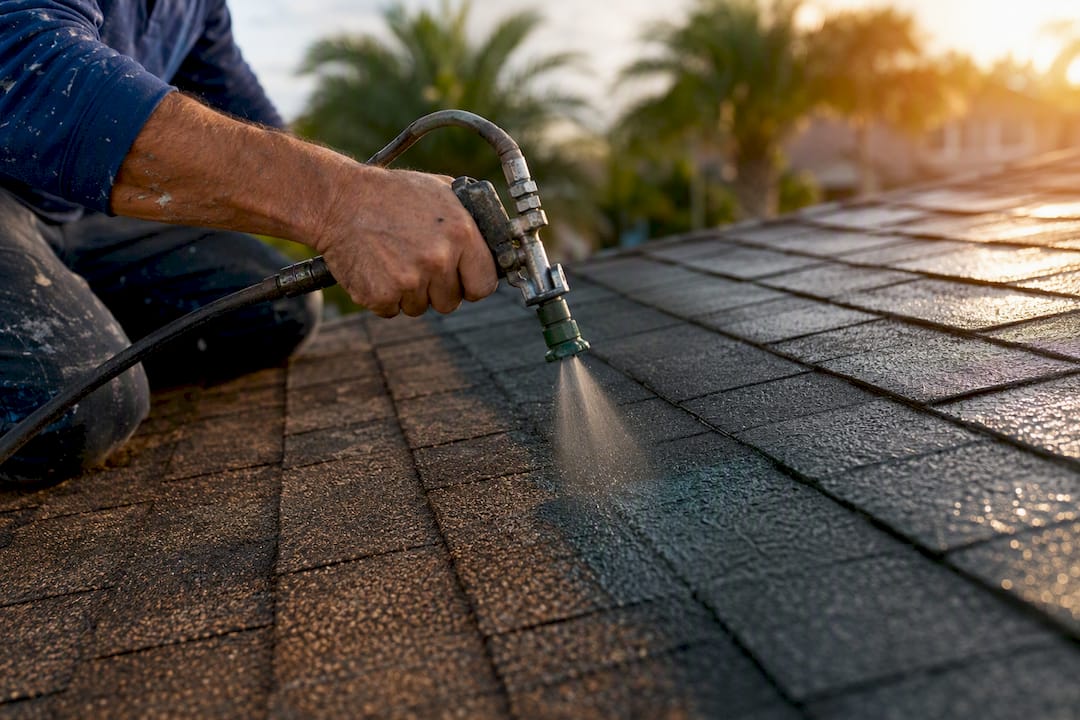
Most homeowners assume a 20-year-old roof only has two paths: patch it or replace it. There's a third option that gets overlooked because most roofing companies don't offer it: preservation. Shingleroofrenewal's certified Green Soy Technology penetrates asphalt shingles at the molecular level, restoring flexibility, slowing granule loss, and improving wind and fire resistance on roofs that still qualify.
Call us before you call the roofer.
This only works on roofs that qualify. A structurally sound roof with brittle but intact shingles is the ideal candidate. A roof with rotted decking or widespread active leaks needs a contractor, not a preservation service, and we'll tell you that honestly during the assessment.
If you're in Palm Beach or Broward County, schedule your free roof inspection in Delray Beach or check service availability in Plantation to find out whether your roof qualifies for renewal before you commit to a full tear-off.
What the Data Actually Tells Homeowners at Year 20
Most roofing advice treats the 20-year mark as a countdown timer. That's the wrong frame. The real signal isn't the calendar, it's the shingle class and the ventilation history, and conventional advice glosses over both because "replace at 20" is an easier headline than "it depends on your attic airflow and shingle grade."
Where the standard advice actually falls short is insurance. Most articles tell you to watch for curling shingles and call it a day. Almost none of them tell you to check your policy's RCV versus ACV status before you decide anything, even though that shift often happens at the exact same age range this article covers. That's a bigger financial trigger than a few curled shingles.
If I had to rank priorities for a homeowner staring at a 20-year-old roof: get the insurance answer in writing first, get an honest inspection second, and only then decide between repair, restoration, or replacement. Skipping straight to "get quotes for a new roof" is how people spend $20,000 on a roof that had another decade in it.
— Daniellison
Sources
- How Long Does an Asphalt Roof Last? Lifespan by Shingle Type (2026)
- 2026 Roofing Material Lifespan Report (Field Data) | TRB
- Asphalt shingle lifespan: 8 factors that decide real roof life | JDH Remodeling
- When to Replace Roofs: 7 Signs | Owens Corning Roofing