
TL;DR:
- Many asphalt shingle roofs can be preserved and extended through professional treatment before needing full replacement.
- A free inspection helps determine if your roof qualifies, especially considering South Florida’s harsh climate accelerates aging.
Many asphalt shingle roofs can be preserved and extended with professional treatment before replacement ever becomes necessary. If your roof is in the mid-life stage and still holding granules across most of its surface, a certified preservation service may add meaningful service life and delay a costly replacement. The single best next step: schedule a free on-site qualification inspection with a certified applicator before you call a roofer.
- Preservation can add years of service life to qualifying roofs
- South Florida's heat and UV accelerate aging faster than most U.S. climates
- A free inspection determines whether your roof qualifies
- Preservation typically costs far less than full replacement
Think of it the way professionals describe roof maintenance: small preventive fixes avoid expensive reactive repairs. The ROI on preservation, when a roof qualifies, almost always beats early replacement.
Table of Contents
- How Long Does Your Roof Life Actually Last?
- Warning Signs Your Roof Is Approaching End-of-Life
- Preservation Options That Can Extend Your Roof's Lifespan
- How Professionals Decide Whether Your Roof Qualifies
- What Does Preservation Cost Compared to Full Replacement?
- How to Choose a Roof Preservation Provider
- What to Expect During and After a Preservation Treatment
- Key Takeaways
- The Inspection-First Approach Makes Sense Here
- Your Roof May Qualify for Preservation. Find Out for Free.
- Useful Sources and Further Reading
How Long Does Your Roof Life Actually Last?
Asphalt shingle roofs are the most common steep-slope roofing material in the United States, and their lifespan varies significantly by shingle type. Three-tab shingles generally last around two decades. Architectural (dimensional) shingles last longer, with premium "lifetime" products potentially exceeding typical lifespans under ideal conditions.
Climate changes everything. A roof in Erie, Pennsylvania may outlast a comparable roof in a hot, high-UV market by nearly a decade, according to regional wear data. South Florida sits at the harsh end of that spectrum. Constant sun, high humidity, salt air, and storm cycles dry out the oils in asphalt shingles faster than almost any other U.S. climate, causing brittleness, cracking, and granule loss years ahead of schedule.
The factors that shorten roof lifespan most:
- High UV exposure and heat breaking down shingle oils
- Poor attic ventilation trapping heat and moisture (inadequate ventilation can cut effective lifespan significantly)
- Biological growth (algae, moss) trapping surface moisture
- Storm damage and wind uplift
- Poor installation or substandard workmanship
One common misconception: a 30-year or 50-year manufacturer warranty is not a guarantee of that service life. Real-world performance depends on climate, maintenance, and installation quality. Professional assessment is the only reliable way to know where your roof actually stands.
Warning Signs Your Roof Is Approaching End-of-Life
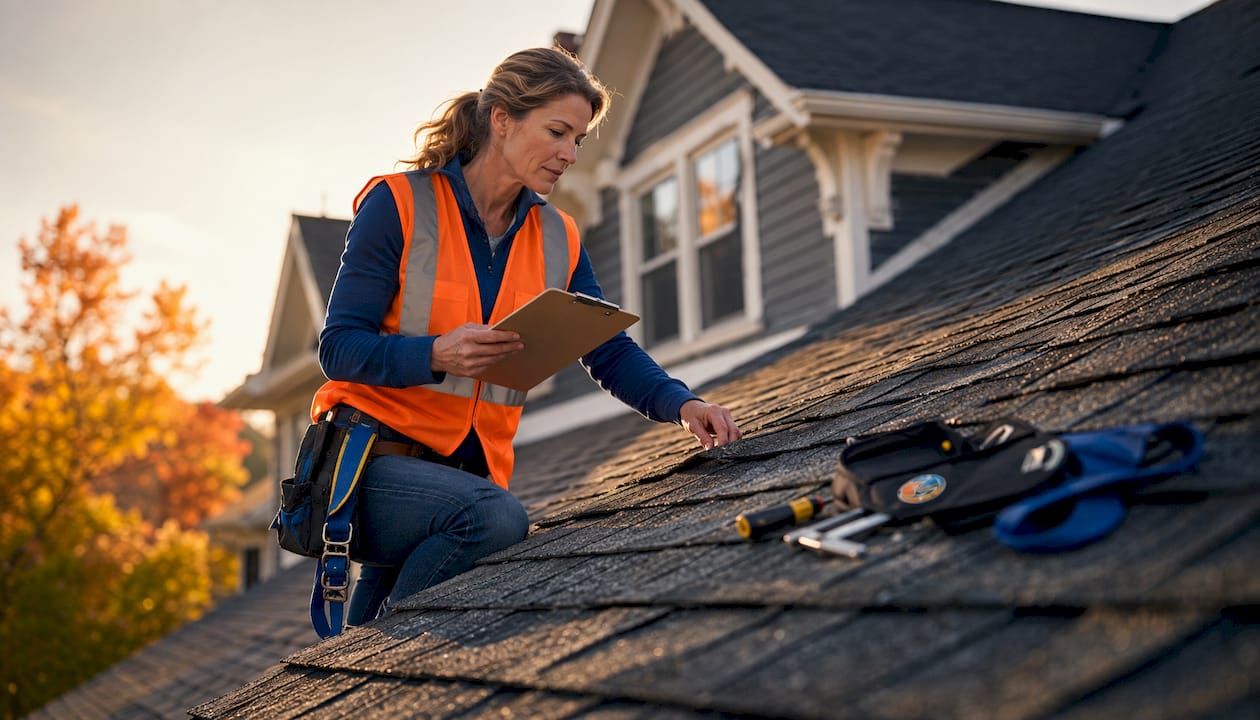
Catching the right signs early is what separates a preservation candidate from a replacement job. Key warning signs include widespread granule loss, extensive cracking, curling or cupping of tabs, and attic water infiltration signs such as damp insulation or stained decking.
Check from the ground and gutters first:
- Granules collecting in gutters or downspouts (normal in small amounts; patchy bald spots are the red flag)
- Visible cracking, curling, or cupping across multiple shingle fields
- Missing tabs or shingles after storms
- Dark staining or algae streaks that never dry out
Then check the attic:
- Damp insulation or stained decking after rain
- Active water trails or mold growth on rafters
- Soft spots or sagging when you walk the roof surface
Some of these signs still leave a preservation window open. Widespread structural decking rot, active repeat leaks across multiple areas, or near-total granule loss across the field typically indicate replacement is the right call. A roof that looks rough but is still shedding water cleanly may still qualify for treatment.
Pro Tip: Grab a pair of binoculars and scan your roof from the yard after a storm. Check your gutters for granule buildup. These two quick checks cost nothing and tell you a lot. If you see bald patches or curling on more than a small section, call for a professional inspection rather than waiting.
Preservation Options That Can Extend Your Roof's Lifespan
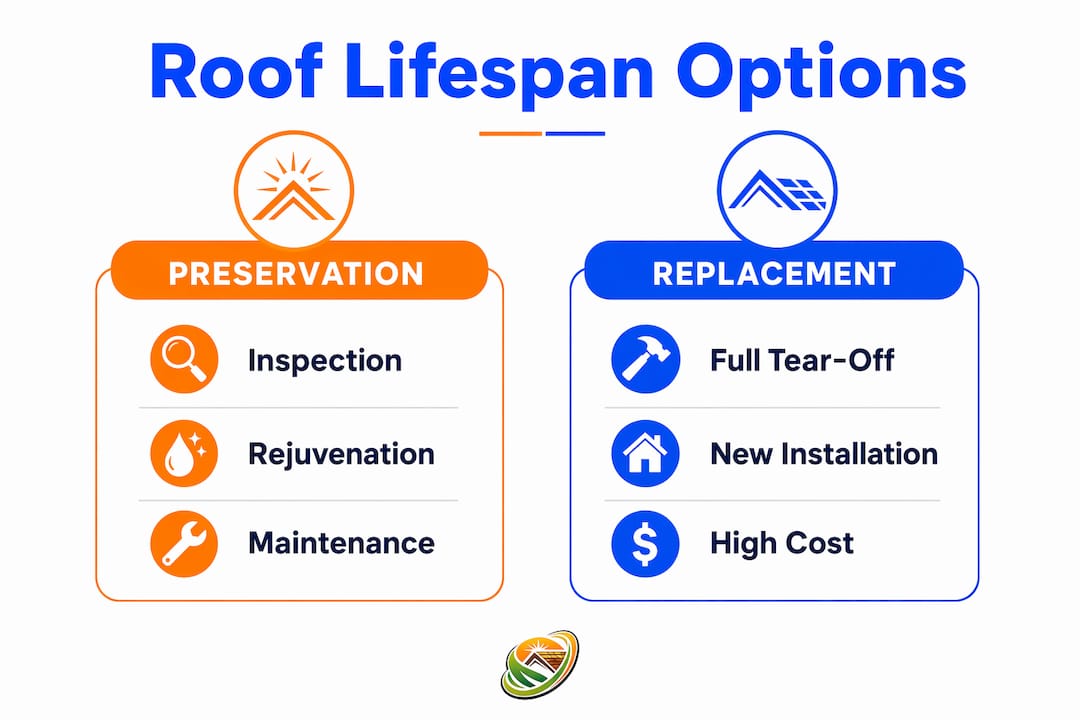
Routine maintenance and professional treatments work together. Twice-yearly inspections (spring and fall) plus post-storm checks are the baseline. Beyond that, targeted repairs to flashing and seals, gutter maintenance, soft-wash algae treatment, and attic ventilation upgrades all contribute to a longer-lasting roof.
The most impactful option for qualifying roofs is a professional rejuvenation treatment. Heat, UV exposure, and attic humidity accelerate molecular-level oil loss in shingles, making them brittle and prone to cracking. A treatment that restores those oils at the molecular level can reverse early-stage brittleness, lock in granules, and improve flexibility before the damage becomes irreversible.
Fresh Roof Green Soy Technology works at that molecular level. It penetrates the shingle, restores flexibility, slows further deterioration, and improves wind and fire resistance. A single treatment can add approximately 5 years of service life; repeated applications on structurally sound shingles can push cumulative gains higher.
What preservation can and cannot do:
- It can restore flexibility and slow oil loss on shingles with intact structure
- It can lock in granules where the field is still largely intact
- It cannot rebuild missing granules across large bald areas
- It cannot repair structural decking rot or reverse extreme brittleness where shingles are already cracked through the field
| Method | Typical lifespan extension | Cost shape | Qualifying condition | Time to complete |
|---|---|---|---|---|
| Routine inspections + repairs | Maintains existing life | Low annual cost | Any roof | 1–2 hours per visit |
| Ventilation upgrade | — | One-time moderate cost | Poor ventilation present | 1 day |
| Soft-wash algae/moss treatment | Prevents surface damage | Low periodic cost | Biological growth present | Half day |
| Professional rejuvenation treatment | ~5 years per application | Moderate one-time cost | Intact granule field, some drying | 1 day |
For Florida homeowners, cost-effective roof care that combines ventilation, maintenance, and professional treatment delivers the best return.
How Professionals Decide Whether Your Roof Qualifies
Not every roof is a preservation candidate. The qualification process is straightforward, but it requires eyes on the roof and inside the attic.
Inspection checklist professionals use:
- Shingle age and original installation quality
- Granule retention across the full surface
- Shingle flexibility (a simple bend test reveals brittleness)
- Percentage of surface with cracking, curling, or cupping
- Flashing condition at penetrations and edges
- Evidence of decking rot or soft spots
- Attic moisture, ventilation balance, and insulation condition
- Prior repairs, overlays, or patching history
The qualification process, step by step:
- Free on-site roof inspection (exterior and attic)
- Photo documentation of condition across all slopes
- Flexibility and granule retention assessment
- Written recommendation: preserve, repair, or replace
A strong candidate is typically 10–18 years old, has most of its granule field intact, shows some surface drying or early brittleness, and has no active leaks or decking damage. A roof that is too far gone, with widespread granule loss, sagging decking, or active moisture intrusion, will not benefit from treatment and needs replacement.
Timing matters. There is a window, roughly 10–15 years into a roof's life, when rejuvenation delivers the best return. Too early and the shingles don't need it yet. Too late and the structural damage is already done.
What Does Preservation Cost Compared to Full Replacement?
Full replacement for a typical South Florida home runs $15,000–$30,000 depending on size, materials, and labor. Regular preventive maintenance can add up to 10 extra years to shingle lifespan and save thousands compared with early replacement. Maintained roofs have averaged 21 years of service life versus 13 years for neglected roofs in studied cases.
| Preservation treatment | Full replacement | |
|---|---|---|
| Typical cost range | Significantly less than replacement | $15,000–$30,000 |
| Years added | ~5 per treatment (structurally sound roof) | Full new lifespan |
| Warranty | 6-year transferable (Shingleroofrenewal) | Manufacturer warranty (varies) |
| Transferable to buyer | Yes | Depends on manufacturer |
| Time to complete | 1 day | Several days |
A homeowner who preserves a qualifying roof at year 12 and delays replacement by 5–10 years avoids a major capital expense during that window. That savings, combined with a transferable warranty that adds value at resale, makes preservation a strong financial decision for the right roof. For savings examples specific to South Florida, the cost-effective roofing solutions guide breaks down the math in detail.
How to Choose a Roof Preservation Provider
Not all preservation services are equal. Use this checklist before signing anything.
What to verify:
- Certified applicator status with manufacturer authorization
- Transferable warranty with clear written terms
- Documented before/after photos from past jobs
- Clear written scope of work and exclusions
- Proof of insurance and local references
Red flags to walk away from:
- Pressure-wash-only approach marketed as "rejuvenation"
- Promises to make old shingles perform like new without an inspection
- No warranty, or vague verbal warranty terms
- Refusal to inspect the attic
- Demand for full payment before work begins
Questions to ask during the estimate:
- How many years of extension do you realistically expect for my roof?
- What specifically qualifies or disqualifies my roof?
- What is excluded from the warranty coverage?
- Who issues the warranty, and is it transferable to a new owner?
- What maintenance do I need to do to keep the warranty valid?
Knowing when to call a roofing professional versus a preservation specialist is part of making a smart decision. Use the free qualification inspection as your filter. If a provider won't do a thorough attic inspection, that tells you everything.
What to Expect During and After a Preservation Treatment
The process is simpler than most homeowners expect.
Typical timeline:
- Inspection and qualification: completed within 1–2 weeks of contact
- Scheduling: flexible around your availability
- Day of treatment: most residential roofs are completed in one day
- Post-treatment follow-up: a brief curing period, then a final walkthrough
Homeowner prep before the crew arrives:
- Clear gutters and downspouts of debris
- Trim overhanging branches that limit roof access
- Secure loose items in the yard
- Keep pets indoors during the work
- Let neighbors know if access to adjacent property is needed
After treatment, you may notice the surface looks slightly different as the product cures. That is normal. Monitor the same areas you flagged before treatment. If you had minor surface cracking, check those spots after the first heavy rain.
Pro Tip: Keep three documents in a safe place after treatment: the inspection report, before/after photos, and the warranty document. If you sell the home, the transferable warranty is a real selling point. If you need to file a warranty claim, those photos are your best evidence.
For ongoing protection steps specific to South Florida conditions, the South Florida shingle guide covers seasonal maintenance in detail.
Key Takeaways
Professional preservation is often the smarter financial choice for qualifying asphalt shingle roofs, delivering years of added service life at a fraction of full replacement cost.
| Point | Details |
|---|---|
| Preservation window | Roofs aged 10–18 years with intact granules are the strongest candidates for treatment. |
| Lifespan gains | A single professional rejuvenation treatment can add approximately 5 years of service life. |
| Cost advantage | Full replacement runs $15,000–$30,000; preservation costs significantly less and includes a 6-year transferable warranty. |
| Ventilation matters | Poor attic ventilation can significantly cut effective roof lifespan, independent of shingle quality. |
| Shingleroofrenewal | Offers free on-site qualification inspections and certified Fresh Roof Green Soy Technology application in Palm Beach and Broward counties. |
The Inspection-First Approach Makes Sense Here
South Florida roofs age differently than roofs in most of the country. The combination of intense UV, high humidity, salt air, and storm cycles means shingles here lose flexibility faster, granules loosen sooner, and the window for effective preservation is shorter than homeowners often realize. Most people call a roofer first. By then, they're already in replacement territory.
The smarter move is to get an honest assessment before that conversation. An inspection costs you nothing. It tells you exactly where your roof stands and whether preservation is a realistic option. If it qualifies, you save money and protect your home. If it doesn't, you go into the replacement process with clear information rather than a rushed decision.
That's the core of what we believe: call us before you call the roofer. For more on how South Florida's climate specifically affects shingle aging, the roof aging guide for South Florida homeowners is worth reading before your inspection.
Your Roof May Qualify for Preservation. Find Out for Free.
Shingleroofrenewal is the certified Fresh Roof Green Soy Technology applicator serving Palm Beach and Broward counties. We are not roofers. We are the company you call before the roofer, when there's still time to preserve what you have.
Our process starts with a free on-site inspection. We assess your roof's condition, check the attic, document what we find, and give you a straight answer: does your roof qualify for preservation, or does it need replacement? No pressure, no guesswork.
If your roof qualifies, you get certified treatment backed by a 6-year transferable warranty, at a fraction of what replacement would cost. Every preserved roof also keeps unnecessary tear-off waste out of local landfills.
Schedule your free inspection at shingleroofrenewal.com and find out if your roof can be saved.
Useful Sources and Further Reading
- What Is Roof Aging? A Guide for South Florida Homeowners — explains the environmental drivers of shingle aging specific to South Florida's climate
- Roof Longevity Checklist: Extend Your Shingle Roof Life — a practical checklist homeowners can use before and after an inspection
- How Shingles Degrade Over Time: A South Florida Guide — covers molecular oil loss and why South Florida shingles age faster
- Roof Replacement Red Flags List — a concise checklist of conditions that indicate replacement over preservation
- Long-Term Durability of Asphalt Shingle Roof Covers (NIST) — laboratory research on how UV, heat, and humidity affect asphalt shingle performance over time