

Yes. Engineered rejuvenation treatments can restore measurable flexibility to aged asphalt shingles, buying homeowners several years before replacement becomes necessary. That benefit only applies to roofs that pass a basic qualification check, not to roofs with bald patches, torn mats, or active leaks. Most qualifying roofs see a benefit window of several years per treatment, which is why a professional inspection should come before any decision.
TL;DR:
- Rejuvenation treatments work best on roofs with minimal damage, such as less than 30% bald spots and moderate curling, and are ineffective on torn mats or active leaks.
- These treatments replenish the oil content inside the asphalt binder, improving flexibility by 10% to 30%, but do not reverse oxidation or regrow lost granules.
- Typical mechanical benefits last between 3 to 6 years, depending on climate conditions, roof color, and maintenance habits like keeping gutters clear.
- A professional inspection should include visual checks of granules, curling, gutter debris, and a manual bend test to determine eligibility.
- Cost savings are significant if the roof has 5 to 10 good years left and damage is limited; full replacement is necessary if structural or extensive surface damage exists.
Table of Contents
- How Do Shingle Rejuvenation Treatments Restore Flexibility?
- What Does the Lab Evidence Actually Show?
- Is Your Roof a Good Candidate for Restoration?
- What Results Should You Expect, and When?
- How Does the Cost Compare to Full Replacement?
- What Should a Qualified Applicator Show You?
- Why Early Intervention Beats Waiting Too Long
- Ready to Find Out if Your Roof Qualifies?
- Sources
- FAQ
How Do Shingle Rejuvenation Treatments Restore Flexibility?
Asphalt shingles start life full of maltenes, the light, oily fraction of the asphalt binder that keeps the material pliable. Heat, UV exposure, and oxidation slowly cook those oils out over the years, leaving behind asphaltenes, the brittle, hardened fraction that cracks and curls. That chemical shift is exactly what NIST's laboratory research on shingle durability identifies as the primary driver of shingle aging.
Rejuvenation treatments work by putting oil back into that starved binder rather than coating the surface. Engineered bio-oils, commonly modified soybean methyl esters, get blended with emulsifiers and surfactants that carry the oil into the shingle through capillary action and diffusion. That distinction matters more than most homeowners realize:
- A surface spray sits on top of the granules and does little for the asphalt underneath.
- A properly emulsified bio-oil penetrates through the granule layer and into the matrix itself.
- Penetration depth and rate depend on formulation, which is why generic oils and unproven rejuvenator sprays tend to underperform or fail outright.
- Lab-measured cold-bend tests show the treated material actually flexes further before cracking, not just looking shinier.
The chemistry behind this process replenishes what plant-derived bio-oils and emulsifiers restore inside the binder itself. It is a physical restoration of oil content, not a reversal of the oxidation that already happened. Think of it less like turning back a clock and more like re-hydrating dried-out leather. The material gets more pliable, but the years it already spent baking in the sun still show.
What Does the Lab Evidence Actually Show?
Independent testing gives homeowners something more concrete than a sales pitch to lean on. Standardized cold-bend tests found that treated shingles flex 10% to 30% more than untreated shingles of the same age, with some tests also showing a roughly 60% drop in water permeability after a single application.
By the numbers: Standardized lab testing recorded a 10% to 30% improvement in cold-bend flexibility on treated shingles, along with meaningfully better tear resistance in some samples, according to the Iowa State research on treatment effects.
That range exists because no two roofs age the same way. A roof with a long heat history, poor attic ventilation, or a dark shingle color will show more variability in outcomes than a well-ventilated roof of the same age. That is also why the Asphalt Industry/Foundation's durability report ties binder aging directly to strain tolerance, and why testing protocols exist in the first place: to diagnose whether a roof is a realistic candidate.
The limits matter just as much as the gains:
- Rejuvenation cannot regrow granules the roof has already shed.
- It cannot repair a fiberglass mat that has torn or separated.
- It does nothing for failed flashing, deck rot, or structural leaks.
Treat those three as hard stops, not suggestions.
Is Your Roof a Good Candidate for Restoration?
Before you call anyone, walk your yard and look up. A quick visual pass tells you most of what you need to know before scheduling a professional inspection.
- Check granule coverage. Even, consistent granule color across each roof plane is a good sign. Scattered bald spots covering more than 20% to 30% of a single plane usually disqualify that section.
- Look for curling or cracking. Moderate curling at shingle edges is normal for an aging roof and often responds well to treatment. Severe curling, where the shingle edge lifts an inch or more, is a different story.
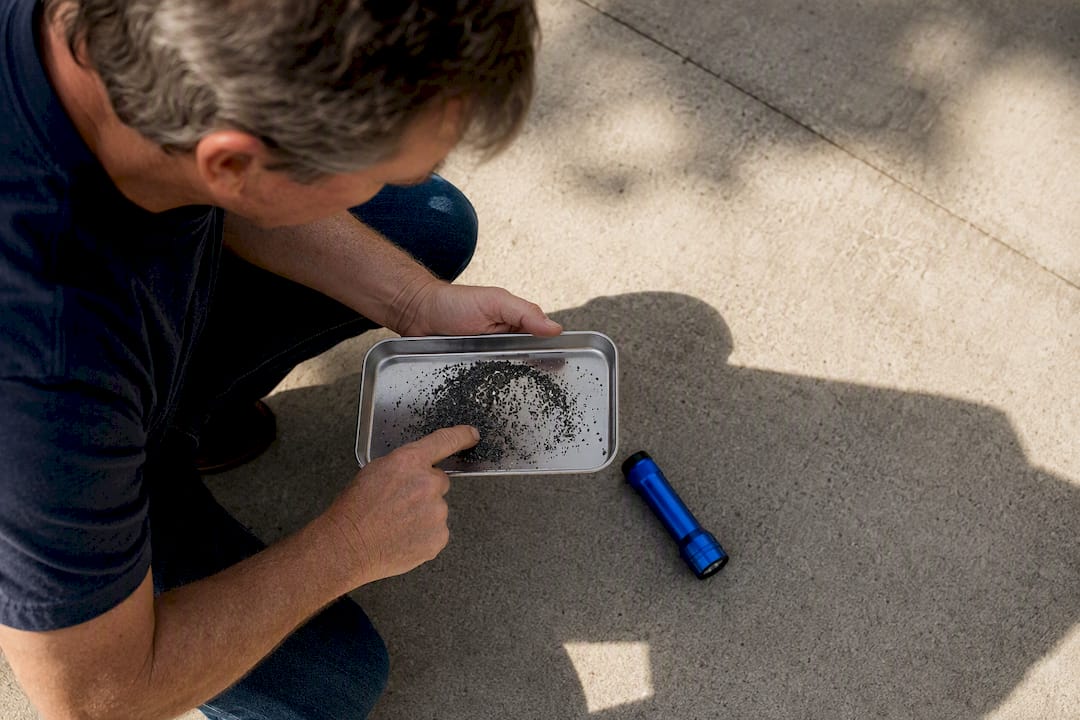
- Check your gutters and downspouts. A heavy buildup of loose granules is a sign the shingle has already shed its protective layer in that area.
- Ask about a manual bend test. A qualified inspector can safely flex a sample shingle to feel whether the mat underneath is still intact or has gone brittle and torn.
- Compare roof planes. A south-facing slope that looks years older than a north-facing one usually points to heat-driven aging, not a defect.
Active leaks, storm damage, or a soft, spongy deck under the shingles are automatic disqualifiers. That is exactly why the inspection and qualification steps outlined in this step-by-step restoration guide exist before any treatment gets applied.
Pro Tip: Do the granule and gutter check yourself first. It takes ten minutes and can save you a wasted inspection call if your roof clearly needs replacement instead of restoration.
What Results Should You Expect, and When?
Visible change happens fast, but the meaningful change happens underneath. Most treated roofs show a slight darkening within hours of application, simply from the oil saturating the surface. The real story is in flexibility, and that improvement builds over days to a few weeks as the bio-oil fully diffuses into the binder.
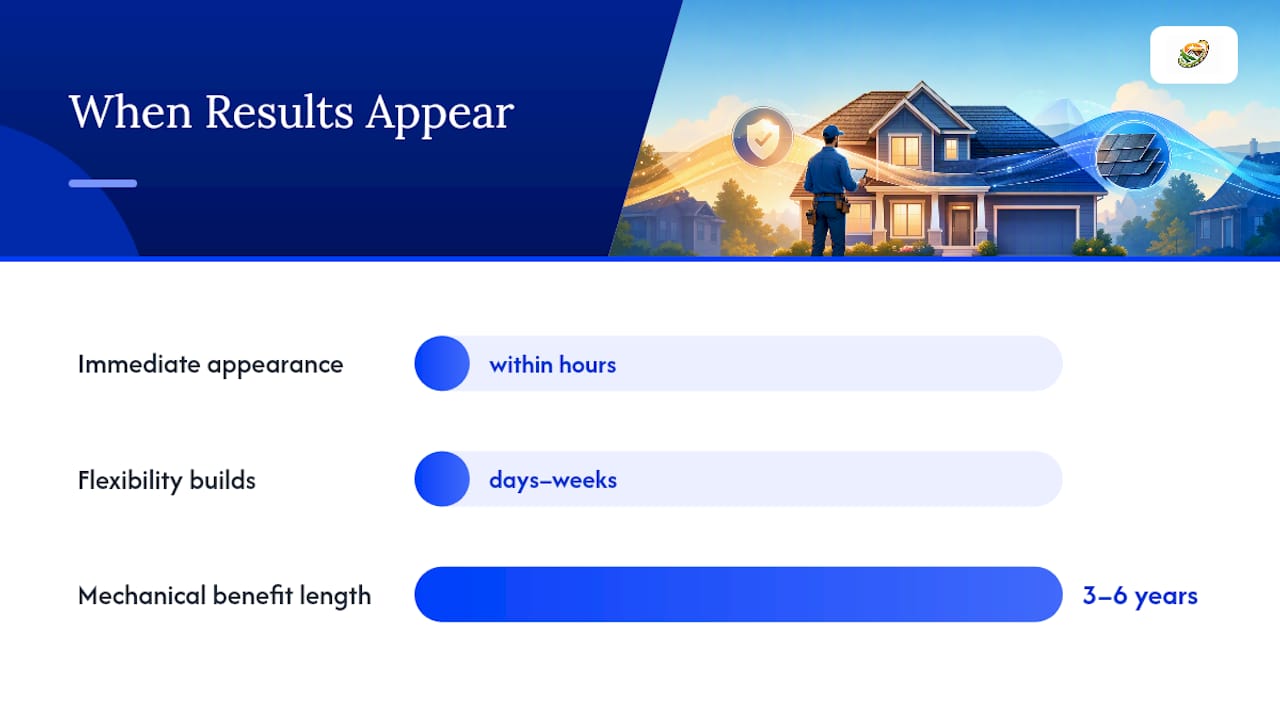
The mechanical benefit typically holds for 3 to 6 years, depending on sun exposure, shingle color, and the roof's condition going in. A dark roof in a hot climate will burn through that benefit faster than a lighter roof with good attic ventilation.
Between applications, a few habits stretch the results:
- Keep gutters clear so water doesn't pool and accelerate local aging.
- Trim overhanging branches that create shaded, damp patches prone to uneven wear.
- Schedule a follow-up inspection near the end of the expected benefit window rather than waiting for visible problems.
- Watch for new curling or granule loss on the roof's hottest-facing slope first.
Guidance on stretching a roof's working life between treatments is covered in more detail in this overview of extending shingle life.
How Does the Cost Compare to Full Replacement?
A restoration treatment costs a fraction of a full tear-off and replacement, though the exact number depends on your roof's size and condition, so an individualized quote matters more than any ballpark figure. What should actually drive your decision isn't the price tag alone, it's a handful of specific signals:
- Remaining useful life. A roof with 5 to 10 good years left is a stronger restoration candidate than one already past its expected service life.
- Extent of visible damage. Isolated curling and moderate granule thinning are treatable. Widewidespread bald patches usually aren't.
- Leak history. One old, already-fixed leak is different from an active, recurring one.
- Warranty terms. Check whether your existing shingle warranty is still active and what a rejuvenation treatment does to it.
Replacement becomes the only responsible call when the deck itself is compromised, when granule loss is extensive across multiple planes, or when leaks keep recurring despite repairs. For a broader look at how preservation economics stack up against a full replacement bill, this guide to cost-effective roofing solutions breaks down the math further, and this international overview of professional roof renovation covers similar preservation economics from a different market's perspective.
What Should a Qualified Applicator Show You?
Any legitimate rejuvenation applicator should be able to walk you through a clear process before touching your roof: inspect, assess, and qualify. That sequence exists because not every roof should be treated, and a responsible applicator says so when a roof doesn't qualify.
Before you sign anything, ask for these:
- Inspection photos showing granule coverage, curling, and any problem areas found.
- A plain-language written assessment of your roof's current condition.
- A summary of the lab testing behind the product being used, not just marketing claims.
- Proof of applicator certification for the specific rejuvenation system.
- A written, transferable warranty, not a verbal assurance.
Some roof preservation companies offer certified application of rejuvenation technologies, backed by transferable warranties and guidance built around extending a qualifying roof's life by additional years.
Pro Tip: If an applicator can't produce lab test data or a written warranty on request, treat that as a red flag regardless of how confident the sales pitch sounds.
Why Early Intervention Beats Waiting Too Long
Roofs baking under years of direct sun rarely fail all at once. They dry out slowly, one season at a time, until the flexibility that once let them handle wind and thermal cycling is gone. Homeowners who get an inspection while the shingles are still merely brittle, not shattered, have real options. Wait until granules are gone and the mat has torn, and restoration stops being on the table.
Get the inspection before you assume replacement is your only path. Just don't let a hopeful diagnosis talk you out of a roof that's genuinely past saving.
— Daniellison
Ready to Find Out if Your Roof Qualifies?
Some companies specialize in helping homeowners determine if their shingles can be preserved rather than replaced, aiming to offer an honest assessment before costly replacement decisions.

Our free roof assessment covers the same qualification checklist outlined above: inspection photos, a written condition assessment, and a straight answer on whether your roof qualifies, plus an estimate if it does. Qualifying homeowners can save significantly compared to full replacement, backed by a transferable warranty. If you're in Boca Raton, Delray Beach, or Plantation, your local page has service details specific to your area. Call us before you call the roofer, and schedule your free inspection today.
Sources
- Laboratory observations and treatment effects on aged asphalt shingles (Iowa State repository)
- Long-term durability of asphalt shingle roof coverings: laboratory degradation characteristics (NIST)
- The chemistry behind shingle rejuvenation (CanThisRoofBeSaved)
- Durability of asphalt shingles (Asphalt Industry/Foundation report)
FAQ
Does Shingle Rejuvenation Really Work?
Yes, for qualifying roofs. Standardized cold-bend testing shows treated shingles flex 10% to 30% more than untreated shingles the same age, though it can't fix already-torn mats or regrow missing granules.
What Is the 25 Rule in Roofing?
Definitions vary by contractor and region, and there's no single standardized rule by that name. Most references to it describe a rough guideline that roofs showing roughly 25% or more surface damage or granule loss on a plane are typically better candidates for replacement than restoration.
How Do You Rejuvenate Roof Shingles?
A qualified applicator inspects the roof for granule coverage and mat condition, confirms it qualifies, then applies an engineered bio-oil emulsion that penetrates the shingle and replenishes lost maltenes. This differs from a surface spray, which sits on top of the granules without restoring flexibility underneath.
Does a 30-Year Shingle Really Last 30 Years?
Rarely in full, real-world conditions. Heat, UV exposure, and oxidation break down the asphalt binder over time, and NIST's degradation research shows that rating reflects lab conditions, not the accelerated aging many roofs face in hot, sun-heavy climates.
How Much Does Roof Restoration Cost Compared to Replacement?
Restoration typically costs a fraction of a full tear-off and replacement, though the exact figure depends on your roof's size and condition. Shingleroofrenewal provides an individualized estimate as part of its free roof assessment.