
TL;DR:
- Shingle flexibility, or ductility, is vital for roof longevity in South Florida's harsh climate because it prevents cracking and wind damage. Rejuvenation with soy-based bio-oil treatments can restore flexibility by replenishing internal oils, delaying costly full replacements. Homeowners should conduct field tests in warm weather to assess shingle condition and seek professional evaluation when multiple slopes show brittleness signs.
Shingle flexibility is defined as the ability of an asphalt shingle to bend and recover without cracking, and it is the single most important factor in how long your roof survives South Florida's heat, UV exposure, and storm season. The industry term for this property is ductility, and explaining shingle flexibility means understanding what keeps shingles pliable, what destroys that pliability over time, and what you can do about it before a $15,000–$30,000 replacement becomes your only option. In Broward and Palm Beach County, where the sun bakes rooftops year-round, this knowledge is the difference between a roof that lasts and one that fails ahead of schedule.
What is shingle flexibility and how does it affect roof performance?
Shingle flexibility depends almost entirely on maltene oils inside the asphalt binder. Maltenes make up 40%–60% of asphalt binder weight, and they are what keep shingles soft enough to flex under wind load, thermal expansion, and impact. When those oils deplete, the binder hardens, and the shingle becomes brittle.
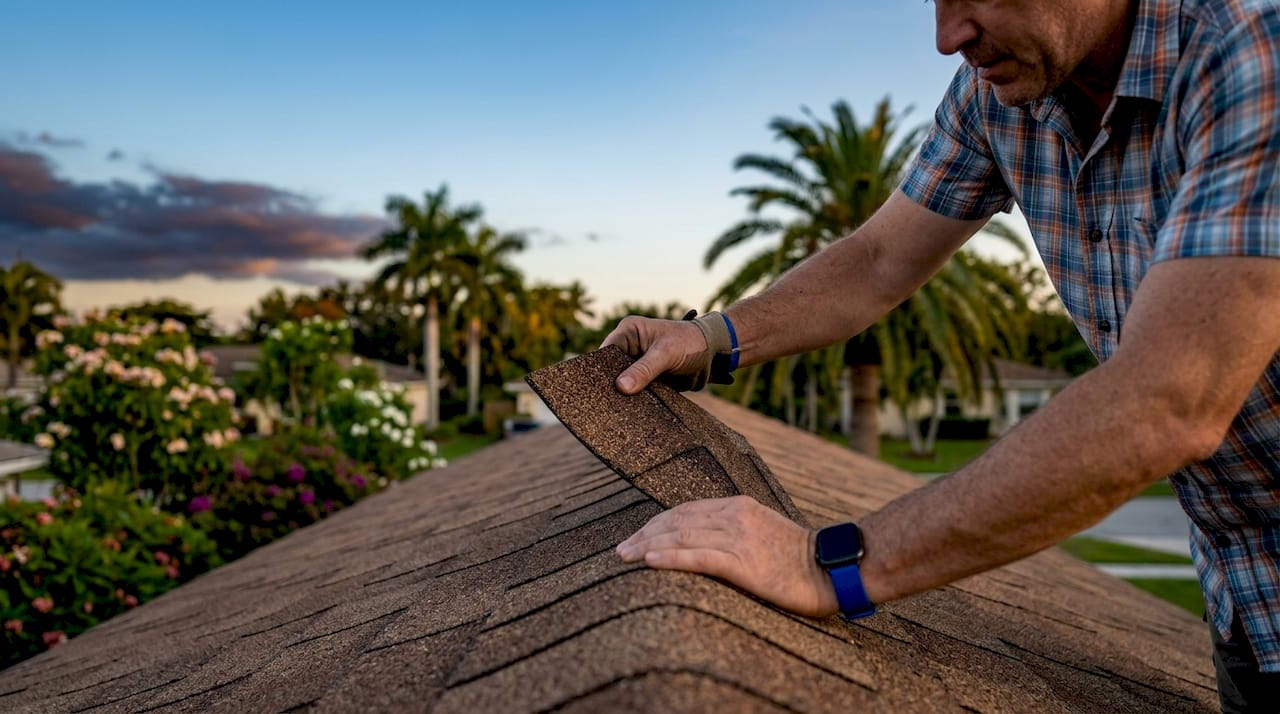
South Florida accelerates that depletion. UV radiation, relentless heat, and oxidation work together to break down maltene oils over 8–15 years. Once they are gone, no amount of surface treatment reverses the damage at a structural level without the right product.
The consequences of lost flexibility show up in predictable ways:
- Cracking and splitting along the shingle surface, especially at corners and edges
- Granule loss, because brittle shingles can no longer grip the protective granule layer
- Curling and cupping, which exposes the underlayment to direct weather
- Wind damage, because a stiff shingle cannot absorb gusts and instead snaps or lifts
Flexibility not only prevents cracks but acts as a shock absorber against wind-driven debris and hail damage. A pliable shingle deflects impact energy. A brittle one transfers it directly into a crack.
Not all shingles age at the same rate. Architectural shingles last 20–30 years and many use SBS polymer-modified asphalt, which holds flexibility better than standard 3-tab shingles under harsh conditions. The industry shift toward polymer-modified asphalt reflects a direct response to the flexibility problem in climates like South Florida's.
How can homeowners test shingle flexibility?
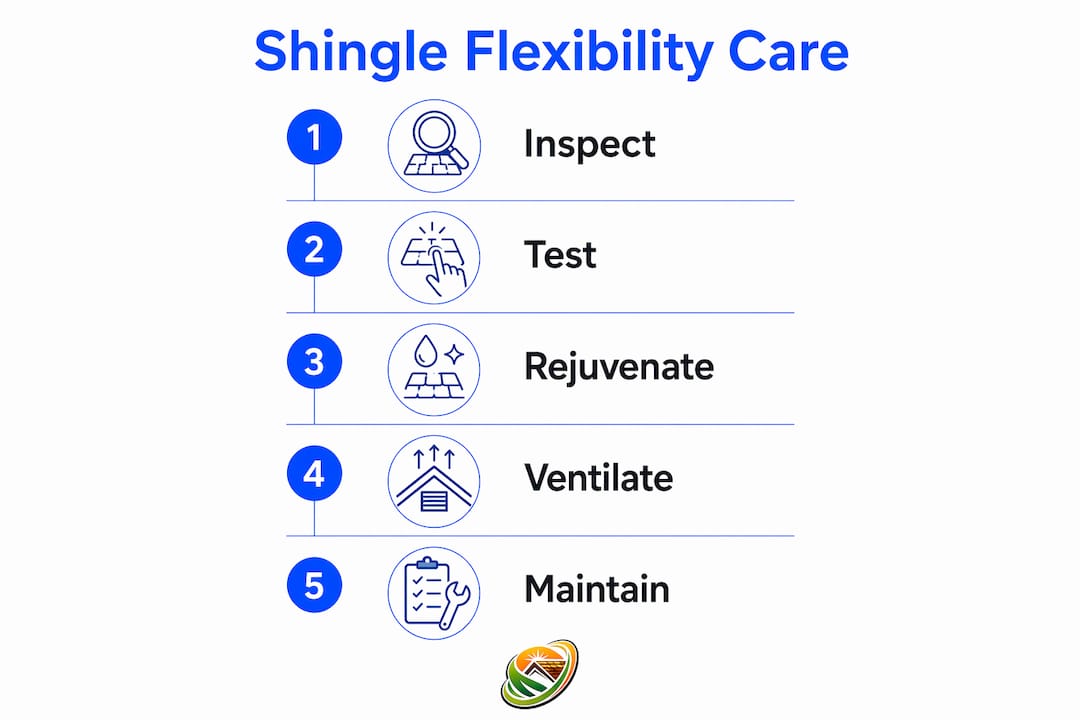
The standard field test for shingle ductility is straightforward, and you can do it yourself. Nearmap's RepairLogic protocol recommends testing between 55°F and 85°F for accurate results. Testing in cold temperatures causes false brittleness readings that do not reflect the shingle's true condition.
Follow these steps to assess your roof:
- Choose a warm day. Aim for mid-morning when the roof has warmed but is not scorching. Temperatures between 55°F and 85°F give the most reliable reading.
- Select 3–5 test spots per roof slope. One test is not enough. Shaded areas age differently than sun-exposed areas, so test multiple points across each slope.
- Gently lift a shingle corner. Apply slow, steady pressure. A healthy shingle bends without resistance. A compromised one resists, cracks, or tears along the nail line.
- Note the result. Cracking, snapping, or granule loss during the lift are all failure indicators.
- Repeat on the north and south slopes. South-facing slopes in Florida receive far more UV exposure and typically show brittleness first.
Pro Tip: Never perform this test on a cold morning after an overnight low below 55°F. The shingle will feel brittle regardless of its actual condition, and you may crack a shingle that still has years of life left.
A single failed test on one slope does not automatically mean full replacement. It means that slope needs professional evaluation. A pattern of failures across multiple slopes tells a different story.
What methods improve shingle flexibility in south florida's climate?
The most effective treatment for restoring lost ductility is a soy-based bio-oil rejuvenator. These products work by penetrating the asphalt matrix and replenishing the maltene oils that heat and UV have depleted. The science is well-established: rejuvenation improves flexibility by 50%–300%, depending on the shingle's starting condition and the product used.
Shingleroofrenewal uses Fresh Roof's Green Soy Technology, a certified soy-based treatment that works at the molecular level. It does not coat the surface. It penetrates the asphalt binder and restores the oils from within, which is what separates it from basic sealants or surface sprays.
Here is how the main approaches compare:
| Method | How It Works | Best For | Limitations |
|---|---|---|---|
| Soy-based bio-oil rejuvenator | Replenishes maltene oils in asphalt binder | Shingles within the maintenance window | Cannot fix structural damage |
| Surface sealant | Coats shingle surface | Short-term granule retention | Does not restore internal flexibility |
| Full replacement | Removes and replaces all shingles | Severely degraded or structurally failed roofs | Highest cost, landfill waste |
Pro Tip: Rejuvenation works best as preventative maintenance applied before shingles reach the point of failure. Waiting until shingles are visibly cracked or curling significantly narrows your options.
Attic ventilation is the other major factor homeowners overlook. Poor ventilation accelerates brittleness by trapping heat beneath the shingles, essentially baking the oils out from the underside. In South Florida, where attic temperatures can exceed 150°F on a summer afternoon, proper ridge and soffit ventilation is not optional. It is a direct line to longer shingle life.
Routine care also matters. Keeping gutters clear, trimming overhanging branches, and removing debris after storms all reduce the moisture and physical stress that speed up oil depletion.
What factors cause variability in shingle flexibility across roofs?
Two roofs installed in the same year in the same neighborhood can age at completely different rates. Several factors explain why.
| Factor | Effect on Flexibility | Notes |
|---|---|---|
| Shingle type | SBS polymer-modified shingles retain flexibility longer | Architectural shingles outperform 3-tab in harsh climates |
| Attic ventilation | Poor ventilation reduces lifespan by 30%–50% | Trapped heat bakes oils out from beneath |
| Roof orientation | South-facing slopes degrade faster | More direct UV exposure in South Florida |
| Shading | Shaded areas retain oils longer | Can create uneven aging across the same roof |
| Microclimates | Coastal salt air adds oxidation stress | Affects homes near the Atlantic or Intracoastal |
One point that surprises many homeowners: restored flexibility does not fix damaged decking, flashing, or other structural components. A rejuvenation treatment addresses the shingle material itself. If your flashing is failing or your roof deck has rot, those are separate problems that require separate repairs. Roof maintenance must combine flexibility treatments with a full structural inspection to be effective.
The guide to restoring asphalt shingle flexibility for Florida homes covers how these factors interact and what a complete maintenance plan looks like in practice.
When does flexibility loss signal that replacement is necessary?
Rejuvenation works within a specific window. Once shingles cross into irreversible brittleness, restoration is no longer the right call. Knowing the difference protects you from spending money on a treatment that cannot deliver results.
These are the signs that replacement is likely the better path:
- Shingles crack or tear immediately when lifted during the field test, with no resistance or flex at all
- Granule loss is severe, exposing large areas of bare asphalt across multiple slopes
- Curling is advanced, with shingle edges lifting more than an inch from the deck
- Multiple slopes fail the flexibility test, not just one isolated area
- The roof is 15+ years old and has never received any maintenance or rejuvenation treatment
- Structural issues are present, including sagging, visible deck damage, or persistent leaks that have not been resolved
A failed brittle test means repairs risk further damage, and if multiple failures occur across a roof, full slope replacement is often the recommended outcome. Lifting brittle shingles during repairs can cause them to crack along nail lines, creating new entry points for water.
A professional inspection is the only way to get a definitive answer. What looks like total failure from the ground sometimes has more life left than expected. The reverse is also true. A roof that looks acceptable from the street can be severely compromised up close.
Key takeaways
Shingle flexibility, or ductility, is the core property that determines how long an asphalt roof survives South Florida's climate, and restoring it through soy-based rejuvenation is the most cost-effective option within the maintenance window.
| Point | Details |
|---|---|
| Maltene oils control flexibility | These oils deplete over 8–15 years due to heat and UV, causing brittleness and cracking. |
| Field testing is accessible | Lift shingle corners at 55°F–85°F across 3–5 spots per slope to assess current condition. |
| Rejuvenation restores ductility | Soy-based bio-oil treatments improve flexibility by 50%–300% when applied within the maintenance window. |
| Ventilation directly affects lifespan | Poor attic ventilation can reduce shingle lifespan by 30%–50% by trapping heat beneath shingles. |
| Rejuvenation has limits | Restored flexibility does not repair structural damage; flashing, decking, and leaks need separate attention. |
What i've learned after years of watching south florida roofs age too fast
The most common mistake I see homeowners make is waiting. They notice a few cracked shingles, assume the roof has years left, and do nothing. By the time they call someone, the maintenance window has closed and replacement is the only option on the table.
The second mistake is assuming flexibility loss is visible. It is not, at least not early on. A roof can look perfectly fine from the street while the asphalt binder is already hardening from the inside out. The South Florida sun does not announce what it is doing to your shingles. It just does it, quietly, every single day.
What I find genuinely encouraging is how many roofs are still saveable when homeowners act early. The common myths about roof care often lead people to believe replacement is inevitable once shingles show any sign of aging. That is simply not true for roofs within the maintenance window.
Roof rejuvenation also has a sustainability angle that does not get enough attention. Every roof that gets preserved instead of torn off is one less load of shingles in a landfill. In a region where roofs are replaced at the rate South Florida replaces them, that adds up fast.
My honest recommendation: do the field test yourself, then call a professional before you call a roofer. You may have more options than you think.
— Daniellison
How Shingleroofrenewal helps you restore and protect your roof
If your shingles still have life left, Shingleroofrenewal can help you keep them that way. As a certified applicator of Fresh Roof's Green Soy Technology, we serve homeowners across Broward and Palm Beach County with a proven three-step process: inspect, assess, and recommend.
If your roof qualifies, our treatment restores shingle ductility at the molecular level, locks in granules, and slows the deterioration that South Florida's climate accelerates every year. Homeowners who qualify can save up to 80% compared to full replacement, backed by a 6-year transferable warranty that also adds value if you sell. Roof rejuvenation can even improve your home's resale value by extending the life of a major structural asset. Visit Shingleroofrenewal to schedule your free inspection today and find out if your roof qualifies before replacement becomes your only choice.
FAQ
What does shingle flexibility actually mean?
Shingle flexibility, also called ductility, is the ability of an asphalt shingle to bend without cracking. It depends on maltene oils in the asphalt binder, which deplete over time due to heat and UV exposure.
How do i test my shingles for flexibility at home?
Lift a shingle corner gently on a warm day between 55°F and 85°F. A flexible shingle bends without cracking; a brittle one snaps or tears, which signals it may need professional evaluation or replacement.
Can rejuvenation fully restore shingle flexibility?
Soy-based rejuvenators can improve flexibility by 50%–300% when applied within the maintenance window. They cannot reverse severe structural damage or restore shingles that have already reached full brittleness failure.
How does attic ventilation affect shingle flexibility in florida?
Poor attic ventilation traps heat beneath shingles, accelerating oil depletion and brittleness. Ventilation quality can alter shingle lifespan by 30%–50%, making it one of the most impactful and overlooked factors in South Florida roof longevity.
When should i stop trying to maintain my roof and just replace it?
Replacement is the right call when multiple slopes fail the flexibility test, shingles crack immediately when lifted, granule loss is severe across the roof, or the roof is past 15 years with no prior maintenance. A professional inspection confirms which path makes sense for your specific roof.