
TL;DR:
- Neglected roof maintenance leads to water damage, mold, pests, structural issues, and higher costs. Regular inspections and early repairs can prevent these problems and extend roof life. Preservation treatments offer a cost-effective alternative to full replacement for qualifying roofs.
Neglected roof maintenance is the leading cause of premature roof failure in South Florida homes. The risks of neglected roofs go far beyond a few missing shingles. Water infiltration, mold growth, structural decay, and energy loss all follow when routine care is skipped. In Broward and Palm Beach County, the combination of intense UV exposure, humidity, and hurricane-season storms accelerates every one of these problems. The good news is that most of these outcomes are preventable. Catching deterioration early can save you thousands of dollars and years of roof life.
What are the most common risks from neglecting roof maintenance?
Roof neglect creates a chain reaction. One small problem left unaddressed becomes five bigger ones within a single storm season. Here are the primary hazards South Florida homeowners face when maintenance is deferred.
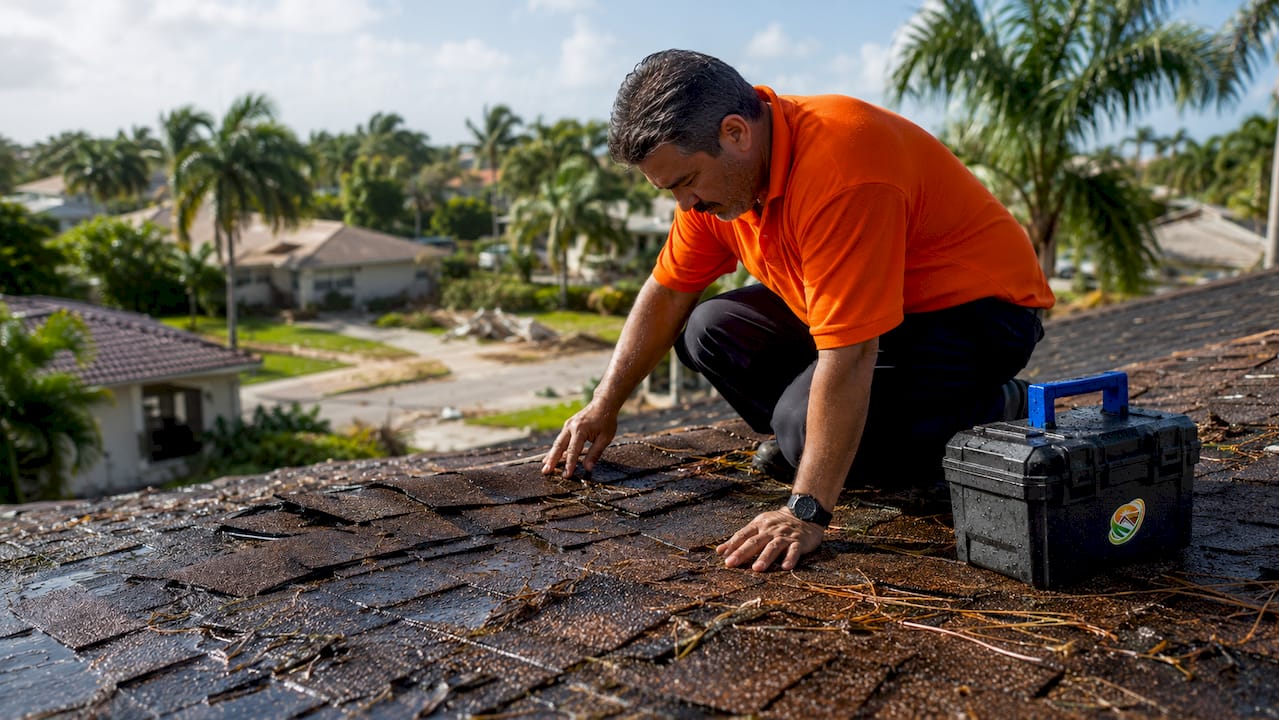
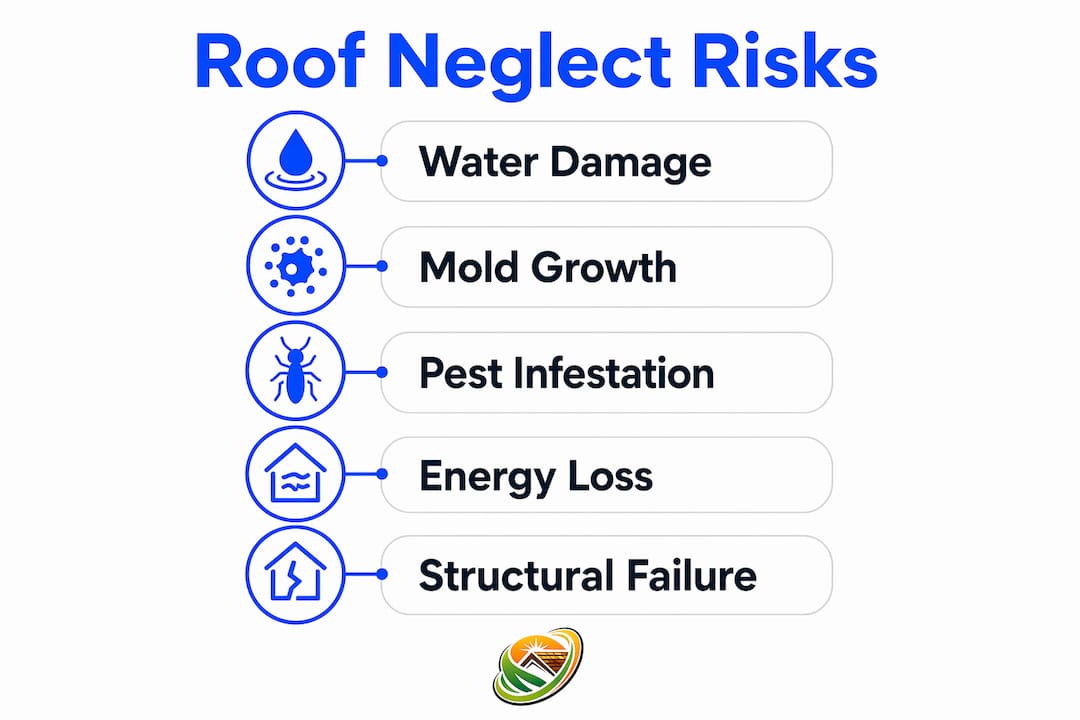
Water damage and leaks are the most immediate consequence. Leaks from neglected roofs begin at the smallest breach and spread quickly through decking, insulation, and interior walls. South Florida's afternoon rainstorms deliver water fast and hard, exploiting every gap.
Mold and mildew growth follow moisture intrusion within 24 to 48 hours. Mold from roof neglect increases the risk of allergic reactions and respiratory issues for everyone in the home. This is not a cosmetic problem. It is a health hazard that requires professional remediation once established.
Pest infestation becomes likely once water softens the roof deck. Termites, carpenter ants, and rodents enter through gaps created by rotting wood and failed flashing. In South Florida's warm climate, these infestations move fast.
Higher energy bills are a direct financial consequence. A compromised roof envelope increases energy costs by 10–25%. That means your air conditioner works harder every single day, adding hundreds of dollars to annual utility bills.
Structural failure is the worst-case outcome. Chronic moisture weakens roof decking until it sags, bounces underfoot, or collapses under load. This is not a repair. It is a full structural intervention.
Pro Tip: Walk your attic after every major storm. Look for water stains on rafters, soft spots on the deck, or any daylight visible through the boards. Catching these signs early costs nothing. Ignoring them costs everything.
How do signs of roof deterioration indicate increasing risks?
Visible warning signs appear well before a roof fails completely. Knowing what to look for lets you act before minor deterioration becomes a major expense.
The most reliable signs of roof deterioration include:
- Curling or cupping shingles. Shingles that curl upward at the edges or cup in the center have lost their flexibility. South Florida's UV intensity accelerates this process, especially on west and south-facing slopes.
- Granule loss in gutters. Finding granules in your gutters after rain is normal for new roofs. Granule loss exceeding 25–30% accelerates asphalt roof failure within 2–5 years. Once granules are gone, UV rays oxidize the asphalt directly, making shingles brittle and prone to cracking.
- Sagging roofline. A structural deflection greater than 1 inch over 10 feet indicates deck rot requiring structural repair. This is not a cosmetic issue. It signals advanced moisture damage inside the roof system.
- Flashing failures. Flashing joint separation and metal corrosion at roof-to-wall transitions often precede visible shingle damage. Water enters through these gaps and causes major interior moisture problems long before you see a stain on the ceiling.
- Multiple unrelated leaks. Leaks in different roof areas signal compromised underlayment and make spot repairs ineffective. When leaks appear in three or more locations, the roof system has failed, not just the surface.
Pro Tip: Check your attic during daylight hours with the lights off. Any pinpoints of light coming through the roof boards mean water can get in too. This attic daylight test is one of the simplest and most reliable early-detection methods available to any homeowner.
| Warning sign | What it means | Urgency level |
|---|---|---|
| Granule loss in gutters | UV protection is failing; oxidation accelerating | Moderate |
| Curling or cracking shingles | Shingles have lost flexibility; water entry likely | High |
| Sagging roofline | Deck rot present; structural risk | Critical |
| Flashing corrosion or gaps | Hidden water entry at transitions | High |
| Multiple ceiling leaks | Underlayment failure; system-wide damage | Critical |
When is it better to repair versus replace a neglected roof?
The repair-versus-replace decision is the most financially significant choice a homeowner makes about their roof. Age alone does not determine the answer. Roof condition drives the decision, not the calendar.
The most widely used industry rule is the 50% threshold. If repair costs exceed 50% of full roof replacement cost, replacement is typically more cost-effective over the long term. For a South Florida home where replacement runs $15,000 to $30,000, that threshold sits at $7,500 to $15,000. Spending $8,000 patching a roof that needs $20,000 in total work is money lost.
The repair-and-repeat cycle is a trap many homeowners fall into. Repeated repairs without addressing systemic issues increase overall expenses and risk over time. Each patch delays the inevitable while the underlying damage grows. The roof deck softens, the underlayment fails, and the next storm causes more damage than the last repair fixed.
For roofs under 15 years old with isolated damage, targeted repairs are often cost-effective provided the overall roof system is still sound. A single cracked flashing or a small area of lifted shingles does not mean replacement is necessary. Context matters.
| Scenario | Best option | Reason |
|---|---|---|
| Isolated damage, roof under 15 years | Repair | System is sound; targeted fix is cost-effective |
| Repair cost exceeds 50% of replacement | Replace | Long-term savings outweigh short-term patch cost |
| Multiple leaks in different areas | Replace or renew | Underlayment failure; spot repairs will not hold |
| Granule loss over 25–30%, shingles brittle | Assess for renewal | Preservation may extend life before full replacement |
| Sagging deck or structural deflection | Replace | Structural damage requires full intervention |
A third option exists that most homeowners never hear about. Roof preservation and renewal, using certified treatments like Fresh Roof's Green Soy Technology, can restore shingle flexibility and extend roof life for qualifying roofs. This option sits between repair and full replacement, and it can save you significantly compared to a tear-off.
- Preservation works best on roofs showing early deterioration without structural damage
- It is not suitable for roofs with deck rot, multiple active leaks, or shingles past the point of recovery
- A professional inspection determines whether your roof qualifies
What proactive steps can South Florida homeowners take to prevent roof damage?
Prevention is always less expensive than repair. South Florida's climate makes proactive maintenance especially important because heat, humidity, and storms accelerate roof wear faster than in most other regions of the country.
Follow these steps to protect your roof and extend its life:
- Schedule a professional inspection at least once a year. The best time is before hurricane season, which runs from june through november. A trained eye catches flashing gaps, granule loss, and soft spots that are invisible from the ground.
- Clean your gutters every six months. Clogged gutters force water back under shingles and against fascia boards. In South Florida, debris from palm trees and tropical storms fills gutters faster than in northern climates.
- Monitor granule loss actively. After heavy rain, check your downspout discharge area for granule accumulation. Increasing granule loss over consecutive seasons means your shingles are losing their UV protection and need attention.
- Inspect flashing at every roof penetration. Check around chimneys, vents, skylights, and roof-to-wall transitions after every major storm. Caulk separation and rust are early signs of failure.
- Act on small problems immediately. A single lifted shingle or a small flashing gap costs very little to fix. Left alone through a storm season, the same problem can cause thousands of dollars in interior water damage.
Preventative maintenance can extend asphalt shingle life by several years and reduce landfill waste from unnecessary tear-offs. That is a financial and environmental benefit that starts with nothing more than a regular inspection.
Pro Tip: Take dated photos of your roof from the ground every six months. Over time, you will have a visual record of granule loss, shingle curling, and flashing condition. This record is also valuable when filing an insurance claim after a storm.
Key takeaways
Neglecting roof maintenance in South Florida leads to water damage, mold, structural failure, and energy loss, all of which are preventable with regular inspection and early intervention.
| Point | Details |
|---|---|
| Neglect triggers a chain reaction | Water infiltration leads to mold, pests, structural decay, and higher energy bills. |
| Granule loss is a measurable warning | Loss exceeding 25–30% signals roof failure within 2–5 years; act before that threshold. |
| The 50% rule guides replacement decisions | If repair costs exceed half the replacement cost, full replacement is more cost-effective. |
| Preservation is a third option | Certified renewal treatments can extend qualifying roof life before replacement is needed. |
| Annual inspections prevent major costs | Catching problems early costs far less than repairing damage after a storm season. |
Why I stopped telling homeowners to "just get it inspected"
After working with South Florida roofs for years, I have noticed a pattern that frustrates me. Homeowners get told to schedule an inspection, they do it, and then they get handed a quote for full replacement. No one explains whether the roof could have been saved. No one asks whether preservation was an option six months ago.
The uncomfortable truth is that most roofs I see did not need to be replaced when they first showed signs of deterioration. They needed attention. The effects of poor roof maintenance compound quietly over months and years. By the time a homeowner calls someone, the damage looks worse than it is, or it has genuinely crossed the line into replacement territory because too much time passed.
I also push back on the idea that roof age is the primary factor. A 15-year-old roof that has been maintained can outperform a 10-year-old roof that has been ignored. Condition is what matters. The decision to replace should come after a thorough assessment, not after a quick look from the driveway.
My advice is simple. Do not wait for a leak to take your roof seriously. The costs of deferred roof repair always exceed what early maintenance would have cost. Get an honest assessment from someone who is not automatically trying to sell you a new roof.
— Daniellison
Is your South Florida roof a candidate for renewal?
If your roof is showing early signs of wear but has not crossed into structural failure, you may have more options than you think. Most homeowners spend $15,000 to $30,000 on replacement without ever asking whether their roof could be preserved instead.
Shingleroofrenewal is a certified applicator of Fresh Roof's Green Soy Technology, a treatment that restores shingle flexibility at the molecular level, locks in granules, and extends qualifying roof life. We inspect your roof, assess its condition, and tell you honestly whether it qualifies for renewal. If it does, you could save up to 80% compared to full replacement, backed by a 6-year transferable warranty. Schedule your free inspection today and find out if your roof can be saved before you call the roofer.
FAQ
What are the main risks of neglecting roof maintenance?
The primary risks include water infiltration, mold growth, pest infestation, structural deck rot, and increased energy bills. A compromised roof envelope raises energy costs by 10–25% and creates health hazards from persistent moisture.
How do I know when to replace a roof versus repair it?
If repair costs exceed 50% of full replacement cost, replacement is typically more cost-effective. Roofs under 15 years with isolated damage are often good candidates for targeted repair or preservation instead.
What are the earliest signs of roof deterioration?
Curling shingles, granule accumulation in gutters, flashing corrosion, and multiple ceiling leaks are the most reliable early warning signs. Granule loss exceeding 25–30% signals accelerated failure within 2–5 years.
Can a neglected roof be saved without full replacement?
Yes, if the damage has not reached structural failure. Certified preservation treatments like Fresh Roof's Green Soy Technology can restore qualifying roofs and extend their life, making full replacement unnecessary in many cases.
How often should South Florida homeowners inspect their roofs?
At minimum, once a year before hurricane season and after any major storm. South Florida's heat, humidity, and storm frequency accelerate wear faster than in most other U.S. regions, making regular checks especially important.