
TL;DR:
- South Florida shingle roofs typically last 15 to 20 years due to extreme climate conditions.
- UV, heat, humidity, and storms accelerate roof deterioration, increasing risk of leaks and failure.
- Proactive inspection, maintenance, and restoration can significantly extend roof lifespan and protect investments.
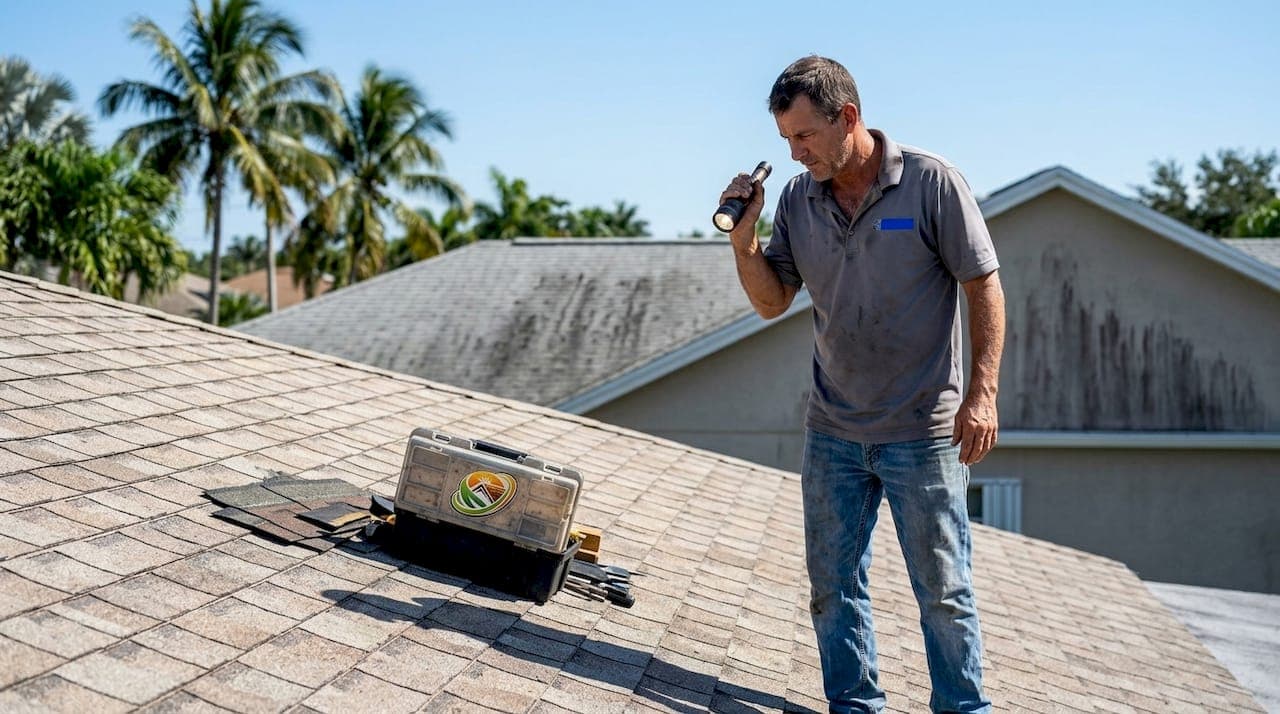
Most South Florida homeowners expect their shingle roof to last 25 years or more, just like the national average suggests. The reality here is very different. Shingle roofs in South Florida often last only 15 to 20 years because of the brutal local climate. Intense UV exposure, daily heat cycles, and hurricane-force winds wear shingles down faster than almost anywhere else in the country. If you own a home in Palm Beach or Broward County, understanding how and why this happens is the first step toward protecting your investment and avoiding a costly surprise.
Table of Contents
- Why shingle roofs deteriorate faster in South Florida
- The stages of shingle roof deterioration
- Key signs your roof needs attention now
- Options for slowing down deterioration and saving money
- Hard truths most homeowners miss about shingle roof aging
- Next steps: restore your shingle roof and protect your investment
- Frequently asked questions
Key Takeaways
| Point | Details |
|---|---|
| South Florida climate impact | Shingle roofs here wear out much faster due to heat, UV, and storms. |
| Stepwise wear warning | Most roof failure starts small—regular checks catch issues before leaks. |
| Maintenance extends lifespan | Routine inspections and minor fixes can delay major expenses. |
| Renewal vs replacement | Modern rejuvenation methods offer cost-effective extra years but are not a permanent fix. |
Why shingle roofs deteriorate faster in South Florida
South Florida is simply harder on roofs than most of the country. The combination of heat, humidity, and storm activity creates a perfect environment for accelerated shingle wear. Let's break down exactly how and why shingle roofs degrade so quickly here.
UV radiation is one of the biggest culprits. The sun beats down on your roof nearly every day of the year, and that constant exposure slowly breaks down the asphalt compounds that hold shingles together. Over time, shingles lose their flexibility and become brittle. Heat compounds this problem. When your roof heats up during the day and cools down at night, shingles expand and contract repeatedly. That daily stress adds up fast in South Florida's climate.
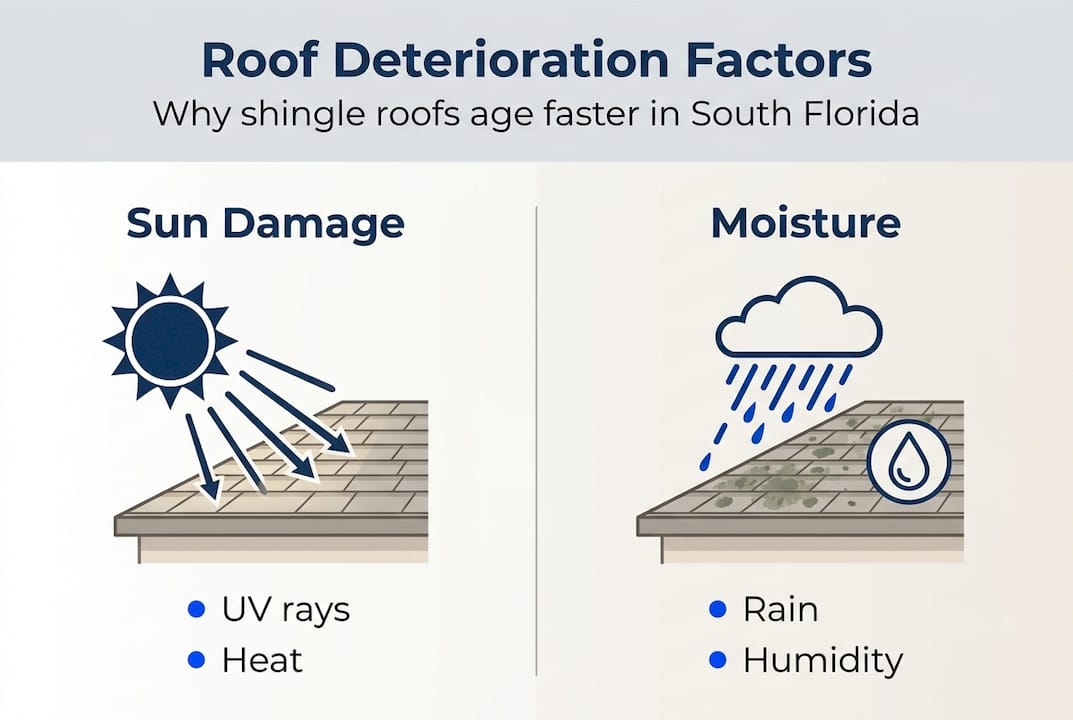
Moisture is another major factor. Heavy rain, high humidity, and standing water from afternoon thunderstorms work their way under shingles and into the underlying structure. Mold, algae, and moss take hold quickly. Once that biological growth starts, it accelerates the breakdown of granules and shingle materials.
Hurricanes and tropical storms add another layer of risk. Florida climate impacts on shingles are well documented. High winds lift shingle edges, break the adhesive seal strips, and create entry points for water. When Hurricane Ian struck in 2022, the risks of shingle roofs in Florida became starkly clear.
Top climate-related stressors for South Florida shingle roofs:
- Intense UV radiation year-round
- Daily heat cycles above 90°F in summer months
- High humidity and frequent heavy rainfall
- Hurricane and tropical storm wind events
- Algae and moss growth from persistent moisture
- Salt air exposure in coastal areas
"Nearly half of area shingle roofs were damaged during Hurricane Ian in 2022, with older roofs experiencing the highest failure rates."
That statistic is not a warning about a rare event. It is a reminder that here in South Florida, your roof faces extreme stress every single storm season.
The stages of shingle roof deterioration
With the big picture in mind, let's look at the timeline of how shingles wear out in South Florida's real conditions. Deterioration is never sudden. It starts small and builds quietly until something goes wrong at the worst possible time.
The typical progression of shingle aging:
- Granule loss (Years 1 to 5): Small protective granules begin washing off the shingle surface. You will notice them collecting in your gutters. This is normal early on, but heavy granule loss signals accelerated aging.
- Surface weathering (Years 5 to 8): Shingles start to look faded or uneven. The asphalt layer dries out and loses its protective oils, making shingles more vulnerable to cracking.
- Curling and cupping (Years 8 to 12): Shingle edges begin to lift or curl inward. This is one of the most visible signs of deterioration and leaves your roof exposed to wind and water intrusion.
- Cracking and brittleness (Years 10 to 15): Shingles crack under thermal stress and minor impacts. At this stage, roofs older than 10 years lose significant wind resistance, making them far more vulnerable during storm season.
- Active leaks and structural exposure (Years 15 and beyond): Water penetrates the underlayment and reaches the roof deck. Repairs become more expensive and frequent. Full replacement may now be unavoidable.
| Shingle age | Typical damage | Hurricane risk level |
|---|---|---|
| 0 to 5 years | Minor granule loss | Low |
| 5 to 10 years | Surface weathering, fading | Moderate |
| 10 to 15 years | Curling, cracking, seal failure | High |
| 15 to 20 years | Active leaks, widespread damage | Very high |
| 20 years and older | Structural exposure, failure risk | Severe |
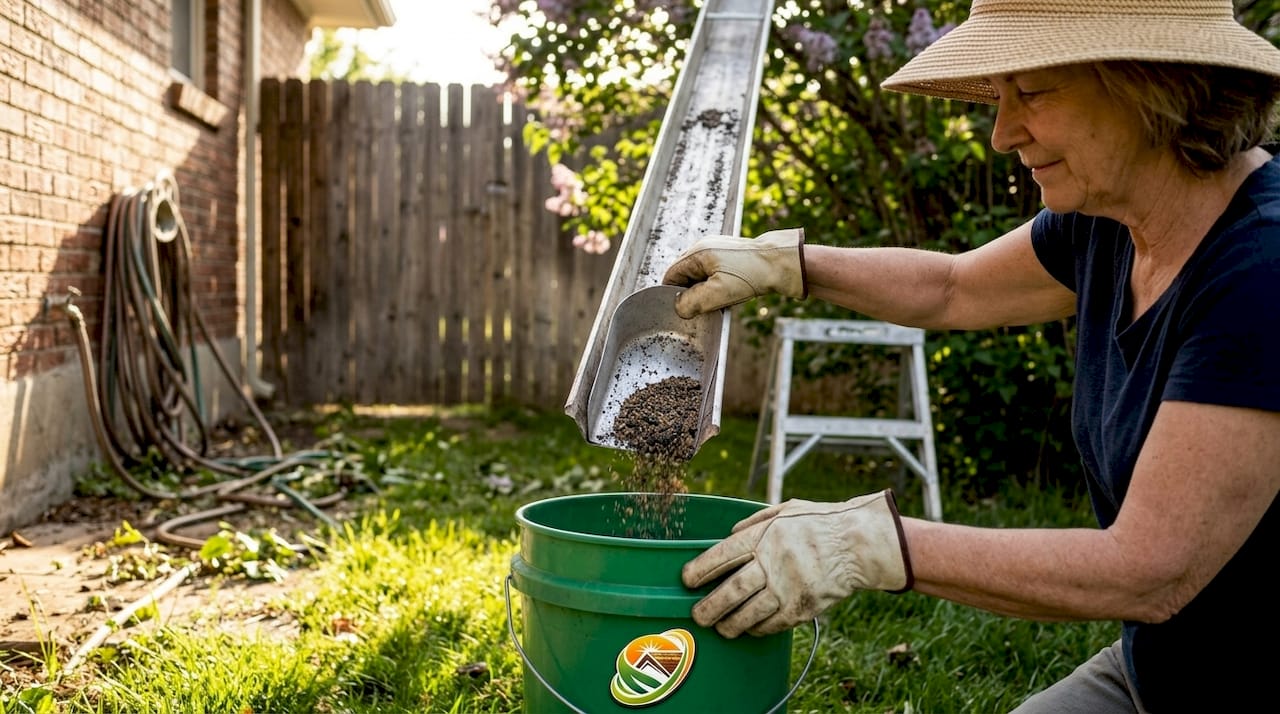
Pro Tip: Walk around your home after every heavy rain and look at the gutters. A significant amount of gritty, dark granules collecting in the downspout area is one of the earliest and easiest-to-spot signs that your shingles are aging faster than expected. Use a roof inspection checklist to make sure you catch issues before they get expensive.
Key signs your roof needs attention now
Now that you know what the deterioration process looks like, here is how to spot problems before they threaten your home. Not all damage is immediately obvious from the ground. Some of the most costly issues start as subtle signals that worsen quickly if ignored.
Watch for these warning signs:
- Missing or displaced shingles after any wind event, even moderate ones
- Granule piles in gutters or at the base of downspouts
- Dark streaks or staining on the roof surface, which usually indicate algae or moisture damage
- Buckling or waving visible along shingle rows when viewed from ground level
- Moss or lichen growth, which holds moisture against the roof surface and accelerates breakdown
- Water stains on interior ceilings or walls, which signal active leaks
- Sagging roof sections, which indicate structural damage beneath the shingles
- Shingle edges that are cracked, torn, or noticeably curled
Insurance is another reason to act quickly. Insurance compliance may require prompt action before severe damage develops, especially as Florida insurers tighten their policies on aging roofs. Waiting until damage is obvious can cost you coverage options you cannot afford to lose.
Pro Tip: Do not forget to check your attic. Poor ventilation traps heat and moisture against the underside of your roof deck, speeding up shingle deterioration from below. A quick look for moisture, mold, or daylight coming through the deck can reveal problems that are invisible from the outside. Pair this with a professional inspection through roof renewal in Florida resources to get the full picture.
Options for slowing down deterioration and saving money
When you spot these issues early, you can often choose more affordable solutions. Let's break down your smartest options.
Not every aging roof needs immediate replacement. There are several approaches, and the right choice depends on your roof's current condition, age, and budget. Understanding the trade-offs helps you make a smarter decision.
| Option | Pros | Cons | Estimated cost |
|---|---|---|---|
| Spot repair | Quick fix for isolated damage | Does not address underlying aging | $300 to $1,500 |
| Roof rejuvenation | Restores some flexibility, extends life | Not permanent, limited penetration | $500 to $2,000 |
| Certified roof renewal (GreenSoy Technology) | Deep molecular restoration, 6-year warranty, extends life 10 to 15 years | Requires professional assessment | $1,500 to $4,000 |
| Full replacement | New roof, full lifespan reset | Highest cost, major disruption | $10,000 to $25,000+ |
Practical steps to maximize your shingle roof life:
- Schedule professional inspections at least once a year and after every major storm
- Clean gutters regularly to prevent water backup against the roof edge
- Address moss, algae, or debris buildup before it penetrates the shingle surface
- Ensure your attic has proper ventilation to reduce heat and moisture buildup
- Act on minor repairs immediately rather than delaying until damage spreads
As for rejuvenation, it is worth understanding its real limitations. Rejuvenation can restore shingle flexibility but is not a permanent fix. That is why we use Fresh Roof's GreenSoy Technology, which goes deeper than standard rejuvenation products and includes a 6-year transferable warranty.
"The smartest move is not always the cheapest option today. It is the option that costs least over the next 10 years. In South Florida, that almost always means proactive restoration rather than waiting for a storm to force your hand." Learn more about how fresh roof vs rejuvenation compares in real performance terms.
Hard truths most homeowners miss about shingle roof aging
Conventional wisdom says wait until you see a leak before spending money on your roof. In most of the country, that approach might be reasonable. In South Florida, it is one of the most expensive mistakes you can make.
Here is what we have seen over and over again: roofs that look completely fine from the street are already failing at the shingle level. Granule loss, dried-out asphalt, and compromised seal strips are invisible from your driveway. By the time you notice water stains on your ceiling, the damage underneath is often extensive.
Storm data consistently backs this up. Older roofs fail fastest, even when they appear intact. The homeowners who avoid costly emergency repairs and insurance headaches are the ones who schedule inspections before storm season, not after.
We have worked on homes in roof renewal in Plantation and across South Florida where a proactive restoration added a decade to a roof that the homeowner assumed was fine. Acting early is not an expense. It is protection.
Attic conditions matter more than most people realize too. A poorly ventilated attic turns your roof into an oven. Addressing that alone can meaningfully slow deterioration and reduce the chance of premature failure before a storm even arrives.
Next steps: restore your shingle roof and protect your investment
Ready to take action for your own home? Here are the most reliable next steps.
If your roof is 8 years or older, now is the time to get a professional assessment, before storm season gives you no choice. We provide certified shingle roof restoration across Palm Beach and Broward counties, including roof renewal in Boca Raton and surrounding areas.
Our certified roof restoration services use Fresh Roof's GreenSoy Technology to restore your shingles at the molecular level, extend your roof's life by 10 to 15 years, and back that up with a 6-year transferable warranty. It is a fraction of the cost of replacement and a far smarter option than waiting for damage to force your hand. Contact us today to schedule your no-obligation assessment.
Frequently asked questions
What's the average lifespan of a shingle roof in South Florida?
In South Florida, most asphalt shingle roofs last 15 to 20 years due to the harsh climate, which is significantly shorter than in cooler or less storm-prone regions.
How can I tell if my roof needs replacement versus repair or renewal?
If you notice widespread leaks, missing shingles, or your roof is older than 15 years, a professional inspection will confirm whether renewal or full replacement is the right call.
Does rejuvenation really extend shingle roof life?
Yes, rejuvenation restores flexibility and can add useful years to your roof, but it is not a permanent fix and works best as part of a broader maintenance plan.
Are insurance companies requiring roof replacement sooner in Florida?
Some Florida insurers now require replacement or documented maintenance by the 10 to 15 year mark, and insurance compliance requirements have tightened in recent years due to hurricane risk exposure.