
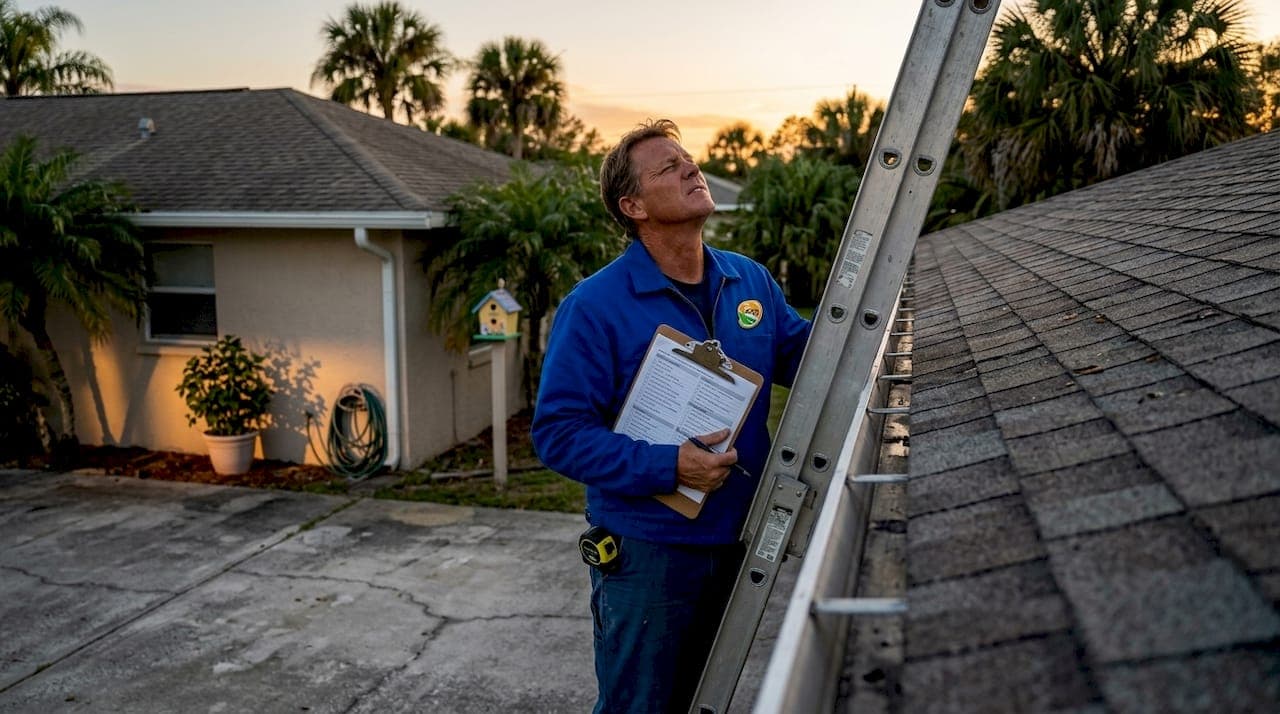
TL;DR:
- South Florida's harsh climate causes asphalt shingle roofs to age rapidly, leading homeowners to consider renewal strategies. If damage affects less than 25%, repair is cost-effective, but widespread issues often require full replacement due to legal and structural concerns. Proper preparation, adherence to Florida's codes, and documentation are essential for successful roof renewal, helping homeowners extend roof life and avoid costly replacements.
South Florida's relentless sun, humidity, and storm season age asphalt shingle roofs faster than almost anywhere else in the country. If you own a home in Broward or Palm Beach County, you've probably noticed curling edges, missing granules, or shingles that look faded and brittle. The good news: a clear roof renewal workflow can help you avoid a $15,000 to $30,000 replacement and extend your roof's life by a decade or more. This guide walks you through every stage, from deciding whether renewal is right for you to locking in your warranty.
Table of Contents
- Assessing your roof: Repair, renew, or replace?
- What you need before starting: Tools, permits, and preparation
- Step-by-step workflow: Renewing your asphalt shingle roof
- Special considerations in Florida: Moisture, ventilation, and code compliance
- Considering restoration and coatings: When and how they fit
- Getting the best warranty: Documentation and compliance
- A local expert's take: What most homeowners get wrong about roof renewal
- Save more and stress less with certified roof renewal
- Frequently asked questions
Key Takeaways
| Point | Details |
|---|---|
| Florida 25% rule | If you repair over 25% of your roof within a year, you must update the whole roof to current code. |
| Permits and inspections | You need proper permits and inspections to comply with local regulations and insurance. |
| Step-by-step workflow | Following the complete renewal workflow ensures the longest life for your shingle roof. |
| Local climate impacts | Proper ventilation and moisture control are essential for durability in South Florida. |
| Warranty coverage | Use compatible materials, follow instructions, and save documentation for the best warranty protection. |
Assessing your roof: Repair, renew, or replace?
Before you spend a dollar, you need to know which path makes sense. The three options are localized repair, full renewal, or complete replacement. Each one fits a different condition level.
A useful rule of thumb is this: if damage covers less than 25% of your roof surface, targeted repair is usually the most cost-effective move. Widespread granule loss across multiple sections, or leaks showing up in more than one room, typically points toward replacement.
Florida adds a legal layer to this decision. Florida Building Code Section 706.1.1.2 states that repairing or replacing more than 25% of your roof within a 12-month period can trigger a requirement to bring the entire roof up to current code. That one rule can turn a "quick fix" into a full project overnight.
Understanding how Florida's climate impacts shingle roofs helps you set realistic expectations before any work begins.
| Condition | Best option | Why |
|---|---|---|
| Isolated damage, under 25% | Repair | Cost-effective, minimal disruption |
| Aging but structurally sound | Renewal | Extends life 10 to 15 years, major savings |
| Widespread balding, multiple leaks | Replacement | Repair costs exceed long-term value |
Warning signs that renewal won't be enough:
- Granule loss across most of the roof surface
- Soft or spongy decking underfoot
- Interior water stains in multiple rooms
- Shingles cracking along the entire field
Pro Tip: Before calling anyone, walk your attic with a flashlight after a rain. Daylight peeking through or wet insulation tells you more about your roof's real condition than any exterior inspection.
"The 25% rule is not just a guideline — it's codified in Florida law. Ignoring it can turn a simple renewal into a full code-compliance project with a much larger price tag."
For a closer look at what cost-effective repair steps look like in practice, check out our detailed breakdown.
What you need before starting: Tools, permits, and preparation
Once you know renewal is the right call, preparation determines whether the job goes smoothly or creates expensive problems later.
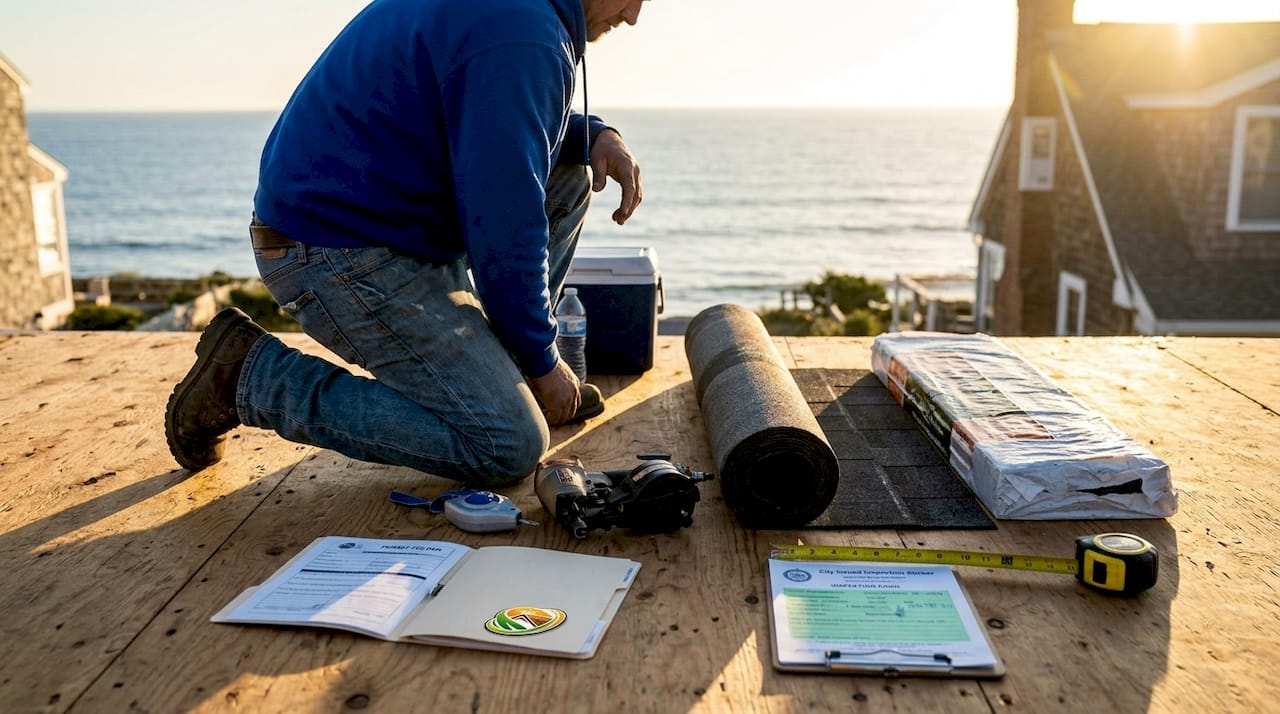
In Florida, permits and inspections are not optional for most re-roofing work. You should expect multiple inspection stages: deck inspection, underlayment inspection, and a final sign-off. Skipping any of these can result in fines and, more critically, can void your homeowner's insurance coverage.
Here's what a typical preparation checklist looks like:
| Item | Purpose | Note |
|---|---|---|
| Building permit | Legal requirement | Pull before any work starts |
| Roofing nailer | Fastening shingles | Check nail length for code compliance |
| Pry bar and tear-off tools | Removing old shingles | Protect decking during removal |
| Synthetic underlayment | Moisture barrier | Use high-wind rated product for South Florida |
| Drip edge | Edge water control | Required by Florida code |
| Ice-and-water shield | Vulnerable area protection | Apply at eaves and valleys |
Before you start, confirm:
- Your permit is approved and posted
- Your materials match the manufacturer's warranty requirements
- Your contractor (if using one) is licensed in Florida
Pro Tip: Product selection matters more than most homeowners realize. Using off-brand or mismatched materials can disqualify your warranty before the first shingle goes down. Our three-step roof renewal guide explains exactly how we approach this stage for South Florida homes.
Step-by-step workflow: Renewing your asphalt shingle roof
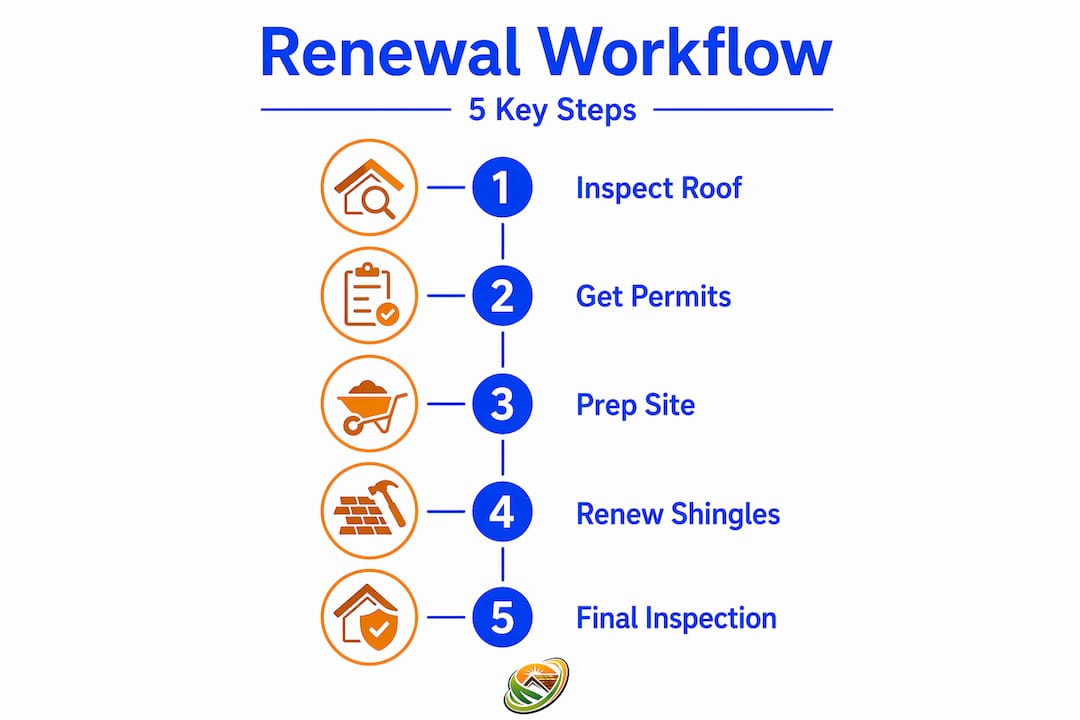
With permits pulled and materials staged, you're ready to move through the actual roof renewal process workflow. Here's the sequence that professional re-roofing follows for asphalt shingle roofs:
- Tear-off: Remove all existing shingles, starter strips, and old underlayment. Dispose of debris properly.
- Deck inspection: Check every board for rot, soft spots, and nail pops. Replace damaged sections before moving forward.
- Drip edge installation: Secure metal drip edge along eaves first, then rakes after underlayment is laid.
- Moisture barrier: Apply ice-and-water shield at eaves, valleys, and around penetrations. Lay synthetic underlayment over the field with proper overlaps.
- Starter strips: Install along the eave line to seal the first shingle course.
- Shingle courses: Work from eave to ridge, staggering joints between courses for water resistance.
- Flashing: Install step flashing at walls, pipe boots at penetrations, and valley flashing in all low points.
- Ridge cap: Finish the peak with ridge cap shingles for a weather-tight seal.
- Final inspection and cleanup: Schedule your permit inspection, remove all debris, and do a nail sweep with a magnet.
Safety note: Working at roof height in Florida's heat is a real hazard. Use fall protection equipment, work in the early morning before peak temperatures, and never work alone.
Where DIY makes sense vs. when to call a pro:
- DIY-friendly: Minor repairs, cleaning, granule checks
- Call a pro: Full tear-off, flashing, anything near electrical or HVAC penetrations
Knowing how to restore shingle flexibility before shingles reach the replacement stage is one of the most cost-effective things a Broward or Palm Beach homeowner can do.
Special considerations in Florida: Moisture, ventilation, and code compliance
Florida's climate creates conditions that punish shortcuts. Heat, humidity, and hurricane-force winds mean your roof system needs to perform at a higher standard than in most other states.
Proper attic ventilation is one of the most overlooked factors in roof longevity. Intake at the soffits combined with exhaust at the ridge reduces heat and moisture buildup that accelerates wear on decking, underlayment, and fasteners. A poorly ventilated attic can shorten a renewed roof's life by years.
Underlayment choice also matters here. In high-wind zones like South Florida, underlayment acts as your secondary water barrier when the top layer is compromised during a storm. Using a product rated for high-wind exposure is not optional.
Florida-specific tips that protect your investment:
- Use synthetic underlayment rated for 130+ mph wind exposure
- Seal all roof penetrations with code-approved boots and caulk
- Ensure soffit vents are not blocked by insulation
- Secure drip edge with the correct nail spacing per Florida Building Code
- Document every material and installation step for insurance purposes
Pro Tip: Your insurance company may request proof of code-compliant underlayment after a storm claim. Keep your permit, inspection records, and material receipts together in one folder. This single habit has saved homeowners thousands in disputed claims.
For more on why Florida asphalt roofs fail early and how to prevent it, the patterns are consistent and avoidable.
Considering restoration and coatings: When and how they fit
For some roofs, a coating-based restoration is a viable alternative to a full renewal workflow. It costs less and adds protection, but it only works on roofs that are fundamentally sound.
The standard methodology for coating an existing roof follows this sequence:
- Full inspection: Identify all damaged areas before any coating is applied.
- Localized repair: Fix every problem spot. Coatings do not seal over active leaks.
- Cleaning: Remove dirt, algae, and debris so the coating bonds properly.
- Coating application: Apply the fluid-applied system per manufacturer specs.
- Post-application check: Inspect coverage, edges, and penetrations for gaps.
This approach treats your existing roof as a reusable asset rather than a liability. But it only applies when the underlying structure is still solid.
Pro Tip: If your shingles are brittle and cracking across the whole surface, coating will not save them. The right candidate for restoration is a roof that has aged but hasn't failed. See how the risks and strengths of renewal compare before you decide.
Getting the best warranty: Documentation and compliance
Following the right workflow is only half the job. Protecting what you've invested means understanding what your warranty actually requires.
Most system warranties, like the GAF Roofing System Limited Warranty, are conditional. You must use all required system products together, follow installation specs exactly, and keep documentation. Missing one requirement can void coverage on the entire roof.
Best practices for protecting your warranty:
- Use only the products specified in your warranty system
- Keep all receipts, product labels, and installation photos
- File your permit and final inspection certificate together
- Register your warranty with the manufacturer within the required window
- If using a contractor, get a signed copy of the installation certificate
One statistic worth noting: Many homeowners only discover their warranty is invalid when they file a claim. The most common reason is mismatched products or missing documentation, not installation errors.
A local expert's take: What most homeowners get wrong about roof renewal
We've seen hundreds of roofs across Broward and Palm Beach County. The pattern is almost always the same. Homeowners wait too long, try a quick patch, and then face a full replacement two years later that could have been avoided.
The biggest myth is that a patch job buys meaningful time. In South Florida's climate, a localized repair on a roof that's already losing granules across the field is like putting a bandage on a systemic problem. The underlying shingles keep drying out, and the next storm finds the next weak point.
The second mistake is underestimating ventilation. We've seen brand-new roofs deteriorate in under five years because the attic had no real airflow. The heat builds up, the underlayment degrades, and the shingles above it follow. No amount of quality materials fixes a ventilation problem after the fact.
The third mistake is skipping documentation. In South Florida, your roof is directly tied to your homeowner's insurance rate and your home's resale value. A well-documented renewal, with permits, inspections, and warranty registration, can actually lower your premium and increase buyer confidence when you sell.
Our expert renewal process explanation shows how catching these issues early changes the outcome entirely. The homeowners who come to us before their roof fails spend a fraction of what those who wait end up paying.
Save more and stress less with certified roof renewal
If your roof is showing signs of age but hasn't failed yet, you may have more options than you think. At Shingle Roof Renewal, we use certified GreenSoy Technology to restore your existing shingles at the molecular level, stopping deterioration and extending your roof's life by 10 to 15 years. Homeowners in Broward and Palm Beach County who qualify can save up to 80% compared to a full replacement, backed by a 6-year transferable warranty.
Our professional roof renewal services start with a free inspection so you know exactly where you stand before spending anything. We serve homeowners across the region, including Delray Beach and Boca Raton. Schedule your free roof inspection today and find out if your roof qualifies for renewal before a small problem becomes a $20,000 decision.
Frequently asked questions
What is Florida's 25% roof replacement rule?
If more than 25% of your roof is repaired or replaced within 12 months, state code requires the entire roof covering to be brought up to current building standards.
Can I renew my shingle roof without a permit in Broward or Palm Beach?
No. Most renewal jobs require a building permit and multiple inspections covering the deck, underlayment, and final work to ensure safety and code compliance.
What are the signs I should replace instead of renew my roof?
Widespread granule loss, severe balding across the field, or multiple interior leaks typically mean full replacement delivers better long-term value than renewal.
How can I maximize my warranty coverage on a renewed roof?
Use all required system products, follow the manufacturer's installation rules exactly, and keep detailed records including receipts, photos, and permit documents.
When is coating or restoration a good alternative for an older roof?
If your roof is mostly sound, a fluid-applied coating can extend its life after localized repairs, but systemic damage or widespread shingle failure usually rules this approach out.