

TL;DR:
- Roof warranties typically cover manufacturing defects and installation errors, not storm damage or aging.
- Proper maintenance and documentation are crucial to ensure warranty validity and avoid claim denials.
- Roof restoration, if approved, can extend roof life and preserve warranty coverage without voiding it.
You finally decide to get your roof looked at, and the quote comes back at $20,000 or more. You think, "Wait, doesn't my warranty cover this?" Then you dig through the paperwork and realize the answer is far more complicated than you expected. For homeowners in Broward and Palm Beach counties, this moment of confusion is more common than it should be. Understanding what your roof warranty actually covers, and how to use that knowledge strategically, can protect your home and save you thousands of dollars over the life of your roof.
Table of Contents
- What is a roof warranty and why does it matter?
- What does your roof warranty actually cover?
- How roof restoration affects your warranty
- Practical steps to maximize your roof warranty and avoid costly mistakes
- What most homeowners miss about roof warranties in Florida
- Expert roof renewal services in Broward and Palm Beach counties
- Frequently asked questions
Key Takeaways
| Point | Details |
|---|---|
| Understand warranty types | Knowing the difference between manufacturer and workmanship warranties is essential for effective roof maintenance. |
| Check coverage gaps | Many warranties exclude storm damage and improper installation, so reviewing terms is key before investing in repairs. |
| Restoration can extend protection | Approved restoration methods may help renew warranty eligibility and extend the roof’s functional life. |
| Regular maintenance saves money | Documented inspections and timely repairs keep your roof eligible for warranty claims and avoid costly surprises. |
| Expert advice matters | Consult certified professionals and use expert reports to negotiate warranty claims and optimize restoration decisions. |
What is a roof warranty and why does it matter?
Before you make any decisions on repairs or restoration, it's crucial to understand exactly what your roof warranty includes and what it doesn't.
A roof warranty is a written promise from either the manufacturer or the contractor that covers specific problems with your roof for a set period of time. That sounds simple enough. But in practice, the details matter enormously. Roof warranties are often misunderstood and vary greatly depending on the manufacturer and installation quality.
There are two primary types of warranties you need to know about:
- Manufacturer warranty: This covers defects in the shingle materials themselves. If the shingles fail prematurely because of a production flaw, this warranty kicks in. It typically runs anywhere from 20 to 50 years, but the coverage often decreases significantly as the roof ages.
- Workmanship warranty: This covers mistakes made during installation. If shingles were improperly nailed, flashing wasn't sealed correctly, or the underlayment was laid wrong, this warranty is what you'd rely on. It usually comes from your roofing contractor and may only last 1 to 10 years.
- Extended warranty: Some manufacturers offer enhanced protection when a certified contractor installs the roof. These can cover both materials and labor under specific conditions.
Most homeowners assume their warranty covers everything. It rarely does. In South Florida especially, the intense heat, relentless UV exposure, and frequent storms accelerate shingle aging. Roofs that might last 30 years in a milder climate can show serious wear in 15 to 20 years here. That wear may not qualify for a warranty claim if it's classified as climate-related deterioration rather than a manufacturing defect.
"Knowing precisely what your specific warranty covers, and what it excludes, is the difference between a covered repair and a bill you pay entirely out of pocket. Don't assume. Read every line."
Exploring your roof renewal services options early, before your warranty lapses or conditions worsen, puts you in a much stronger position to make cost-effective decisions.
What does your roof warranty actually cover?
Knowing the difference between types of coverage helps you spot which issues are truly protected by your warranty and which you need to plan for out of pocket.
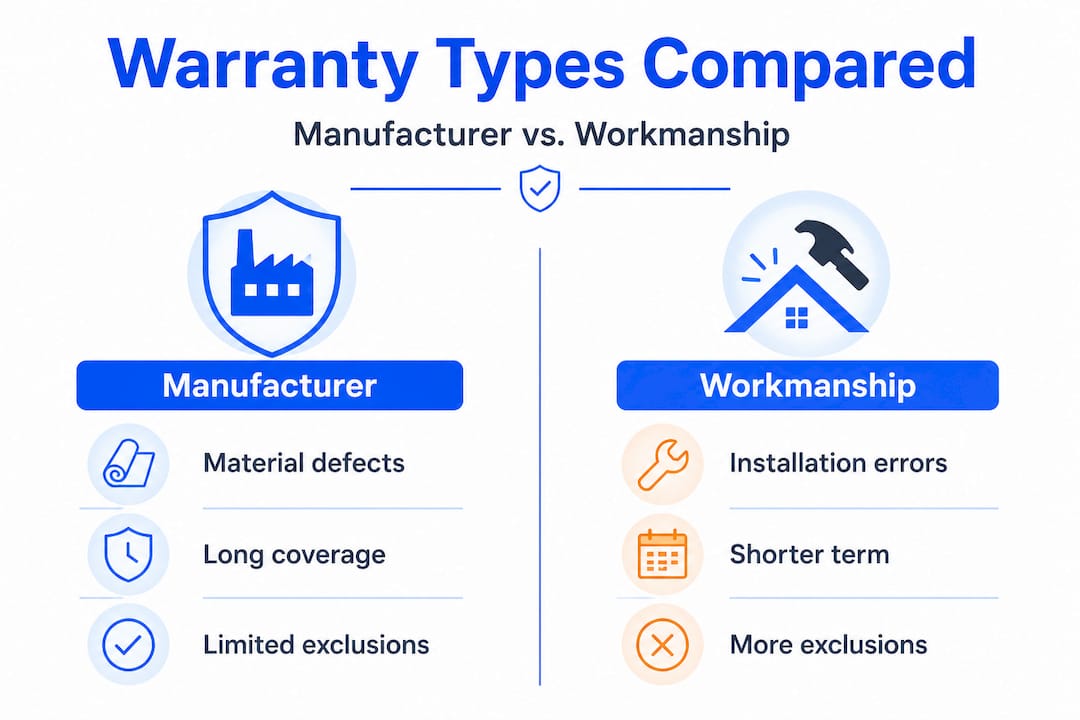
Here's a quick comparison to clarify what each type typically covers:
| Coverage type | What it covers | What it excludes | Typical duration |
|---|---|---|---|
| Manufacturer warranty | Material defects, premature granule loss from defect | Storm damage, normal wear, poor maintenance | 20 to 50 years (prorated) |
| Workmanship warranty | Installation errors, flashing failures, improper sealing | Material issues, storm damage | 1 to 10 years |
| Extended warranty | Both materials and labor (certified installs only) | Neglect, unauthorized modifications, storm damage | 25 to 50 years |
Notice that storm damage appears in the exclusion column for every single type. That's not a coincidence. Many warranties exclude storm damage and only cover manufacturing defects, which means the very thing most Florida homeowners fear most, a hurricane or tropical storm tearing up shingles, falls outside standard warranty protection. Your homeowner's insurance policy is what handles storm events, not your roof warranty.
Other common exclusions worth knowing:
- Lack of maintenance: If you haven't had regular inspections and you file a claim, the manufacturer can deny it on grounds of neglect.
- Improper installation by a non-certified contractor: Using an unlicensed roofer or one not approved by the manufacturer can void the entire warranty from day one.
- Ventilation problems: Poor attic ventilation accelerates shingle degradation. If the manufacturer determines your attic wasn't properly ventilated, your claim may be denied.
- Unauthorized repairs: DIY patchwork or using a non-approved sealant can be grounds for voiding coverage.
- Prorating: Many manufacturer warranties are prorated, meaning the coverage value decreases each year. A 30-year warranty might only cover 10% of costs by year 25.
Must-check items every homeowner should review on their warranty:
- The exact start date and expiration date of all coverage types
- Whether coverage is prorated and at what rate
- Which specific weather events are excluded
- Maintenance requirements written into the warranty terms
- Whether the warranty is transferable if you sell your home
- What documentation is required to file a claim
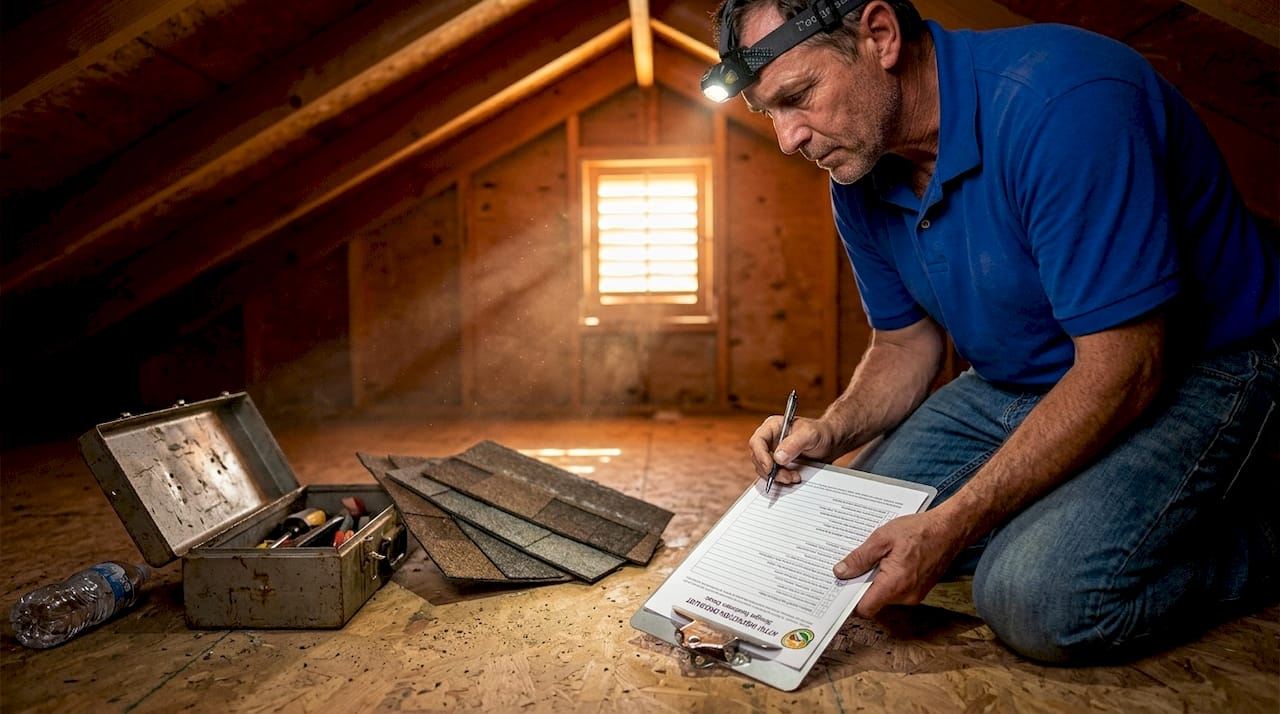
Using a solid roof inspection checklist and understanding the full roof assessment process helps you stay on top of conditions that affect both your roof's health and your warranty's validity.
How roof restoration affects your warranty
With so much at stake, understanding how restoration impacts your warranty is essential before you invest in renewal services.
The good news is that restoration doesn't automatically void your warranty. But it does require careful handling. Some restoration processes can renew warranty eligibility or extend roof life without requiring a full replacement, which is a significant financial advantage for homeowners with aging but structurally sound roofs.
The key is communication. Before any restoration work begins, contact the shingle manufacturer and ask specifically whether the process you're considering is approved or will affect your existing coverage. Get the answer in writing. This single step protects you from a denial later.
Here's a realistic look at how warranty terms tend to shift after professional restoration:
| Restoration type | Years potentially added to roof life | Warranty impact | Common approval requirements |
|---|---|---|---|
| GreenSoy Technology renewal | 10 to 15 years | May qualify for new 6-year transferable warranty | Certified applicator, inspection report |
| Standard rejuvenation spray | 2 to 5 years | Usually no official warranty adjustment | Varies by manufacturer |
| Full re-roofing over existing | Resets to new roof warranty | New manufacturer warranty begins | Permit, licensed contractor |
| Partial repair and sealant | Minimal | May void warranty if unapproved materials used | Manufacturer approval needed |
Pro Tip: Before signing any restoration contract, ask the service provider for written documentation showing that the process complies with your manufacturer's warranty terms. A reputable company will provide this without hesitation. If they can't produce it, walk away.
Steps to verify your warranty status after restoration:
- Request a post-restoration inspection report and keep a copy
- Contact the manufacturer with the report to confirm continued coverage
- Ask your restoration provider for a copy of their certification or approval documentation
- Update your home records file with all new warranty paperwork
- Note whether your new coverage is transferable, which adds real estate value if you sell
Homeowners in areas like Boca Raton and Plantation have found that professional roof renewal not only extends the functional life of their shingles but also simplifies the documentation process, making future warranty interactions far less stressful.
Practical steps to maximize your roof warranty and avoid costly mistakes
When you're ready to apply these insights, protecting your investment starts with consistent, smart maintenance.
Florida's climate is genuinely one of the harshest in the country for asphalt shingle roofs. The combination of intense UV radiation, heat cycling between hot days and cooler nights, high humidity, and frequent storms creates conditions that age a roof faster than almost anywhere else in the United States. Your warranty was likely written with a more moderate climate in mind. That means you need to be more proactive than the average homeowner to keep your coverage intact.
Regular roof inspections and timely maintenance reduce claims denial and prolong shingle life significantly. Here are the key steps to follow:
-
Schedule a professional inspection at least once a year. In Broward and Palm Beach counties, we recommend inspections every spring before hurricane season begins and after any major storm event. Document the findings every time.
-
Clean your gutters and roof surface regularly. Debris buildup holds moisture against shingles, accelerating deterioration. Clogged gutters can also cause water to back up under shingles, a condition that voids most warranties.
-
Address minor repairs immediately. A missing shingle or a small area of lifted flashing seems minor. Left alone, it leads to water intrusion, deck rot, and a claim denial because the damage was "allowed to worsen due to neglect."
-
Use only manufacturer-approved materials for repairs. Even a small patch job using the wrong type of sealant or incompatible shingles can give the manufacturer grounds to deny future claims.
-
Keep every receipt and invoice for roof-related work. This documentation creates a paper trail that proves you've maintained the roof as required.
-
Review your warranty terms annually. Warranty terms can be updated or clarified. Knowing where you stand each year prevents unpleasant surprises when you need to file.
-
Communicate proactively with your warranty provider. If you're considering any change to your roof, from adding solar panels to applying a renewal treatment, call first. A quick conversation can save your entire coverage.
Pro Tip: Take dated photos of your roof at least twice a year, especially after storms. Visual documentation of your roof's condition over time is one of the strongest tools you have when disputing a denied claim. Store these photos alongside your inspection checklist tips and the roof assessment process records from any professional evaluations.
What most homeowners miss about roof warranties in Florida
Here's a perspective that most articles won't give you: your roof warranty is not a safety net. It's a starting point for a conversation. And in Florida, that distinction matters more than anywhere else.
The conventional wisdom tells homeowners that a 30-year warranty means 30 years of protection. What it actually means is 30 years of coverage, under specific conditions, for specific defects, with decreasing financial value over time. That's a very different thing. And in a climate like South Florida's, where Florida's climate impacts shingle roofs in ways that manufacturers headquartered in northern states may not fully account for, the gap between expectation and reality can be enormous.
We've seen homeowners with roofs that are only 12 years old, technically still under a long-term manufacturer warranty, face claim denials because the damage was attributed to a maintenance gap rather than a material defect. A missed cleaning here, a small repair left undone there, and suddenly a warranty that felt rock-solid is worthless at the exact moment you need it most.
"A warranty is only as strong as the documentation behind it. In Florida, your maintenance records and inspection reports are worth more than the warranty certificate itself."
The smarter approach is to treat your warranty as one layer of a broader strategy, not the whole strategy. Use it alongside regular professional inspections, proactive restoration when your roof qualifies, and thorough documentation practices. Homeowners who approach their roof this way almost never face surprise denials. They know the condition of their roof at all times. They catch deterioration early. And when renewal is an option, they take it before the problem escalates into a full replacement.
The most successful homeowners we work with don't wait for a problem. They use assessment reports as a negotiating tool with warranty providers and seek third-party expert confirmation when a claim is disputed. That proactive mindset is what separates a $2,000 restoration from a $25,000 replacement.
Expert roof renewal services in Broward and Palm Beach counties
If this article has shown you anything, it's that the roof over your head deserves more than a single glance every few years. Understanding your warranty is step one. Taking action to protect and extend your roof's life is step two.
At Shingle Roof Renewal, we help homeowners across Broward and Palm Beach counties get the most out of their existing roofs. Our shingle roof restoration services use certified GreenSoy Technology to restore shingle flexibility at the molecular level, extending roof life by 10 to 15 years. If you're in Boca Raton or Plantation, or anywhere in between, we can assess your roof's condition and tell you exactly whether renewal is a smart option for your situation. Our process starts with a free inspection, and our 6-year transferable warranty backs every treatment we apply. Schedule your free roof inspection today and find out if your roof qualifies for renewal before a small problem becomes a very large bill.
Frequently asked questions
Does roof restoration void my manufacturer warranty?
Most restoration services won't void your warranty if you consult the manufacturer and use approved methods, but always check terms and request documentation before any work begins. Some restoration processes can actually renew warranty eligibility rather than eliminate it.
How can I tell if my shingle roof warranty is still valid?
Review your warranty paperwork for expiration dates, proration schedules, and maintenance requirements, then schedule a professional roof inspection if you're unsure of your roof's current status. Regular roof inspections are the most reliable way to confirm coverage eligibility and catch any gaps before filing a claim.
Are storm damages covered by my shingle roof warranty?
Most warranties do not cover storm damage because coverage typically applies only to manufacturing defects in the shingle materials. Many warranties exclude storm damage entirely, which is why homeowner's insurance, not your roof warranty, is what you rely on after a hurricane or major weather event.
What maintenance steps help keep my roof warranty valid?
Inspect your roof at least once a year, document all repairs with receipts and photos, and always use certified professionals for maintenance and any restoration work. Consistent maintenance records are your strongest defense against a warranty claim denial, especially in Florida's demanding climate.