
TL;DR:
- Roof flexibility is vital for asphalt shingles to withstand South Florida's extreme heat and storms. Maintaining pliability extends roof life, while early treatments can restore it and delay costly replacements. Proper ventilation and regular inspections are essential for preserving shingle durability in this demanding climate.
Roof flexibility is defined as the ability of asphalt shingles to bend, expand, and contract without cracking as temperatures rise and fall. For South Florida homeowners in Broward and Palm Beach County, this property is the single most important factor in how long your roof lasts. Florida's intense heat, UV radiation, and rapid temperature swings from afternoon thunderstorms attack shingle flexibility faster than almost any other climate in the country. Understanding what causes shingles to lose pliability, and what you can do about it, is the difference between a roof that lasts and one that fails years too soon.
Roof flexibility explained: why it matters in South Florida
Asphalt shingles stay flexible because they contain petroleum-based oils that keep the asphalt binder soft and pliable. When those oils are present, shingles can expand in the midday heat and contract at night without cracking. When those oils evaporate or oxidize, the shingle becomes stiff and brittle.
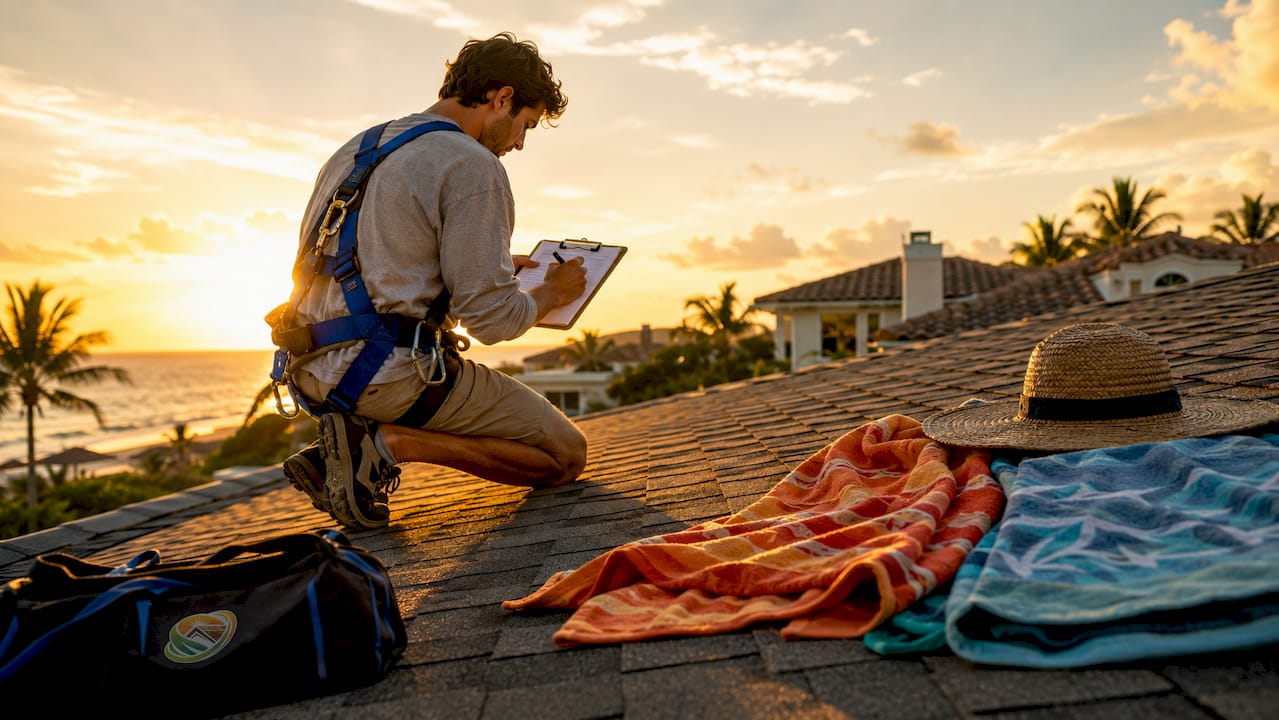
South Florida's climate attacks this process from every direction. Asphalt shingles in Florida last only 12–18 years, well below national averages, because UV radiation, salt air, and surface temperatures above 150°F accelerate oil loss faster than shingles are designed to handle. Near the coast, that lifespan can drop to 10–15 years. That is not a minor difference. It means your roof may need attention a decade before a homeowner in a cooler state would even think about it.
The industry term for this process is "volatilization." The oils inside the asphalt literally evaporate under sustained heat. Once they are gone, no amount of surface cleaning or coating brings them back without a treatment that penetrates the shingle at the material level. This is why roof flexibility is not just a comfort feature. It is the core mechanism that keeps your roof waterproof, intact, and storm-ready.
How does South Florida's climate affect roof flexibility?
South Florida's climate creates a combination of stressors that no single roofing material was originally engineered to handle simultaneously. The four main forces are heat, UV radiation, thermal shock, and salt air.
Surface heat and thermal cycling
Shingle surface temperatures regularly exceed 150°F on a clear South Florida afternoon. That heat drives petroleum oils out of the asphalt binder through volatilization. Every day the sun rises and sets, shingles expand and contract. Over years, that repeated movement on an increasingly stiff shingle creates micro-cracks that grow with each cycle.
Heat history determines roof age more than the calendar year your shingles were installed. Two houses on the same street, built the same year, can have dramatically different levels of brittleness depending on roof pitch, tree coverage, and attic ventilation. This is why a roof inspection matters more than simply counting years.
Thermal shock from afternoon storms
Florida's afternoon thunderstorms drop temperatures rapidly after hours of intense heat. Thermal shock from rapid cooling creates stress on shingles, seal strips, and flashings that can cause leaks even when the roof looks visually sound from the street. A shingle with good flexibility absorbs that stress. A brittle shingle cracks under it.
UV radiation and salt air
UV radiation breaks down the chemical bonds in asphalt over time, speeding up oxidation. Salt air from the Atlantic and Gulf coasts adds a corrosive layer that accelerates surface degradation on both shingles and metal components like flashings and fasteners. Together, these forces make South Florida one of the most demanding environments for any roofing material.
| Climate Factor | Effect on Shingles | Result |
|---|---|---|
| 150°F+ surface heat | Volatilizes petroleum oils | Brittleness and cracking |
| UV radiation | Breaks down asphalt bonds | Oxidation and stiffening |
| Thermal shock | Stresses seal strips and flashings | Leaks without visible damage |
| Salt air | Corrodes metal components | Accelerated surface aging |
| Poor attic ventilation | Cooks shingles from below | Premature oil loss and failure |
What physical and chemical changes cause shingles to lose flexibility?
Shingle aging follows a predictable chemical sequence. Understanding it helps you recognize warning signs before they become expensive problems.
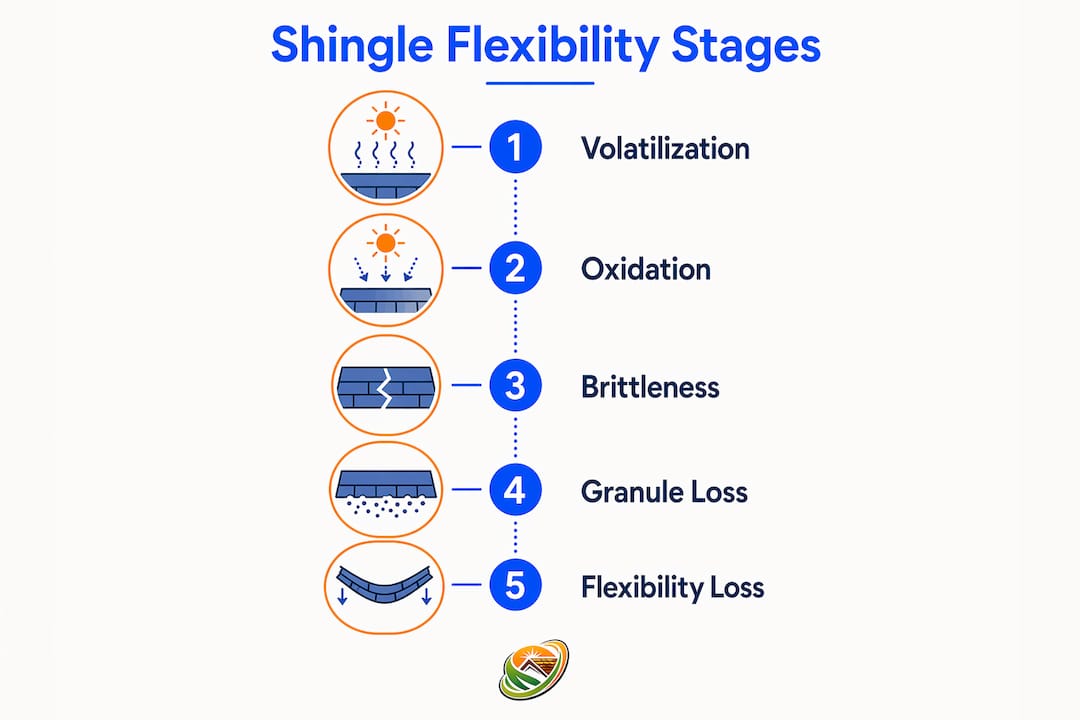
Volatilization is the first stage. Heat causes the lighter petroleum oils in the asphalt binder to evaporate. This is a slow process in moderate climates, but South Florida's sustained high temperatures make it happen years faster than the shingle manufacturer's warranty assumes.
Oxidation follows. As oils leave the binder, oxygen fills the gaps and chemically stiffens the asphalt. Brittleness from oxidation leads directly to cracking and granule loss. The shingle surface becomes rigid and can no longer flex with thermal movement.
Granule loss is the visible result of a failing binder. Granules are embedded in the surface of every asphalt shingle to block UV rays and protect the asphalt underneath. When the binder weakens, granules detach. Granule loss accelerates UV damage by exposing the underlying asphalt, aging the roof 3 to 5 times faster than a protected surface. Finding granules in your gutters is one of the clearest early warnings your roof is losing its defense.
Thermal shock damage to seal strips and flashings is the final stage most homeowners miss. Repeated thermal shock damages seal strips and roof components, causing leaks that appear without any obvious external aging signs. A roof can look fine from the driveway and still be leaking at the flashing points.
- Petroleum oil loss causes stiffening and cracking
- Oxidation chemically locks the asphalt into a rigid state
- Granule loss removes UV protection and speeds up aging
- Thermal shock damages flashings and seal strips invisibly
- Attic heat buildup accelerates all four processes simultaneously
Pro Tip: Check your attic ventilation before blaming the shingles. Poor ventilation traps heat below the roof deck and cooks shingles from the inside out. Improving airflow is one of the most cost-effective steps you can take to slow shingle aging.
What are the benefits of maintaining roof flexibility?
Flexible shingles do more than just look good. They perform better in every measurable way that matters to a South Florida homeowner.
A flexible shingle resists cracking during thermal cycling. It seals tightly after a storm. It holds its granules longer, which keeps UV protection intact and slows the oxidation process. Granule loss is the primary defense against UV degradation, so maintaining the binder that holds granules in place directly extends the roof's useful life.
Flexible roofs also handle storm impact better. A brittle shingle shatters or cracks under hail or wind-driven debris. A pliable shingle absorbs the impact and springs back. In a region where hurricane season runs june through november, that difference matters every single year.
The financial case is straightforward. A roof replacement in South Florida costs $15,000–$30,000. Catching flexibility loss early and treating it costs a fraction of that. Homeowners who maintain shingle pliability through regular inspections and preservation treatments extend their roof's life and delay or avoid replacement entirely.
- Prevents cracking and tearing during daily thermal cycling
- Holds granules in place, preserving UV protection
- Absorbs storm impact instead of shattering
- Slows oxidation by keeping the binder intact
- Reduces the frequency and cost of repairs
- Delays or eliminates premature replacement costs
How can homeowners maintain and restore roof flexibility?
Maintaining shingle flexibility requires a combination of routine inspection, proper ventilation, smart material choices, and targeted restoration treatments.
-
Schedule annual inspections. A professional inspection catches early brittleness, granule loss, and flashing damage before they become leaks. Granule loss and brittleness are visible signs of oxidation even when the roof looks intact from the ground.
-
Improve attic ventilation. Attic ventilation is the most overlooked factor in roof longevity. Poor ventilation causes roofs to cook from below, accelerating asphalt oil loss. Adding ridge vents, soffit vents, or powered attic fans reduces internal heat buildup significantly.
-
Choose polymer-modified shingles on repairs. When replacing sections of your roof, polymer-modified asphalt shingles maintain flexibility longer by slowing oxidation. They endure up to 50% more thermal cycles before showing degradation than conventional shingles. That translates directly to fewer repairs during peak storm season.
-
Use penetration-based rejuvenation treatments. Lab tests show that penetration-based rejuvenators improve cold-weather flexibility by up to 66.7% on 15-year-old shingles. These treatments work by replenishing the oils that volatilized out of the binder, restoring pliability at the material level rather than just coating the surface.
-
Avoid pressure washing and harsh coatings. High-pressure washing strips granules and accelerates the very damage you are trying to prevent. Surface-only coatings seal the shingle without restoring internal flexibility and can trap moisture underneath.
Pro Tip: Ask your roof inspector to note moisture patterns and wear zones on a simple diagram. Areas with heavy shade, poor drainage, or direct western sun age at different rates. Spot treatments based on actual wear patterns cost less and work better than treating the entire roof uniformly.
Shingleroofrenewal uses Fresh Roof Green Soy Technology to restore flexibility at the molecular level, which is a different approach from standard surface rejuvenation products. The treatment penetrates the shingle binder, replenishes lost oils, and locks in granules. For qualifying roofs in Broward and Palm Beach County, this process can extend roof life by 10–15 years.
What I have learned about roof flexibility after years in South Florida
The most common mistake I see South Florida homeowners make is treating roof age as a fixed number. They hear "20-year shingle" and assume they have 20 years. They do not. What they have is 20 years under ideal conditions, and South Florida is not ideal conditions.
I have seen roofs that were only 10 years old showing brittleness and granule loss that would be alarming on a 20-year-old roof in a cooler state. The reason is almost always the same: poor attic ventilation combined with a west-facing roof slope that gets direct afternoon sun for six or more hours a day. The heat history of that roof is double what the calendar suggests.
The other misconception I encounter constantly is that a roof has to look bad to be failing. Homeowners drive up, look at their roof from the driveway, and see no missing shingles. They assume everything is fine. But thermal shock damage to flashings, early-stage granule loss visible only up close, and stiffening that you can only detect by feel are all happening before any shingle goes visibly missing.
My honest advice: get a professional inspection before you call a roofer for a replacement quote. A good inspector will tell you whether your roof is genuinely at end of life or whether it still qualifies for preservation. The difference in cost between those two outcomes is often $20,000 or more. Prevention and early intervention are not just good ideas. They are the financially responsible choice for any South Florida homeowner.
— Daniellison
Your roof may qualify for preservation, not replacement
Most homeowners in Broward and Palm Beach County call a roofer when they notice shingle problems. Shingleroofrenewal is the call you make first.
As a certified Fresh Roof applicator, Shingleroofrenewal inspects your roof, assesses its condition, and tells you honestly whether it qualifies for preservation. If it does, you could save up to 80% compared to a full replacement, backed by a 6-year transferable warranty. The process starts with a free inspection and ends with a clear recommendation. No pressure, no sales pitch. Just an honest answer about whether your roof can be saved. Schedule your free inspection today and find out what your roof actually needs before spending $15,000–$30,000 on a replacement that may not be necessary yet.
Key takeaways
Roof flexibility is the core property that determines how long an asphalt shingle roof survives South Florida's heat, UV radiation, and storm cycles, and restoring it early is always less expensive than replacing the roof.
| Point | Details |
|---|---|
| Flexibility drives durability | Pliable shingles resist cracking, hold granules, and seal better after storms. |
| South Florida accelerates aging | Surface temps above 150°F and UV radiation cut shingle lifespan to 12–18 years. |
| Granule loss is the key warning sign | Losing granules exposes asphalt and speeds up aging 3 to 5 times faster. |
| Attic ventilation is critical | Poor ventilation cooks shingles from below and is the most overlooked aging factor. |
| Restoration beats replacement | Penetration-based treatments can restore flexibility and extend roof life by 10–15 years. |
FAQ
What is roof flexibility in asphalt shingles?
Roof flexibility is the ability of asphalt shingles to expand and contract with temperature changes without cracking. It depends on petroleum-based oils in the asphalt binder that volatilize and oxidize over time, especially in hot climates.
How long do asphalt shingle roofs last in South Florida?
Asphalt shingle roofs in Florida typically last 12–18 years, and as few as 10–15 years near the coast, due to intense UV exposure, heat, and salt air. That is significantly shorter than national averages.
What are the first signs that my shingles are losing flexibility?
Granule loss in gutters, visible cracking or curling at shingle edges, and stiff shingles that do not flex when pressed are the clearest early signs. These indicate oxidation is underway and the binder is weakening.
Can lost shingle flexibility be restored?
Lab-tested penetration-based rejuvenators show up to 66.7% improvement in flexibility on 15-year-old shingles. Treatments like Fresh Roof Green Soy Technology replenish oils at the material level rather than just coating the surface.
Does attic ventilation really affect shingle flexibility?
Attic ventilation directly affects how fast shingles lose their oils. Poor ventilation traps heat below the roof deck and accelerates volatilization from underneath, compounding the damage from sun exposure above. Improving ventilation is one of the most cost-effective steps a South Florida homeowner can take.