
TL;DR:
- Scheduling a roof inspection before storm season helps identify damage risks early and prevents costly repairs.
- South Florida homeowners can preserve their roofs with a treatment that improves flexibility and resistance, avoiding full replacement.
Schedule a professional pre-season roof inspection now, then run through this six-item homeowner checklist the same day. South Florida attics can reach very high temperatures in summer, which bakes shingles from below and accelerates cracking and granule loss. A standard inspection costs a modest amount, a fraction of what a full replacement typically runs. If your roof qualifies, Shingleroofrenewal offers a free assessment and may be able to preserve it using Fresh Roof Green Soy Technology, backed by a 6-year transferable warranty.
Your immediate pre-storm checklist:
- Clear gutters and downspouts of all debris
- Trim any branches near the roofline
- Photograph every slope with timestamped images for insurance
- Check the attic on a sunny day for daylight coming through the deck
- Temporarily seal any visibly lifted shingle edges with roofing cement
- Pull out your homeowner's policy and confirm your hurricane deductible and coverage type
Table of Contents
- What are the roof inspection steps for storm season?
- Your roof may qualify for preservation, not replacement
- Key Takeaways
What are the roof inspection steps for storm season?
Follow these steps in order. Safety comes first, every time.
Step 1: Stay safe before you start. If you are not comfortable on a ladder, stay on the ground and use binoculars. Most homeowner roof injuries happen on ladders, not the roof itself. Wear non-slip shoes, never work alone, and avoid the roof entirely in heat above 90°F when shingles are soft and brittle.
Step 2: Ground-level perimeter scan. Walk all four sides of your home. Look for cracked, curled, or missing shingles, sagging roofline sections, and granules collecting in the soil below downspouts. Bare patches on shingles are visible from the street with binoculars.
Step 3: Clear gutters and downspouts. Clogged gutters back water under the roofline and cause rot. Check that gutters are firmly attached to the fascia and that downspouts direct water away from the foundation.
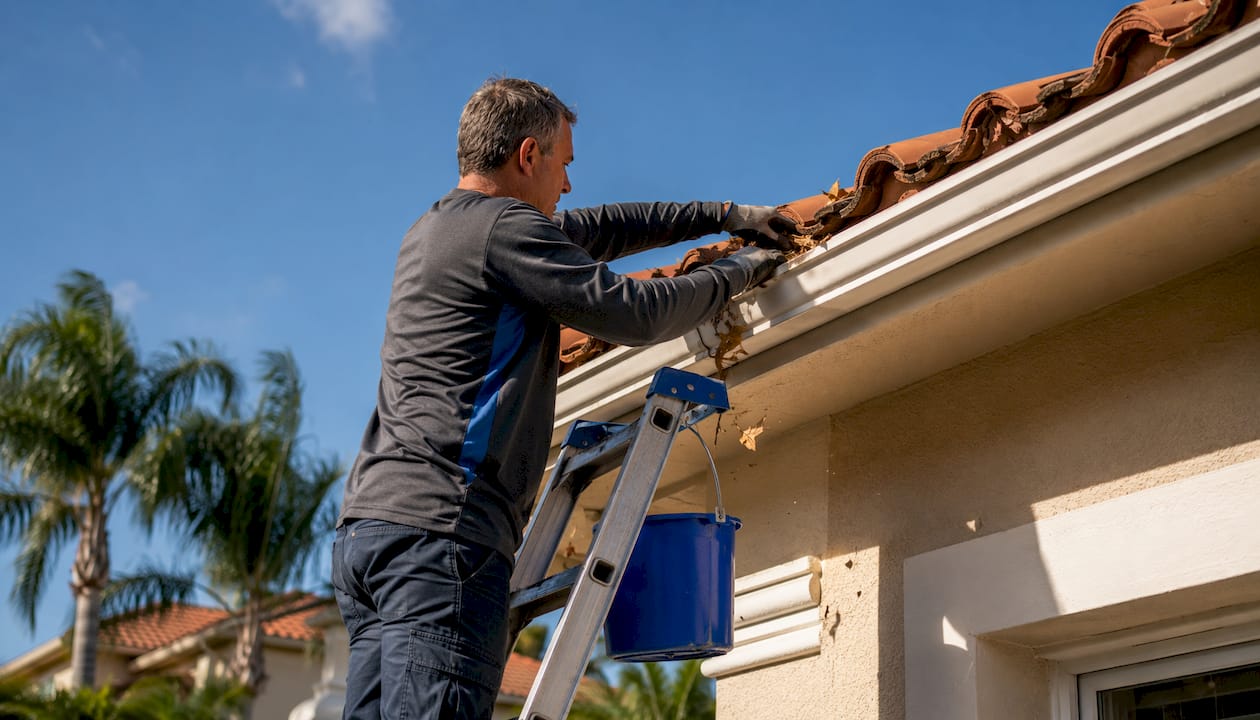
Step 4: Inspect exterior slopes, flashing, and penetrations. Flashing around chimneys, vents, and roof-wall junctions is the primary failure point in storm events. Check for lifting, rust, or gaps in sealant. Inspect pipe boots for cracking or animal damage. Check ridge caps and hip shingles for looseness.
Step 5: Test shingle adhesion. Carefully lift a few tab edges. If tabs separate easily or feel brittle, the seal strip has failed. Loose tabs are the first thing wind peels back in a hurricane.
Step 6: Attic inspection. On a sunny day, turn off your flashlight and look for daylight through the deck — it is a more reliable method for finding holes than any exterior scan. Check for water stains on rafters, wet insulation, and rust on nail heads. Also look at roof-to-wall connections for hurricane straps.
Step 7: Document everything. Insurers may attribute damage to pre-existing conditions without pre-storm photos. Shoot each slope, close-ups of flashing, any nail pops, and the attic. Store everything in cloud storage with timestamps.
Step 8: Immediate fixes and escalation. Seal lifted tabs with roofing cement. If you find daylight through the deck or an active leak, tarp that section and call a licensed professional the same day.
What professionals check that you can't: Underlayment condition, hidden nail pops, deck attachment strength, and wind mitigation features. A completed wind mitigation report can qualify you for insurance premium discounts.
Pro Tip: Schedule your inspection in March or April — contractors fill up fast as June 1 approaches. Also ask your inspector to check attic ventilation. Balanced intake and exhaust can reduce attic temperatures significantly, which meaningfully slows shingle aging from below.
Florida's coastal salt air corrodes metal flashing and fasteners faster than inland conditions, so these checks matter more in coastal Florida than in many other areas. Twice-yearly inspections are the standard for Florida shingle roofs: once in spring before hurricane season and again in late fall after it closes.
| Inspection Type | Timing | Typical Cost | Recommended Follow-Up |
|---|---|---|---|
| Pre-season professional | March–May | — | Repair all flagged items by late spring |
| Wind mitigation inspection | March–May | — | Submit report to insurer for discount |
| Post-storm check | Immediately after sustained high wind events | Varies | Document and file claim promptly |
| Homeowner attic check | Quarterly | Free | Escalate if daylight or stains found |
Your roof may qualify for preservation, not replacement
Most South Florida homeowners assume a worn shingle roof means one thing: a $15,000–$30,000 replacement. That is often not true. Shingleroofrenewal is the local preservation-first alternative for Broward and Palm Beach County homeowners who want to protect their investment before calling a roofer.
As a certified applicator of Fresh Roof Green Soy Technology, Shingleroofrenewal restores shingle flexibility at the molecular level, locks in granules, and improves wind and fire resistance on qualifying roofs. The process is straightforward: inspect, assess, and determine whether your roof qualifies for preservation. Homeowners whose roofs qualify can save up to 80% compared to full replacement, with results backed by a 6-year transferable warranty.
The free assessment takes the guesswork out of the decision. You find out exactly where your roof stands and what your options are, before spending a dollar on anything.
Book your free roof assessment today and find out if your roof qualifies for preservation.
Key Takeaways
Completing roof inspection steps before storm season is the single most effective action South Florida homeowners can take to avoid emergency repairs and premature replacement.
| Point | Details |
|---|---|
| Inspect in March or April | Contractors book up fast before June 1; early scheduling guarantees availability and repair time. |
| Attic check is most reliable | Looking for daylight through the deck detects holes more accurately than any exterior scan. |
| Document before storms hit | Timestamped cloud photos protect your insurance claim; insurers may deny coverage without pre-storm evidence. |
| Flashing fails first | Flashing around chimneys, vents, and roof-wall junctions is the primary water entry point in storm events. |
| Shingleroofrenewal preserves qualifying roofs | Free assessment, Fresh Roof Green Soy Technology treatment, and a 6-year transferable warranty for eligible South Florida homes. |