
TL;DR:
- Preparing your roof early with inspections and repairs helps it withstand storms in South Florida.
- Inspect from the ground to identify damage, and stage emergency materials 48–72 hours before a storm.
Preparing your roof for storms means taking deliberate, expert-supported steps to inspect, repair, and reinforce your asphalt shingle roof well before hurricane season arrives. South Florida homeowners in Broward and Palm Beach County face a specific threat: relentless sun and heat dry out shingles over time, making them brittle and far more vulnerable when a storm hits. The Insurance Institute for Business and Home Safety (IBHS) confirms that targeted roof upgrades, not just basic maintenance, are what separate roofs that survive storms from those that don't. Knowing how to prepare your roof for storms starts with understanding your shingles' current condition and acting early.
When should you start roof maintenance before storm season?
Optimal roof maintenance happens 3–6 months before hurricane season, which in South Florida means starting no later than february or march. That window matters for a practical reason. A repair that takes two weeks to schedule in february can take six weeks by may, when every contractor in the county is booked solid. Starting early gives you access to contractors, materials, and pricing that disappear fast.
Early roof preparation for storm season focuses on three specific weak points: cracked vent boots, loose ridge caps, and damaged flashing. Each one is a direct path for water to enter your home during a storm. A licensed roofer or roof preservation specialist can identify and seal these points before they become emergency repairs.
Granular loss leads to brittleness in asphalt shingles, increasing the risk of cracking and lifting under high winds. South Florida's heat accelerates this process faster than in most other states. Shingles that look intact from the ground may already be compromised at the surface level.
- Check your gutters for granule buildup after rain. Heavy granule deposits signal shingle deterioration.
- Look for curling or cupping at shingle edges, especially on south-facing roof sections that absorb the most sun.
- Schedule a professional inspection to assess flashing around chimneys, skylights, and roof vents.
- Ask your contractor about stronger nailing patterns and sealed roof deck options that go beyond standard building codes.
Pro Tip: Book your roof inspection before april. Contractor lead times in South Florida extend significantly as hurricane season approaches, and waiting until may or june means competing with every other homeowner on your street.
Routine maintenance before the season not only extends roof life but also reduces emergency repair needs after storms pass. Prevention is always cheaper than the alternative.
How do you inspect your asphalt shingle roof for storm damage?
A thorough roof inspection is the foundation of any storm-proofing plan. You do not need to climb your roof to conduct a useful inspection. In fact, homeowners should never walk on roofs without professional training, especially after any weather event. A pair of binoculars from the ground gives you a clear view of shingle condition, flashing alignment, and ridge cap integrity.
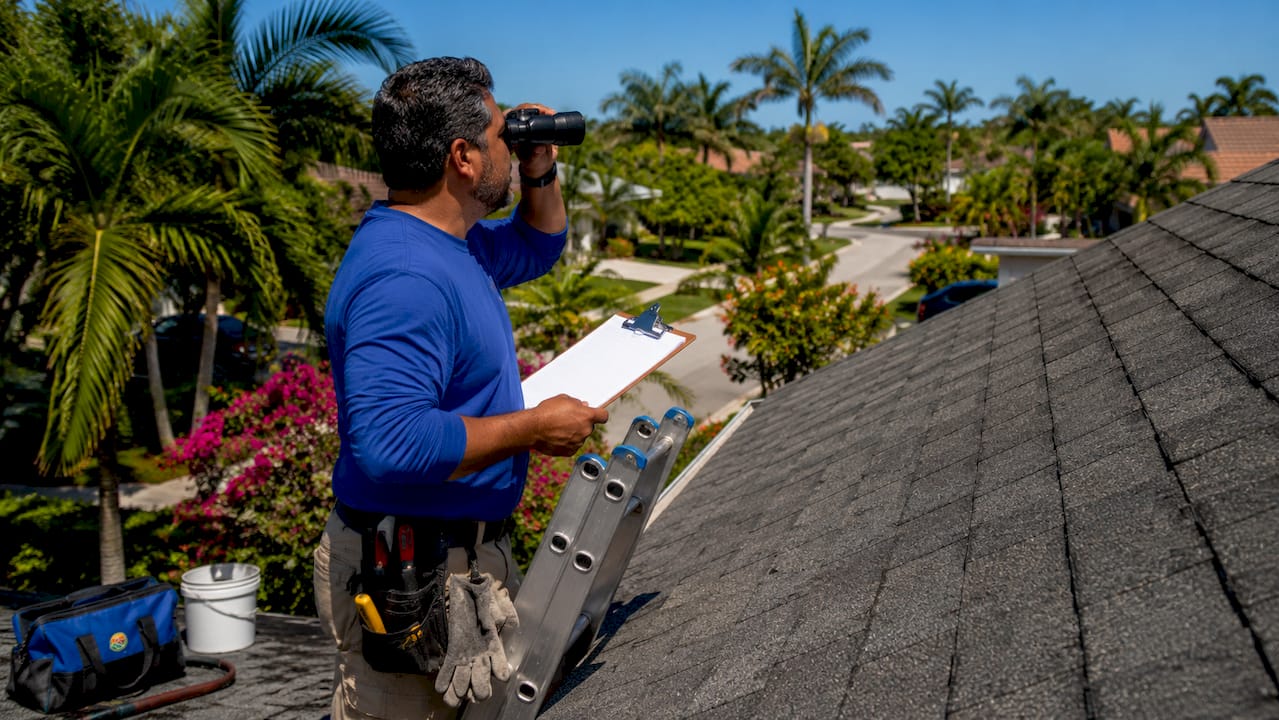
Professional roof inspectors commonly use telescopic binoculars or drones to assess shingle and flashing condition without climbing the roof. That approach keeps you safe and still produces a detailed picture of what needs attention.
Follow these steps for a systematic ground-level inspection:
- Walk the perimeter of your home with binoculars and look for missing, cracked, or curling shingles. Note the exact location of any problem area.
- Check all roof penetrations including vents, chimneys, and skylights. Flashing that has pulled away from the wall or roof surface is a direct leak point.
- Inspect your gutters for sagging sections, rust, or separation from the fascia. Clogged gutters cause water backup under shingles and add dangerous weight to your roofline during storms.
- Go into your attic on a sunny day and look for pinpoints of daylight coming through the decking. Any light means a gap. Also look for water stains on rafters or insulation.
- Photograph everything with your phone. Turn on location services so each photo carries a timestamp and GPS tag. These images are critical if you file an insurance claim later.
- Write notes describing what you found and where. A simple text document with photo references is enough. Your roofer or preservation specialist will use it to prioritize repairs.
Pro Tip: Use a free roof inspection checklist to stay organized. Shingleroofrenewal offers a detailed inspection guide built specifically for South Florida asphalt shingle roofs.
Even brand-new roofs can fail under storm conditions if key installation details like nail placement and attic ventilation are missed. Age alone does not determine storm readiness. A thorough inspection tells you the real story.
What roof protection steps should you take 48–72 hours before a storm?
The 48–72 hour window before a storm makes landfall is your last chance for meaningful roof protection. This is not the time for major repairs. It is the time to secure what you have and prepare emergency materials.
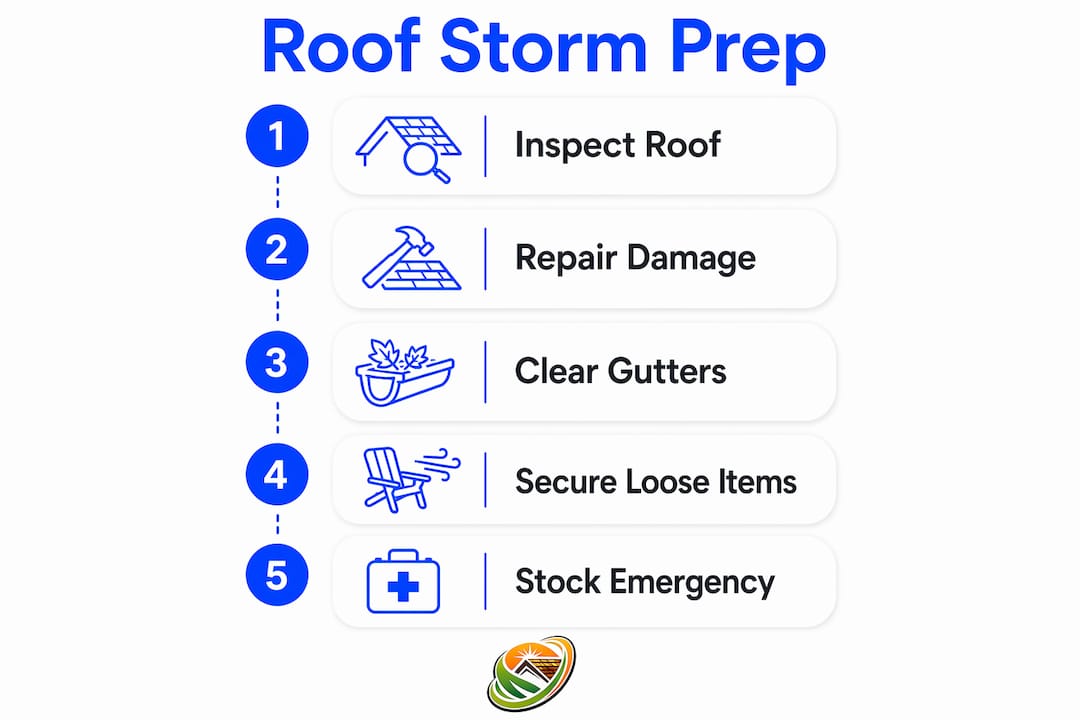
- Clear gutters and downspouts completely. Debris-clogged gutters back up water under your shingles and add weight that can pull gutters off the fascia entirely. Replacing old or sagging gutters before storm season avoids this failure point and eliminates a flying debris hazard.
- Trim overhanging branches. Any branch within striking distance of your roof is a projectile in 100 mph winds. Cut them back at least 6 feet from the roofline.
- Secure loose shingles and ridge caps. Use roofing cement to press down any shingle that has lifted at the edge. A few dollars of cement now prevents a missing shingle during the storm.
- Check and seal exposed flashing. Flashing around vents and chimneys that has started to separate can be temporarily sealed with roofing caulk until a permanent repair is scheduled.
- Stage your emergency materials. Early purchase of heavy-duty tarps, wood strips, stainless staple guns, and a ladder before storm season prevents last-minute shortages and price surges. Keep them accessible, not buried in a garage.
Pre-storm inspection steps like checking for lifted shingles and clearing gutters directly reduce the risk of water intrusion during the storm. Small actions in this window have a disproportionate impact on outcomes.
What are the most common vulnerabilities in asphalt shingle roofs during hurricanes?
Asphalt shingle roofs fail during hurricanes in predictable ways. Understanding those failure points lets you address them before the storm, not after.
Lifted or missing shingles are the most common entry point for wind and water. A single lifted shingle creates a wind catch that can peel back an entire section of roof in a strong gust. Shingles that have lost granules and become brittle are far more likely to lift or crack under wind pressure.
Degraded sealants and flashing are the second most common failure. Flashing around chimneys, vents, and skylights relies on a continuous seal. South Florida's heat cycles cause sealants to shrink and crack over time, often invisibly. Water finds these gaps immediately during heavy rain.
Inadequate attic ventilation is a hidden risk most homeowners overlook. Poor ventilation traps heat and moisture, which accelerates shingle degradation from the underside. It also creates pressure differentials during storms that can lift the roof deck.
| Vulnerability | Risk During Storm | Solution |
|---|---|---|
| Lifted or missing shingles | Wind peels back roof sections | Secure with roofing cement; replace damaged shingles |
| Degraded flashing | Water intrusion at penetrations | Reseal or replace flashing before storm season |
| Granule loss and brittleness | Shingles crack and lift under wind | Restore shingle flexibility with preservation treatment |
| Inadequate attic ventilation | Pressure buildup lifts roof deck | Add or clear soffit and ridge vents |
| Weak nailing patterns | Decking separates from structure | Upgrade to IBHS-recommended nailing standards |
Sealed roof decks reduce water intrusion by up to 95% during severe wind events and are linked to 70% fewer insurance claims after storms. That is the single most impactful structural upgrade a South Florida homeowner can make. When basic maintenance is not enough, a licensed contractor can install self-adhering underlayment as part of a FORTIFIED standard upgrade.
What should you do immediately after storm damage to your roof?
Safety comes first after a storm. Do not access your roof under any circumstances until a professional has confirmed the structure is stable. Wet decking and weakened rafters can give way without warning.
Follow these steps in order:
- Inspect from the ground only. Use binoculars to identify obvious damage like missing shingles, exposed decking, or displaced flashing. Take photos and video from multiple angles with your phone's timestamp active.
- Call your insurance company immediately. Prompt notification triggers your coverage. Delays can complicate or reduce your claim.
- Request professional shrink-wrapping if large sections of decking are exposed. Shrink-wrapping provides a weather-tight seal far superior to blue tarps and is often covered by insurance when initiated promptly. Tarps tear in wind. Shrink-wrap holds.
- Document everything before any repairs begin. Walk around the home narrating a video. State the date, your address, and describe each area of damage out loud. This narration becomes part of your claim record.
- Keep all receipts for emergency materials, temporary repairs, and contractor visits. Insurance adjusters require documentation of every expense.
"Notify insurers promptly upon discovering damage to trigger coverage. Insurance often covers emergency mitigation like shrink-wrapping, which is more durable and effective than blue tarps." — Storm Wrappers
Proper documentation speeds claims and repair timelines. Homeowners who document thoroughly before and after storms consistently experience faster resolutions than those who do not.
Key Takeaways
Preparing your asphalt shingle roof for storms requires early inspections, targeted repairs, and staged emergency materials well before hurricane season begins.
| Point | Details |
|---|---|
| Start 3–6 months early | Schedule inspections and repairs before contractor availability tightens in late spring. |
| Inspect from the ground | Use binoculars and attic checks to identify shingle, flashing, and ventilation issues safely. |
| Address granule loss early | Brittle shingles crack and lift under wind; restore flexibility before storm season starts. |
| Secure the roof 48–72 hours out | Clear gutters, trim branches, and seal loose shingles before a storm makes landfall. |
| Document everything | Timestamped photos and video before and after storms are your strongest insurance tool. |
What I've learned watching South Florida roofs fail
After seeing hundreds of asphalt shingle roofs across Broward and Palm Beach County, the pattern is consistent. Homeowners who wait until june to think about their roof are already behind. The ones who fare best in storm season are the ones who treated their roof like a car, scheduling regular maintenance and catching problems early.
The mistake I see most often is treating roof prep as a one-time checklist. You clear the gutters, maybe nail down a loose shingle, and call it done. But the real vulnerability in South Florida roofs is not visible from the ground. It is in the shingle itself. Years of UV exposure and heat cycles pull the oils out of asphalt shingles, making them stiff and fragile. A roof that looks fine in april can lose shingles in the first storm of the season.
The other mistake is skipping the attic. Most homeowners never go up there. But a five-minute attic check in march can reveal water stains, daylight gaps, or ventilation problems that would cost thousands to fix after a storm. Prevention is not just cheaper. It is dramatically less stressful.
My honest recommendation: call a roof preservation specialist before you call a roofer. Many roofs that homeowners think need replacement can be restored and reinforced at a fraction of the cost. That conversation is worth having before you spend $15,000 or more on a tear-off that may not have been necessary.
— Daniellison
Is your South Florida roof ready for storm season?

Shingleroofrenewal specializes in roof preservation and preventative maintenance for asphalt shingle roofs in Broward and Palm Beach County. As a certified Fresh Roof applicator, Shingleroofrenewal uses Green Soy Technology to restore shingle flexibility at the molecular level, locking in granules and extending roof life before deterioration becomes irreversible. Most homeowners who call us discover their roof qualifies for renewal at a fraction of replacement cost, backed by a 6-year transferable warranty. Before you spend $15,000–$30,000 on a new roof, find out if yours can be saved. Schedule your free inspection with Shingleroofrenewal and get a clear answer before storm season starts. See our full services and find out what your roof actually needs.
FAQ
When is the best time to prepare your roof for hurricane season?
The best time is 3–6 months before hurricane season, which means starting in february or march in South Florida. Contractor availability and material stock drop sharply as june approaches.
Can a new roof still fail during a hurricane?
Yes. New roofs can fail under storm conditions if installation details like nail placement and attic ventilation are compromised. Age alone does not guarantee storm readiness.
What is the most effective way to reduce water intrusion during a storm?
Sealing the roof deck with self-adhering underlayment reduces water intrusion by up to 95% during severe wind events, according to IBHS research on the FORTIFIED standard.
Should you walk on your roof to check for storm damage?
No. Homeowners should inspect from the ground using binoculars and check the attic interior instead. Wet or storm-damaged decking can be structurally unstable and dangerous to walk on.
What is shrink-wrapping and does insurance cover it?
Shrink-wrapping is a professional emergency roof covering that creates a weather-tight seal over damaged sections. Insurance often covers it when homeowners notify their insurer promptly after discovering storm damage.