
TL;DR:
- Effective roof protection in 2026 involves systematic inspections, maintenance, and targeted repairs to extend asphalt shingle roof lifespan amid South Florida's harsh climate. Regular biannual inspections, gutter cleaning, and post-storm assessments are essential, along with proper attic ventilation and drainage upgrades. Prompt professional repair and preventative care can prevent costly replacements and ensure maximum roof longevity.
Effective roof protection steps in 2026 are defined as a systematic set of inspections, maintenance routines, and targeted repairs that extend the life of your asphalt shingle roof before deterioration forces a costly replacement. In South Florida, the stakes are higher than anywhere else in the country. Broward and Palm Beach County homeowners face relentless UV exposure, hurricane-season storms, and humidity that dry out shingles faster than in any other U.S. climate. The industry term for this approach is preventative roof maintenance, and it is the difference between a roof that lasts 25 years and one that fails at 15. This guide covers every critical step, from seasonal inspections to post-storm protocols, tailored specifically for asphalt shingle roofs in 2026.
What are the critical roof protection steps 2026 homeowners need?
Twice-yearly visual inspections are the foundation of every effective roof protection strategy. Conduct inspections each spring and fall, and always after a major storm. Professional inspections can extend roof life by 5–10 years and help maintain manufacturer warranties. That means a single annual inspection call could add a decade of life to a $20,000 asset.
What to look for during each inspection:
- Missing, cracked, or curling shingles
- Granule buildup in gutters (a sign of accelerated aging)
- Damaged or lifted flashing around chimneys, vents, and skylights
- Moss or algae growth, which traps moisture against the shingle surface
- Sagging areas or soft spots visible from the ground
Pro Tip: Schedule inspections in the early morning, not during peak afternoon heat. Walking on or closely examining hot shingles can cause curling and blistering that would not otherwise occur.
South Florida's seasonal rhythm is different from the rest of the country. Your spring inspection should focus on damage from the previous winter's cold fronts and wind events. Your fall inspection, done before hurricane season peaks, should confirm your roof is ready for heavy rain and sustained winds.
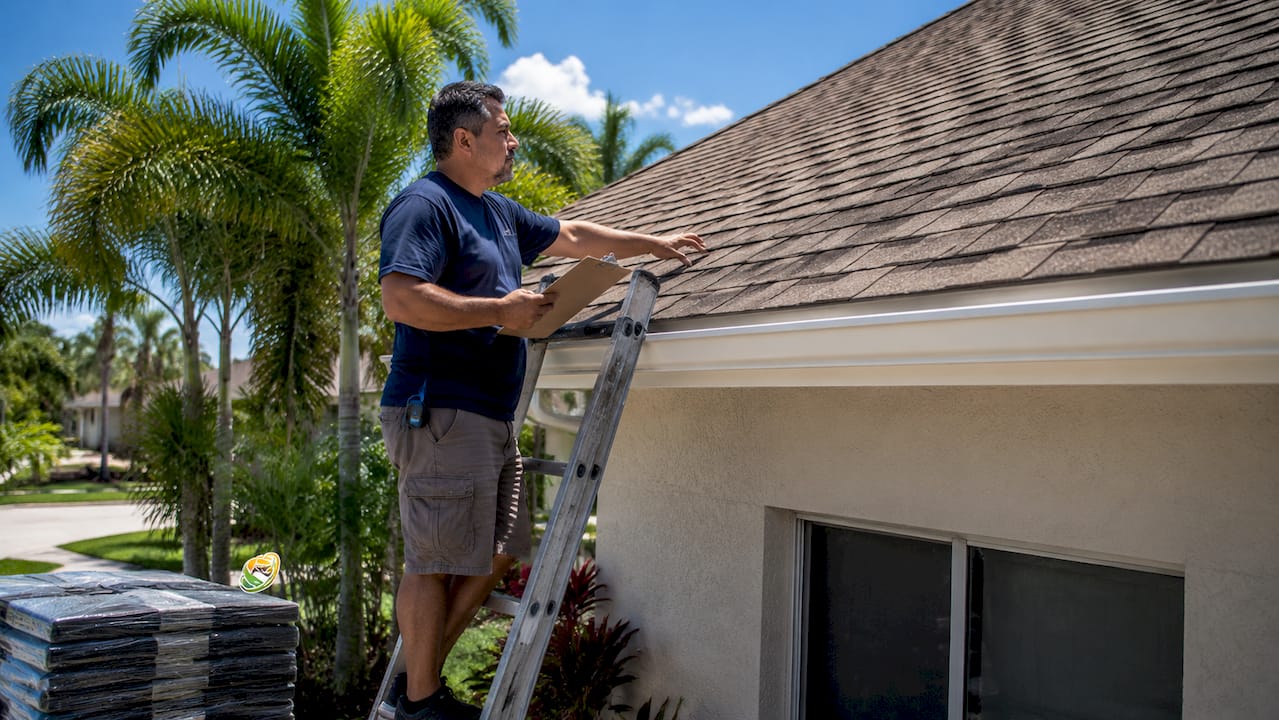
| Season | Primary Task | What to Check |
|---|---|---|
| Spring | Post-winter damage review | Shingle condition, flashing, granule loss |
| Pre-hurricane (June) | Storm readiness check | Flashing seals, gutter flow, attic vents |
| Fall | Post-storm assessment | Wind damage, debris impact, moss growth |
| Year-round | Gutter cleaning | Blockages, overflow, downspout direction |
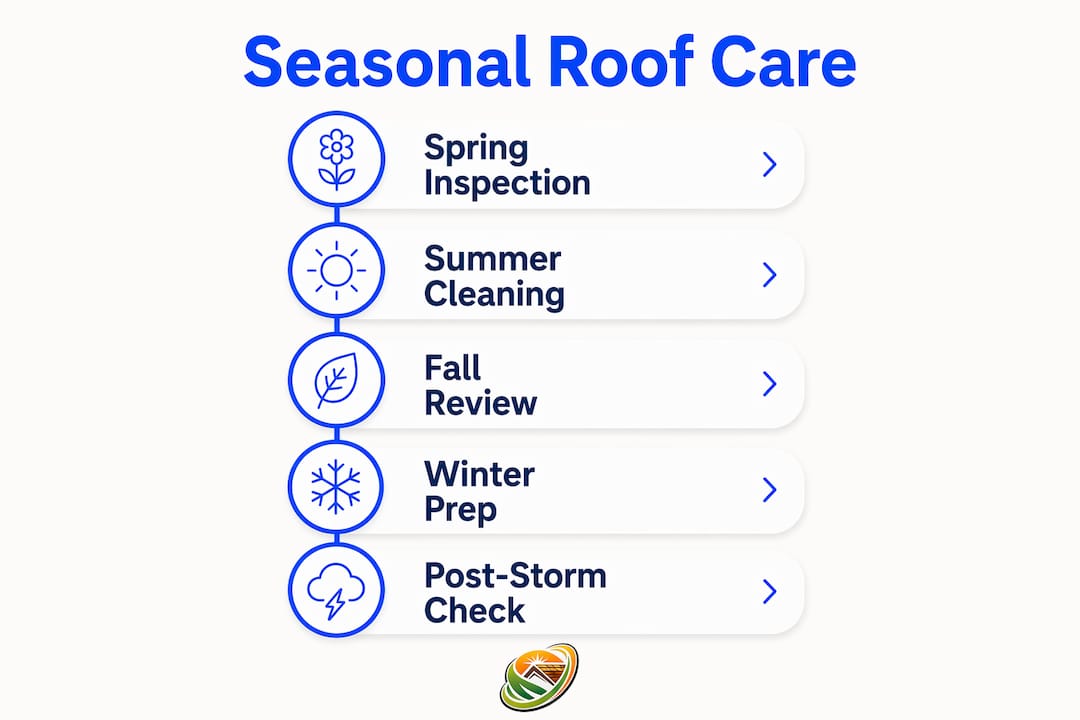
Gutter cleaning belongs on this list twice a year at minimum. Blocked gutters force water back under shingles and onto the roof deck, which accelerates rot. Trim any tree branches hanging within six feet of your roof. Falling limbs and constant leaf debris are among the most common causes of preventable shingle damage in Broward and Palm Beach County neighborhoods.
How does ventilation, insulation, and drainage improve roof durability?
Most roof failures start below the shingles, not on top of them. Improper drainage and ventilation cause more roof failures than surface damage. That finding changes how you should think about roof care. Your shingles are the visible layer, but the system underneath determines how long they last.
Proper attic insulation is the first line of defense. Insulation rated R-38 to R-60 prevents condensation from forming on the underside of your roof deck. In South Florida, where attic temperatures can exceed 150°F on a summer afternoon, that thermal barrier also slows the rate at which heat bakes your shingles from below. Shingles that cook from both sides age in half the time.
Ventilation works alongside insulation to control attic temperature and moisture. A properly ventilated attic keeps air moving, which prevents the heat and humidity buildup that causes shingles to become brittle. The standard recommendation is one square foot of ventilation for every 150 square feet of attic floor space. Many older South Florida homes fall short of this ratio.
Drainage upgrades worth making in 2026:
- Replace standard 5-inch gutters with 6-inch seamless gutters, which handle South Florida's high-volume rain events without overflowing
- Extend downspouts at least four feet from the foundation to prevent water pooling near the roof's edge
- Check that all flat or low-slope sections have clear drainage paths with no standing water after rain
Pro Tip: If you notice water stains on your ceiling after a heavy rain, do not assume the leak is directly above the stain. Water travels along roof deck boards before dripping. A professional can trace the actual entry point.
What are the essential post-storm steps to protect your roof?
After any hurricane, tropical storm, or severe thunderstorm, a ground-level inspection is the first step. Post-storm assessments done from the ground are safer and still reveal the most critical damage signs. Do not climb onto your roof immediately after a storm. Wet shingles are slippery, and hidden structural damage can make the surface unstable.
Here is a numbered post-storm action plan every South Florida homeowner should follow:
- Walk the perimeter of your home and look up at all roof surfaces from ground level.
- Check for missing shingles, exposed roof deck, or large debris impact points.
- Inspect gutters and downspouts for dents, separation, or blockages from storm debris.
- Look at flashing around chimneys, vents, and roof edges for lifted or separated sections.
- Check your attic for daylight coming through the roof deck or new water stains on rafters.
- Document everything with photos before any cleanup or temporary repairs.
- Call a professional if you see exposed decking, multiple missing shingles, or any sign of structural movement.
Early intervention after a storm converts a $500 repair into something manageable. Ignored storm damage turns into a $15,000 replacement within two to three seasons. FORTIFIED Roof™ upgrades, developed by the Insurance Institute for Business and Home Safety (IBHS), strengthen roof-deck attachment and reduce the risk of catastrophic wind damage. If your home is in a high-wind zone in Broward or Palm Beach County, FORTIFIED Roof™ elements are worth discussing with a licensed contractor.
Pro Tip: Keep a folder, physical or digital, with photos of your roof taken before storm season. Side-by-side comparisons make it much easier to identify new damage after a storm and support any insurance claims.
When should you involve professionals in your roof maintenance?
The line between DIY and professional roof care is clear. Complex repairs require expert intervention to avoid voiding your warranty and creating safety risks. Homeowners who attempt flashing repairs or shingle replacements without proper training often cause more damage than they fix.
Tasks you can safely handle yourself:
- Ground-level visual inspections
- Clearing gutters and downspouts
- Removing surface debris like leaves and small branches
- Monitoring for moss or algae growth
- Photographing and documenting changes over time
Tasks that require a professional:
- Replacing missing or damaged shingles
- Resealing or replacing flashing
- Assessing shingle flexibility and granule retention
- Evaluating attic ventilation performance
- Any repair following a named storm or insurance claim
Annual professional inspections are the single highest-return maintenance investment you can make. A trained inspector checks for shingle flexibility and granule loss, which are early indicators of thermal degradation that you cannot see from the ground. Florida's UV and heat exposure cause asphalt shingles to lose flexibility before any visible cracking appears. By the time you see a leak, the underlying damage is often months or years old.
When choosing a roof maintenance professional, look for licensed contractors familiar with South Florida building codes, experience with asphalt shingle systems specifically, and clear documentation of what the inspection covers.
What routine preventative maintenance extends asphalt shingle roof life?
Routine preventative maintenance is the category of roof care steps that most homeowners skip because nothing looks wrong yet. That is exactly the wrong approach. Replacing missing or damaged shingles immediately and maintaining sealed flashing prevents moisture from reaching the roof deck, where rot sets in fast.
Core maintenance tasks and their frequency:
- Debris removal: Monthly, or after any significant wind event
- Gutter cleaning: At minimum twice per year, ideally before and after hurricane season
- Moss and algae treatment: Annually, or at first sign of growth
- Tree trimming: Once per year, keeping branches six feet clear of the roof
- Flashing inspection and resealing: Annually, as part of a professional inspection
The South Florida roof care workflow for asphalt shingle roofs treats these tasks as a calendar, not a reaction to problems. Moss and algae are particularly aggressive in South Florida's humid climate. Left untreated, they hold moisture against shingles and accelerate granule loss. A zinc or copper strip installed at the roof ridge releases trace amounts of metal during rain, which inhibits growth without chemical treatments.
| Maintenance Task | Frequency | Priority Level |
|---|---|---|
| Gutter cleaning | Twice yearly | High |
| Visual inspection | Twice yearly plus post-storm | High |
| Debris removal | Monthly | Medium |
| Flashing check | Annually | High |
| Moss and algae treatment | Annually | Medium |
| Tree trimming | Annually | Medium |
| Professional inspection | Annually | High |
Flashing is the most overlooked component in routine maintenance. It seals every roof penetration, including chimneys, vents, and skylights. When flashing sealant dries out and cracks, water enters the roof system at those joints. In South Florida, UV exposure dries sealants faster than in cooler climates. Check flashing condition every year without exception.
Key takeaways
Consistent preventative maintenance, not emergency repairs, is the most cost-effective way to protect an asphalt shingle roof in South Florida's climate.
| Point | Details |
|---|---|
| Inspect twice yearly plus post-storm | Ground-level checks each spring and fall catch small issues before they become expensive repairs. |
| Ventilation and drainage matter as much as shingles | Attic insulation rated R-38 to R-60 and 6-inch seamless gutters protect the full roof system. |
| Act immediately after storms | Document damage with photos and call a professional if you see exposed decking or multiple missing shingles. |
| Know the DIY limit | Gutter cleaning and visual monitoring are safe for homeowners; flashing, shingle replacement, and post-storm repairs require a professional. |
| Routine maintenance prevents replacement | Monthly debris removal, annual flashing checks, and moss treatment extend shingle life by years. |
What i've learned after years of watching south florida roofs age too fast
The most common mistake I see South Florida homeowners make is treating the roof as a single layer of shingles. They replace a few shingles after a storm, call it done, and ignore the attic for another five years. By the time the next inspection happens, the ventilation is compromised, the insulation is damp, and the roof deck has soft spots. The shingles looked fine from the street. The system underneath was failing.
The second mistake is waiting for a visible leak. Florida's UV and heat cause thermal degradation that makes shingles brittle months before any water gets through. When you finally see a stain on your ceiling, you are not catching a problem early. You are already behind.
What actually works is treating roof maintenance like you treat your car. You do not wait for the engine to seize before changing the oil. You follow a schedule. You get it inspected annually. You address small issues before they compound. The homeowners I see avoid premature replacement are the ones who build a maintenance calendar and stick to it, not the ones who react to emergencies.
South Florida's climate is not forgiving. But a well-maintained asphalt shingle roof in Broward or Palm Beach County can absolutely reach its full rated lifespan. The roof longevity checklist approach works. Prevention works. Replacement is always the last resort, not the first call.
— Daniellison
How Shingleroofrenewal helps south florida homeowners protect their roofs
Shingleroofrenewal is not a roofing contractor. We are the company you call before you call the roofer.
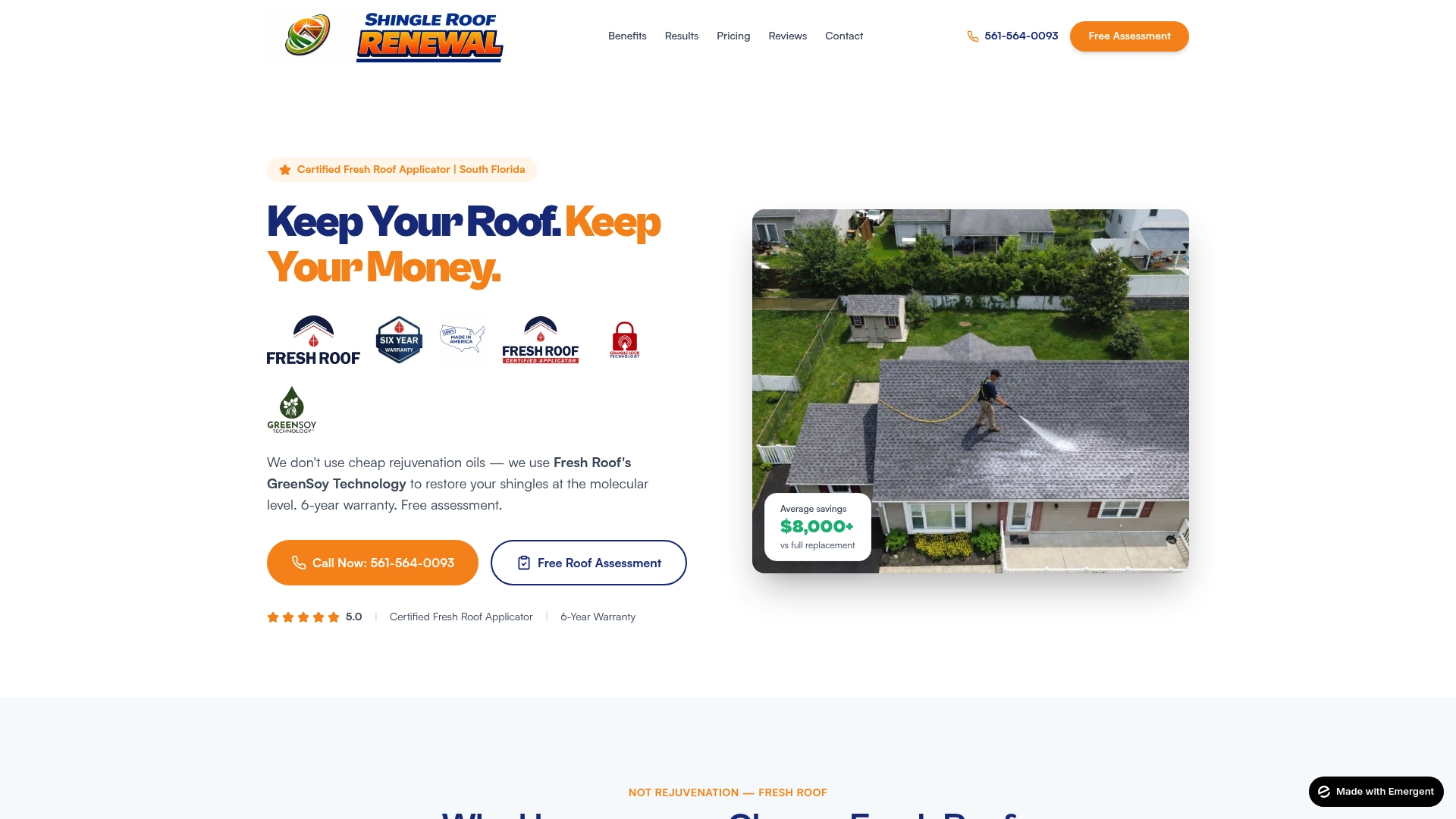
We specialize in asphalt shingle roof preservation for homes in Broward and Palm Beach County. Our certified Fresh Roof Green Soy Technology restores shingle flexibility at the molecular level, slows deterioration, and locks in granules. If your roof qualifies, you could save up to 80% compared to full replacement, backed by a 6-year transferable warranty. Our roof preservation services start with a free inspection and a straightforward assessment of whether your roof can be saved. Most homeowners are surprised to learn their roof still qualifies. Visit Shingleroofrenewal to schedule your free inspection today.
FAQ
How often should south florida homeowners inspect their roofs?
Inspect your roof at least twice per year, once in spring and once in fall, plus after any major storm. Professional inspections can extend roof life by 5–10 years and protect your warranty.
What are the first signs that an asphalt shingle roof needs attention?
Granule buildup in gutters, curling or cracking shingles, and moss or algae growth are the earliest warning signs. Shingle brittleness from UV exposure appears before any visible leaks, so annual professional checks matter.
Can i do my own roof inspection in 2026?
Ground-level visual inspections are safe for homeowners and should be done regularly. However, flashing repairs, shingle replacement, and post-storm assessments require a licensed professional to avoid warranty voids and safety risks.
What is the FORTIFIED roof™ system and should i consider it?
FORTIFIED Roof™ is an IBHS-developed standard that strengthens roof-deck attachment and improves storm resistance. Homeowners in high-wind areas of Broward and Palm Beach County should ask a licensed contractor whether their home qualifies for FORTIFIED upgrades.
How does Shingleroofrenewal differ from a standard roofing company?
Shingleroofrenewal focuses on roof preservation and preventative maintenance, not replacement. Using certified Fresh Roof Green Soy Technology, the company restores qualifying asphalt shingle roofs at a fraction of full replacement cost, backed by a 6-year transferable warranty.