
TL;DR:
- Roofing misconceptions lead homeowners in South Florida to overlook hidden damage and delay essential repairs. Professional inspections, proper surface preparation, and quality materials are critical for effective roof restoration and cost savings. Relying on myths about leaks, DIY fixes, insurance coverage, and low bids can result in costly failures and premature replacements.
Roof restoration myths are widespread beliefs that lead homeowners to delay maintenance, waste money on ineffective treatments, or skip professional inspections until serious damage has already set in. The industry term for this body of misinformation is "roofing misconceptions," and in South Florida's climate of relentless sun, humidity, and storm cycles, believing them carries a real financial cost. This roof restoration myths list covers the most damaging misconceptions circulating in Broward and Palm Beach County right now. Knowing the truth about roof repair misconceptions can be the difference between a $2,000 preservation treatment and a $25,000 full replacement.
1. The roof restoration myths list starts here: no leaks means no problem
A leak-free roof often hides significant internal damage that may take months or years to become visible. This is the most dangerous myth on any roof restoration myths list because it gives homeowners a false sense of security while deterioration quietly advances beneath the surface.
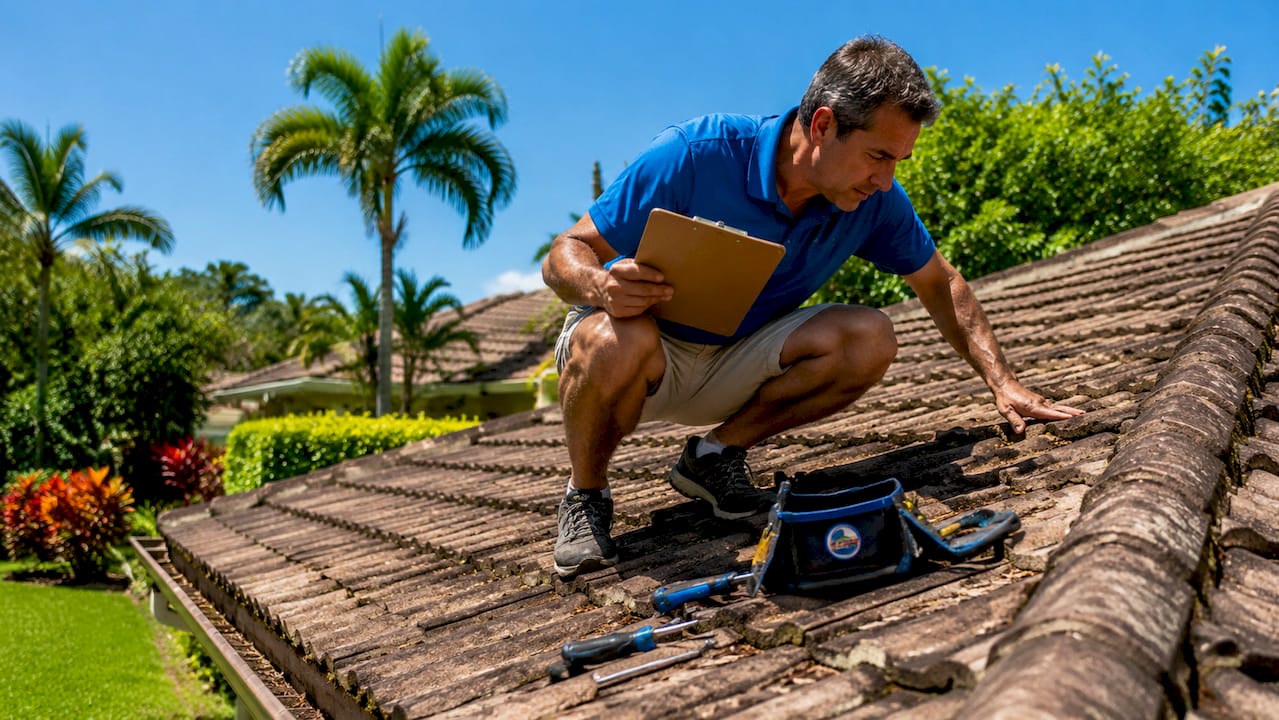
In South Florida, the combination of UV exposure, heat, and seasonal rain accelerates damage to decking, flashing, and insulation long before a single drop appears on your ceiling. By the time water shows up inside your home, structural deterioration may already be too advanced for minor repairs. That means a problem that could have cost a few hundred dollars to address now requires a full tear-off.
Common hidden issues that develop without visible leaks include:
- Decking rot caused by trapped moisture under shingles
- Flashing failure at chimneys, vents, and roof edges
- Insulation degradation from heat cycling and humidity infiltration
- Granule loss that exposes the asphalt layer to direct UV damage
Pro Tip: Schedule a professional roof inspection at least once a year in South Florida, not just after a storm. Catching problems before they reach your ceiling is always cheaper than reacting after the fact. Learn how to spot roof damage before it becomes a crisis.
2. DIY and budget restorations hold up just as well as professional work
DIY roof treatments or budget restorations without proper surface preparation fail quickly, often within six months, due to bubbling and flaking under heat. South Florida's summer temperatures push roof surface temperatures well above 150°F, which exposes every shortcut in a cheap application within one season.
Professional restoration requires cleaning moss, lichen, and oxidation from the surface before any treatment is applied. Skip that step and you are sealing contaminants under a coating, which traps moisture and accelerates the exact deterioration you were trying to stop. The result is a roof that looks treated but is actually degrading faster than before.
Signs your DIY or low-cost restoration is already failing:
- Bubbling or blistering on the shingle surface after the first heat wave
- Flaking coating along ridge lines and edges within weeks of application
- Reappearing moss or algae under a coating that was applied without proper cleaning
- Soft spots on the deck that were not identified before treatment
Pro Tip: Ask any restoration contractor for their surface preparation protocol before signing anything. If they cannot describe a cleaning and inspection process in detail, walk away. The prep work is where the job is won or lost.
3. Homeowner insurance covers roof aging and routine wear
Homeowner insurance generally excludes coverage for gradual deterioration, maintenance failures, and age-related roof decline. Insurance covers specific perils like storm damage, hail, and fire. It does not cover the slow breakdown that happens every day under the Florida sun.
This myth costs homeowners in two ways. First, they skip routine maintenance because they assume insurance will cover any resulting damage. Second, when they file a claim for something that looks like storm damage but is actually accelerated aging, the claim gets denied and they are left with the full repair bill. Insurers in Florida have become increasingly strict about distinguishing storm damage from deferred maintenance, and adjusters are trained to spot the difference.
Proactive steps that protect both your roof and your claim eligibility:
- Document your roof condition annually with dated photos before and after storm season
- Keep records of all maintenance performed, including cleaning, inspections, and treatments
- Address minor issues immediately rather than waiting for your next policy renewal
- Understand your policy's age provisions, since many Florida policies reduce payouts on roofs older than 10 years
Understanding roof aging is the first step toward protecting your coverage and your home's value.
4. All shingles are the same, so brand and grade do not matter
Shingles vary widely in granule composition, asphalt quality, algae resistance, and impact ratings, and installation skill is critical to roof longevity. Treating all shingles as interchangeable is one of the most common roof repair misconceptions in South Florida, where the climate demands materials engineered for heat, UV, and wind.
Algae-resistant shingles, for example, contain copper or zinc granules that prevent the black streaking common on roofs throughout Broward and Palm Beach County. Standard shingles without this feature can show visible algae growth within two years in South Florida's humidity. Beyond material choice, the installation itself determines whether even a premium shingle performs as designed. Improper nailing patterns, inadequate underlayment, and skipped flashing replacement all compromise a roof regardless of the shingle brand on the package.
Key differences that matter when choosing shingles for South Florida:
- Impact rating (Class 3 or Class 4) for hail and wind-driven debris resistance
- Algae-resistant granules to prevent premature staining and degradation
- Wind uplift rating compliant with Florida Building Code requirements
- Asphalt weight and thickness as indicators of heat resistance and longevity
Pro Tip: Ask your contractor to show you the shingle manufacturer's data sheet, not just the product brochure. The technical specifications tell you far more than marketing language. For existing roofs, restoring shingle flexibility can extend performance without a full replacement.
5. Roof rejuvenation sprays fix underlying roof problems
Roof rejuvenation sprays do not fix leaks, missing granules, flashing issues, or rotten decking, and they risk voiding manufacturer warranties. This is one of the most misunderstood points in any roofing myths debunked discussion, because rejuvenation products are often marketed with language that implies a comprehensive fix.
The industry warns that field-applied coatings are unproven and may accelerate damage by trapping moisture. A spray treatment applied over a structurally compromised roof does not address the underlying defect. It covers it. That distinction matters enormously because hidden problems continue to worsen while the surface looks treated. The Asphalt Roofing Manufacturers Association has raised concerns about spray treatments that are applied without manufacturer approval, noting that such applications can void the original shingle warranty.
"Roof rejuvenation treatments benefit roofs that are chemically aged but structurally sound. They do not repair physical defects and can worsen hidden problems." Source: Excel Roofing
What rejuvenation sprays cannot fix:
- Active leaks or water infiltration at any point on the roof
- Cracked, broken, or missing shingles that require physical replacement
- Flashing failures at roof penetrations, valleys, and edges
- Rotten or soft decking beneath the shingle layer
- Structural sagging caused by long-term moisture damage
This is precisely why Shingleroofrenewal uses a different approach. The Fresh Roof Green Soy Technology we apply works at the molecular level to restore flexibility in shingles that are chemically aged but structurally sound. We inspect first, and we only treat roofs that qualify. That distinction separates genuine preservation from a cosmetic spray that masks problems.
6. The lowest bid is the best deal for roof restoration
Selecting the lowest bid is the most common way homeowners lose money due to cut corners and substandard work. In South Florida's competitive roofing market, low bids often mean skipped flashing replacement, inferior materials, or unlicensed labor that leaves you with no recourse when the work fails.
Florida law requires roofing contractors to hold a state-issued license, carry liability insurance, and pull permits for most roofing work. A contractor offering a price that seems too good to be true is often skipping one or more of these requirements. When that work fails, and it typically does within a year or two, you pay twice: once for the original job and again for the repair or replacement. The lowest price does not ensure best value. Quality installation is what protects your roof's lifespan.
7. You can always add another layer of shingles instead of replacing
Local building codes often limit roofing layers to two, making further roof-overs illegal and requiring full replacement. Many South Florida homeowners believe that adding a new layer of shingles over the existing one is a cost-saving shortcut. In practice, this option is frequently unavailable and almost always inadvisable.
Multiple layers obstruct inspection of the underlying deck and can create structural issues by adding significant weight to the roof framing. Florida's building codes are strict on this point, and a roof-over that violates local ordinance can create problems when you sell the home or file an insurance claim. Beyond legality, a second layer traps heat between the shingles, which accelerates deterioration of both layers simultaneously.
8. Restoration is always worth it, no matter how damaged the roof is
When more than 25% of the roof area needs major repairs, restoration becomes economically unviable compared to replacement. This is a roof restoration fact that many homeowners do not want to hear, but it is the honest answer. Restoration is a powerful tool for the right roof. It is not a universal solution.
The cost-benefit analysis shifts unfavorably when damage is widespread. Spending money on preservation treatments for a roof that is already past the point of no return delays the inevitable while adding cost. A qualified inspection is the only way to know which side of that line your roof falls on. Shingleroofrenewal's three-step process exists specifically to answer that question before you spend a dollar on treatment.
Key takeaways
Believing common roof restoration myths costs South Florida homeowners thousands of dollars in premature replacements, failed treatments, and denied insurance claims.
| Point | Details |
|---|---|
| No leaks does not mean no damage | Hidden rot, flashing failure, and insulation damage develop long before water appears inside. |
| DIY treatments fail fast in Florida heat | Without proper surface prep, budget restorations bubble and flake within six months. |
| Insurance does not cover aging | Policies cover storm perils, not gradual wear. Document your roof annually to protect claims. |
| Not all shingles perform equally | Granule composition, algae resistance, and installation quality determine real-world durability. |
| Rejuvenation sprays have real limits | They only work on structurally sound roofs and cannot fix leaks, flashing, or rotten decking. |
What I have learned watching South Florida homeowners navigate these myths
I have seen the same pattern repeat itself more times than I can count. A homeowner in Boca Raton or Pembroke Pines notices a few curling shingles, gets three bids, picks the lowest one, and ends up back at square one within 18 months. The myths on this list are not abstract. They show up in real decisions that real people make every week in this region.
The one that troubles me most is the insurance myth. Homeowners genuinely believe their policy is a safety net for deferred maintenance, and they are blindsided when a claim gets denied. Florida's insurance market has tightened significantly, and carriers are scrutinizing roof age and condition more carefully than ever. Waiting for your insurer to solve a maintenance problem is not a strategy. It is a gamble with very bad odds.
What I have found actually works is simple: treat your roof like any other major system in your home. You service your air conditioning before it fails. You do not wait for your water heater to flood the garage before calling a technician. Your roof deserves the same logic. Early intervention, honest inspection, and working with a provider who will tell you the truth about whether your roof qualifies for preservation or needs replacement. That honesty is rare in this industry, and it is worth seeking out.
The environmental angle matters too. Every unnecessary tear-off sends thousands of pounds of asphalt shingles to a landfill. When a roof can be preserved, preserving it is the right call for your wallet and for the community.
— Daniellison
How Shingleroofrenewal helps South Florida homeowners protect their roofs
Shingleroofrenewal is a certified applicator of Fresh Roof Green Soy Technology, a proven preservation treatment that works at the molecular level to restore shingle flexibility, lock in granules, and slow the deterioration caused by South Florida's sun and heat. We are not roofers. We are the company you call before the roofer, serving homeowners throughout Broward and Palm Beach County.
Our process is straightforward: we inspect your roof, assess its condition, and tell you honestly whether it qualifies for renewal. If it does, you could save up to 80% compared to full replacement, backed by a 6-year transferable warranty. If it does not qualify, we will tell you that too.
Visit Shingleroofrenewal's services page to learn more, or schedule your free inspection at shingleroofrenewal.com today.
FAQ
Does a roof without leaks still need an inspection?
Yes. A leak-free roof can still have significant hidden damage, including decking rot, flashing failure, and granule loss, that worsens over time without any visible interior signs.
Can homeowner insurance cover roof aging in Florida?
No. Homeowner insurance excludes gradual deterioration and maintenance-related decline. Coverage applies to specific perils like storm or hail damage, not routine wear.
Are roof rejuvenation sprays worth the cost?
Only when the roof is structurally sound and the primary issue is chemical aging of the asphalt. Sprays cannot fix leaks, flashing problems, or rotten decking, and they may void your shingle warranty if applied without manufacturer approval.
How do I know if my roof qualifies for restoration vs. replacement?
A professional inspection is the only reliable answer. When more than 25% of the roof area requires major repairs, replacement is typically more cost-effective than restoration.
Why do low-bid roof jobs fail so often in South Florida?
Low bids typically involve skipped flashing replacement, inferior materials, or inadequate surface preparation. In South Florida's extreme heat and humidity, those shortcuts fail fast, often within one to two seasons.