
Most shingle-preservation companies offer their own limited warranty separate from anything the shingle manufacturer provides, and it typically covers retained flexibility or a free retreatment rather than leak repair. Coverage windows run about five years across the market, though a few vendors advertise a six-year transferable term. Before signing anything, get that promise in writing, and take dated photos of the roof's condition prior to treatment.
TL;DR:
- Most warranties last around five years and focus on restoring or maintaining shingle flexibility rather than covering leaks or storm damage.
- Warranties typically exclude preexisting leaks, storm damage, ventilation issues, algae growth, and damage caused by modifications made after treatment.
- Verify warranty terms before signing by obtaining the full document, confirming transferability, and documenting roof condition with photos and inspection reports.
- Most claim denials occur because of "alternative cause" defenses, especially when moisture or damage is linked to issues unrelated to the treatment.
- An inspection-first approach, including a written warranty and pre-treatment documentation, provides the best protection against future disputes.
Table of Contents
- What Does a Shingle Coating Warranty Actually Cover?
- What Do Shingle Coating Warranties Exclude?
- How Do You Verify a Warranty Before You Buy?
- Why Do Shingle Coating Warranty Claims Get Denied?
- How Shingleroofrenewal Handles Inspection and Warranty
- Why Inspection-First Beats Coating-First
- Get a Free Roof Assessment Before You Decide
- Sources
- FAQ
What Does a Shingle Coating Warranty Actually Cover?
A shingle coating warranty is a promise from the applicator, not the shingle manufacturer. It's a separate document, and confusing the two is where most homeowner disputes start.
Most vendors guarantee one specific outcome: that the treatment will restore or maintain shingle flexibility for a set period. If the shingles fail to hold that flexibility within the warranty window, the standard remedy is retreatment, sometimes a partial credit toward future service. It is not a promise to fix leaks, replace damaged shingles, or cover storm damage. Roof rejuvenation vendors commonly build their warranties around flexibility and retreatment rather than leak prevention, and trade reporting on the broader rejuvenation market confirms this pattern of limited terms tied to flexibility testing, not structural repair.
Here's what to expect from a typical vendor warranty:
- A defined term, commonly around five years, occasionally longer
- A flexibility or performance standard the treated shingles must meet
- Retreatment as the primary remedy if that standard isn't met
- Possible transferability if you sell the home during the coverage period
A six-year transferable warranty sits above the market norm and adds resale value since the coverage follows the roof, not the original homeowner.
What Do Shingle Coating Warranties Exclude?
The exclusions matter more than the coverage, because they determine whether you'll actually collect on a claim. Read this section of any contract twice before signing.
Vendors typically exclude:
- Preexisting leaks or active water intrusion at the time of treatment
- Damage to non-shingle roof components (flashing, vents, skylights)
- Inadequate attic ventilation contributing to premature wear
- Algae growth, staining, or discoloration
- Modifications made by another contractor after treatment
Beyond exclusions, watch for limitations that quietly shrink the value of the warranty itself: retreatment-only remedies with no refund option, dollar caps on remediation, prorated payouts that shrink each year, or a narrow definition of "failure" that's nearly impossible to trigger. The Asphalt Roofing Manufacturers Association warns that field-applied coatings can alter shingle behavior and affect fire classification, which is exactly why a vague warranty that doesn't address these specific risks should raise concern.
A few contract phrases should stop you before you sign: no listed start date, a remedy described only as "at the company's discretion," or eligibility language so broad that it could cover almost any roof, including ones that shouldn't qualify for treatment at all.
Pro Tip: Ask the applicator to define "loss of flexibility" in writing, in measurable terms. If they can't give you a specific standard, they can't be held to one later.
How Do You Verify a Warranty Before You Buy?
Verification happens before the crew shows up, not after something goes wrong. Treat this as a short pre-purchase checklist.
- Request the specimen warranty document, not just a sales brochure, and read the full text.
- Confirm the exact start date, end date, and what triggers coverage.
- Ask who's liable if the treatment itself causes damage, and get that answer in writing.
- Verify the transferability clause and how a future homeowner would prove the transfer.
- Confirm the claim process: who you contact, what documentation they require, and the expected timeline.
Three questions are worth asking word for word: "Will you provide a specimen warranty before I sign anything?" "Is this transferable, and how is the transfer recorded?" "What remedies do you offer if the treatment itself causes damage to my shingles?"
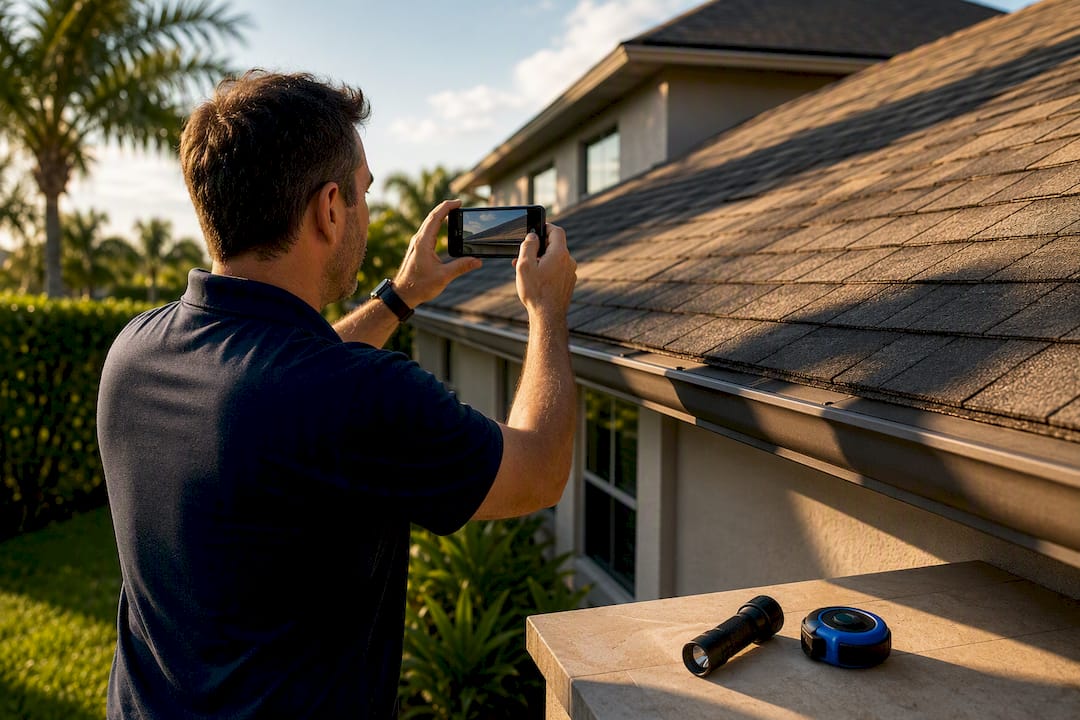
Pro Tip: Photograph your roof from all four sides before any work starts, and keep the invoice, the signed inspection report, and the specimen warranty in one folder. That folder is your entire case if a claim ever gets disputed.
Why Do Shingle Coating Warranty Claims Get Denied?
Most denials trace back to one argument: the "alternative cause" defense. A company argues the shingle failure came from something other than the treatment, poor ventilation, an existing leak, storm damage, and once that argument is on the table, the burden shifts to you to prove otherwise.
Coating type affects that risk directly. Membrane-like surface coatings sit on top of the shingle and can trap moisture underneath, which gives a company more room to blame water damage on something unrelated to the product. Field coatings applied over asphalt shingles can trap moisture and alter how the shingle sheds water, a risk that's lower with true penetrating treatments designed to soak into the shingle rather than form a surface film.
To reduce dispute risk on your end:
- Insist on a thorough pre-treatment inspection that documents existing condition
- Get any underlying repairs (flashing, ventilation, prior leaks) fixed and documented before treatment begins
- Ask for manufacturer input in writing when the shingle brand's warranty status is in question
- Keep a full paper trail: photos, inspection reports, invoices, and the specimen warranty itself
How Shingleroofrenewal Handles Inspection and Warranty
A vetted process is the single biggest lever homeowners have against a denied claim, because it prevents treatment from happening on a roof that shouldn't have qualified in the first place.
Shingleroofrenewal's process runs in three steps: inspect the roof, assess its actual condition, and determine whether it qualifies for renewal before any treatment begins. That sequence matters because a documented inspection process reduces disputes by avoiding treatment on roofs with underlying defects a manufacturer could later point to as the real cause of failure.
What backs that process:
- Certified application of Fresh Roof Green Soy Technology, not a generic rejuvenation spray
- A six-year transferable warranty, longer than typical terms common across the market
- A focus on restoring shingle flexibility and slowing granule loss rather than promising to fix active leaks
If your roof doesn't qualify for preservation, that's information worth having too. Read more on when replacement makes more sense than treatment.
Why Inspection-First Beats Coating-First
Get the inspection and the written warranty before any coating touches your roof. That sequence, not the coating itself, is what actually protects you.
A roof that doesn't qualify for preservation shouldn't be treated at all, no matter how good the sales pitch sounds. Keep your pre-work photos and your specimen warranty together, because that folder is the only leverage you'll have if something goes wrong later.
— Daniellison
Get a Free Roof Assessment Before You Decide
You don't need to guess whether your roof qualifies for preservation, and you shouldn't sign a coating contract without seeing the warranty first. Shingleroofrenewal runs a Free Roof Assessment before recommending anything, inspecting your shingles, checking flexibility and granule retention, and telling you honestly whether your roof is a candidate for the Fresh Roof Application.
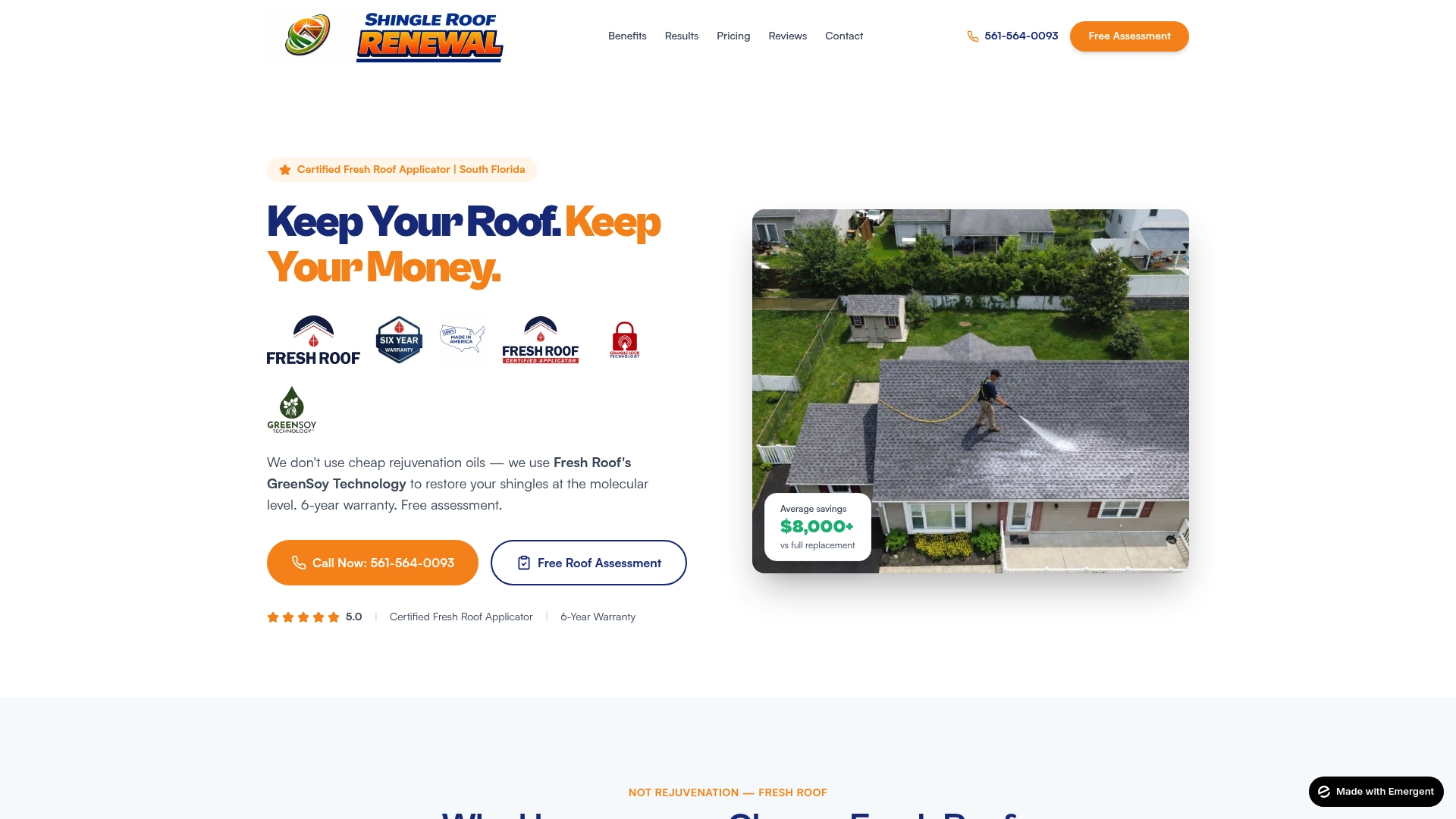
If your roof qualifies, treatment may be backed by a six-year transferable warranty, longer than typical terms common elsewhere in the market, and the coverage may follow the home if you sell. Homeowners in Boca Raton and Delray Beach can check their own roof's eligibility, or start with a general assessment request through the main service page. Call us before you call the roofer, and find out whether your existing roof can be saved instead of replaced.
Sources
- Coating of Asphalt Shingles After Installation — Asphalt Roofing Manufacturers Association
- Spray-On Roof Coating for Asphalt Shingles: Does It Work? — The Roofing Brief
- Are Roof Rejuvenation Products a Good Investment for Asphalt Roofs? — NRCIA
FAQ
How Long Does a Shingle Coating Warranty Last?
Most vendor warranties run around five years and focus on restored flexibility rather than leak coverage, based on industry guidance from NRCIA. Some vendors offer transferable warranties on qualifying roofs treated with proprietary technologies, lasting longer than many typical vendor warranties.
Does a Coating Void My Shingle Manufacturer's Warranty?
It can. GAF's technical bulletin states that its limited warranty may remain in effect, but any damage resulting from the coating application is excluded and becomes the homeowner's responsibility. Always confirm your specific shingle manufacturer's position in writing before treatment.
Is a Shingle Coating Warranty Transferable?
Some are, but not all. Ask the applicator directly how a transfer is recorded and whether documentation is required at the time of sale. Some warranties are transferable if you sell the home during the coverage period.
What Should I Get in Writing Before Hiring a Preservation Company?
Get the specimen warranty document, the start and end dates of coverage, the exact remedy for a failed claim, and confirmation of transferability. Pre-work photos and a signed inspection report protect you if a dispute arises later.
How Much Does a Free Roof Assessment Cost?
Shingleroofrenewal's roof assessment is free and includes an inspection to determine whether your roof qualifies for preservation treatment. Current pricing for the Fresh Roof Application is available directly on the Shingleroofrenewal site.